OEM/ODM AGV Robot Factories & Exporters
Export-ready laser SLAM AMR, jacking robots, pallet AGVs and smart forklifts engineered in Shenzhen for factories and system integrators that need ±5 mm navigation, ±2 mm QR docking and ±0.05 mm composite robotics.
8 AGV and AMR Platforms for Export Projects
These eight product links are preserved from the original catalog. Use them to compare payload, navigation accuracy, top-module potential and factory fit before requesting a quotation or OEM/ODM evaluation.

Warehouse Stacker CE Forklift AGV 800kg Load Capacity Light AMR Pallet
A compact 800 kg pallet AGV platform recommended for light manufacturing, warehouse transfer and aisle-constrained sites where a full-size forklift is unnecessary.

Customizable 1500KG Traction Capacity AGV Autonomous Mobile Robot Amr with Lidar Guided Sensor
A customizable 1,500 kg traction AMR with lidar guidance, suited to towing carts and moving heavy fixtures in mixed-traffic factory and warehouse areas.

Omnidirectional Service Humanoid Robot Chassis Dual 7-DOF Arms Laser SLAM Navigation for Hospitality and Retail
An omnidirectional humanoid service robot chassis with dual 7-DOF arms and laser SLAM, aimed at hospitality, retail and service-robotics OEM/ODM projects.
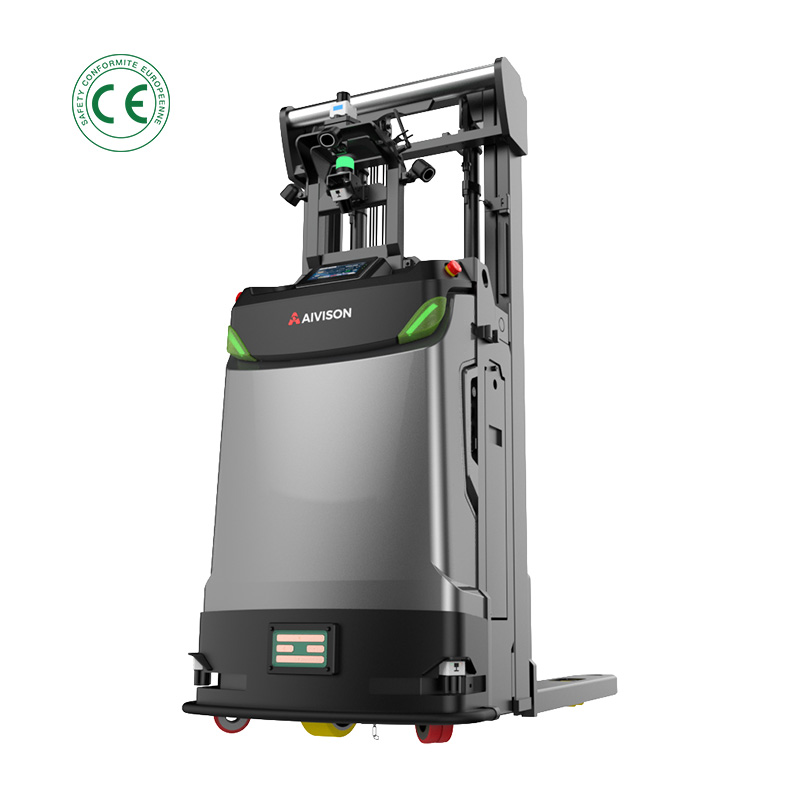
Smart Transport Robotic with Laser Navigation Reach 2000KG AGV Logistics Robots Warehouse Robot AMR
A 2,000 kg laser-navigation reach AGV for logistics and warehouse transport, balancing heavy payload support with flexible route changes.
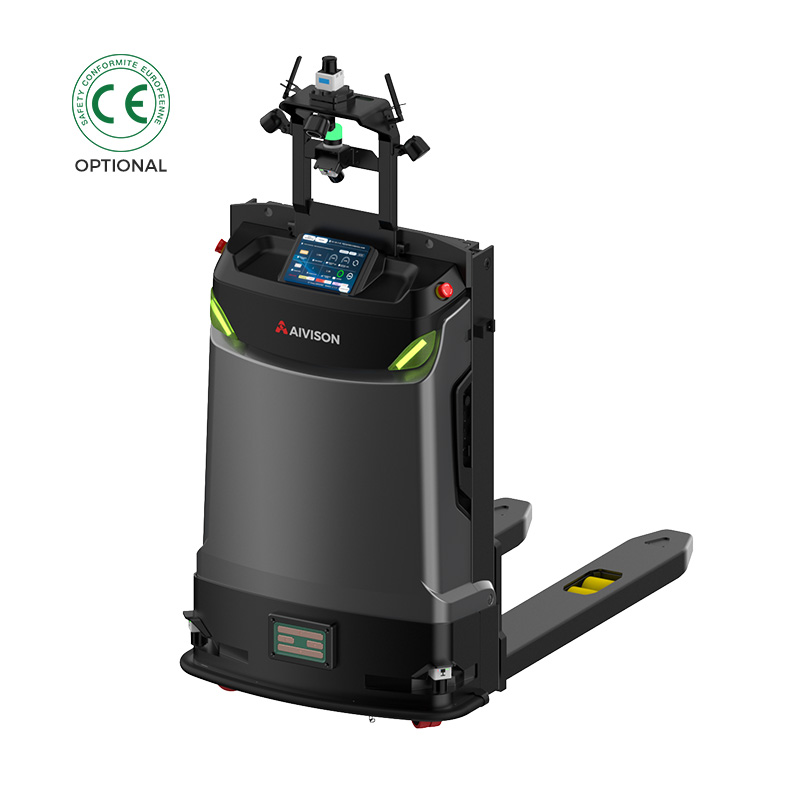
AGV AMR Warehouse Automatic Guided Vehicle 1500kg 2000kg AGV Robot Forklift
A 1,500–2,000 kg warehouse AGV/AMR forklift platform for automated guided vehicle projects that require pallet handling and scalable fleet control.
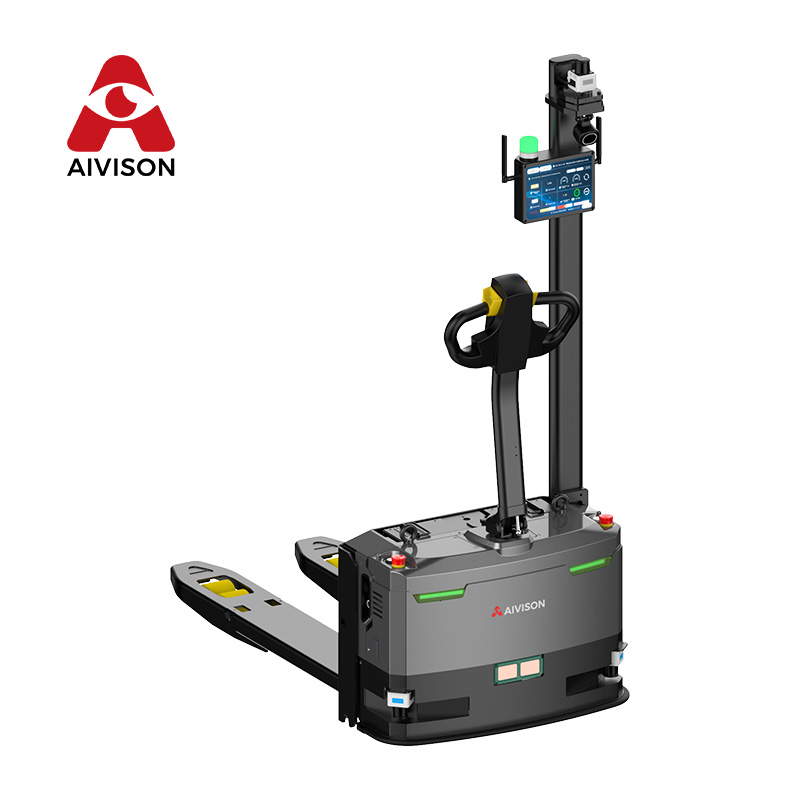
Aivison Stacker Truck Pallet Stacker Forklift Agv 1.5 Ton Autonomous Forklift Smart Deliver AMR Robot
A 1.5-ton autonomous stacker forklift and smart delivery AMR for pallet stacking, line-side replenishment and repetitive warehouse tasks.

Omnidirectional Mobile Manipulator AMR Dual 7-DOF Arms ±0.03 mm Repeatability Laser SLAM Humanoid Robot Base
An omnidirectional mobile manipulator with dual 7-DOF arms, ±0.03 mm repeatability and laser SLAM, built for precision assembly and inspection tasks.
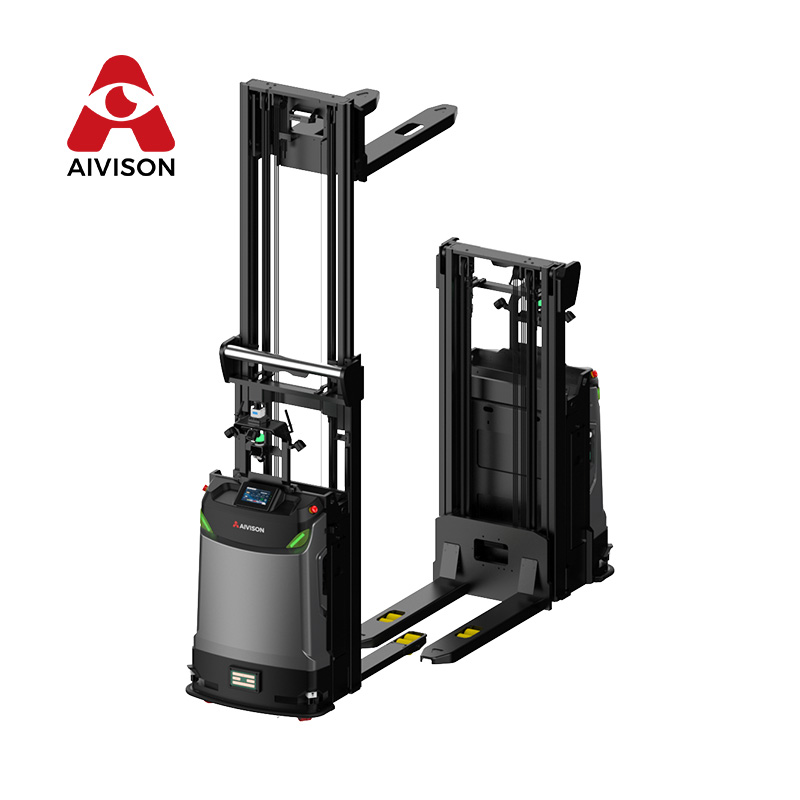
High Precision agv Forklift Full Servo Motor Controlled Laser Forklift with Heavy Load 2000kg
A high-precision 2,000 kg full-servo laser AGV forklift for heavy loads where motor control, repeatability and stable fork positioning are critical.
OEM/ODM AGV Robot Factories & Exporters: The Procurement White Paper
Search demand for OEM/ODM AGV robot factories and exporters rarely begins with a wish for a generic robot. It usually begins with a constraint: a factory must move 800 kg pallets through an aisle that cannot be widened, a semiconductor line needs ±2 mm docking, or an integrator must deliver a branded AMR fleet without building an entire robotics department. That is why the most useful way to evaluate a Chinese AGV/AMR factory is not to compare brochure payloads alone, but to compare how precisely the supplier can match navigation accuracy, top-module design, fleet software and export support to the actual material flow.
For procurement teams, the phrase OEM/ODM AGV robot factories and exporters carries several intent layers at once. It can mean private-label manufacturing, custom chassis engineering, software integration, mixed-fleet deployment support or a long-term spare-parts relationship. A supplier that understands those layers will ask about aisle width, load center of gravity, throughput peaks and docking tolerances before quoting a model. A supplier that only sends a price list is usually a trading intermediary, not an engineering partner.
What OEM and ODM Mean in an AGV/AMR Project
In mobile robotics, OEM often means the factory builds robots or modules for the buyer’s brand, documentation and channel. ODM goes further: the supplier contributes original design work, such as a laser SLAM chassis, jacking unit, roller conveyor top module or safety configuration, which the buyer then adapts for a specific market or production line. The practical difference is not the label on the quotation; it is who owns the engineering risk when the robot must interface with an elevator, a conveyor, a MES platform or a high-shelf docking station.
A credible OEM/ODM AGV factory should be able to discuss three things in the same technical conversation: the navigation core, the payload interface and the factory acceptance test. If a supplier can only discuss the first item, the buyer should expect integration risk later. This is especially true in projects where robots must operate alongside people, forklifts and existing production equipment. The winning supplier is often the one that can reduce the number of interface assumptions before shipment, not the one that quotes the lowest headline price.
Accuracy Is a Commercial Decision, Not a Specification Trophy
Navigation accuracy should be matched to the task, not over-specified across the whole factory. Natural-feature laser SLAM at ±5 mm is sufficient for warehouse transfer, line-side delivery and many pallet movements; it requires no magnetic tape, reflectors or floor QR codes. At stations where the robot must dock with a conveyor or high-shelf position, adding a QR scanning camera can raise precision to ±2 mm. For composite robots with a 6-axis arm, repeatability can reach ±0.05 mm at calibrated stations for semiconductor and medical-device assembly.
That tiered approach creates real information gain for buyers: it separates “factory-wide accuracy” from “station-level accuracy.” Over-specifying the entire floor increases cost, installation time and maintenance burden. Under-specifying a critical docking point creates production stoppages. The best procurement question is therefore not “What is your accuracy?” but “Which stations in our layout actually require precision, and what is the lowest-cost configuration that reliably meets those stations?”
Total Cost of Ownership Starts with the Floor You Do Not Rebuild
Floor infrastructure is one of the most underestimated costs in AGV procurement. Magnetic tape, reflectors and full-floor QR codes can interrupt operations during installation and make future layout changes expensive. A natural-feature SLAM deployment maps the existing environment and only introduces QR labels at the few stations that need ±2 mm docking. For factories that change production layouts frequently, this difference can matter more than a small gap in robot purchase price.
Total cost of ownership also includes fleet scheduling, charging strategy and spare-parts response. A robot that cannot be coordinated with the rest of the fleet may sit idle during peak periods. A charging dock that is not sized correctly can reduce availability even if the robot itself is reliable. Export buyers should ask for a deployment plan that includes Wi-Fi coverage, route design, charging ratio, maintenance access and escalation procedures. These are the details that separate a pilot project from a production-grade deployment.
Factory Qualification Evidence That Reduces Export Risk
Because AGV/AMR projects cross language, safety and service boundaries, supplier qualification should include independent evidence. Shenzhen Marnix Intelligent Technology Co., Ltd. has undergone an onsite supplier assessment by TÜV Rheinland, holds a procurement relationship with a Fortune 500 company, and maintains verified trade capacity and transaction records. For international buyers, these credentials do not replace a factory audit, but they shorten the first screening stage and provide a documented starting point for commercial due diligence.

Why an OEM/ODM Buyer Should Evaluate the Factory, Not Just the Robot
For export projects, the real product is the combination of robot platform, top module, fleet software, quality evidence and engineering response.
Ten Years of AGV Engineering
Shenzhen-based R&D and manufacturing experience with laser SLAM AMRs, jacking robots, smart forklifts, composite robots and charging docks. The portfolio is broad enough to support mixed-fleet projects rather than a single isolated machine.
Manufacturer-Level Customization
Chassis, payload, jacking units, roller conveyors, forklift forks and 6-axis arms can be engineered around the production process. This is the practical meaning of OEM/ODM in an AMR project: the robot adapts to the line, not the other way around.
Precision Matched to the Station
±5 mm laser SLAM for general transfer, ±2 mm QR-assisted docking for high-shelf or conveyor handover, and ±0.05 mm composite repeatability for semiconductor and medical-device applications.
Fleet Software and Charging Ecosystem
An intelligent scheduling system coordinates multiple robots over indoor Wi-Fi, with automatic charging through compatible smart charging docks. Mixed fleets can share traffic rules and task assignment.
Quality Protocol Before Shipment
Multi-stage intelligent inspections and thousands of operational stress tests target near-zero failure rates. Verification happens before export, not after installation on the customer’s floor.
Export and Integrator Support
Marnix serves both end users and system integrators, with third-party credentials including TÜV Rheinland onsite assessment, Fortune 500 supplier experience and verified trade history.
Product Recommendation: Match the Platform to the Material Flow
Use this matrix as a first filter before a detailed engineering review. The right platform is the one that satisfies the station, not the one with the highest payload on the brochure.
Light Pallet Handling
For 800 kg or 1.5-ton pallets in compact aisles, start with the warehouse stacker AGV or the Aivison autonomous stacker. These platforms suit light manufacturing, line-side replenishment and repetitive warehouse transfer.
Heavy Towing and Reach
For 1,500–2,000 kg carts, fixtures or pallets, evaluate the 1,500 kg traction AMR, the 2,000 kg reach AGV and the 1,500/2,000 kg warehouse forklift. Prioritize route width, floor slope and load center of gravity.
Precision Manipulation
For service robotics, inspection or assembly, the dual 7-DOF humanoid chassis and the omnidirectional mobile manipulator provide a base for OEM/ODM development. Select arms, grippers and safety scanners according to the process.
High-Load Servo Forklift
For 2,000 kg heavy loads with repeated fork positioning, the full-servo laser AGV forklift is the preferred starting point. Its value is stable motion control and repeatable docking under production pressure.
How Export Buyers Will Evaluate AGV Robot Factories in the Next Cycle
The purchasing conversation is moving from “Which robot is cheapest?” to “Which factory can prove deployment capability, lifecycle support and documentation?”
Pre-Qualification Before RFQ
Buyers are screening factories for onsite assessment, export records, trade capacity and customer references before releasing detailed CAD layouts or acceptance criteria. The RFQ is becoming a shorter step after supplier qualification.
Outcome-Based Acceptance
Specifications are shifting from single robot speed to missions per hour, dock success rate, availability and recovery time after fault. This favors suppliers that can model installation as a production system.
Mixed-Fleet Interoperability
Factories rarely automate one process forever. Procurement teams increasingly ask whether new AGVs can be coordinated with existing jacking robots, forklifts, conveyors and charging docks under one scheduling layer.
Local Service and Spare-Parts Math
Export buyers now calculate service response against uptime targets. A lower-priced robot can lose on total cost if batteries, sensors, drive units or top modules have long lead times or unclear ownership.
Documentation and Safety Evidence
Technical files, risk assessment, CE-related questions, battery transport information and commissioning records are becoming part of the purchasing decision rather than an afterthought.
Energy and Charging Strategy
Charging ratio, opportunity charging, battery health and dock layout are now evaluated as part of fleet design. The goal is not simply a longer battery life, but predictable availability during peak shifts.
Where AGV and AMR Technology Is Moving for OEM/ODM Projects
Development is converging on modularity, precision tiers, fleet software and application-specific top modules rather than one universal robot.
Natural-Feature SLAM plus Selective QR
General navigation remains trackless, while QR labels are added only at precision stations. This hybrid model balances fast deployment with millimeter-level docking where it matters.
Modular Top Mechanisms
One SLAM chassis can be paired with jacking units, roller conveyors, forklift forks or robotic arms. Integrators gain a faster route to custom machines without redesigning the mobility core.
Composite Mobile Manipulators
AMR mobility is being combined with 6-axis or dual-arm manipulation for assembly, inspection and machine tending. The engineering challenge moves from navigation to station calibration and task sequencing.
Fleet Scheduling as Software Value
The robot becomes more valuable when it is part of a coordinated fleet. Wi-Fi scheduling, traffic control, task dispatch and charging logic are becoming central purchase criteria.
Human-Aware Safety in Mixed Traffic
Robots must operate safely around people, forklifts and temporary obstructions. Dynamic obstacle avoidance and predictable behavior matter as much as route accuracy in real factories.
Battery and Opportunity Charging
Compatible smart charging docks and optimized charging windows reduce idle time. Procurement teams should evaluate energy strategy together with fleet size and shift patterns.
Factory Evidence for Export Buyers
Independent verification and transparent trade records help international buyers shortlist an AGV/AMR manufacturer with greater confidence.
TÜV Rheinland Onsite Assessment
Company premises and operations have been verified through an onsite supplier assessment by TÜV Rheinland, providing a third-party reference for factory qualification.
Fortune 500 Supplier Experience
Marnix has a procurement relationship with a Fortune 500 company, assessed by independent third parties. This is relevant for buyers who need evidence of commercial reliability beyond a product brochure.
Verified Multispecialty Supplier
Low-MOQ customization and multi-category robot procurement capability are verified through trade capacity records, which helps integrators source multiple platforms from one manufacturer.
Credit and Transaction Records
Transparent credit index and transaction-level history are available for review. These records help reduce the commercial risk of first-time international procurement.

Industries Served by an OEM/ODM AGV Robot Factory
The same navigation core can support very different material flows when the top module, safety configuration and docking strategy are chosen correctly.
What to Prepare Before Requesting an OEM/ODM AGV Proposal
From our project experience, these six inputs determine most of the robot selection. Sharing them upfront can shorten evaluation from weeks to days.
OEM/ODM AGV Robot Factory FAQ for International Buyers
Straight answers for procurement teams, integrators and factory engineers comparing AGV/AMR exporters.
What does an OEM/ODM AGV robot factory supply that a trading company does not?
An OEM/ODM factory can participate in chassis engineering, top-module design, navigation configuration and factory acceptance testing. It can adapt the robot to the production line instead of reselling a fixed catalog model.
How do we choose between ±5 mm SLAM, ±2 mm QR and ±0.05 mm composite precision?
Map precision to the station, not the entire factory. Use ±5 mm natural-feature SLAM for general transfer, ±2 mm QR-assisted docking at conveyors or high shelves, and ±0.05 mm composite robots only where assembly or inspection truly requires it.
Do we need to modify floors or install magnetic tape?
No for standard laser SLAM projects. The robot maps existing features, so auxiliary tracks and reflectors are not required. QR labels are only added at stations where higher docking precision is needed.
Can the robot be customized for our line and integrated with conveyors, lifts or MES?
Yes. OEM/ODM scope can include jacking units, roller conveyors, forklift forks and 6-axis arms. Interface requirements should be defined early so that mechanical handover, software signals and safety logic are tested before shipment.
How are multiple AGVs and AMRs coordinated?
An intelligent scheduling system manages the fleet over indoor Wi-Fi, handling simultaneous task assignment, traffic control and automatic charging through compatible charging docks. Fleet size and charging ratio are planned around throughput peaks.
Which payloads and industries are covered?
The product range covers 800 kg light pallet platforms, 1.5–2 ton autonomous forklifts, 2,000 kg reach and servo forklifts, and composite manipulators. Applications include semiconductor, 3C electronics, lithium battery, photovoltaic, automotive parts, PCB, textile and medical devices.
What evidence should export buyers request before placing an order?
Request the factory assessment report, trade history, credit records, product test plan, interface assumptions and spare-parts list. For AGV/AMR projects, also ask for the commissioning checklist and acceptance criteria.
How do we start a project evaluation and get a catalog?
Use the Get Catalog button to open the inquiry conversation, then share load profile, layout, throughput, docking precision, Wi-Fi coverage and equipment interfaces. The engineering team can recommend a platform and OEM/ODM scope from there.
Ready to Evaluate an OEM/ODM AGV Robot Factory?
Share your payload, layout, throughput and docking precision requirements. The engineering team can match the project to the right laser SLAM AMR, jacking robot, pallet AGV, smart forklift or composite mobile manipulator configuration.
Get Catalog Catalog access opens through the existing live-chat module. No additional script or redirect has been added here.