8 Pallet Lifting Robot Platforms for OEM, Wholesale and System Integrator Programs
Compare the core platforms buyers usually request first: autonomous stackers, jacking AMRs, heavy-load forklifts, warehouse logistics robots and AI-ready development chassis. Every link below preserves the original product URL, while the commentary explains where each platform fits in a commercially defensible automation roadmap.

Aivison Stacker Truck Pallet Stacker Forklift Agv 1.5 Ton Autonomous Forklift Smart Deliver AMR Robot
A practical entry platform for low-level stacking, pallet transfer and trailer-to-rack movement. Laser SLAM maps existing aisles, while QR docking can be added where conveyor or rack handover demands tighter repeatability. Strong catalog anchor for wholesalers because it combines a familiar stacker format with AMR software, fleet visibility and OEM branding options.
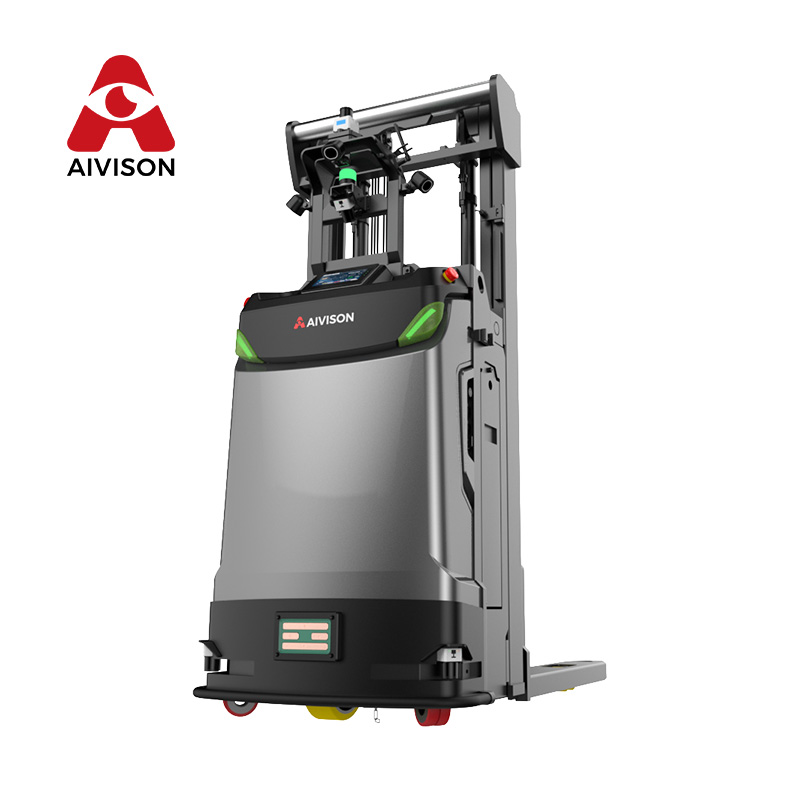
Autonomous Mobile Robots (AMR) Implement Cargo Transportation Between Warehouse and Conveyor Line
Conveyor-to-warehouse transfer should be judged by handshake reliability, not payload alone. This AMR is intended for repeated cargo movement where stop-and-go precision, traffic rules and clear call logic determine throughput. It suits integrators who need a robot platform that accepts conveyor modules, sensors and software hooks without rebuilding the entire logistics layer.
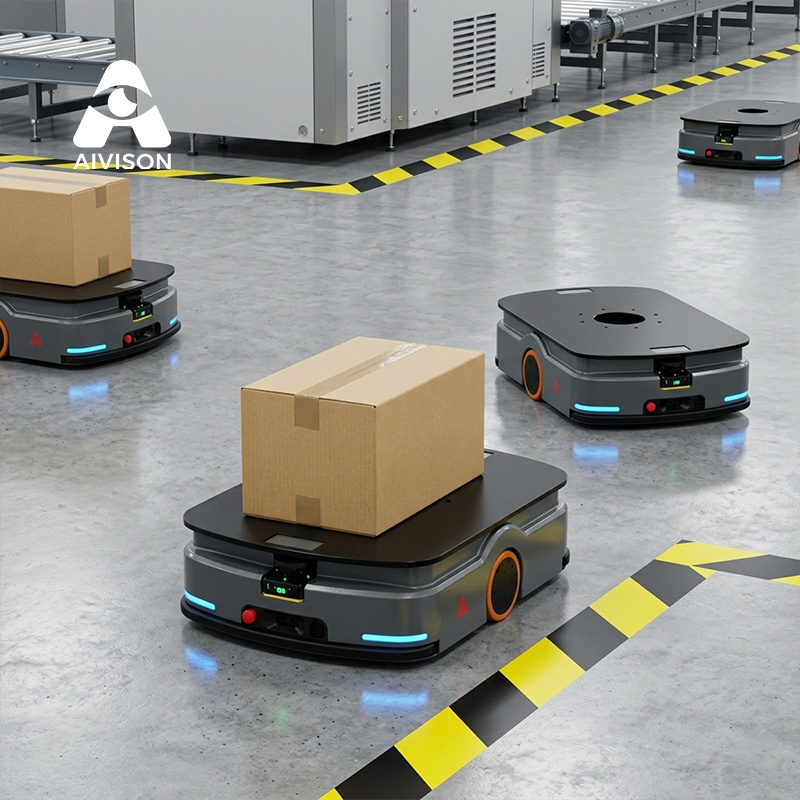
Autonomous Mobile AMR Robot 300kg Payload Laser Guided AGV for Carry Goods in Factory
A 300 kg payload and laser-guided navigation make this a good fit for cartons, totes and small pallet loads in 3C electronics and assembly. It is useful for distributors building a compact fleet for narrow aisles and frequent route changes. The value lies in quick mapping, low floor impact and the ability to scale from one robot to a scheduled fleet as volume grows.
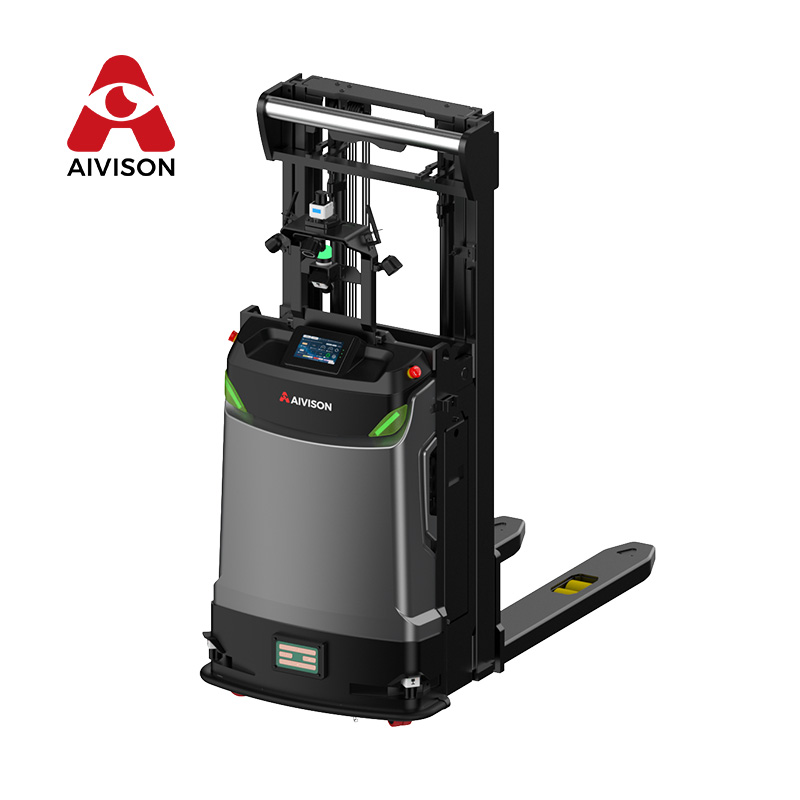
Heavy Load 2000KG Load Forklift Laser Guide AMR for Warehouse Pallet
Heavy-load pallet handling is a different engineering problem: stability, braking, fork behavior and safety envelopes matter more than headline speed. This 2,000 kg laser-guided forklift AMR targets warehouse pallets where conventional forklifts create labor bottlenecks or inconsistent cycle times. For OEM programs, it provides a robust base for regional safety specification and top-module customization.
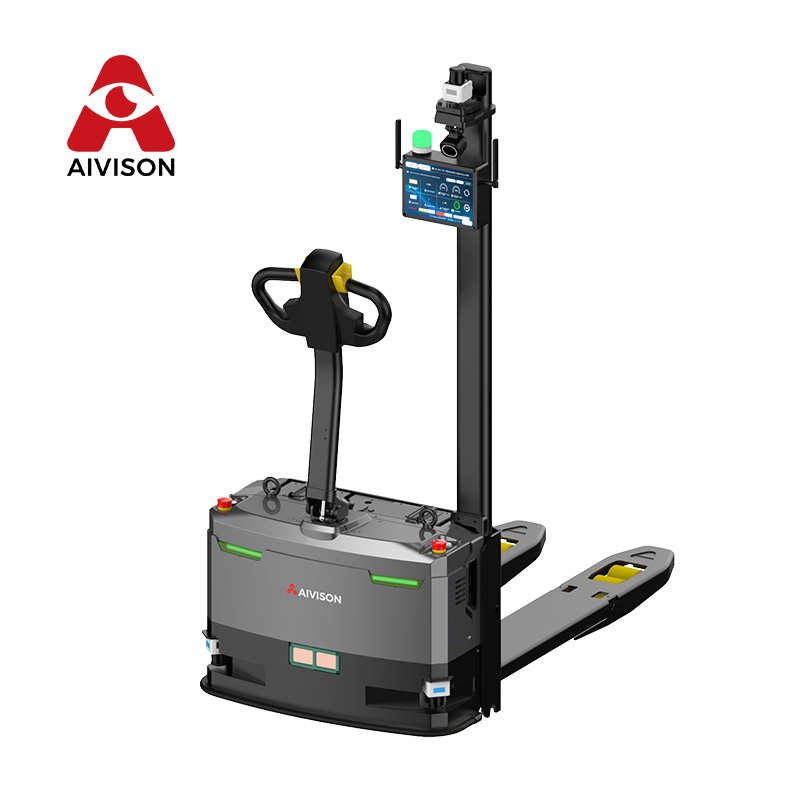
Aivison AGV Forklift High Quality Industrial Unmanned Pallet Forklift
An industrial unmanned pallet forklift for factories that want to remove routine pallet moves from human operators without changing racking. It supports higher-duty operation when paired with compatible charging infrastructure and fleet scheduling. Particularly relevant for wholesale buyers seeking a complete, branded pallet-lifting product family rather than an isolated prototype.

AI-Ready Humanoid Robot Chassis Dual 7-DOF Arms Omnidirectional Drive ROS2 Laser SLAM Open Development Platform
Humanoid and dual-arm platforms are not a replacement for every pallet lifter, but they show where OEM automation is heading: mobile manipulation, ROS2 development and AI-ready sensing. This chassis gives research teams and integrators a programmable base for assembly, inspection and machine-tending experiments. Treat it as an innovation product to pair with proven pallet AMRs.
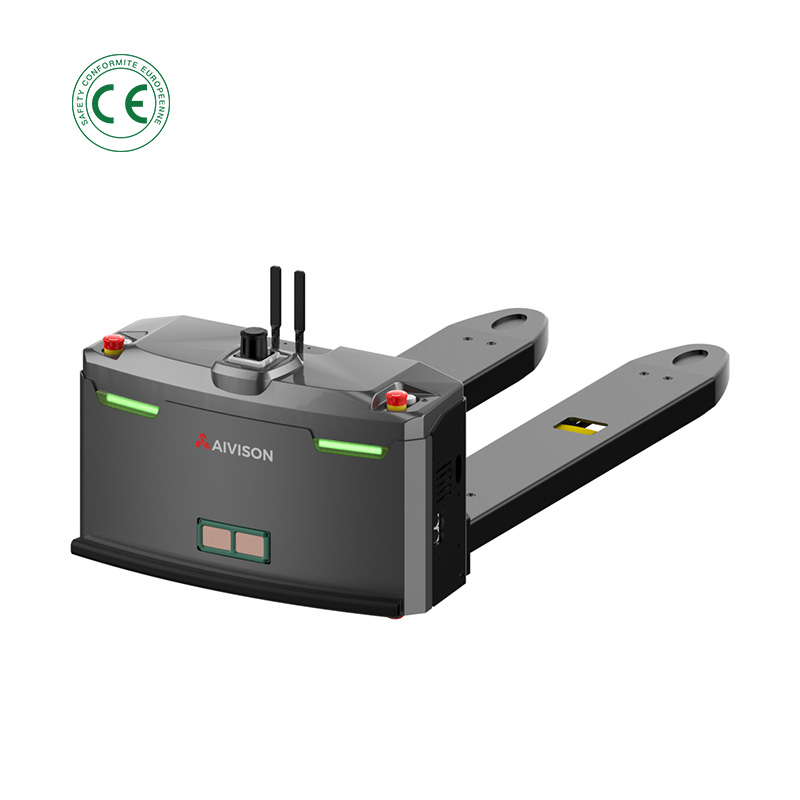
AMR Automated Warehouse Robot Logistics Automatic Industrial Logistics Robots AMR Robot
This automated warehouse logistics AMR focuses on continuous material flow between receiving, storage, picking and dispatch. Its commercial value comes from predictable throughput, scheduling and automatic charging rather than one specification number. For distributors, it fills the gap between light AMRs and heavy forklifts, giving customers a scalable option for 24/7 warehouse logistics.

Humanoid Robot Chassis Dual 7-DOF Arms Laser SLAM Omnidirectional Navigation ROS2 Open Platform AMR
A humanoid chassis platform combining dual 7-DOF arms, laser SLAM and omnidirectional navigation for OEM developers who need a ROS2 open platform. It can support service, inspection and advanced manufacturing research. Smart buyers treat it as a strategic R&D asset while keeping production pallet movement on mature, safety-reviewed autonomous forklift or AMR platforms.
Need a private-label pallet lifting robot, a mixed fleet proposal or a factory audit before your next wholesale order? Share your payload, aisle width and docking tolerance with our engineering team.
Send an InquiryYears in AGV Engineering
Shenzhen-based R&D and manufacturing experience across mobile robot platforms.
Laser SLAM Accuracy
Natural-feature navigation without magnetic tape, reflectors or full-floor QR codes.
Optional QR Docking
Add a QR scanning camera only where high-shelf or machine docking requires it.
Manufacturers Served
Deployments across three continents and eight core industries.
What Pallet Lifting Robot Buyers Are Really Purchasing in 2025
The phrase “pallet lifting robot” now covers several commercial categories: autonomous pallet stackers, low-profile jacking robots, laser-guided forklifts, conveyor-transfer AMRs and custom AGV bases with lifting or roller modules. The procurement risk is not choosing the wrong title; it is buying hardware without proving that the complete material flow can be installed, maintained and scaled.
Factory-direct OEM programs compete on engineering discipline, not catalog size. Wholesalers and integrators need stable bills of material, firmware update paths, spare-part availability, safety documentation and a supplier who can explain why ±5 mm laser SLAM is enough for a warehouse aisle but ±2 mm QR assistance may be necessary at a high-shelf handover. That is where information gain matters: a credible factory should help you avoid over-specifying floor infrastructure and under-specifying safety, service and software.
For buyers comparing custom OEM pallet lifting robot factories and wholesalers, the most useful question is not “What is the payload?” but “What is the fully loaded cost of one reliable pallet move per hour, per shift and per site?” That lens exposes hidden costs in charging strategy, fleet traffic management, integration downtime and spare-part logistics.
Three questions that sharpen every RFQ
Separate repetitive pallet transfer from precision machine docking. They often need different robots and different safety rules.
Use ±5 mm laser SLAM for general transport, QR assist for ±2 mm docking, and composite platforms only where arm-level repeatability is genuinely necessary.
Ask for commissioning support, spare-part lead times, remote diagnostics and fleet software update policy before comparing prices.
Match the Pallet Lifting Platform to the Job, Not the Brochure
Four common buying scenarios illustrate how payload, route structure, handover precision and software ownership change the right recommendation.
Warehouse Pallet Transfer
Choose autonomous stackers or heavy-load forklift AMRs when the dominant work is moving pallets between receiving, storage and dispatch. Prioritize route stability, lift height, fork approach clearance and charging strategy before top speed.
Line-Side Delivery
Jacking robots and low-profile AMRs reduce clutter beside production cells. The buying focus should be takt-time synchronization, safe pedestrian interaction and re-routing flexibility when stations or racks change.
High-Shelf Precision Docking
Use SLAM plus QR coding only at the interfaces that need ±2 mm accuracy. This avoids unnecessary floor markers while satisfying high-bay storage, conveyor handshakes and machine-tending positions.
OEM and Integrator Programs
Composite platforms with jacking units, roller conveyors, forks or 6-axis arms let integrators connect robots directly to equipment. Request interface drawings, PLC/API documentation and change-control terms early.
Choose the Right Accuracy Level for Each Station
Navigation accuracy is often over-specified. Use this comparison to match precision to the actual task and protect project budget without compromising safety or throughput.
| Configuration | Typical Accuracy | Floor Setup | Best Commercial Fit |
|---|---|---|---|
| Laser SLAM on natural features | ±5 mm | No tape, reflectors or full-floor codes | Warehouse transfer, line-side delivery, frequent layout changes and mixed traffic. |
| Laser SLAM + QR scanning camera | ±2 mm | QR labels only at precision stations | High-shelf storage, conveyor docking, wafer handling and machine interfaces. |
| Composite robot with 6-axis arm | ±0.05 mm repeatability | Station calibration | Semiconductor, medical device assembly and advanced machine tending. |
Information-gain note: ±5 mm laser SLAM is not a compromise; it is the correct economic choice for most pallet transport. Adding QR codes everywhere can increase maintenance burden. Specify ±2 mm only where the process fails without it, and reserve ±0.05 mm composite robotics for the stations that genuinely justify the cost.
Future Procurement Trends for OEM Pallet Lifting Robot Factories
Buying behavior is shifting from one-off equipment purchases toward fleet-level programs with software, service and verified factory capability written into the contract.
From Single Robot to Fleet Procurement
Buyers increasingly compare fleet scheduling, traffic control and charging dock ratios before approving pilot robots. A single machine may prove navigation, but only fleet economics prove return on investment.
Software and Integration Clauses
Procurement teams now ask for API documentation, PLC handshake definitions, Wi-Fi requirements and update policy. Software ownership is no longer an afterthought; it is a selection criterion.
Modular Top Modules
Wholesalers prefer a common chassis with interchangeable lifting, roller, fork or arm modules. This reduces spare-part complexity and allows one supplier to serve several customer types.
Verified Factory Due Diligence
Independent onsite assessment, transaction history and Fortune 500 supplier records are becoming baseline checks. Buyers want proof that the factory exists, manufactures and can support exports.
Total Cost per Move
Energy consumption, charging time, battery strategy and uptime now receive more attention than purchase price alone. The winning proposal explains cost per move across shifts and peak periods.
Service-Level Procurement
Remote diagnostics, spare-part lead times, commissioning support and local service partners are moving into the main commercial terms. A lower robot price can become expensive without service coverage.
Where Pallet Lifting Robot Technology Is Moving Next
These product development trends matter to OEM buyers because they affect future upgrade paths, spare-part planning and the useful life of a fleet.
Sensor Fusion Becomes Standard
Laser SLAM, vision, QR docking and safety sensors are being combined intelligently rather than treated as competing options. The goal is robust navigation in mixed traffic without unnecessary floor infrastructure.
Vision-Assisted Pallet Recognition
Camera-assisted fork entry and pallet detection reduce failed picks and commissioning time. For warehouses with damaged or variable pallets, vision assistance can be more valuable than a higher navigation accuracy claim.
Composite Mobile Manipulation
AMR bases with 6-axis arms and roller modules solve machine-tending and assembly tasks that simple pallet movers cannot address. Buyers should require repeatability data and station calibration scope before adopting them.
ROS2 and Open Platforms
Humanoid and AI-ready chassis platforms are accelerating development workflows. For production pallet lifting, the practical benefit is richer integration tooling, simulation and faster customization of fleet logic.
Smarter Charging and Energy Strategy
Intelligent charging docks and opportunity charging reduce downtime across shifts. Procurement models increasingly compare battery capacity, charge ratio and peak-time availability, not just runtime on a datasheet.
Digital Twin and Simulation-Led Commissioning
Virtual mapping and throughput simulation shorten site acceptance and reduce disruption. Buyers should ask whether the factory can model aisle widths, traffic rules, elevator constraints and charging before shipment.

Why Manufacturer-Led OEM Factories Outperform Trading-Only Wholesalers
Shenzhen Marnix Intelligent Technology Co., Ltd. draws on about ten years of AGV manufacturing experience to build autonomous mobile robots that enter existing production environments with minimal disruption. For buyers, that means a supplier that can discuss chassis design, top modules, navigation trade-offs and serviceability together.
The portfolio includes jacking robots, smart forklifts, pallet AMRs, composite robots and compatible intelligent charging docks from one source. This matters to wholesalers and integrators because a single engineering contact can support mixed fleets rather than handing off every interface to a third party.
Complete AMR Portfolio
Jacking robots, smart forklifts, pallet AMRs, composite robots and charging docks support a broader wholesale catalog and reduce supplier fragmentation.
SLAM Lidar + Vision Fusion
Robots map natural features and operate without auxiliary tracks. QR assistance can be localized, while composite platforms add higher-order precision where justified.
Quality and Industry Reach
More than 200 manufacturers across three continents, with experience in semiconductor, 3C electronics, lithium battery, photovoltaic, automotive parts, PCB, textiles and medical devices.
Integrator and Wholesale Support
OEM programs can consolidate platforms, spare parts and documentation under one supply agreement, with customization options for regional requirements and branded catalogs.
How to Compare Custom OEM Pallet Lifting Robot Factories
Use this weighted scorecard to keep commercial conversations factual. The percentages are starting weights; adjust them to your site, safety culture and service model.
| Criterion | Suggested Weight | What to Verify | Red Flag |
|---|---|---|---|
| Fit for duty | 20% | Payload, lift height, fork dimensions, aisle clearance, rack interface and duty cycle. | Supplier proposes a platform before reviewing your layout and load profile. |
| Navigation and docking | 15% | ±5 mm SLAM capability, optional ±2 mm QR docking, re-mapping effort and Wi-Fi dependency. | Every station is over-specified with QR codes without a cost-benefit explanation. |
| Safety and mixed traffic | 15% | Obstacle avoidance, safety sensors, risk assessment support, warning zones and pedestrian rules. | Safety discussed only as a certificate, with no site-specific risk review. |
| Integration and top modules | 15% | Conveyor, jacking, fork or arm modules; API/PLC documentation; station calibration scope. | Custom work priced without interface drawings or acceptance criteria. |
| Uptime and service | 15% | Spare-part lead time, remote diagnostics, commissioning support and fleet software update policy. | No named service contact or unclear escalation path after shipment. |
| Verified factory capability | 10% | TÜV Rheinland onsite assessment, trade history, Fortune 500 supplier record and production evidence. | Trading-only seller cannot explain manufacturing, testing or customization control. |
| Total cost per move | 10% | Charging ratio, energy use, fleet size, spare-part stocking and expected lifecycle. | Purchase price quoted without charging, service or integration assumptions. |
Load Profile
Provide maximum weight, footprint, center of gravity and whether loads are stable, damaged or variable.
Site Layout
Share CAD or a sketch with aisle widths, doors, slopes, elevator or lift points, pedestrian zones and fire routes.
Throughput Target
State missions per hour and peak periods. This determines fleet size, traffic rules and charging dock count.
Docking Precision
Map which stations need only ±5 mm SLAM and which require ±2 mm QR assistance or arm-level repeatability.
Wi-Fi and IT Rules
Confirm access point coverage, roaming quality, cybersecurity policy and whether cloud or on-premise fleet software is required.
Equipment Interfaces
List conveyors, machines, shelving or lift systems the robot must hand over to, plus required top modules and documentation.
Common Questions from Pallet Lifting Robot Buyers
Direct answers for procurement managers, distributors and system integrators evaluating custom OEM factories and wholesalers.
What is a pallet lifting robot?
A pallet lifting robot is an autonomous mobile machine that can move, lift or transfer palletized loads without a human driver. It may use a stacker mast, fork mechanism, low-profile jacking unit or custom top module. The important distinction is whether the robot only transports a pallet or also lifts, stacks and docks it into racks or conveyors.
Is laser SLAM enough, or do I need QR codes?
For most warehouse and line-side transport, ±5 mm laser SLAM is sufficient and avoids floor infrastructure. Add QR scanning only at stations where handover precision must reach ±2 mm, such as high-shelf storage or machine interfaces. Over-specifying QR labels across the entire route can add maintenance work without improving throughput.
Do I need to modify my factory floor?
No for standard laser SLAM navigation. The robot maps existing natural features, so magnetic tape, reflectors and full-floor QR codes are not required. QR labels are localized to precision docking points, which keeps installation fast and reduces disruption to active production.
Can the robot be customized for OEM or wholesale programs?
Yes. Manufacturer-level customization can cover chassis dimensions, payload, jacking units, roller conveyors, forklift forks, 6-axis arms, branding and documentation. Wholesale buyers should define interface drawings, acceptance criteria, spare-part lists and change-control rules before confirming a custom program.
How are multiple robots coordinated?
An intelligent scheduling system manages the fleet over indoor Wi-Fi, assigning tasks, controlling traffic and coordinating charging with compatible docks. Buyers should test network roaming and peak-hour dispatch logic, because fleet performance depends as much on software and Wi-Fi as on individual robot hardware.
What should be included in an RFQ?
Include load profile, pallet dimensions, rack or conveyor interface, aisle widths, throughput target, peak periods, docking precision, Wi-Fi coverage, safety rules and desired service response. Include images or CAD of the site. A detailed RFQ shortens evaluation from weeks to days.
How can I verify a factory before ordering?
Request independent onsite assessment, production evidence, trade history, customer references, spare-part process and export documentation. For this supplier ecosystem, relevant proof points include TÜV Rheinland onsite assessment, Fortune 500 supplier history, verified supplier records and a stated capacity to serve system integrators.
Which industries benefit most from pallet lifting robots?
Semiconductor, 3C electronics, lithium battery, photovoltaic, automotive parts, PCB, textile and medical device operations are common. The shared pattern is repetitive pallet or material movement, mixed human traffic, high uptime expectations and a need to connect robots with production equipment or warehouse systems.
Ready to Shortlist a Custom OEM Pallet Lifting Robot Program?
Send your payload, layout, throughput target and docking precision. Our engineering team will recommend the right laser SLAM platform, top module and charging strategy for your market.
Factory verification · OEM customization · Wholesale supply · Integrator support