Eight Custom OEM Mobile Robot Platforms for Fast Feasibility Review
These eight platforms are the most requested starting points for custom mobile robot projects. Each can be adapted by chassis size, payload interface, safety configuration, navigation precision and fleet software. Use the product links to review specifications, then brief our engineers on your load, layout, throughput and docking requirements.
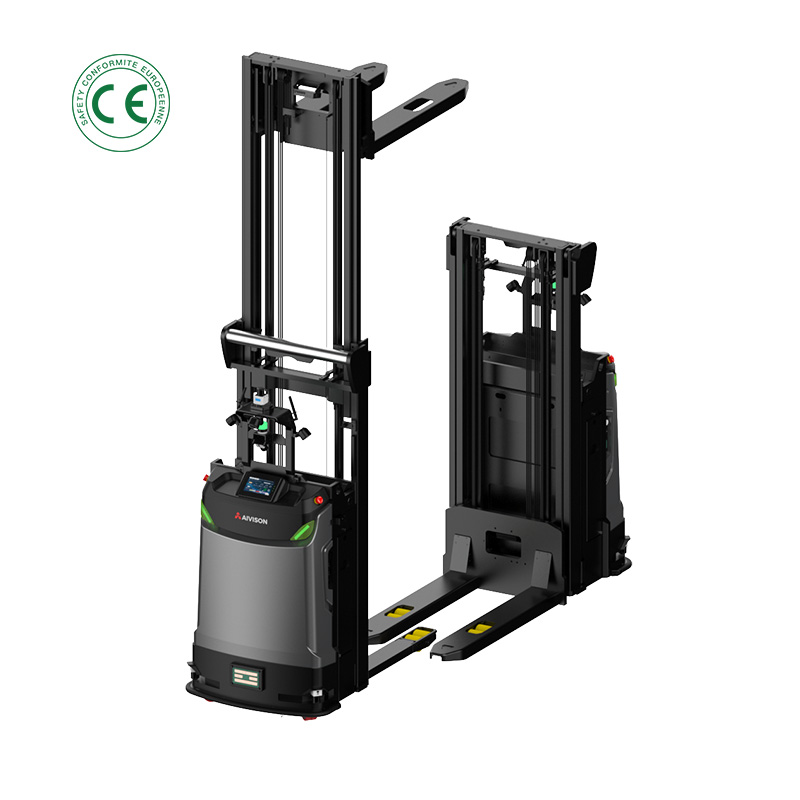
Factory AMR Robot AGV Robot Laser 2000kg Forklift AGV for Industrial Material Handling
Heavy-payload laser forklift AMR for pallet transfer, line-side replenishment and raw-material movement where stability and repeatable fork entry matter.
View product →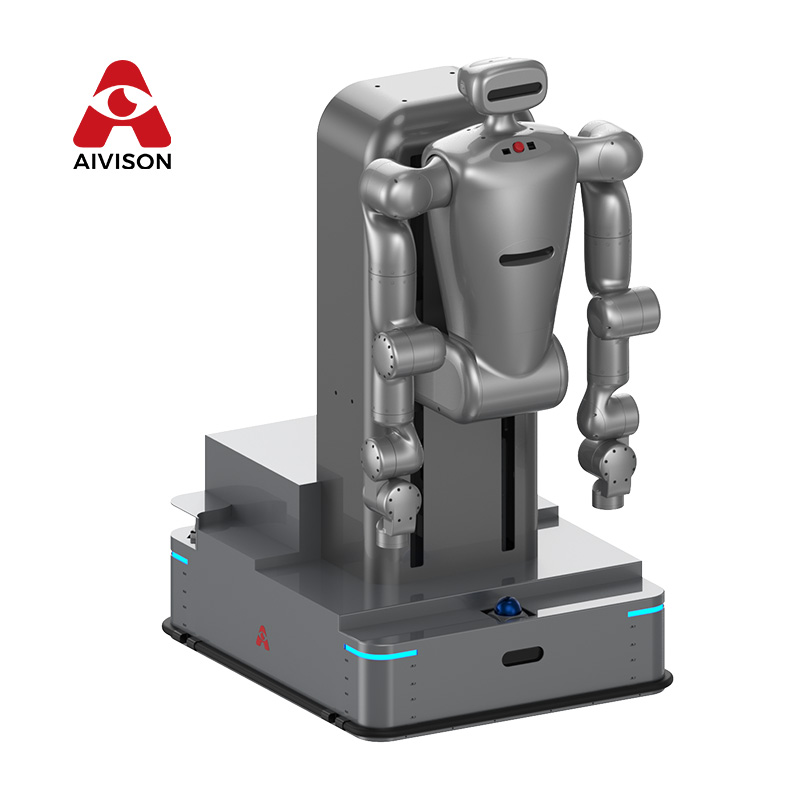
Omnidirectional Mobile Manipulator AMR Dual 7-DOF Arms ±0.03 mm Repeatability Laser SLAM Humanoid Robot Base
Composite mobile robot platform for precision assembly, pick-and-place and humanoid robot research with dual 7-DOF arms and high-repeatability motion.
View product →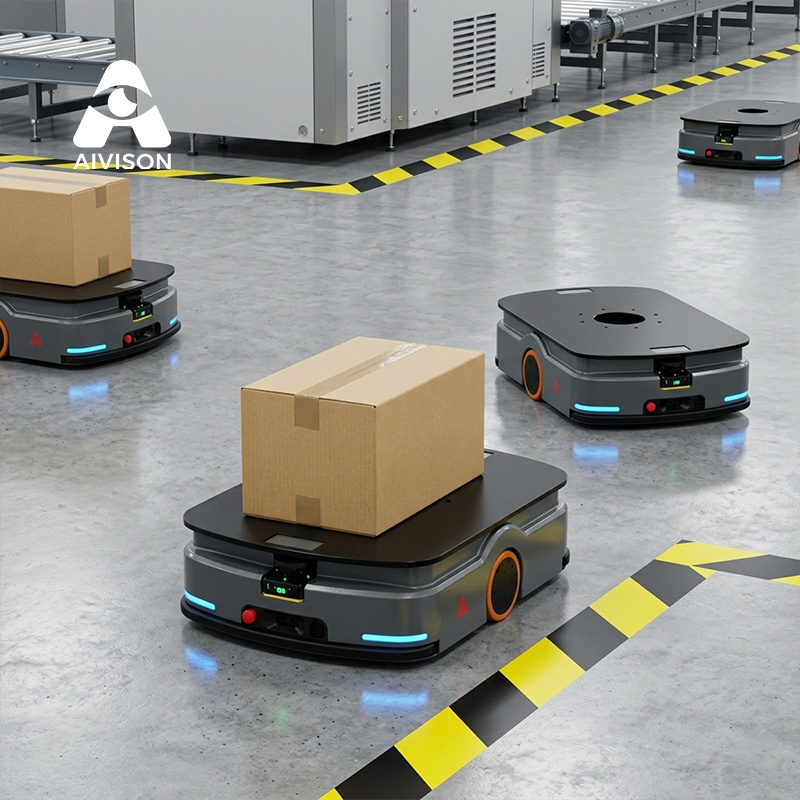
Autonomous Mobile AMR Robot 300kg Payload Laser Guided AGV for Carry Goods in Factory
Compact AMR for light material handling in narrow aisles, electronics lines and assembly cells where full-size forklifts are impractical.
View product →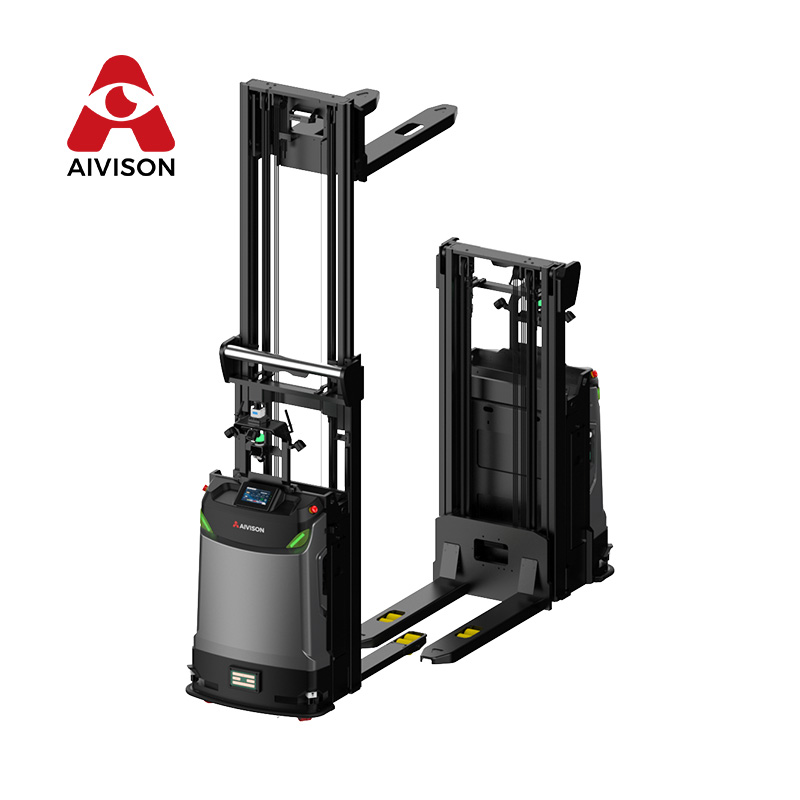
High Precision AGV Forklift Full Servo Motor Controlled Laser Forklift with Heavy Load 2000kg
Servo-controlled autonomous forklift for demanding pallet handling, offering fine motion control and repeatable heavy-load transfer.
View product →
Omnidirectional Humanoid Robot Chassis Dual 7-DOF Arms Laser SLAM Autonomous Warehouse AMR Mobile Platform
Omnidirectional warehouse AMR platform combining mobile navigation and dual-arm manipulation for flexible automation research and integration.
View product →
Humanoid Robot Chassis Dual 7-DOF Arms Laser SLAM Omnidirectional Navigation ROS2 Open Platform AMR
Open-architecture humanoid AMR for integrators who need ROS2 access, omnidirectional motion and a configurable dual-arm payload.
View product →
Aivison Stacker Truck Pallet Stacker Forklift AGV 1.5 Ton Autonomous Forklift Smart Deliver AMR Robot
Space-efficient autonomous stacker truck for pallet movement, stacking and smart delivery in warehouses with constrained operating zones.
View product →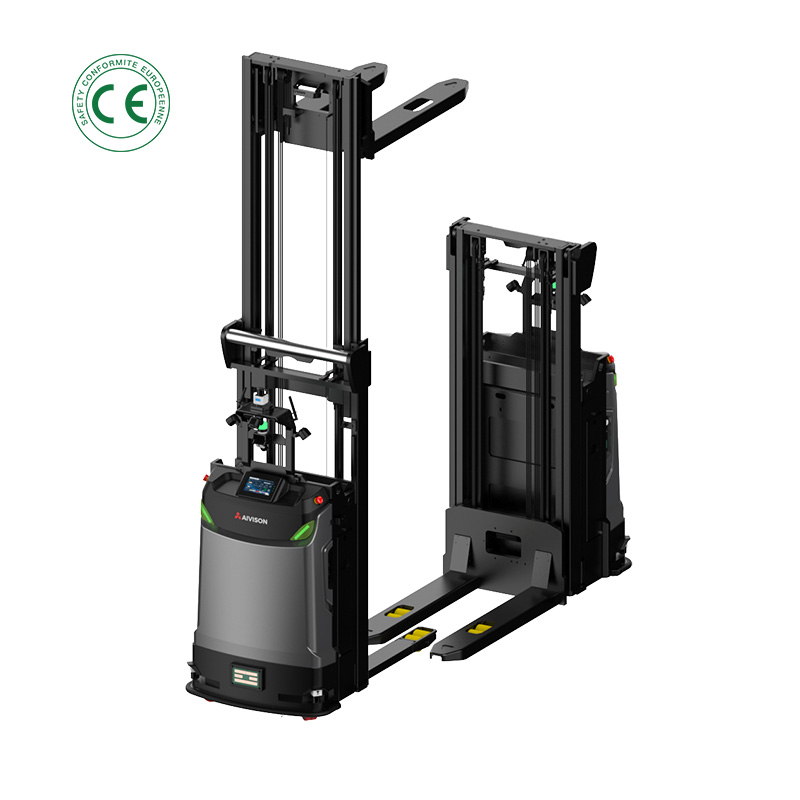
High-performance Intelligent Smart Automated Guided Vehicle 2000kg AMR Robot
High-capacity intelligent AMR for repetitive warehouse and production-line transfer, with customization options for top modules and fleet control.
View product →Need a non-standard chassis, roller conveyor, jacking unit, forklift fork or 6-axis arm? Share your load, layout, throughput and docking precision. Our engineers will recommend a configurable platform or an OEM adaptation.
Contact UsWhat Buyers Really Mean by Custom OEM Mobile Robot Manufacturer & Suppliers
High-intent searchers are no longer looking for a catalog robot with a new paint color. They are looking for a manufacturing partner who can align mobility, navigation, safety, top-module mechanics and fleet software with a real production process.
A custom mobile robot program usually begins with a constraint that a standard platform cannot solve: a rack with an unusual footprint, a docking station that requires ±2 mm handover, a cleanroom aisle with mixed foot traffic, a production machine that must exchange a carrier automatically, or an integrator who needs an OEM chassis with documented interfaces. The supplier’s value is therefore not only the robot itself, but the engineering discipline used to translate a process into a reliable autonomous movement system. This is the information gain serious buyers need: which navigation accuracy is justified, which top module reduces manual handling, and which evidence proves the supplier can support the fleet after commissioning.
Chassis & Payload Engineering
Payload, center of gravity, floor condition and aisle width determine the base. OEM adaptation can change deck height, wheel layout, bumper design and load support without losing the proven navigation core.
Top Module Integration
Jacking units, roller conveyors, forklift forks and 6-axis arms should be treated as process interfaces. A good supplier documents the handover logic so the AMR can connect directly with machines and racks.
Navigation Stack Choice
Laser SLAM matches most transfer work at ±5 mm. QR-assisted docking reaches ±2 mm where stations demand it. Composite arms add a further layer of precision for assembly and test handover.
Fleet Software & Charging
Multi-robot scheduling over indoor Wi-Fi, traffic control and compatible smart charging docks matter as much as the vehicle. The right fleet design protects uptime during peak production periods.
Mobile Robot Procurement Trends Shaping 2025–2030 Supplier Selection
Buyers are moving from simple unit-price comparison to a lifecycle view: deployment speed, integration risk, fleet coordination, spare-parts continuity and verified supplier capability. The following trends are especially relevant for OEM mobile robot procurement teams and system integrators.
1. Total Cost of Ownership Replaces Sticker Price
Procurement teams now compare deployment labor, floor modification, fleet software, charging ratio, spare-parts lead time and uptime risk. A lower-priced robot with a difficult integration can cost more over five years than a properly specified OEM platform.
2. Hybrid Precision Architectures Become Standard
Using natural-feature laser SLAM for most routes and QR labels only at precision stations is a practical way to control infrastructure cost. Buyers increasingly ask suppliers to prove where ±5 mm is sufficient and where ±2 mm is genuinely required.
3. Mixed Fleets Need an Integrator-Ready API
Factories rarely automate every process at once. Procurement leaders prefer platforms that can be scheduled with other robots and software, with clear interfaces for integrators rather than a closed black-box fleet.
4. Modular Customization with Lower MOQ
OEM buyers want modular changes rather than a fully new vehicle: deck height, rollers, forks, jacking mechanism, sensors and branding. A manufacturer that can reuse a proven chassis while adapting the process interface reduces both lead time and engineering risk.
5. Verified Supplier Evidence Becomes Mandatory
Third-party onsite assessment, trade records and Fortune 500 supply evidence help procurement teams reduce risk. Buyers should ask for certification scope, not only a logo, and verify that the assessment covers the actual manufacturing site.
6. Serviceability Drives Long-Term Confidence
Autonomy is only valuable when the fleet stays available. Procurement checklists now include remote diagnostics, spare-parts strategy, onboarding documentation, local service response and training for the customer’s maintenance team.
Where Mobile Robot Technology Is Moving Next
The strongest development direction is not “more autonomy” in the abstract. It is precision matched to the process, modular mechanics that solve a real handover problem, and fleet intelligence that makes mixed automation dependable.
From Tracks to Natural-Feature SLAM
Factories want route flexibility without magnetic tape, reflectors or full-floor QR codes. Laser SLAM on natural features reduces installation work and lets layout changes happen faster, while QR assist remains available only where docking precision justifies it.
From Mobile Base to Mobile Manipulation
Composite robots combine mobility with 6-axis arms, roller conveyors and lifting mechanisms. This closes the gap between transport and machine tending, especially in semiconductor, medical device, electronics and precision assembly workflows.
From Single Robot to Orchestrated Fleet
Fleet scheduling over indoor Wi-Fi, traffic control, automatic charging and task prioritization are becoming purchasing requirements. Buyers should ask how the fleet behaves during peak demand, blocked aisles and charging cycles.

A Shenzhen Manufacturer Built for OEM Customization and Integrator Support
Shenzhen Marnix Intelligent Technology Co., Ltd. combines about ten years of AGV engineering experience with a complete mobile robot portfolio: laser SLAM AMRs, jacking robots, smart forklifts, pallet robots, composite mobile robots and compatible intelligent charging docks. For buyers, this means one engineering team can evaluate the chassis, top module, navigation accuracy and fleet software together rather than forcing a fragmented multi-vendor integration.
The company serves both end users and system integrators, with deployments across semiconductor, 3C electronics, lithium battery, photovoltaic, automotive parts, PCB, textile and medical device industries. More than 200 manufacturers across three continents have used these platforms, and the supplier has been independently assessed by TÜV Rheinland, with Fortune 500 supply evidence and verified multispecialty supplier records available for procurement review.
- Accuracy matched to task: ±5 mm laser SLAM standard, ±2 mm with QR assist, and ±0.05 mm composite-arm repeatability.
- Manufacturer-level customization: chassis, deck, jacking unit, roller conveyor, forklift forks, 6-axis arm and fleet integration.
- Quality protocol: multi-stage intelligent inspections and operational stress testing before shipment.
- Fleet ecosystem: indoor Wi-Fi scheduling, traffic control, automatic charging and compatible smart charging docks.
Proven in Mixed-Traffic Environments Where Uptime Matters
Mobile robots deliver the most value when they operate safely around people, forklifts and changing production conditions. Marnix platforms are engineered for dynamic obstacle avoidance, millimeter-level docking, 24/7 duty cycles and automatic charging. The same navigation core supports warehouse transfer, high-shelf storage, line-side delivery and production-machine handover.
Warehouse & High-Shelf Logistics
Continuous material flow between receiving, storage and dispatch, with precision options for high-bay docking.
Production-Line Material Flow
Line-side delivery and carrier exchange that help stabilize takt time across shifts and reduce manual walking.
Semiconductor, 3C & Medical
Clean, repeatable transport and composite manipulation for precision assembly, inspection and machine tending.
Lithium Battery, PV & Automotive
Heavy-load pallet handling, rack lifting and smart forklift delivery in demanding industrial environments.

How to Evaluate a Custom OEM Mobile Robot Supplier
Procurement teams get better proposals when they share the right technical inputs early. The same checklist also exposes whether a supplier is genuinely engineering-led or simply reselling a standard platform.
1. Load, Footprint & Center of Gravity
Give the maximum weight, carrier dimensions, rack footprint and center of gravity. These inputs determine payload class, deck height, wheel layout and safety margins.
2. Site Layout & Traffic
Provide a CAD drawing or sketch with aisle widths, doors, slopes, elevator or lift points, and areas where people, forklifts and robots will share space.
3. Throughput & Peak Periods
Missions per hour, peak cycles and charging windows determine fleet size and dock count. A supplier should model peak behavior, not only average throughput.
4. Docking Precision by Station
Separate normal transfer routes from stations needing ±2 mm handover. Avoid adding QR labels or infrastructure everywhere when the process only needs high precision at a few points.
5. Wi-Fi & Fleet Integration
Check access-point coverage and ask how the fleet controller assigns tasks, handles blocked routes and coordinates charging. Integrators should review API and documentation scope.
6. Equipment Interfaces & Service
List conveyors, machines, shelving and top modules the robot must connect to. Confirm spare-parts, training, remote diagnostics and commissioning support before purchase.
Custom OEM Mobile Robot Manufacturer & Suppliers FAQ
These are the questions most frequently raised by factory buyers, automation engineers and system integrators during initial supplier evaluation.
What does “custom OEM mobile robot” actually mean?
It means the supplier adapts a proven robot platform to your process instead of forcing a standard catalog model. Typical changes include deck height, load interface, jacking mechanism, roller conveyor, forklift forks, 6-axis arm, sensor layout, branding, fleet logic and documentation. The goal is to reduce integration work and make the robot behave like part of your production equipment.
What navigation accuracy can Marnix AMRs achieve?
Using laser SLAM on natural features, the AMRs reach ±5 mm positioning without magnetic tape, reflectors or floor QR codes. Adding a QR code scanning camera raises docking accuracy to ±2 mm where stations require it. Composite robots with a 6-axis arm can reach ±0.05 mm repeatability for precision assembly and machine tending.
Do I need to modify my factory floor before deployment?
No for standard laser SLAM operation. The robot maps the existing environment, so auxiliary tracks and most floor codes are not required. QR labels are only added at precise docking stations when the handover process genuinely needs ±2 mm accuracy. This mixed approach controls infrastructure cost and keeps route changes easier.
Can you integrate a robotic arm, roller conveyor or jacking unit?
Yes. Marnix customizes chassis and top modules including jacking units, roller conveyors, forklift forks and 6-axis robotic arms so the robot can connect directly with production equipment. The engineering discussion should include the load interface, handover height, communication protocol and safety requirements.
How many robots will my project need?
Fleet size depends on missions per hour, travel distance, elevator or door constraints, charging windows and peak demand. A reliable proposal models peak throughput rather than average movement. More robots are not automatically better; the right number balances utilization, traffic flow and charging capacity.
How are multiple robots coordinated and charged?
An intelligent scheduling system manages the fleet over indoor Wi-Fi, handling simultaneous task assignment, traffic control and automatic charging through compatible smart charging docks. Buyers should review how the system behaves during peak hours, blocked aisles and charger occupancy.
Which industries are the best fit for these mobile robots?
Common deployments include semiconductor, 3C electronics, lithium battery, photovoltaic, automotive parts, PCB, textile and medical device manufacturing. The strongest fit is a process with repetitive material movement, defined pick-up and drop-off points, and a need for traceable, consistent delivery.
What supplier evidence should I verify before purchase?
Review third-party verification such as the TÜV Rheinland onsite assessment, trade records, Fortune 500 supply evidence, credit index and transaction history where available. Also ask for application references, spare-parts commitments, commissioning documentation and the training plan for your maintenance team.
Ready to Define Your Custom Mobile Robot Program?
Share your payload, layout drawing, throughput target, docking precision and equipment interface. Our engineers will recommend the right laser SLAM AMR, jacking robot, smart forklift or composite mobile robot configuration and respond with a practical project evaluation.
Shenzhen Marnix Intelligent Technology Co., Ltd. · Room 102, Building P, No. 163 Ban Xuegang Avenue, Shenzhen, Guangdong, China · info@marnixbot.com