8 Proven Mobile Lifting Robot Platforms for OEM, Wholesale and Integrator Programs
The range below covers stacker AGVs, autonomous forklifts, heavy-load pallet AMRs, omnidirectional humanoid platforms and warehouse logistics robots. Each product link is preserved for direct evaluation, while every platform can be discussed as a single unit, mixed-container program or OEM batch.
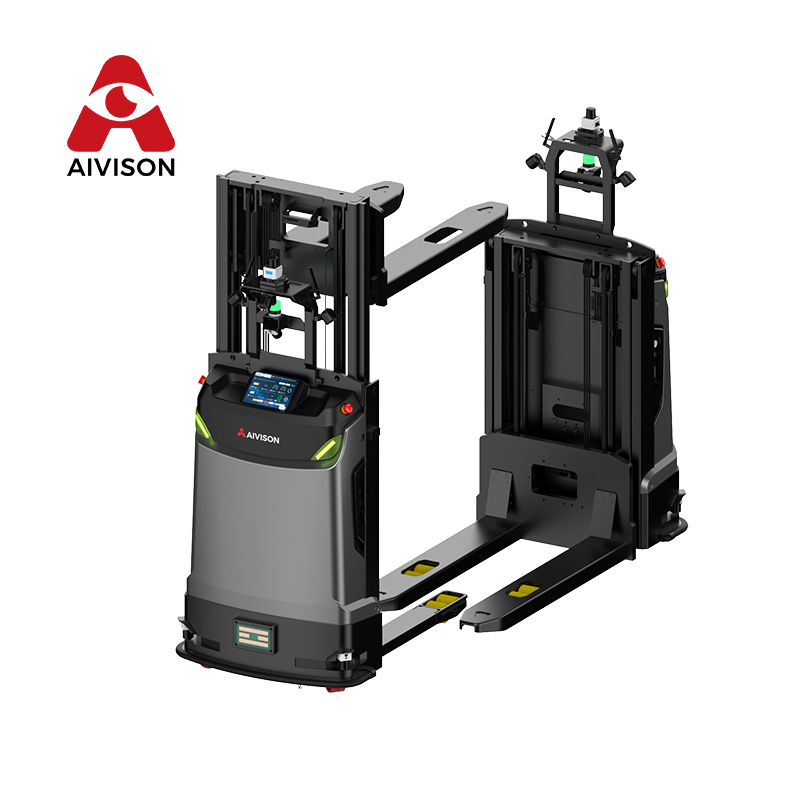
New Warehouse Autonomous Cars agv Robot 2000kg Load Capacity Stacker agv Robot
A 2,000 kg stacker AGV for warehouse pallet lifting and transfer. A practical recommendation for distributors who need a recognizable stacker format with laser SLAM mapping and optional QR docking.
- 2,000 kg
- Stacker AGV
- Laser SLAM

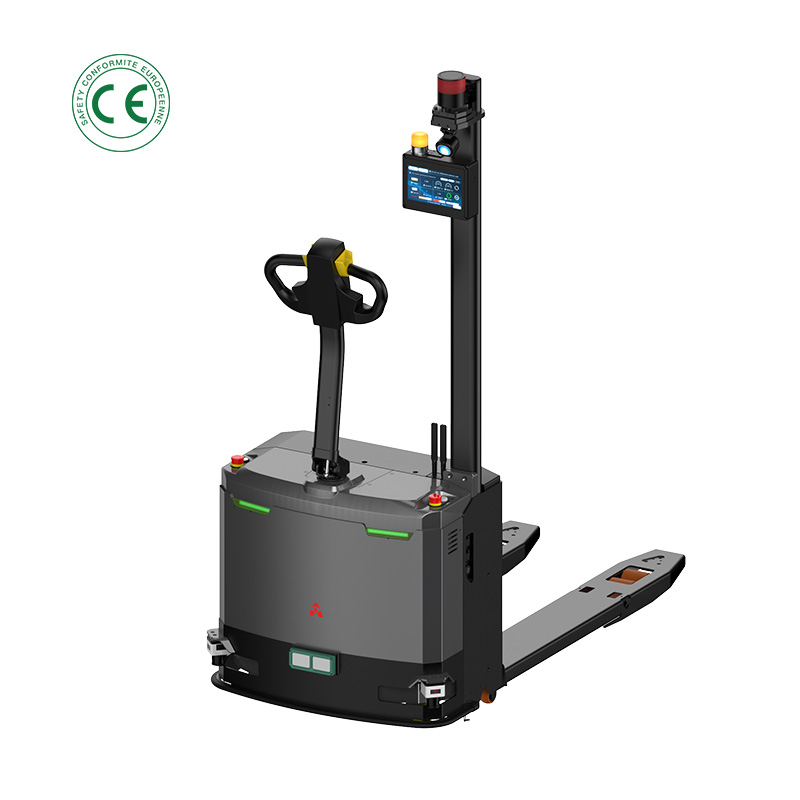
Aivison Stacker Truck Pallet Stacker Forklift Agv 1.5 Ton Autonomous Forklift Smart Deliver AMR Robot
A 1.5-ton autonomous forklift AMR for pallet delivery, line-side replenishment and repetitive warehouse routes. Suitable for OEM branding and mixed-fleet wholesale programs.
- 1.5 ton
- Pallet stacker
- Autonomous delivery
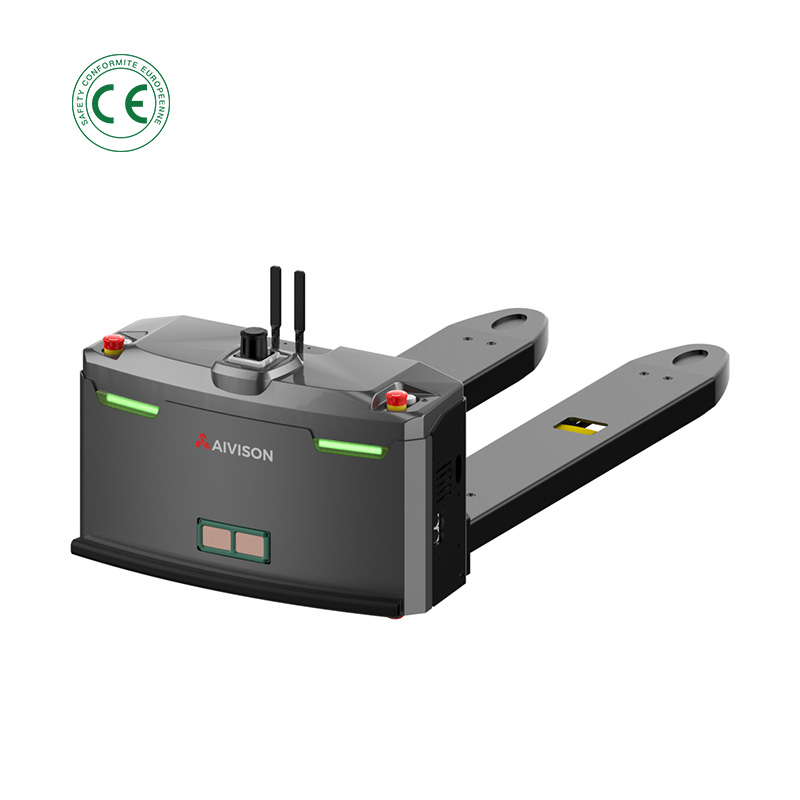
Automatic Handling CE Certificate 2000kg Forklift Robot Vehicle Laser AGV for Large Load Goods-carrying
A 2,000 kg laser AGV forklift for larger loads and export-oriented projects that need clear documentation, stable material flow and a robust autonomous vehicle format.
- CE mention
- 2,000 kg
- Laser AGV
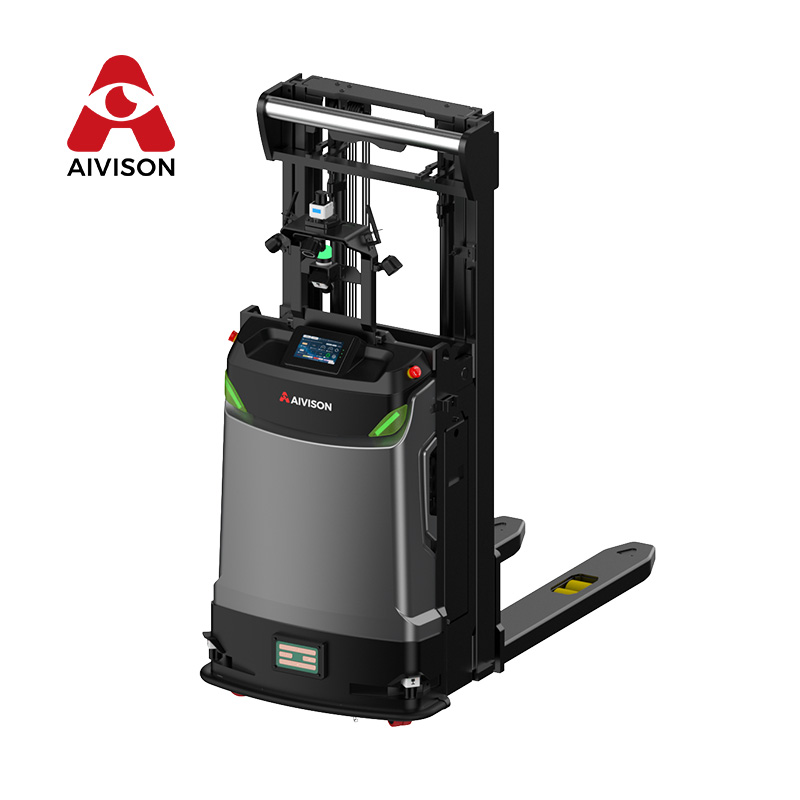
Heavy Load 2000KG Load Forklift Laser Guide AMR for Warehouse Pallet
Recommended for warehouse pallet handling where 2,000 kg loads and repeated fork entry require stable navigation, clear safety zones and dependable after-sales support.
- 2,000 kg
- Laser guided
- Pallet AMR
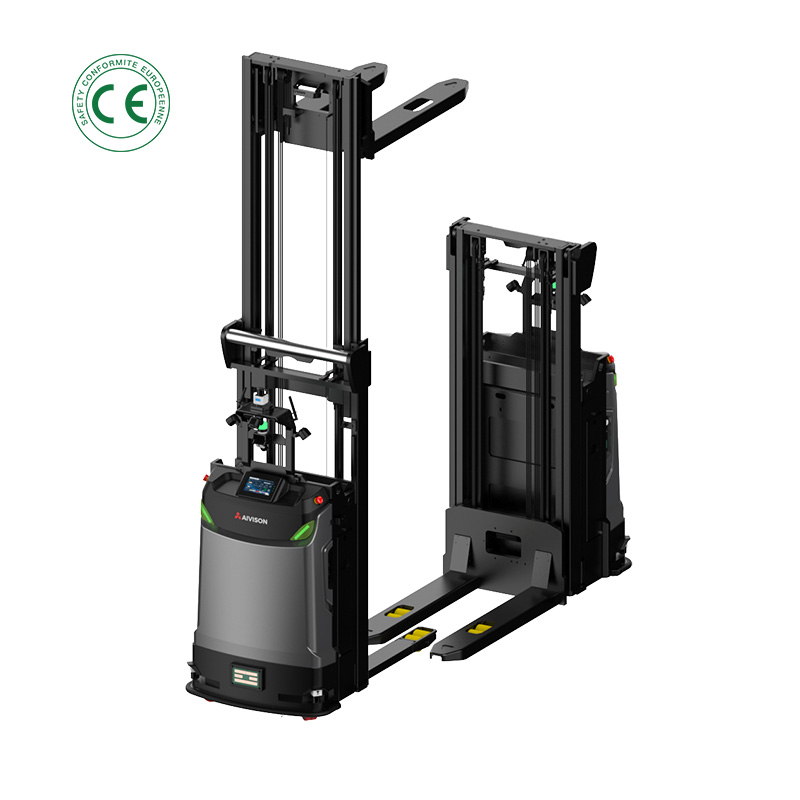
High-performance Intelligent Smart Automated Guided Vehicle 2000kg AMR Robot
A general-purpose 2,000 kg intelligent AMR platform for smart factory logistics, long-distance transfer and repetitive material movement across mixed-traffic zones.
- 2,000 kg
- AGV / AMR
- Smart factory

Humanoid Robot Chassis Dual 7-DOF Arms Laser SLAM Omnidirectional Navigation ROS2 Open Platform AMR
Built for integrators, research teams and advanced automation labs that need a ROS2 open platform, dual 7-DOF arms and omnidirectional navigation in one mobile chassis.
- Dual 7-DOF
- ROS2
- Laser SLAM

Omnidirectional Humanoid Robot Chassis Dual 7-DOF Arms Laser SLAM Autonomous Warehouse AMR Mobile Platform
An omnidirectional humanoid mobile platform for warehouse research, flexible manipulation studies and OEM projects that need open integration rather than a fixed top module.
- Omnidirectional
- Dual-arm platform
- Warehouse AMR
AMR Automated Warehouse Robot Logistics Automatic Industrial Logistics Robots AMR Robot
A warehouse logistics AMR for receiving, storage and dispatch flows. A sensible entry point for wholesalers building a repeatable catalog of autonomous handling platforms.
- Warehouse logistics
- Automated handling
- Industrial AMR
How to Shortlist These Eight Models
For 1.5–2 t pallets and stacker-style handling, start with models 1–4 and 8. For ROS2 research, dual-arm manipulation or omnidirectional development, compare models 6 and 7. For general smart-factory transfer at 2,000 kg, model 5 is the fastest starting point. If you are an exporter, wholesaler or system integrator, Marnix can engineer the chassis interface, lifting unit, roller conveyor, forklift forks or arm package around your target application.
What Exporters and Wholesalers Are Buying Next
The buying question is shifting from “which robot is cheapest?” to “which platform can be repeated, serviced and integrated across multiple customer sites?” These six procurement signals matter when evaluating a custom OEM mobile lifting robot exporter and wholesalers.
Modular Platforms Over One-Off AGVs
Wholesale buyers increasingly prefer a proven chassis and navigation core that can accept different top modules. That approach shortens quotation, engineering and spare-parts planning while keeping the robot recognizable across a catalog.
TCO and Uptime Replace Lowest Price
Procurement teams now compare charging strategy, maintenance access, spare-parts availability and fleet software support. A lower unit price can be expensive if a single docking failure stops a production line.
Interoperability and Open Scheduling
Fleet management over indoor Wi-Fi, open APIs and ROS2-ready platforms are becoming selection criteria. Exporters need robots that can join an existing warehouse management or manufacturing execution system without a closed automation island.
Hybrid Precision Budgets
Rather than installing QR codes everywhere, experienced buyers use trackless SLAM for most travel and add QR-assisted docking only at precision stations. This protects floor flexibility and reduces label maintenance.
Regional Service Readiness
Wholesalers are asked for local training, spare-parts kits, remote diagnostics and clear escalation paths. An exporter with a manufacturer engineering team behind it can support these commitments more consistently.
Documentation and Traceability
Customs, safety reviews and end-customer audits require consistent documentation. Export-ready projects benefit from defined bills of material, test records, packaging standards and third-party credentials such as TÜV Rheinland onsite assessment.
Where Mobile Lifting Robots Are Heading
Custom OEM mobile lifting robots are becoming more modular, more software-defined and more closely tied to real production interfaces. These directions are especially relevant for wholesalers who need a future-proof catalog rather than a single-purpose machine.
Low-Profile, High-Payload Lifting
Jacking and lifting robots are being engineered to move heavier racks and pallets while keeping a low chassis profile. The value is not only payload, but the ability to fit existing rack footprints and aisle widths without rebuilding the warehouse.
LiDAR SLAM + QR + Vision Fusion
Natural-feature SLAM provides flexible navigation at ±5 mm, QR cameras raise docking to ±2 mm where required, and vision assistance supports pallet entry and station handover. Hybrid sensing lets buyers pay for precision only where the process needs it.
Omnidirectional and Humanoid Platforms
Omnidirectional chassis and dual 7-DOF arm platforms are moving from research labs into integrator projects. They create a development base for manipulation, machine tending and flexible automation where a fixed conveyor top module is too limiting.
Composite Robots with Real Interfaces
Mobile bases are increasingly combined with 6-axis arms, roller conveyors, jacking units or forklift forks. The winner is not the robot with the most features, but the one that connects directly to production equipment at the right repeatability and cycle time.
Software-Defined Fleet Coordination
Intelligent scheduling over indoor Wi-Fi, automatic charging and coordinated traffic control are becoming standard expectations. The robot is now part of a fleet system, not a standalone vehicle, which changes how OEM and wholesale partners specify projects.
Serviceability and Export Packaging
Design for transport, battery handling, spare-parts access and remote support is growing in importance. Exporters need platforms that survive shipping, arrive with clear documentation and can be maintained by local technicians with manufacturer support.
Match Navigation Accuracy to the Station, Not the Whole Factory
Over-specifying precision is one of the most common procurement mistakes in mobile robot projects. Use this matrix to separate flexible travel from precision docking and avoid unnecessary floor labels, reflectors or calibration work.
Laser SLAM on Natural Features
Best for warehouse transfer, line-side delivery and sites with frequent layout changes. No magnetic tape, reflectors or floor QR codes are required for standard navigation.
- Trackless mapping
- Fast layout changes
- Low floor infrastructure cost
SLAM + QR Code Camera
Use QR labels only where handover precision matters, such as high-shelf storage, precision docking or wafer handling. This hybrid approach keeps most of the route flexible.
- QR at critical stations
- Higher docking reliability
- Balanced infrastructure cost
Composite Robot with 6-Axis Arm
Intended for semiconductor, medical device and other high-precision assembly tasks where the mobile robot must synchronize with a robotic arm and station calibration.
- Arm-level repeatability
- Station calibration required
- Advanced integration projects
Why Marnix Is a Practical OEM Partner for Exporters and Wholesalers
Shenzhen Marnix Intelligent Technology Co., Ltd. draws on about ten years of AGV engineering experience to build autonomous mobile robots that drop into existing factories with minimal disruption—for end users and for the system integrators who serve them.
Years in AGV Engineering
Shenzhen-based R&D and manufacturing experience.
Manufacturers Served
Across three continents, per company profile.
Continents with Deployments
Supporting global end users and integrators.
Core Industries
From semiconductor cleanrooms to textiles and medical devices.
Manufacturer-Level Customization
Marnix customizes chassis, payload and top mechanisms such as jacking units, roller conveyors, forklift forks and 6-axis robotic arms. This is the key advantage for an OEM program: the robot can be matched to a process rather than forcing the process to fit a standard model.
Precision Without Unnecessary Floor Rework
Laser SLAM reaches ±5 mm on natural features without magnetic tape, reflectors or floor QR codes. Where ±2 mm docking is required, a QR code scanning camera can be added. Composite robots with a 6-axis arm reach ±0.05 mm repeatability for demanding production tasks.
Verified Quality and Supply Credentials
Marnix has undergone an onsite supplier assessment by TÜV Rheinland, supplies a Fortune 500 company through a procurement contract assessed by independent third parties, and is presented as a verified multispecialty supplier with low-MOQ customization and multi-category robot procurement capability.
Fleet, Charging and Integrator Support
Robots are coordinated by an intelligent scheduling system over indoor Wi-Fi, enabling simultaneous task assignment, traffic control and automatic charging through compatible smart charging docks. Beyond end users, Marnix supplies robots and complete solutions to system integrators building automation projects worldwide.


Manufacturer Profile
Shenzhen Marnix Intelligent Technology Co., Ltd., Room 102, Building P, No. 163 Ban Xuegang Avenue, Shenzhen, Guangdong, China. Email: info@marnixbot.com. Applications include semiconductor, 3C electronics, lithium battery, photovoltaic, automotive parts, PCB, textile and medical device industries.
What to Prepare Before Requesting an OEM Mobile Lifting Robot Quote
From project experience, these six inputs determine most of the robot selection and quotation accuracy. Sharing them upfront shortens evaluation from weeks to days.
Load Profile
Maximum weight, footprint, center of gravity, rack or pallet type, and whether the load is lifted, towed or conveyed.
Site Layout
A CAD drawing or sketch with aisle widths, doors, slopes, elevator or lift points, and areas shared with people or forklifts.
Throughput Target
Missions per hour, peak periods and shift pattern. This sets fleet size, charging dock count and battery strategy.
Docking Precision
Where ±5 mm is sufficient and where ±2 mm QR assist or ±0.05 mm composite-arm precision is genuinely required.
Wi-Fi and IT
Existing access points, coverage quality, fleet-management integration and any cybersecurity or network segmentation requirements.
Equipment Interfaces
Conveyors, machines, shelving and handover stations the robot must connect to, plus top-module requirements and documentation needs.
Common Questions from Exporters, Wholesalers and Integrators
Direct answers from the engineering team at Shenzhen Marnix Intelligent Technology Co., Ltd.
What is a custom OEM mobile lifting robot?
It is an autonomous mobile robot built around a lifting, jacking, forklift or conveyor interface rather than a fixed payload. OEM customization can include chassis dimensions, payload, top module, branding, software interfaces and documentation.
Can you supply wholesale quantities or mixed models?
Yes. Projects can be discussed as single units, mixed-model wholesale batches or OEM programs. Mixed fleets use the same SLAM navigation core and fleet-management approach, which helps distributors support multiple customer applications.
What navigation accuracy do Marnix robots achieve?
Laser SLAM on natural features reaches ±5 mm without magnetic tape, reflectors or floor QR codes. Adding a QR code scanning camera raises docking accuracy to ±2 mm, and composite robots with a 6-axis arm reach ±0.05 mm repeatability.
Do I need to modify my factory floor?
No. Standard laser SLAM maps the existing environment, so auxiliary tracks and floor codes are not required. QR labels are only added at stations where ±2 mm docking precision is needed.
How are multiple robots coordinated?
An intelligent scheduling system manages the fleet over indoor Wi-Fi, handling simultaneous task assignment, traffic control and automatic charging through compatible smart charging docks.
Which industries use these robots?
Semiconductors, 3C electronics, lithium batteries, photovoltaics, automotive parts, PCB, textiles and medical devices, serving both end users and system integrators.
How do you support export and after-sales projects?
Support can include product documentation, packaging coordination, spare-parts planning, remote technical guidance and integration support. Third-party verification such as TÜV Rheinland onsite assessment and trade records can be reviewed before purchase.
How do I start a project evaluation?
Send payload, floor layout, throughput, docking precision and destination market through the inquiry channel. The engineering team will recommend the right platform, top module, charging strategy and export configuration.
Build a Repeatable OEM Mobile Lifting Robot Supply Program
Share your payload, layout, throughput target, docking precision and destination country. Marnix engineers will map the requirement to a proven chassis, lifting or forklift module, charging strategy and export-ready configuration.