Recommended Lifting AGV & OEM Mobile Robot Systems
Eight field-proven platforms cover light pallet transfer, 1,500–2,000 kg lifting, autonomous forklift handling, warehouse stacking and CE-certified automation. Each configuration can be adapted at chassis, top-module or software level, so end users and integrators can standardize on one fleet architecture.
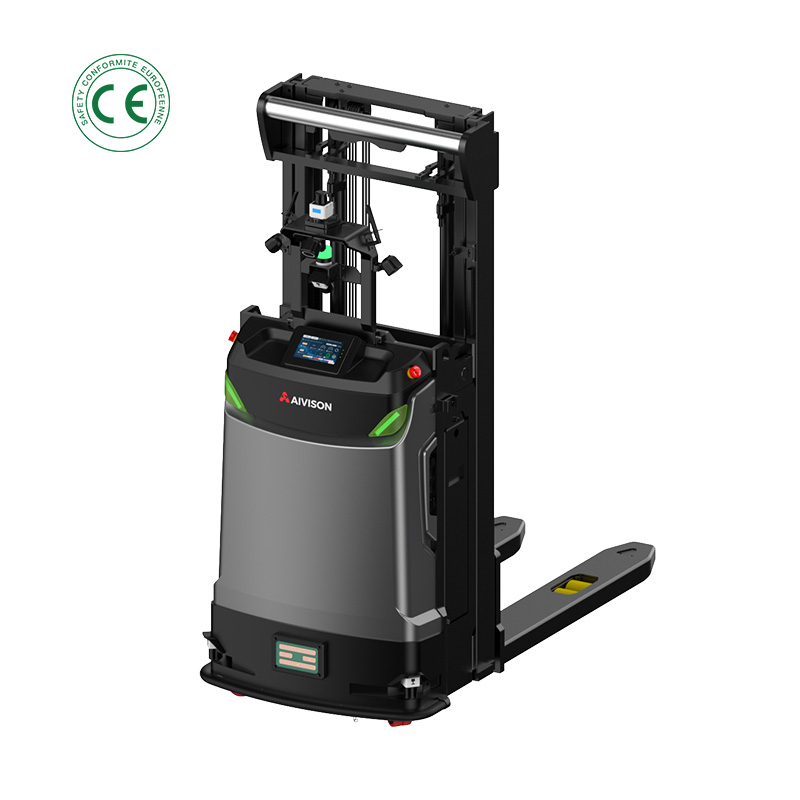
Aivison AMR Robot Vehicle for Automated Warehouse Logistics
A flexible warehouse platform for repetitive pallet and container movement, with laser SLAM mapping, fleet scheduling and OEM top-module options.
- Laser SLAM
- Warehouse logistics
- OEM ready
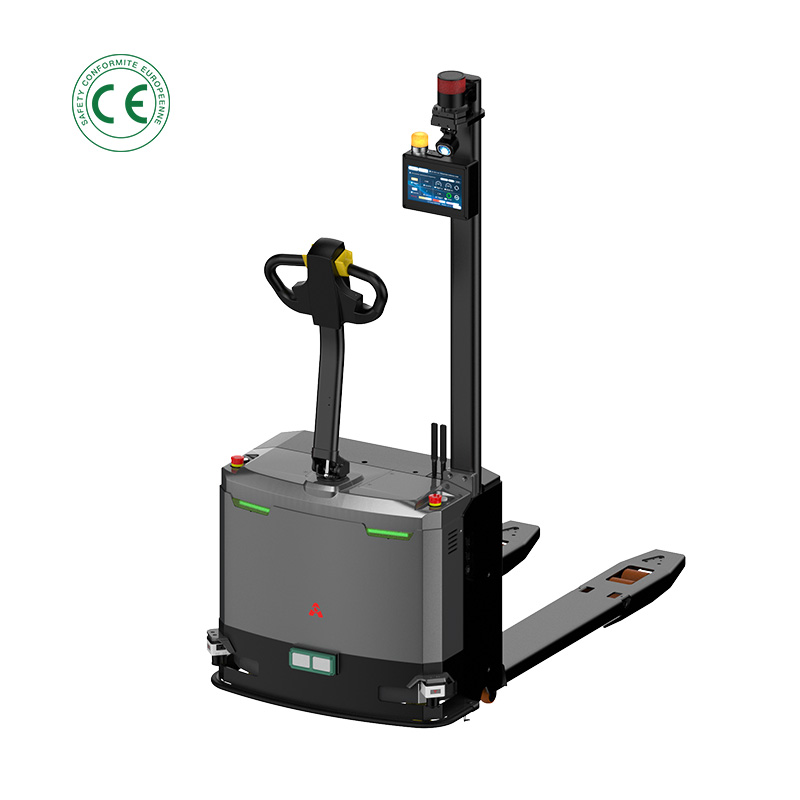
CE-Certification Industrial AMR AGV Robot for Warehouse Automation
A CE-certified autonomous material handling platform for mixed-traffic warehouses that require reliable navigation, safety and multi-robot coordination.
- CE certified
- Autonomous handling
- Fleet ready
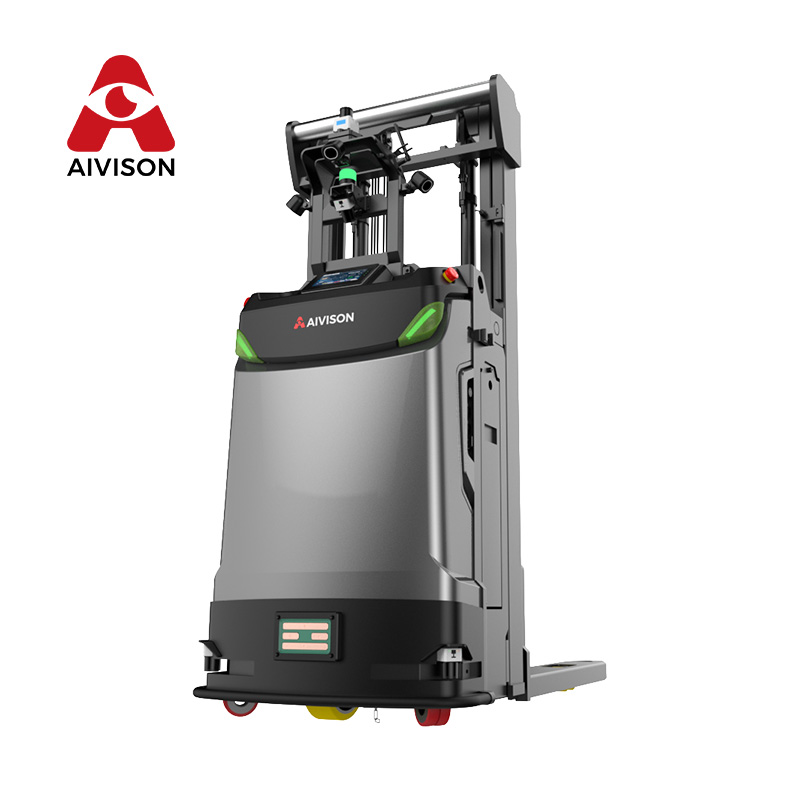
Autonomous Mobile Robots for Warehouse-to-Conveyor Cargo Transport
Designed for dock-to-line and warehouse-to-conveyor handovers where consistent cycle time and reliable load transfer matter.
- Conveyor interface
- Line-side delivery
- ±5 mm SLAM
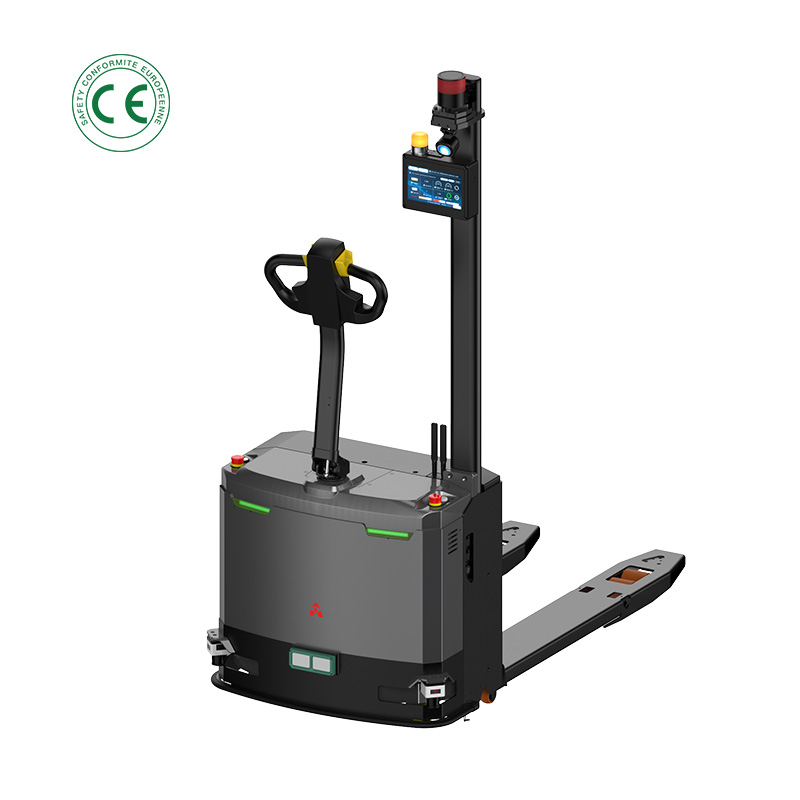
Automatic Handling CE Certificate 2,000 kg Forklift Robot
A heavy-load laser AGV forklift for large goods-carrying, pallet lifting and high-capacity transfer in production and warehouse zones.
- 2,000 kg
- Laser AGV
- Forklift module
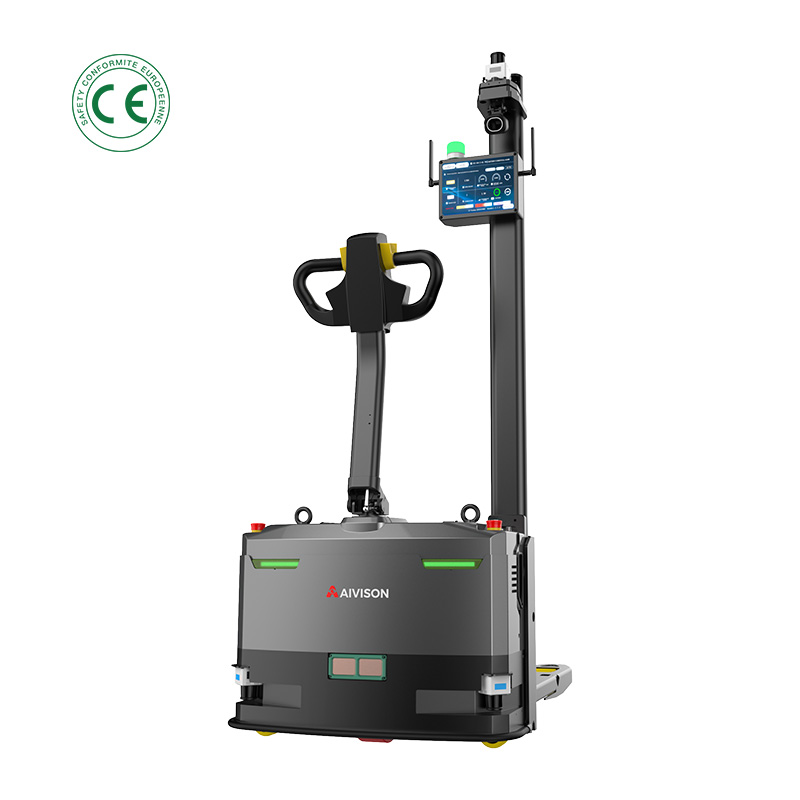
AIVISON CE Laser SLAM 1,500 kg Warehouse Lifting AGV
A 1,500 kg warehouse lifting AGV for rack, shelf and pallet handling where the floor should remain free of tracks, reflectors and dense QR grids.
- 1,500 kg
- CE
- No floor tracks
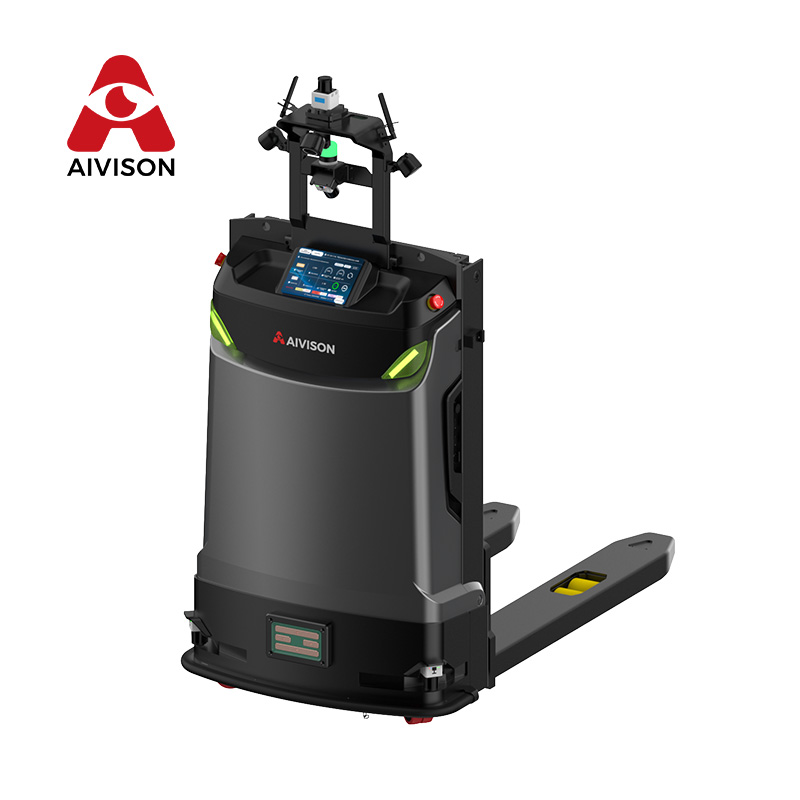
AGV AMR Autonomous Forklift Smart Mobile Transfer Stacker Robot
A smart mobile forklift and stacker platform for automated transfer, stacking and pallet handling in warehouse and production operations.
- Stacker
- AMR / AGV
- Vision assist
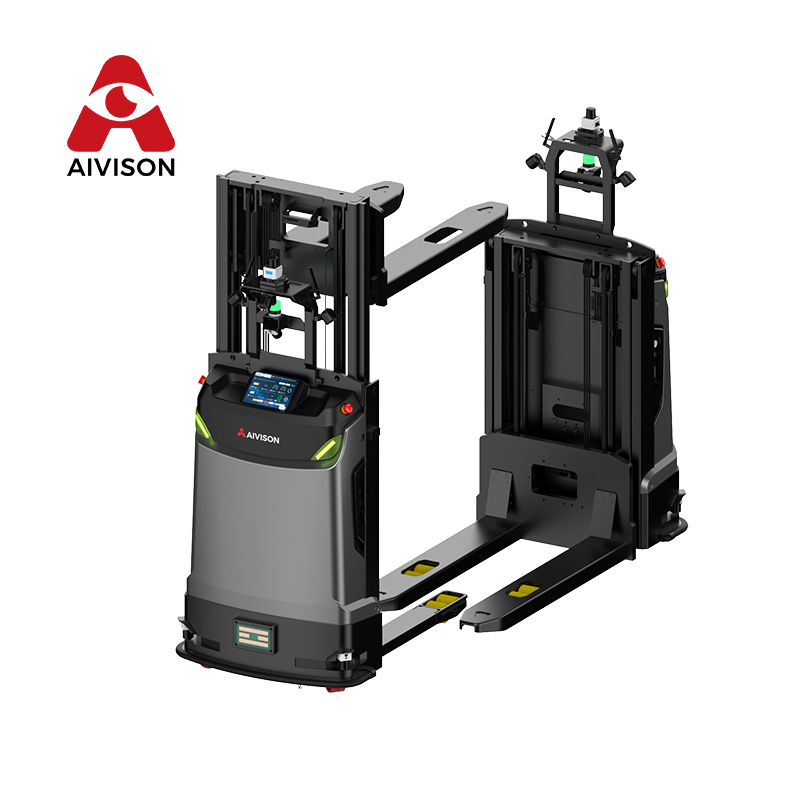
New Warehouse Autonomous 2,000 kg Load Capacity Stacker AGV Robot
A high-capacity stacker AGV for dense storage and repetitive lifting operations, with optional QR-assisted docking where ±2 mm precision is required.
- 2,000 kg
- Stacker
- ±2 mm option
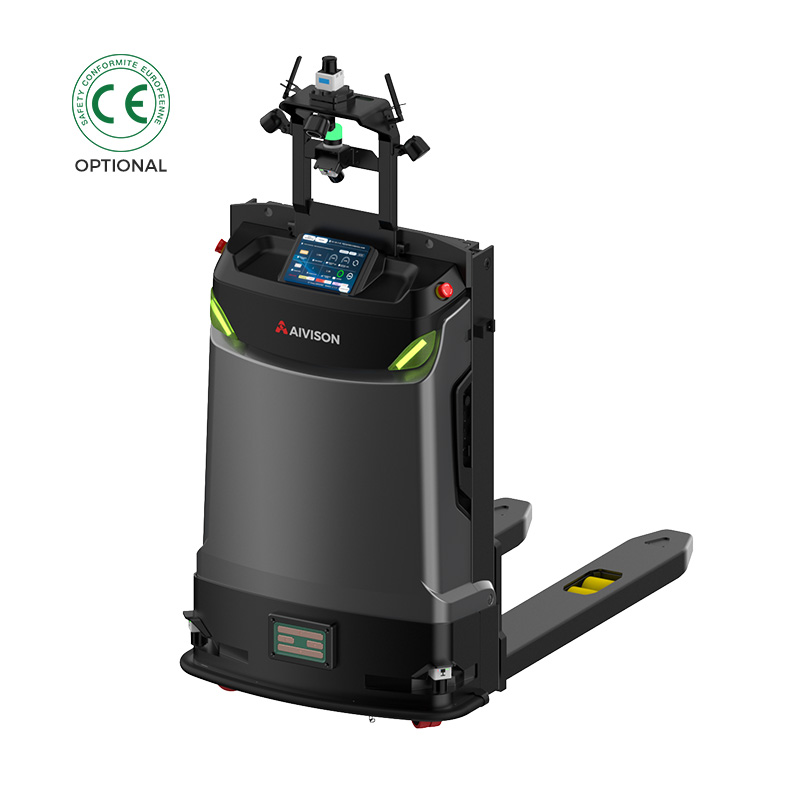
AGV AMR Warehouse Automatic Guided Vehicle 1,500–2,000 kg Forklift
A scalable autonomous forklift platform for mixed pallet sizes, shifting layouts and multi-shift logistics where one fleet standard is preferred.
- 1,500–2,000 kg
- Forklift
- Fleet ready
Years of AGV engineering and manufacturing experience
Laser SLAM navigation without tape or reflectors
QR-assisted docking accuracy where stations require it
Manufacturers served across three continents
Lifting AGVs Are Becoming the Backbone of Flexible Intralogistics
Material handling is no longer a support function hidden at the edge of the factory. In high-mix, low-volume production, the distance between a receiving lane and a line-side station can decide whether a changeover happens in minutes or shifts. Lifting AGVs—autonomous platforms fitted with jacking units, forks, roller conveyors or robotic arms—are becoming the flexible link between fixed automation and manual work. They move racks, pallets, carriers and large components without requiring a conveyor for every route.
From an engineering perspective, the important shift is not the robot itself but the decoupling of navigation from floor infrastructure. Legacy AGV systems relied on magnetic tape, reflectors or a dense grid of QR codes. Laser SLAM uses natural features—walls, pillars, racks and machines—to build a map. That is why a custom lifting AGV can be deployed in an operating factory without stopping production to install tracks. Where a station requires ±2 mm docking, QR labels can be added locally; where a composite robot performs assembly, ±0.05 mm repeatability can be engineered at the station. The result is a precision budget that matches cost and risk to the actual task.
Procurement teams are also changing how they evaluate suppliers. The question is no longer “what payload can the robot carry?” but “can this platform be repeated across sites, integrated with our conveyors and MES, serviced locally, and expanded without a second engineering standard?” This is why manufacturer-level customization matters. A wholesaler can source a standard chassis; an OEM manufacturer can control the chassis, the top-module interface and the fleet software so the next line does not require a new robot architecture.
For buyers, the practical conclusion is straightforward: select a navigation core that can serve multiple vehicle types, then allocate precision by station. This approach reduces floor work, shortens commissioning and preserves the option to scale from one bottleneck cell to a multi-robot fleet.
Precision Architecture: Match Accuracy to the Station
| Configuration | Accuracy | Floor Setup | Best Use |
|---|---|---|---|
| Laser SLAM natural features | ±5 mm | No tape, reflectors or floor codes | Warehouse transfer, line-side delivery, frequently changing layouts |
| SLAM + QR code camera | ±2 mm | QR labels only at critical docking points | High-shelf storage, precision docking, wafer handling |
| Composite AMR + 6-axis arm | ±0.05 mm | Station calibration | Semiconductor, medical device and precision electronics assembly |
Over-specifying the whole factory is one of the most common procurement errors. Use trackless SLAM for transfer routes and reserve high-precision hardware for stations that truly need it.
Why a Verified OEM Lifting AGV Manufacturer Reduces Project Risk
Behind every reliable lifting AGV is a manufacturing process that tolerates real factory conditions: dust, mixed traffic, voltage variation, uneven floors, 24/7 duty and operator misuse. Our Shenzhen engineering and production base combines about ten years of AGV experience with a component-to-system approach.
Full-Spectrum Lifting AGV Portfolio
Jacking robots, smart forklifts, pallet AMRs, composite mobile robots and intelligent charging docks share a common navigation and control architecture. Mixed fleets can be commissioned together rather than integrated after delivery.
SLAM + Vision Fusion and Fleet Scheduling
Laser SLAM reaches ±5 mm without tape or reflectors; a QR camera raises docking accuracy to ±2 mm. Indoor Wi-Fi scheduling coordinates simultaneous task assignment, traffic control and automatic charging.
Manufacturer-Level Customization
As a manufacturer, we adapt chassis, payload, lifting height and top modules—jacking units, roller conveyors, forklift forks and 6-axis arms—so the robot meets production equipment at the correct interface.
Quality Evidence and Integrator Support
Multi-stage intelligent inspection and thousands of operational stress tests target near-zero failure rates. Composite robots achieve ±0.05 mm repeatability for semiconductor and medical-device production.

Independent Verification for First-Time Automation Buyers
Third-party verification reduces first-project risk. Our premises and operations have been assessed onsite by TÜV Rheinland, and our trade records, credit index and transaction level are available for review. We are also a verified supplier to a Fortune 500 company and have served more than 200 manufacturers across three continents.
- TÜV Rheinland onsite assessment for factory and operations
- Verified supplier contract with a Fortune 500 company
- Documented trade history, credit index and transaction level
- Support for end users, system integrators and OEM programs
Procurement Trends Reshaping Lifting AGV Decisions
In the next buying cycle, the winning suppliers will not necessarily be the ones with the highest payload. They will be the ones that make deployment predictable across lines, sites and shifts.
TCO Replaces Sticker Price
Energy consumption, charging strategy, spare parts, software support, training and reconfiguration now sit in the same business case as the robot. A lifting AGV that can be re-mapped instead of reinstalled often wins on five-year cost.
OEM Modules Become Procurement Criteria
System integrators are asking for stable CAD models, mechanical interfaces, APIs and CE documentation before a pilot. The top module—jacking unit, roller, fork or arm—is increasingly specified as an OEM subsystem, not an afterthought.
Station-Level Precision Budgets
Over-specifying the whole floor is expensive. Buyers are allocating ±5 mm natural-feature SLAM for transfer, ±2 mm QR-assisted docking at critical stations, and ±0.05 mm composite robotics only where assembly demands it.
Fleet Software and Interoperability
Multi-robot scheduling over indoor Wi-Fi, traffic control, charge management and integration with warehouse or MES software are now part of the request for quotation. Single-robot demos are no longer sufficient evidence.
Safety, Compliance and Traceability
CE certification, risk assessment, emergency stops, human detection and documented stress tests are being reviewed by procurement and EHS teams together. Independent onsite assessment is becoming a shortcut to supplier approval.
Phased, Labor-Resilient Deployment
Factories are starting with one bottleneck cell, proving throughput and uptime, then scaling to a fleet. That pattern reduces capital risk and gives operators time to adapt to new workflows without disrupting production.
Technology Trends Defining the Next Generation of Lifting AGVs
Technology is moving from “can the robot navigate?” to “can the fleet make the right decision at the right precision?” The strongest platforms will combine trackless mobility, modular payloads and fleet-level software.
SLAM Plus Vision Fusion
Laser SLAM maps natural features and navigates without tracks, while vision improves pallet detection and dynamic obstacle handling. The result is a robot that can work in mixed human and forklift traffic without freezing at every change.
QR Precision Only Where Needed
Rather than covering the floor with codes, the system uses QR labels at high-precision docking points. Accuracy rises to ±2 mm while transfer routes remain trackless and easy to change when the layout evolves.
Composite Robots with 6-Axis Arms
Combining an AMR chassis with a robotic arm, roller conveyor or lifting module turns material handling into mobile processing. Multi-layer synchronization protocols can reach ±0.05 mm repeatability for semiconductor and medical-device tasks.
Intelligent Scheduling at Fleet Level
Indoor Wi-Fi scheduling assigns tasks, prevents deadlocks and routes robots around congestion. Automatic charging is coordinated so the fleet does not lose capacity during shift changes or peak windows.
Modular Battery and Charging Strategy
Opportunity charging, smart charging docks and battery monitoring reduce downtime. Buyers should evaluate charging time against the mission profile, not just nominal battery capacity.
Deployment Data and Digital Twin Readiness
A strong OEM platform captures maps, mission data and fault logs in a form that supports simulation and continuous improvement. This is where an industrial supplier differs from a one-off robot vendor.

Custom top modules—jacking units, roller conveyors, forklift forks and 6-axis arms—allow one navigation core to serve different production interfaces without redesigning the base robot.
Where Custom Lifting AGVs Deliver the Fastest Payback
Lifting AGVs are most valuable where material flow changes frequently, where forklift traffic creates safety risk, or where fixed conveyors would be too expensive to reconfigure.
Warehouse and High-Shelf Logistics
Dynamic obstacle avoidance, millimeter-level docking and 24/7 operation in existing aisles. SLAM maps the site; QR labels can be limited to high-shelf stations that need ±2 mm precision.
Production-Line Material Flow
Line-side delivery that keeps takt time stable across shifts. Coordinated fleets, optional precision docking and quick re-mapping support frequent layout changes without floor reconstruction.
Heavy Load and Large Goods
2,000 kg forklift AGVs and stacker robots handle pallets, racks and large components where manual forklifts create safety, labor and cycle-time bottlenecks.
High-Precision Assembly
Composite mobile robots with 6-axis arms bridge transport and assembly for semiconductor, medical device and precision electronics production with ±0.05 mm repeatability.
Deployment Blueprint: A Four-Step Evaluation That Scales
Use a structured evaluation to avoid a pilot that cannot be replicated. The goal is not simply to prove that one robot moves a load; it is to prove that the architecture can support the next line, the next shift and the next site.
Define the Load Profile
Weight, footprint, center of gravity, lifting height and the interface between the robot and the rack, pallet or carrier.
Allocate Precision by Station
Use ±5 mm SLAM for transfer, ±2 mm QR docking where needed and ±0.05 mm composite robotics only for assembly-critical points.
Simulate Fleet Size
Calculate missions per hour, peak windows, charging time, aisle congestion and Wi-Fi coverage before committing to robot quantity.
Pilot, Document and Standardize
Prove uptime and throughput in one bottleneck cell, then replicate the same navigation core and top-module standard across lines.
Lifting AGV Questions Buyers Ask Before Automating
Direct answers from the engineering and manufacturing side of custom OEM lifting AGV projects.
What is a custom OEM lifting AGV?
A custom OEM lifting AGV is an autonomous mobile robot built around a standard navigation and chassis platform, then adapted with a lifting mechanism, jacking unit, forklift fork, roller conveyor, robotic arm or other top module. OEM customization can include payload, lifting height, chassis dimensions, software interfaces and branding so the robot fits an existing production or warehouse process.
Do I need to modify the floor for laser SLAM navigation?
No. Standard laser SLAM navigation maps natural features in the existing environment, so there is no need for magnetic tape, reflectors or a QR-code grid across the whole floor. QR labels are only added at stations that require ±2 mm docking precision. This is one reason lifting AGVs can be deployed in operating factories with less disruption.
What navigation accuracy can be achieved?
Laser SLAM on natural features typically achieves ±5 mm positioning. Adding a QR scanning camera raises docking accuracy to ±2 mm at selected stations. Composite mobile robots that combine an AMR chassis with a 6-axis arm can reach ±0.05 mm repeatability for high-precision semiconductor, medical device and electronics assembly tasks.
Can you customize the chassis and top module for our production line?
Yes. As a manufacturer, we adapt chassis size, payload, lifting height and top mechanisms such as jacking units, roller conveyors, forklift forks and robotic arms. The objective is to connect the robot directly to your production equipment rather than forcing a standard platform into an awkward interface.
How are multiple lifting AGVs coordinated?
Robots are managed by an intelligent scheduling system over indoor Wi-Fi. The fleet software handles simultaneous task assignment, traffic control, route planning and automatic charging through compatible smart charging docks. This allows mixed fleets to work in the same area without manual dispatch.
Which industries and payloads do you support?
Our robots are used in semiconductor, 3C electronics, lithium battery, photovoltaic, automotive parts, PCB, textile and medical device production. Payloads range from light pallet and container transfer to 2,000 kg forklift and stacker applications, with custom top modules for composite tasks.
What evidence can reduce supplier risk?
Look for independent verification, not just a product photo. Relevant evidence includes TÜV Rheinland onsite assessment, documented quality inspection, operational stress testing, CE certification where applicable, trade history, credit index and transaction records. Our team can provide these materials during supplier evaluation.
What information should we send for a fast evaluation?
Send the maximum load weight and footprint, center of gravity, site layout or CAD drawing, aisle widths, doors and slopes, throughput target, peak periods, docking precision requirements, Wi-Fi coverage and the equipment interfaces the robot must connect to. With these inputs, our engineers can recommend a configuration and estimate fleet size more quickly.
Build a Custom Lifting AGV Fleet Around Your Real Material Flow
Share your load profile, layout, throughput target, docking precision, Wi-Fi coverage and equipment interfaces. Our engineers will map the right mix of ±5 mm SLAM transfer robots, ±2 mm QR-assisted lifting AGVs and ±0.05 mm composite stations—then outline a practical procurement and deployment path.