8 OEM Latent Lifting Robots & Industrial AMR Platforms
These recommendations cover the practical range buyers ask for most: low-profile lifting, pallet transfer, heavy-load forklift automation, omnidirectional manipulation and humanoid research platforms. Every platform shares a laser SLAM navigation core, Wi-Fi fleet scheduling logic and factory-level customization, so mixed fleets can be commissioned from one engineering partner instead of several disconnected suppliers.

Customizable 1500 kg Traction Capacity AGV AMR with LiDAR Guidance
A flexible 1500 kg class platform for rack, cart and pallet transfer where a low-profile base and custom top module are more important than a fixed conveyor layout.
View product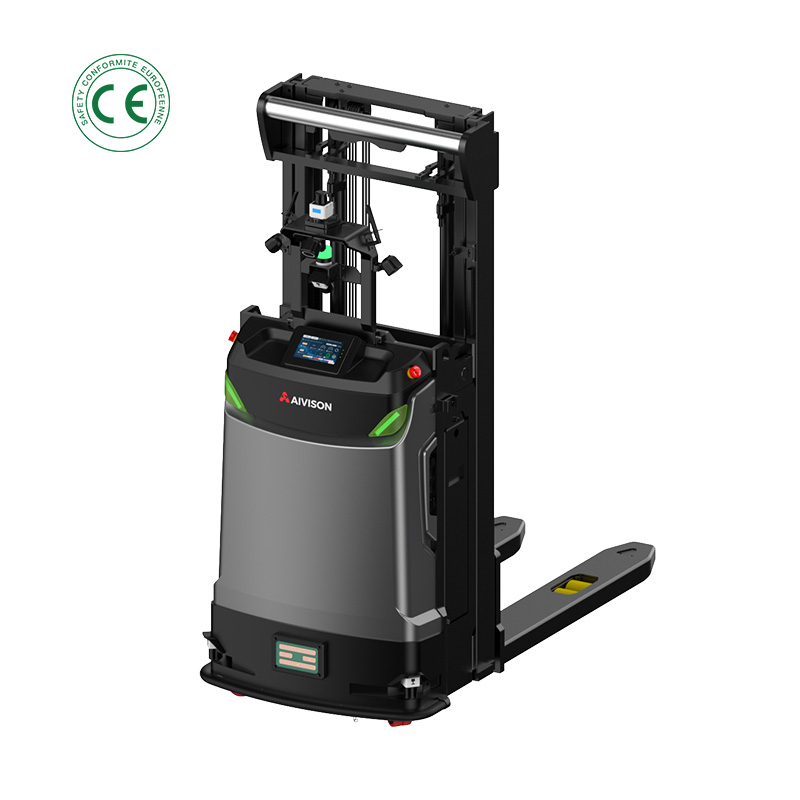
Aivison Industrial AMR for Automated Warehouse Logistics
Built for repetitive warehouse transport and line-side replenishment, with fleet scheduling and 24/7 duty support for growing internal logistics teams.
View product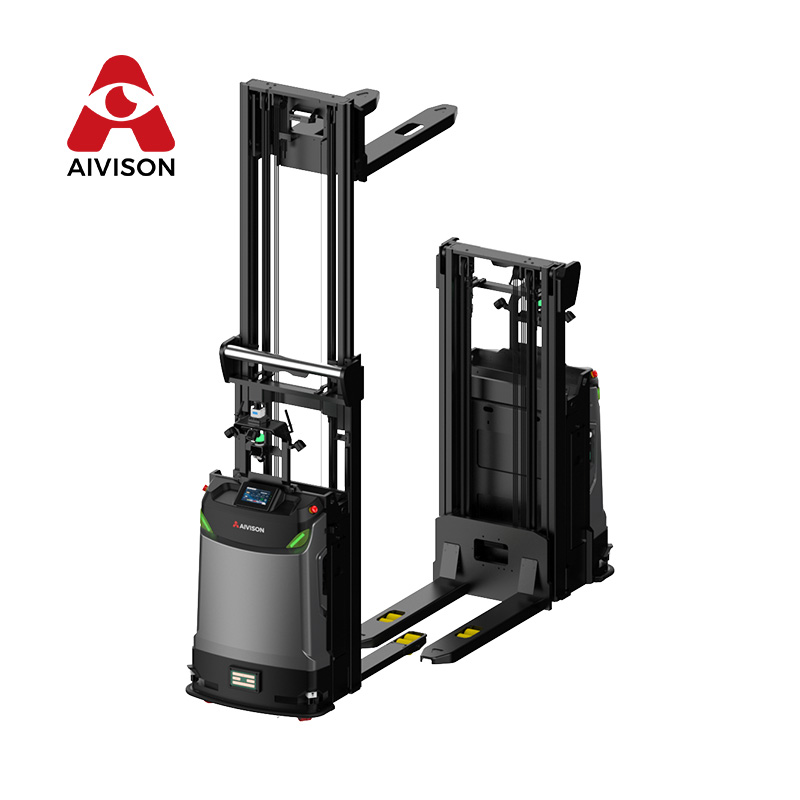
High-Precision 2000 kg Servo Laser AGV Forklift
Full-servo fork control for heavy loads and repetitive pallet handling, reducing fork-entry error and protecting high-value goods during automated put-away.
View product
Omnidirectional Dual 7-DOF Mobile Manipulator AMR
Laser SLAM mobility with dual 7-DOF arms and ±0.03 mm repeatability, suited to machine tending, precision assembly and research lines that need mobile manipulation.
View product
High-Performance 2000 kg Intelligent AMR Robot
A robust 2000 kg platform for high-throughput factory logistics, designed to connect with MES/WMS workflows and existing Wi-Fi coverage without floor reconstruction.
View product
Humanoid Robot Chassis with Dual 7-DOF Arms & Laser SLAM
An open ROS2 mobile manipulation platform for advanced automation teams, combining omnidirectional navigation, dual arms and laser SLAM in one research-ready base.
View product
Automatic 2000 kg CE-Certified Laser AGV Forklift
For large-load goods carrying and automated handling, this CE-certified forklift robot supports warehouse and production environments that require documented safety and reliability.
View product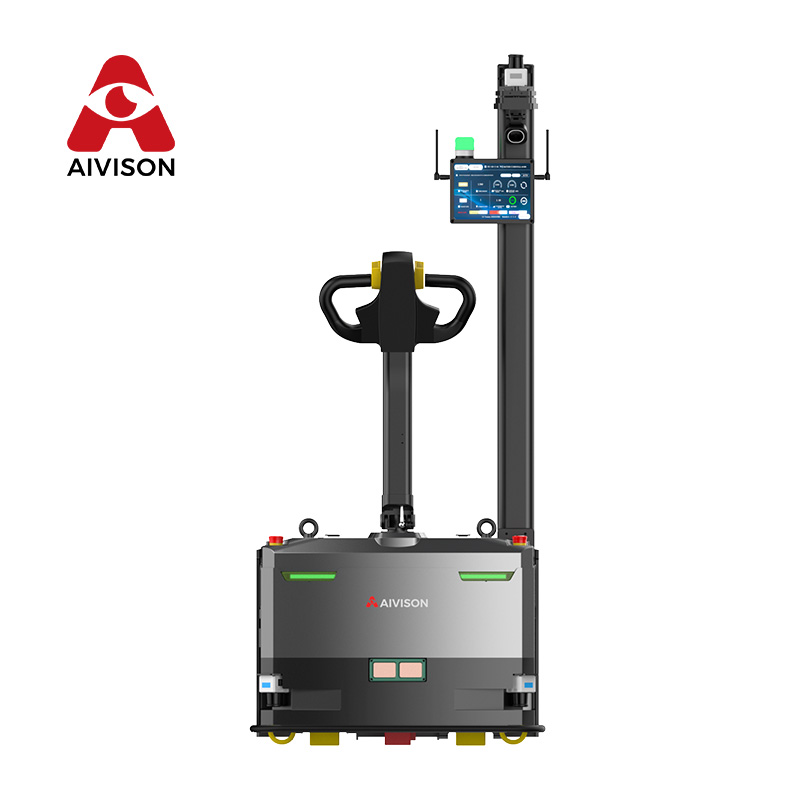
Movable Pallet AGV Robot Rack for Smart Warehousing
Turns static racking into flexible mobile inventory for intelligent robot warehouses, helping buyers scale storage density without locking the floor plan.
View product
Why Global Buyers Choose a Manufacturing Partner, Not a Catalog Reseller
Shenzhen Marnix Intelligent Technology Co., Ltd. builds autonomous mobile robots on a foundation of about ten years of AGV engineering experience. The portfolio covers jacking robots, smart forklifts, pallet AMRs, composite mobile robots and compatible intelligent charging docks. This matters to OEM buyers because a latent lifting robot is rarely a stand-alone purchase: it must connect to racks, conveyors, lifts, Wi-Fi, safety systems and production software.
As a factory and exporter, we support both end users and system integrators. Our team reviews your load profile, aisle width, floor slope, docking tolerance, throughput target and existing equipment interfaces before proposing a chassis or top module. That engineering review is where information gain becomes practical value: fewer assumptions, fewer change orders and a shorter path from sample evaluation to series deployment.
Manufacturer-Level Customization
Chassis, payload, battery, lifting unit, roller conveyor, forklift fork and 6-axis arm options are engineered around your process.
Precision Without Floor Rework
Laser SLAM reaches ±5 mm on natural features; QR assist raises docking to ±2 mm; composite arms reach ±0.05 mm repeatability.
Third-Party Verified Credentials
TÜV Rheinland onsite supplier assessment, supplier to a Fortune 500 company and verified multispecialty supplier records.
Export & Integrator Support
Low-MOQ customization, multi-category robot procurement, documentation and global service coordination for integrators.
What Is a Latent Lifting Robot — and Why Is It Replacing Fixed Conveyors?
A latent lifting robot is a low-profile autonomous mobile robot with a lifting mechanism concealed within or directly above the chassis. Instead of relying on a forklift mast or a fixed conveyor, the robot drives under a rack, shelf, cart or pallet, raises the load a few centimetres and moves it through the facility.
Because the lifting action is activated only during pickup, the vehicle stays compact, keeps aisles clear and can share space with people and conventional forklifts. For factories that must add automation without stopping production, this architecture is often more practical than installing floor tracks or rebuilding conveyor lines. The main engineering question is not whether the robot can lift, but whether the navigation, docking accuracy, safety sensing and fleet software match the real operating environment.
Low-Profile Lift Interface
The lifting unit sits close to the ground, allowing the robot to slide beneath standard racks and carts. This reduces aisle congestion and avoids permanent floor infrastructure.
Trackless SLAM Navigation
Laser SLAM maps the existing environment. There is no magnetic tape or reflector path to install; QR labels are added only where ±2 mm docking precision justifies them.
Fleet-Ready Software
Indoor Wi-Fi scheduling coordinates task assignment, traffic control and automatic charging, so a single latent lifting robot can later scale into a mixed fleet.
Where Latent Lifting Robots Are Heading Next
Buyers should evaluate future-readiness, not only today’s payload. The next generation of OEM mobile robots will be judged by sensor fusion, modularity, fleet intelligence and verifiable safety.
Sensor Fusion Becomes Standard
Laser SLAM, vision and QR-assisted docking are converging. The result is one chassis that handles general transport at ±5 mm and precision stations at ±2 mm without separate vehicle types.
Composite Mobile Robots Reduce Handoffs
AMR bases combined with 6-axis arms, roller conveyors or lift units reduce the number of times a product is transferred between machines, conveyors and people.
Lower Profile, Higher Payload Efficiency
Thinner chassis and improved battery packaging allow latent lifting robots to enter tighter rack clearances while preserving traction and stability under heavy loads.
Open Fleet & Digital Twin Integration
MES/WMS integration, ROS2 platforms and fleet dashboards make robot performance visible. Buyers increasingly ask for data, not just hardware.
Match Navigation Accuracy to the Station, Not the Whole Factory
One of the most common procurement mistakes is over-specifying every route for the highest precision. In practice, most transport routes are well served by laser SLAM, while only a small number of docking stations need QR assistance or arm-level repeatability. Splitting the requirement lowers floor infrastructure cost and simplifies fleet management.
The table below illustrates a practical accuracy ladder for OEM projects. It is useful during supplier comparison because it separates general transport, precision docking and composite manipulation instead of blending them into a single headline figure.
Navigation accuracy by configuration

What Smart Buyers Will Require From OEM Robot Suppliers
Procurement is moving from “buy one robot” to “buy a reliable material-flow outcome.” These four trends are already visible in serious RFQs from manufacturers and system integrators.
Total Cost of Uptime
Buyers compare charger count, battery strategy, spare-parts lead time, service response and fleet software fees — not only the unit price of the robot.
Customization as the Default
OEM top modules, custom battery capacity and application-specific safety sensing are becoming standard requirements rather than premium options.
Evidence, Not Claims
Third-party onsite assessment, CE documentation, Fortune 500 supply records and verifiable test data increasingly determine supplier shortlists.
Local Support With Global Manufacturing
Integrators want factory pricing and engineering depth, plus clear escalation paths for commissioning, spare parts and software support across regions.
From Sample to Series: How a Custom Project Moves Forward
A latent lifting robot project becomes predictable when the engineering inputs are defined early. This four-step path helps procurement teams compare proposals on the same basis.
Load & Route Audit
Confirm maximum load, rack footprint, centre of gravity, aisle width, slopes, lift access and traffic mix. This defines chassis size and safety configuration.
Precision & Interface Map
Mark which stations need ±5 mm, ±2 mm or arm-level repeatability, then specify top modules such as lifting units, rollers, forks or robotic arms.
Fleet & Charging Design
Calculate missions per hour, peak demand, charger quantity, Wi-Fi coverage and traffic rules to avoid bottlenecks after commissioning.
Pilot, Validate & Scale
Run a measured pilot against throughput and uptime targets, then replicate the validated configuration across lines or facilities.
Common Questions Before Buying a Latent Lifting Robot
These are the questions our engineering team answers most often during OEM evaluation. For a project-specific review, share your layout, payload and docking requirements with our team.
What is the difference between a latent lifting robot and a standard AMR?
A standard AMR moves a load on top of its chassis or tows it. A latent lifting robot carries a concealed lifting mechanism that slides under a rack or cart and raises it for transport. This allows the robot to handle mobile racks and pallets without a permanent conveyor or forklift mast, while keeping a low profile in shared aisles.
What navigation accuracy can the factory achieve?
Laser SLAM on natural features typically reaches ±5 mm without magnetic tape, reflectors or floor QR codes. Adding a QR scanning camera at selected stations raises docking accuracy to ±2 mm. Composite mobile robots with a 6-axis arm can reach ±0.05 mm repeatability for precision assembly or machine tending.
Do I need to modify my factory floor?
No. Standard laser SLAM navigation maps the existing environment. QR labels are added only where a process requires ±2 mm docking. This is one reason latent lifting robots can be deployed during active production, provided traffic and safety rules are designed correctly.
Can you customize the robot for my production line?
Yes. As a manufacturer, we customize chassis dimensions, payload, battery strategy, lifting units, roller conveyors, forklift forks, 6-axis arms and safety sensing. The goal is to connect directly with your racks, machines, conveyors and software instead of forcing a standard platform into an unsuitable interface.
How are multiple robots coordinated?
An intelligent scheduling system manages the fleet over indoor Wi-Fi. It handles simultaneous task assignment, traffic control, route planning and automatic charging with compatible smart charging docks. Mixed fleets can share the same navigation and scheduling logic when specified during project design.
What information is needed for a fast quotation?
Send the maximum load and rack footprint, a CAD or sketch of the layout, aisle widths, throughput target, docking precision requirements, Wi-Fi coverage notes, equipment interfaces and any preferred top module. With these inputs, our engineers can recommend a chassis, navigation configuration and charging plan for evaluation.
Request a Custom Latent Lifting Robot Proposal
Share your payload, rack footprint, layout drawing, throughput target and docking precision. Our engineers will recommend the right chassis, top module, navigation accuracy and charging strategy — whether you are an end user standardizing a factory or a system integrator building a repeatable automation solution.
Factory direct · OEM customization · Laser SLAM AMR · Jacking robots · Smart forklifts · Composite mobile robots