Custom OEM Latent Jacking Robot Supplier & Suppliers
A procurement-grade guide for integrators, manufacturers and automation teams comparing low-profile jacking AMRs, laser SLAM mobile platforms, smart forklifts and custom top modules.
Eight Mobile Robot Platforms to Shortlist First
For buyers comparing a custom OEM latent jacking robot supplier, the fastest path is to review complete platforms rather than isolated components. The eight systems below cover jacking, lifting, pallet, forklift, warehouse and development-grade humanoid chassis use cases. Product URLs and image assets are preserved so engineering teams can move from early comparison to a technical review without losing product context.
China Factory Automated Mobile Robot SLAM Lifting Wholesale AGV Chassis Vehicle
A robust SLAM lifting AGV base for rack, cart and production-line transport, suited to buyers that need a dependable chassis with clear customization potential.
View Product
Humanoid Robot Chassis Dual 7-DOF Arms Laser SLAM Omnidirectional Navigation ROS2 Open Platform AMR
A ROS2-oriented development platform for integrators exploring dual-arm manipulation, omnidirectional mobility and AI-ready automation research.
View Product
Omnidirectional Humanoid Robot Chassis Dual 7-DOF Arms Laser SLAM Autonomous Warehouse AMR Mobile Platform
An autonomous warehouse AMR platform with dual arms for advanced handling, research and human-robot collaboration pilots in mixed environments.
View Product
AI-Ready Humanoid Robot Chassis Dual 7-DOF Arms Omnidirectional Drive ROS2 Laser SLAM Open Development Platform
An open development platform for AI and robotics teams that need laser SLAM navigation, omnidirectional drive and flexible software access.
View Product
High-performance Intelligent Smart Automated Guided Vehicle 2000kg AMR Robot
A heavy-duty intelligent AMR for high-payload movement where safety, repeatability and stable throughput matter more than superficial speed claims.
View Product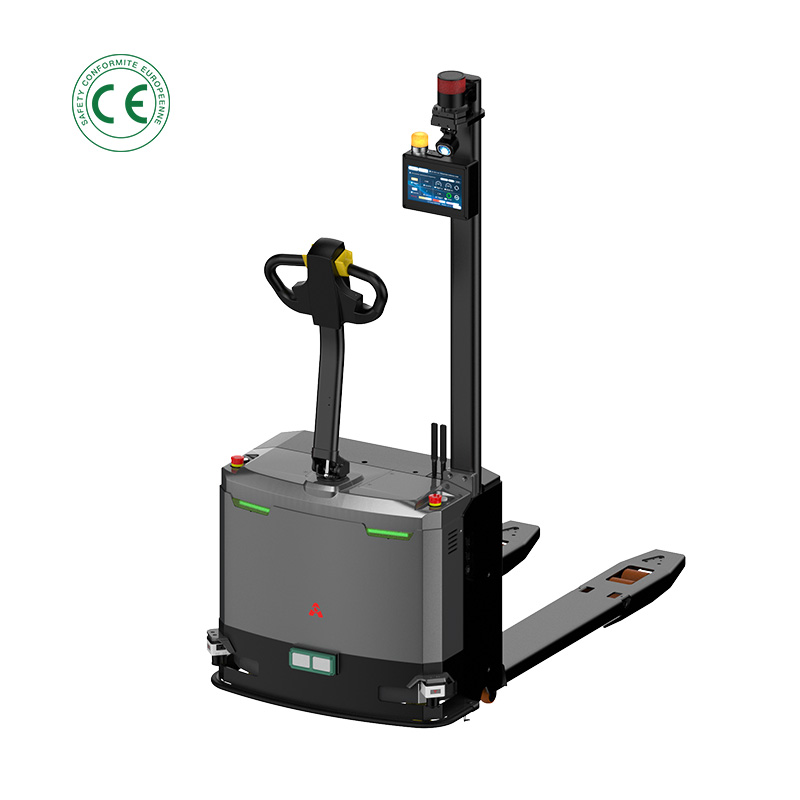
CE Certification Industrial AMR AGV Robot for Warehouse Automation Autonomous Material Handling Logistics
A compliance-ready warehouse automation platform for material handling logistics, suited to projects that need CE-conscious deployment planning.
View Product
Omnidirectional Service Humanoid Robot Chassis Dual 7-DOF Arms Laser SLAM Navigation for Hospitality and Retail
A service-oriented mobile chassis for hospitality, retail and public-facing robotics developers that need laser SLAM navigation and dual-arm flexibility.
View Product
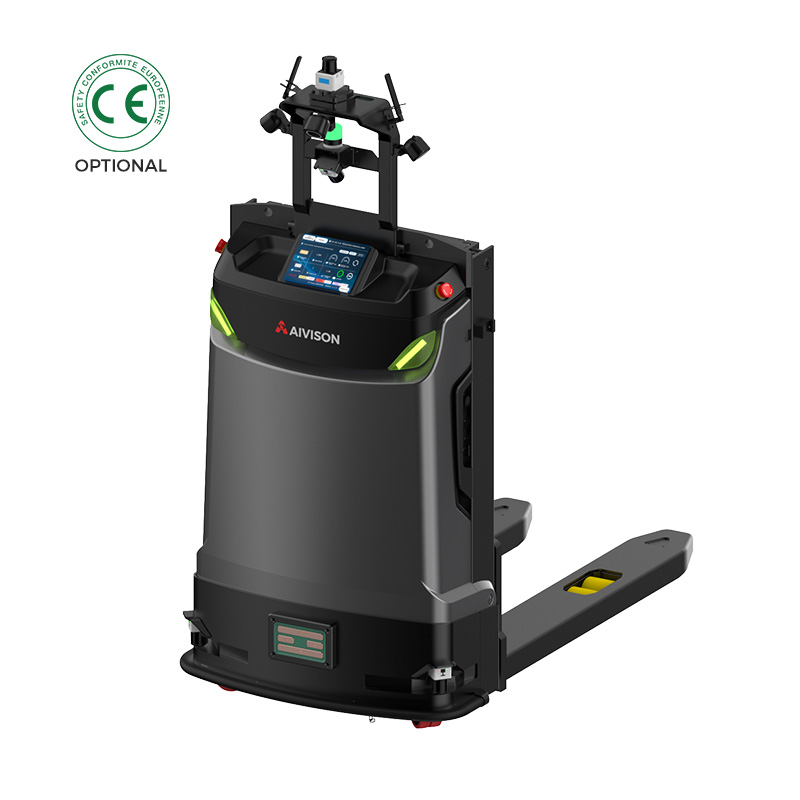
Automatic Handling CE Certificate 2000kg Forklift Robot Vehicle Laser AGV for Large Load Goods-carrying
A laser AGV forklift for large-load pallet handling, ideal where automated fork entry and reliable pallet transport can reduce repetitive manual work.
View ProductWhy the “Latent Jacking Robot” Query Is Becoming a Strategic Procurement Search
Buyers searching for a custom OEM latent jacking robot supplier are usually not shopping for a single lifting machine. They are comparing engineering partners who can absorb a real material-flow problem: a rack that must be moved without floor tracks, a cart that must be lifted from below, a line-side station that needs repeatable docking, or a fleet that must remain coordinated while production continues. In buyer language, “latent jacking” often refers to a low-profile jacking AMR whose lifting mechanism stays beneath the cart, rack or shelf until the robot positions itself. That distinction matters because the product is only useful when the hidden lift, navigation stack and safety behavior work together.
The commercial context has also changed. Earlier AGV projects were often judged by a short demonstration: the vehicle drives forward, turns, lifts and returns. Modern projects are judged by deployment evidence: how quickly the site can be mapped, how precisely the robot docks at different stations, how mixed traffic is controlled, how charging is scheduled, how spare parts are handled and how the fleet software fits the plant’s process logic. That is why a serious OEM supplier discussion should begin with load profile, floor layout, throughput, docking precision, Wi-Fi coverage and equipment interfaces—not only with unit price.
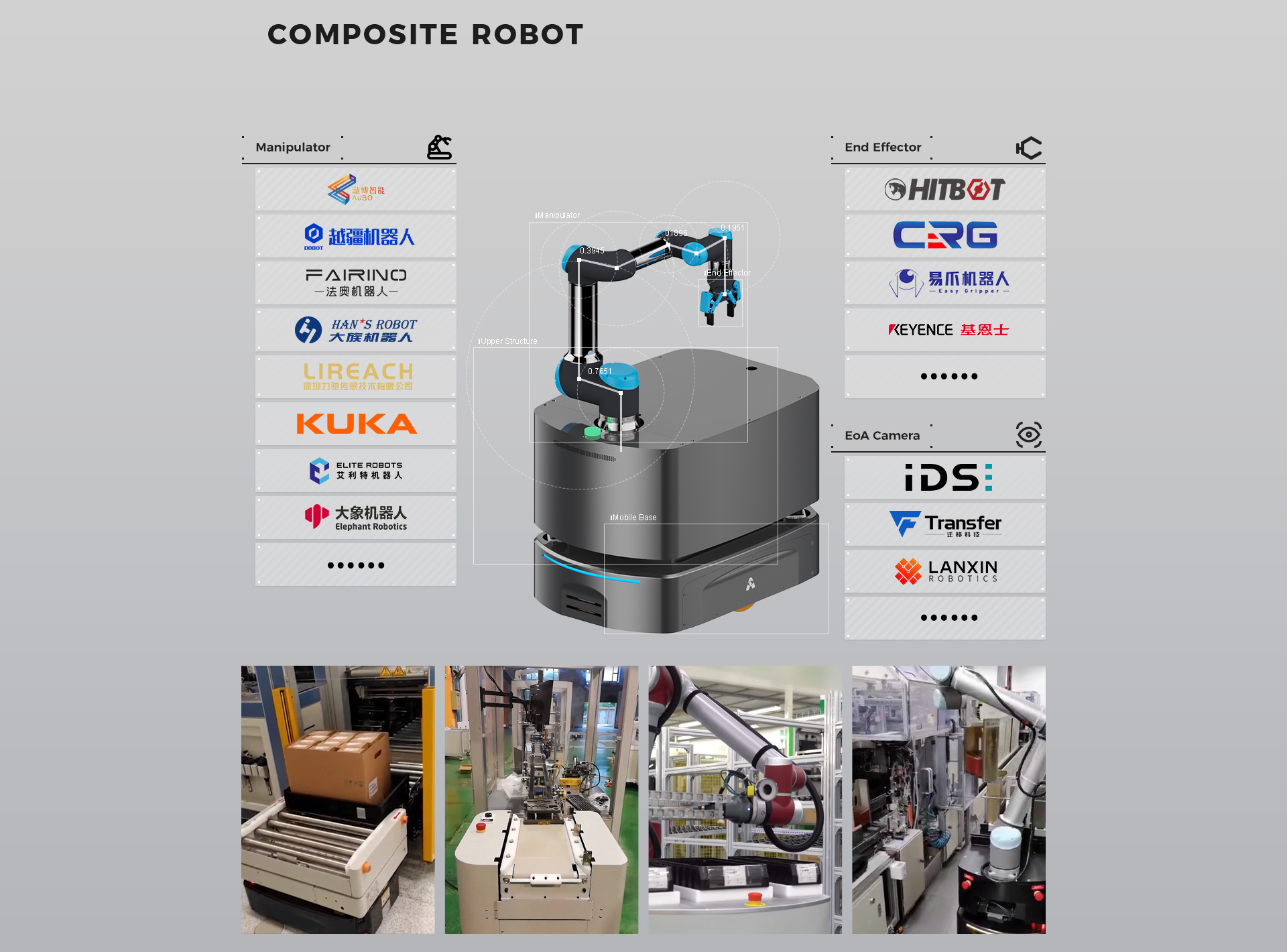
A second shift is precision tiering. Many warehouse transfers do not need millimetre-level QR positioning at every point. Laser SLAM on natural features can achieve around ±5 mm without magnetic tape, reflectors or floor QR codes. A QR code scanning camera can upgrade selected stations to around ±2 mm, while composite mobile robots with a 6-axis arm can reach ±0.05 mm repeatability for highly demanding assembly tasks. This tiered approach avoids unnecessary infrastructure cost and keeps room for future upgrades. The most reliable procurement strategy is therefore not to buy the highest specification everywhere, but to match accuracy to the station and validate the interface before deployment.
Precision is a station-level decision, not a robot-level badge. Specify ±5 mm for general transport, ±2 mm only where QR-assisted docking is justified, and ±0.05 mm where a composite arm must interact with precision equipment. This single discipline often reduces quoted project complexity while improving long-term flexibility.
Illustrative RFQ weighting model to support technical discussion; it is not a market statistic. Project priorities should be confirmed with your engineering and procurement teams.
What Product Buyers Will Expect From OEM Jacking Robot Suppliers Through 2030
The next procurement cycle will reward suppliers who can document engineering logic, not only present catalogue images. Demand is moving toward fleets, modularity, safety evidence and lifecycle support.
From single unit to fleet outcome
Procurement teams increasingly evaluate the fleet, not the robot. They ask how multiple jacking robots share routes, avoid deadlock, receive tasks and charge without disrupting takt time. A supplier that can explain scheduling logic and traffic control is more valuable than one that lists only payload and speed.
Modular top modules become normal
Jacking units, roller conveyors, forklift forks and robotic arms are now treated as process interfaces. Buyers want one proven navigation chassis with different top modules so that a line change does not require a completely new vehicle platform.
Precision tiering replaces over-specification
More buyers understand that not every station needs the same accuracy. A transfer aisle may be well served by laser SLAM at around ±5 mm, while a charging or assembly station may justify QR assistance at around ±2 mm. This reduces floor work and keeps capital focused on value-bearing stations.
Software and Wi-Fi readiness move earlier
Fleet scheduling over indoor Wi-Fi is no longer an afterthought. Buyers now ask about access-point coverage, latency, handover zones and task dispatch before finalizing floor plans. A robot that cannot communicate reliably is simply a parked asset.
Safety evidence matters in mixed traffic
Robots increasingly share space with people, forklifts and manually pushed carts. Procurement teams want obstacle avoidance behavior, warning zones, emergency-stop design and operating assumptions explained clearly. Safety should be documented as a system capability, not assumed from a vehicle photo.
Lifecycle economics dominate the decision
Battery behavior, automatic charging, service access and spare-part turnaround now appear in the first round of supplier comparison. Buyers want a robot that keeps working across shifts, not a low-cost unit that creates hidden downtime during peak production.
What Makes an OEM Jacking Robot “Future-Ready” in 2025 and Beyond
A future-ready jacking robot is not defined by one dramatic feature. It is defined by how cleanly the platform absorbs change: a new rack footprint, a different load, a tighter docking point, a new fleet size or an additional process interface. This is where modular design and navigation consistency create long-term value.
The most practical development direction is to keep a stable SLAM navigation core while making the payload interface, safety configuration and fleet software easy to adapt. That approach protects the buyer’s engineering investment and reduces the risk of a line becoming dependent on a discontinued custom chassis.
Natural-feature SLAM
Navigation should use existing environmental features so that deployment does not require magnetic tape, reflectors or floor QR codes across the entire route.
Hybrid QR precision
QR-assisted docking can be added only at stations where ±2 mm precision is justified, preserving most of the layout freedom of natural-feature SLAM.
Omnidirectional mobility
Sideways, diagonal and rotational movement help robots work in narrow aisles and dense equipment zones where conventional forward-only steering causes unnecessary delays.
Modular payload interfaces
Jacking units, roller decks, forks and arms should be designed as reusable modules so a chassis can support multiple production processes over its service life.
Fleet scheduling
Intelligent scheduling over indoor Wi-Fi coordinates task assignment, traffic and charging so that adding robots improves capacity instead of creating congestion.
Automatic charging
Compatible charging docks and planned charge windows are essential for 24/7 operation, especially when peak throughput leaves little time for manual intervention.
Safety sensing
Obstacle detection, warning zones and controlled stop behavior should be validated in mixed-traffic areas, not tested only in an empty demonstration aisle.
Diagnostics and serviceability
Remote diagnostics, accessible components and clear fault reporting shorten troubleshooting and help maintenance teams keep uptime predictable.
Choose Precision by Station, Not by Habit
A custom jacking robot project becomes easier to price and validate when each station is classified by the accuracy it truly requires.
Laser SLAM on natural features
Best for warehouse transfer, line-side delivery, rack transport and routes that may change. No tape, reflectors or floor QR codes are required. This is the default choice for most material movements and the cleanest starting point for layout flexibility.
SLAM plus QR code camera
Best for high-shelf storage, precision docking and handover points where a few millimetres matter. QR labels are added only where needed, so the majority of the route remains free of floor infrastructure.
Composite robot with 6-axis arm
Best for semiconductor, medical device and advanced assembly tasks where the robot must interact with equipment. Multi-layer synchronization and station calibration protect repeatability in demanding processes.
Match the Platform to the Material-Flow Problem
These starting points help buyers frame an RFQ before a full engineering review. A supplier should then confirm payload, aisle width, floor conditions, throughput and interface requirements.
For rack and cart transport
Start with the automated SLAM lifting AGV chassis when the core task is to drive beneath a cart or rack, lift, move and lower at a station. Review the chassis
For heavy 2000 kg loads
Use the high-performance 2000 kg intelligent AMR when payload, stability and safety in mixed traffic dominate the business case. Review the heavy-duty AMR
For warehouse logistics
Shortlist the CE certification industrial AMR AGV when warehouse automation and compliance-conscious procurement are central to the project. Review the warehouse AMR
For AI and dual-arm research
Choose the AI-ready humanoid robot open development platform when software access, ROS2 development and omnidirectional mobility matter more than immediate production throughput. Review the open platform
For service and hospitality
Use the omnidirectional service humanoid robot chassis when the application involves public-facing interaction, navigation in dynamic spaces and future dual-arm extension. Review the service platform
For large-load pallet handling
Select the automatic 2000 kg laser AGV forklift robot when pallet handling and fork entry are the primary tasks, and when automated goods carrying can remove repetitive heavy work. Review the forklift robot
Why Global Buyers Shortlist Shenzhen Marnix Intelligent Technology Co., Ltd.
Shenzhen Marnix Intelligent Technology Co., Ltd. is a Shenzhen-based manufacturer of laser SLAM autonomous mobile robots, jacking robots, smart forklifts, composite mobile robots and intelligent charging docks. The company draws on about ten years of AGV engineering experience and supports both end users and system integrators who need practical customization rather than a one-size-fits-all catalogue vehicle.
The advantage is not simply a product list. It is the ability to connect navigation, payload interface, fleet scheduling and service planning in one engineering conversation. Robots are coordinated by an intelligent scheduling system over indoor Wi-Fi, enabling simultaneous multi-robot dispatch, traffic control and automatic charging with compatible smart charging docks. The portfolio covers jacking units, roller conveyors, forklift forks and 6-axis robotic arms, which makes it easier to align a robot with the real production interface.
Marnix also brings verifiable commercial signals to procurement discussions. The company’s published credentials include an onsite supplier assessment by TÜV Rheinland, supplier status with a Fortune 500 company assessed by independent third parties, verified multispecialty supplier capability and transparent credit and transaction records. More than 200 manufacturers across three continents have been served, with deployments spanning semiconductor, 3C electronics, lithium battery, photovoltaic, automotive parts, PCB, textile and medical device industries.

Manufacturer-level customization
Chassis, payload and top mechanisms can be engineered around the line instead of forcing the line to fit a standard machine.
Complete AMR portfolio
Jacking robots, smart forklifts, pallet AMRs, composite robots and charging docks can be sourced with one navigation logic.
Quality protocol
Multi-stage intelligent inspections and operational stress tests target near-zero failure rates before shipment, not after installation.
Integrator support
System integrators can combine standard platforms with customized upper modules and project support for complex automation programs.

Credentials Buyers Can Review Before Committing
Technical capability should be matched with commercial transparency. These trust signals help procurement teams move from interest to due diligence.
TÜV Rheinland onsite assessment
Company premises and operations assessed by an independent inspection body.
View assessmentSupplier to Fortune 500
Procurement contract with a Fortune 500 company, assessed by independent third parties.
Trade historyVerified multispecialty supplier
Low-MOQ customization and multi-category robot procurement capability for mixed fleets.
Trade capacityCredit and transaction records
Transparent credit index and transaction level history to support commercial due diligence.
Credit indexFrequently Asked Questions From Jacking Robot Buyers
These are the questions that most often determine whether a project moves forward to a technical review or stalls at the comparison stage.
What is a latent jacking robot, and is it the same as a jacking AMR?
Buyers often use “latent jacking robot” to describe a low-profile jacking AMR whose lifting mechanism remains beneath a cart, rack or shelf until the robot positions itself. In practice, it is a jacking robot or lifting AMR used for under-carriage transport. The key specification is not the name but whether the robot can engage the load safely and repeatably.
How do I choose between ±5 mm, ±2 mm and ±0.05 mm?
Start with the station. Use laser SLAM at around ±5 mm for general transport and line-side delivery. Add QR code scanning at around ±2 mm only where docking demands it. Choose a composite robot with a 6-axis arm when the process itself requires around ±0.05 mm repeatability. Over-specifying every route increases cost and floor complexity.
Do I need to modify the factory floor or install tracks?
No for standard laser SLAM deployment. The robot maps existing environmental features, so magnetic tape, reflectors and full-floor QR codes are not required. QR labels are only added at selected stations that need higher docking precision. A site survey should still confirm floor flatness, slopes, aisle width and door or lift transitions.
Can Marnix customize the chassis and top modules for OEM projects?
Yes. As a manufacturer, Marnix customizes chassis and top modules such as jacking units, roller conveyors, forklift forks and 6-axis robotic arms to connect directly with production equipment. For integrators, this means a project can combine a proven navigation platform with application-specific handling hardware.
How many robots and charging docks should a project plan for?
The answer depends on missions per hour, travel distance, load and unload time, peak periods and acceptable waiting time. Charging dock count should be based on battery capacity, charging windows and redundancy targets. A proper fleet calculation should be performed with your peak-throughput data rather than estimated from the number of aisles alone.
What information should I send with an RFQ?
Send the load profile, a site layout or sketch, aisle widths, doors and slopes, throughput target, docking precision by station, Wi-Fi coverage quality and equipment interfaces. Include photos of the cart, rack or pallet. These inputs allow an engineer to recommend a realistic chassis, navigation configuration, top module and fleet size.
Turn Your Layout Into a Practical Robot Specification
Share your load profile, floor plan, throughput target, docking precision and equipment interfaces. The engineering team can then recommend the right combination of laser SLAM navigation, QR-assisted docking, jacking unit, roller conveyor, forklift fork or composite arm platform. If you are comparing multiple suppliers, request a specification review rather than a generic catalogue price.
Get a Quote Direct project contact: info@marnixbot.com