Custom OEM Automated Transport Robot Suppliers & Exporter
Compare OEM-ready laser SLAM AMRs, jacking robots, pallet stackers, smart forklifts, humanoid platforms and lidar sensors from Shenzhen Marnix Intelligent Technology Co., Ltd. — a manufacturer with about ten years of AGV engineering experience, ±5 mm trackless navigation and ±2 mm QR-assisted docking capability.
8 OEM Automated Transport Robot Platforms for Factory, Warehouse and Integrator Projects
This is a recommendation-led shortlist, not a catalog dump. Match each platform to payload, floor layout, docking tolerance and handover equipment before comparing price.

Humanoid Robot Chassis Dual 7-DOF Arms Laser SLAM Omnidirectional Navigation ROS2 Open Platform AMR
AI-ready humanoid chassis for integrators building mobile manipulation: dual 7-DOF arms, omnidirectional drive, laser SLAM and an open ROS2 platform.
View product details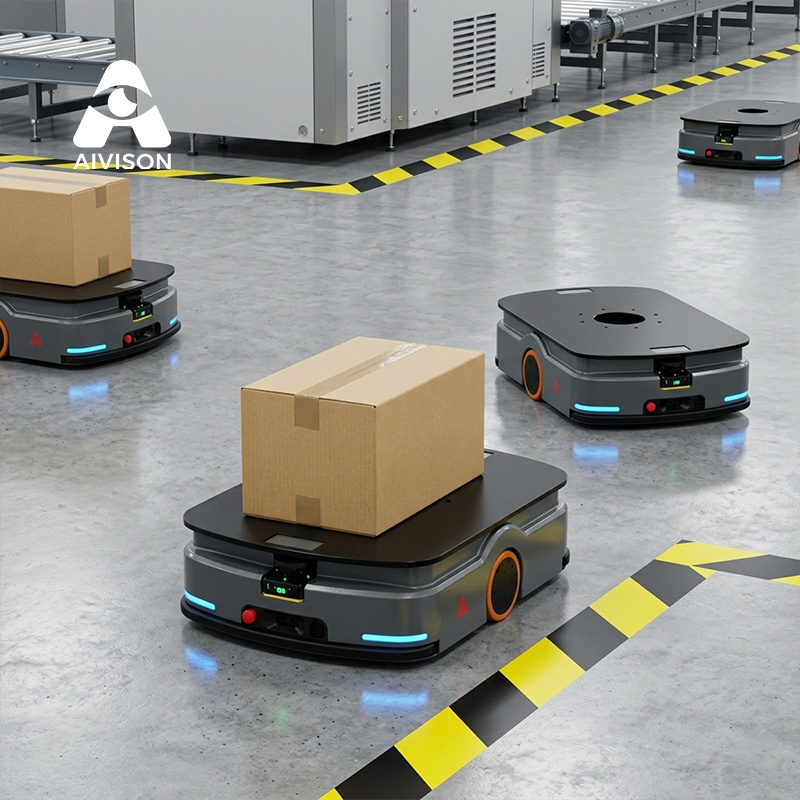
Autonomous Mobile AMR Robot 300kg Payload Laser Guided AGV for Carry Goods in Factory
Compact 300 kg class AMR for repetitive goods movement, line-side transfer and aisles where larger forklifts are inefficient.
View product details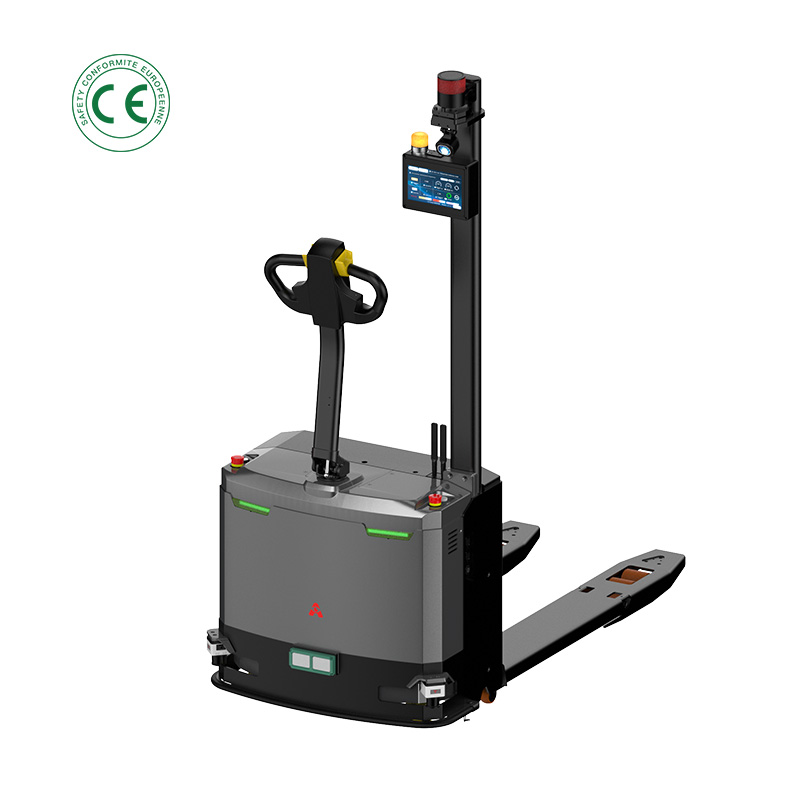
Autonomous Mobile Robot AMR AGV Forklift Pallet Stacker CE Certificate for Smart Warehouse and Production Line Automation
CE-certified pallet stacker concept for smart warehouses and production lines that need repeatable pallet pickup, transfer and stacking.
View product details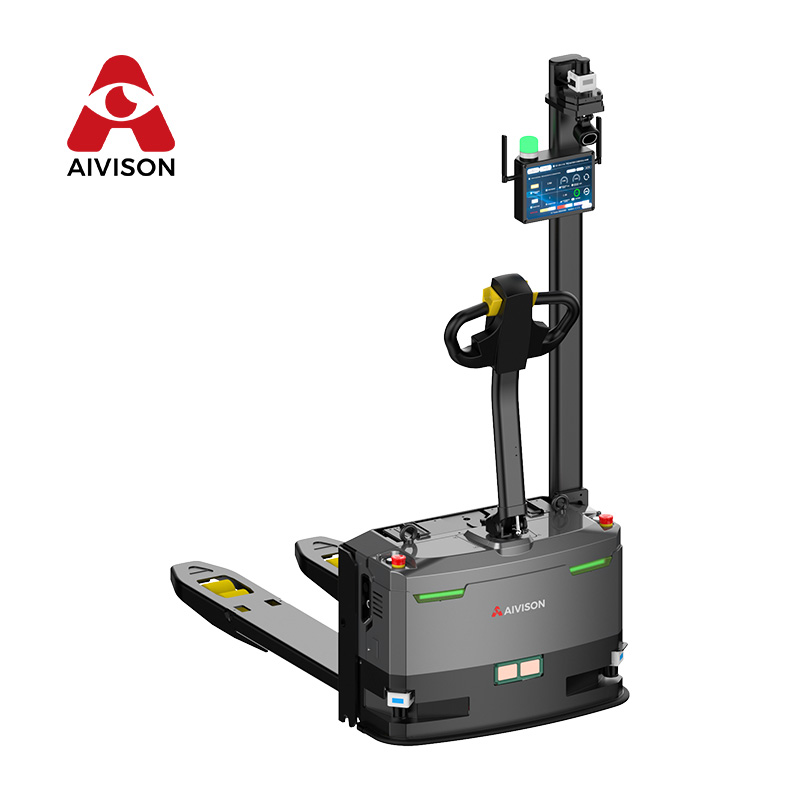
Laser SLAM Navigation Automated Guided Vehicle Forklift agv 1500kg Load Capacity
1,500 kg load capacity platform for denser pallet flows, where laser SLAM navigation must operate around mixed traffic and changing routes.
View product details
Hot Selling Logistics Navigation Detector Sensor Lidar Manufacturers Direct Sales
Navigation-grade lidar component for robot builders, integrators and maintenance teams that need a direct-source sensing option.
View product details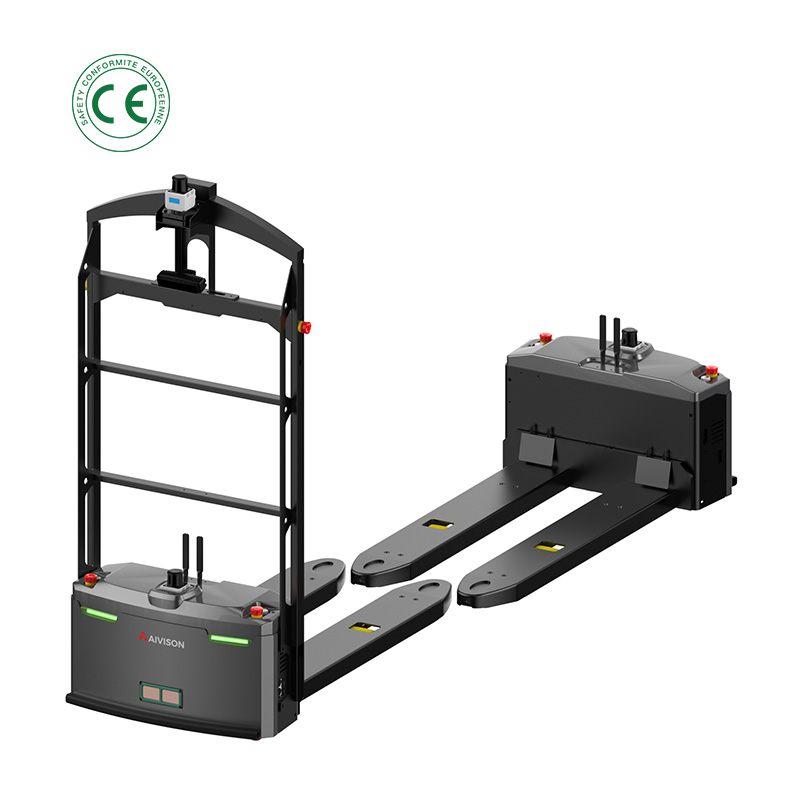
Aivison Customized 800kg Warehouse AGV Robot Lithium Battery AMR
Customized 800 kg warehouse platform with lithium battery power, suited to OEM projects that need a balance of payload, runtime and route flexibility.
View product details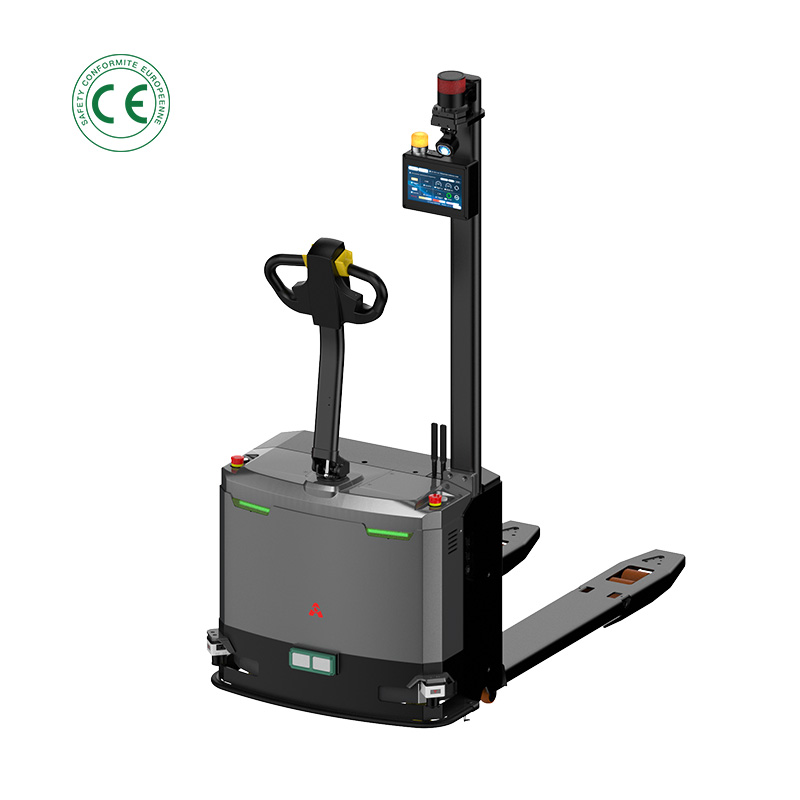
CE Certification Industrial AMR AGV Robot for Warehouse Automation Autonomous Material Handling Logistics
CE-certified industrial AMR for autonomous material handling, warehouse automation and logistics flows that require documented compliance.
View product details
AI-Ready Humanoid Robot Chassis Dual 7-DOF Arms Omnidirectional Drive ROS2 Laser SLAM Open Development Platform
Open development platform for AI robotics teams that need a mobility base, dual arms, omnidirectional drive, ROS2 and laser SLAM in one starting point.
View product detailsYears in AGV Engineering
Shenzhen-based R&D and manufacturing experience.
Laser SLAM Navigation
Natural-feature navigation without tape or reflectors.
Manufacturers Served
End users and system integrators across three continents.
Continents with Deployments
From semiconductor cleanrooms to textile warehouses.
What Separates a Transport Robot Supplier from a Deployment Partner?
When search intent moves from “buy an AMR” to “find a custom OEM automated transport robot supplier and exporter,” price alone is no longer the deciding factor.
A serious procurement team is buying a working transport system: a robot platform, a navigation configuration, a fleet controller, a safe handover method, spare parts, documentation and a service path. That is why two suppliers can quote similar hardware while creating very different total costs. The useful question is not “which robot has the highest specification?” but “which configuration delivers the required material flow with the fewest hidden dependencies?”
Use six checks before shortlisting: navigation accuracy against the actual docking task, payload and center-of-gravity limits, floor and traffic conditions, integration with conveyors or machines, fleet software and charging logic, and independent evidence of supplier reliability. A ±5 mm laser SLAM AMR may remove the cost of magnetic tape and floor QR codes across most routes. A ±2 mm QR-assisted station can be added only where high-shelf or machine docking demands it. A composite robot with a 6-axis arm may reach ±0.05 mm repeatability, but that capability should be reserved for tasks that truly need robotic manipulation. This precision ladder is the first information gain a buyer should apply: avoid over-specifying every route because one station is demanding.
Shenzhen Marnix Intelligent Technology Co., Ltd. approaches OEM projects from this system level. The company builds laser SLAM autonomous mobile robots, jacking robots, smart forklifts, composite mobile robots and compatible intelligent charging docks for semiconductor, 3C electronics, lithium battery, photovoltaic, automotive parts, PCB, textile and medical device industries. For distributors, integrators and factory owners sourcing a custom OEM automated transport robot supplier and exporter, that breadth matters because mixed fleets, top modules and charging infrastructure can be planned together instead of purchased piecemeal.
Why Marnix Is Positioned as an OEM and Integrator-Ready Exporter
Evidence beats slogans. These are the practical advantages procurement teams can verify, test and map to project risk.
About Ten Years of AGV Experience
Engineering and manufacturing experience in mobile robotics helps shorten requirement review, prototype iteration and acceptance testing.
Complete AMR Portfolio
Jacking robots, smart forklifts, pallet AMRs, composite robots and charging docks share a common navigation and fleet-control foundation.
Precision Without Floor Rework
Natural-feature laser SLAM supports ±5 mm navigation, with QR assist available for ±2 mm docking and station calibration for higher precision.
OEM Customization at Machine Level
Chassis, payload, jacking units, roller conveyors, forklift forks and 6-axis arms can be engineered around production equipment rather than forced into a fixed catalog shape.
 Manufacturer-level R&D and assembly support.
 Multi-stage inspections and operational stress testing.
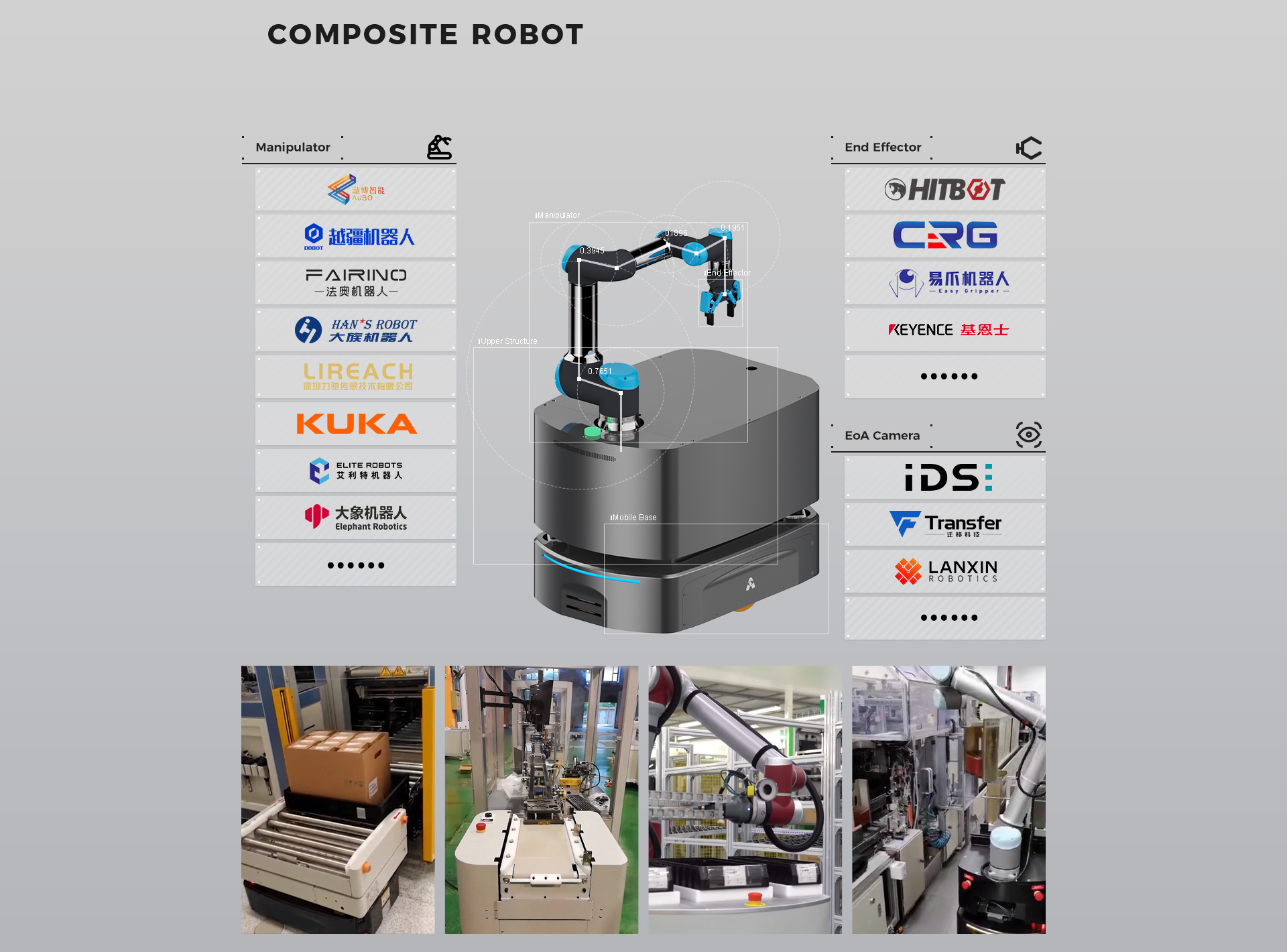 Custom top modules connect robots to production equipment.
Choose the Right Navigation Accuracy for Each Station
Not every route needs the highest precision. Over-specifying accuracy can add unnecessary floor labels, station calibration and integration cost.
A practical three-tier ladder
Use laser SLAM for general transport, add QR only where docking is critical, and reserve composite-robot repeatability for robotic manipulation. This gives procurement a defensible specification instead of a single headline number.
The same logic applies to fleet planning: if most missions need ±5 mm, the fleet should be standardized around that capability, with a small number of precision stations or composite units added only where process value is clear.
Future Procurement Trends for Automated Transport Robots
Buying behavior is shifting from one-time equipment purchase toward measurable operational outcomes, integration quality and lifecycle evidence.
Total Cost of Ownership Becomes Central
Procurement teams increasingly compare energy, spares, service response, integration labor, charging dwell time and uptime instead of only robot unit price.
Mixed-Fleet and API-First Integration
Fleet scheduling over indoor Wi-Fi, WMS/MES interfaces and mixed-model coordination are becoming selection criteria rather than afterthoughts.
Modular OEM Specifications Win
Integrators prefer a proven chassis with configurable top modules—jacking, roller, forks or arms—over fully bespoke one-off robots that slow service and spare-parts planning.
Verification and Service Footprint
Independent assessment, trade history, CE documentation, acceptance protocols and local service questions are moving into the pre-qualification stage.
Where Automated Transport Robot Technology Is Moving Next
These development directions matter to buyers because they influence upgrade paths, integration cost and resale value over a five- to ten-year horizon.
AI-Ready Humanoid and Dual-Arm Chassis
Open ROS2 platforms with dual 7-DOF arms and omnidirectional drive are creating a bridge between mobile transport and in-aisle manipulation. Buyers should ask whether the base is an open development platform or a closed product.
SLAM + Vision + QR Fusion
Natural-feature laser SLAM remains the base layer, while vision and QR assist are added only where docking or pallet recognition needs more certainty. Fusion reduces floor infrastructure without overbuilding every station.
Fleet Intelligence and Digital Twins
Multi-robot scheduling, traffic control and charging coordination are becoming software-led advantages. Integrators increasingly expect simulation, route logic and telemetry to connect with plant systems.
Energy and Automatic Charging
Lithium battery platforms and compatible intelligent charging docks are being planned as part of throughput design, because charging dwell time and dock count can change fleet size requirements.
What to Prepare Before Requesting an OEM Quotation
From project experience, these six inputs determine most of the robot selection. Sharing them upfront shortens evaluation from weeks to days.
Load Profile
Maximum weight, footprint and center of gravity of racks, pallets or carriers to be moved.
Site Layout
A CAD drawing or sketch with aisle widths, doors, slopes, elevators, charging areas and traffic zones.
Throughput Target
Missions per hour, peak periods and takt-time constraints—these set fleet size and charging dock count.
Docking Precision
Where ±5 mm is sufficient and where ±2 mm QR assist or arm-level precision is required.
Wi-Fi and Traffic
Access-point coverage, latency expectations and how people, forklifts and robots will share the same floor.
Equipment Interfaces
Conveyors, machines, shelves and safety devices the robot must hand over to, plus any top-module needs.
Common Questions from Importers, Integrators and Factory Buyers
Practical answers for teams comparing custom OEM automated transport robot suppliers and exporters.
What does “custom OEM automated transport robot” actually include?
It should include more than a logo on a standard robot. A real OEM program may configure the chassis, payload interface, jacking unit, roller conveyor, forklift forks, 6-axis arm, sensor package and fleet software interface. The supplier should define which parts are standard, which are configurable and which require new engineering. For buyers, this distinction controls lead time, spare-parts risk and acceptance-test scope.
Do I need to modify my factory floor for laser SLAM navigation?
Usually not. Natural-feature laser SLAM maps existing walls, columns and fixed equipment, so magnetic tape, reflectors or floor QR codes are not required for standard transport. QR labels are typically added only at stations that need ±2 mm docking precision. Composite robots with arms may require station calibration because the manipulation task, not just the driving task, defines the final tolerance.
How do I choose between 300 kg, 800 kg and 1,500 kg platforms?
Start with the real load, including carrier weight, center of gravity and any dynamic forces during braking or turning. A 300 kg platform may be a better fit for light goods in narrow aisles, while 800 kg and 1,500 kg platforms are relevant for denser pallet or rack flows. Do not select only by payload headline; aisle width, floor condition, top module and duty cycle also change the recommendation.
How many robots will my project need?
A reliable estimate requires mission count, route length, traffic constraints, loading and unloading time, charging strategy and peak-hour demand. The simplest way to avoid overbuying is to request a route-by-route calculation or simulation. Fleet size should be based on required throughput and acceptable waiting time, not just the number of workers replaced. Charging dock count should be planned at the same time.
Can different robot types work together in one fleet?
Yes, when they share a navigation and scheduling foundation. Marnix robots are coordinated by an intelligent scheduling system over indoor Wi-Fi, enabling simultaneous task assignment, traffic control and automatic charging with compatible smart charging docks. For mixed projects, ask the supplier to show how jacking robots, forklifts, pallet AMRs and composite units are prioritized and how conflict zones are handled.
What evidence should I request from a supplier or exporter?
Request independent verification, relevant CE documentation where applicable, test reports, spare-parts lists, warranty terms, acceptance-test procedures and references for similar layouts. Marnix has undergone an onsite supplier assessment by TÜV Rheinland and is a verified supplier with a published trade history and Fortune 500 procurement record. These signals are useful, but they should still be matched to your specific technical and service requirements.
How should I compare total cost of ownership?
Include the robot, top module, charging docks, Wi-Fi upgrades, safety assessment, integration, training, spare parts, service response, energy consumption, expected uptime and layout-change costs. A lower-priced robot that requires floor rework or custom integration can cost more over three years. Ask for a lifecycle model that separates fixed installation cost from recurring operating and change costs.
What information starts a fast evaluation?
Send the load profile, site layout, throughput target, docking precision, Wi-Fi coverage, equipment interfaces and target go-live date. Our engineering team can then recommend a platform family and a project path. For OEM projects, include drawings or photos of racks, pallets and machine handover points. Email info@marnixbot.com or use the inquiry button below to begin.
Ready to Shortlist a Custom OEM Automated Transport Robot Supplier?
Share your load, layout, throughput, docking precision and target go-live. Our engineers will return a configuration recommendation and deployment roadmap for your factory, warehouse or integrator project.
Inquire Now Project intake: info@marnixbot.com