Eight Customizable AMR Platforms for Real Factory Workflows
These production platforms are the starting point for OEM customization. Each shares a laser SLAM navigation core, Wi-Fi fleet scheduling and optional top modules — jacking units, roller conveyors, forklift forks, QR-code cameras and 6-axis arms. Product links retain the original catalogue URLs; specifications can be reviewed against your load, aisle and docking data.
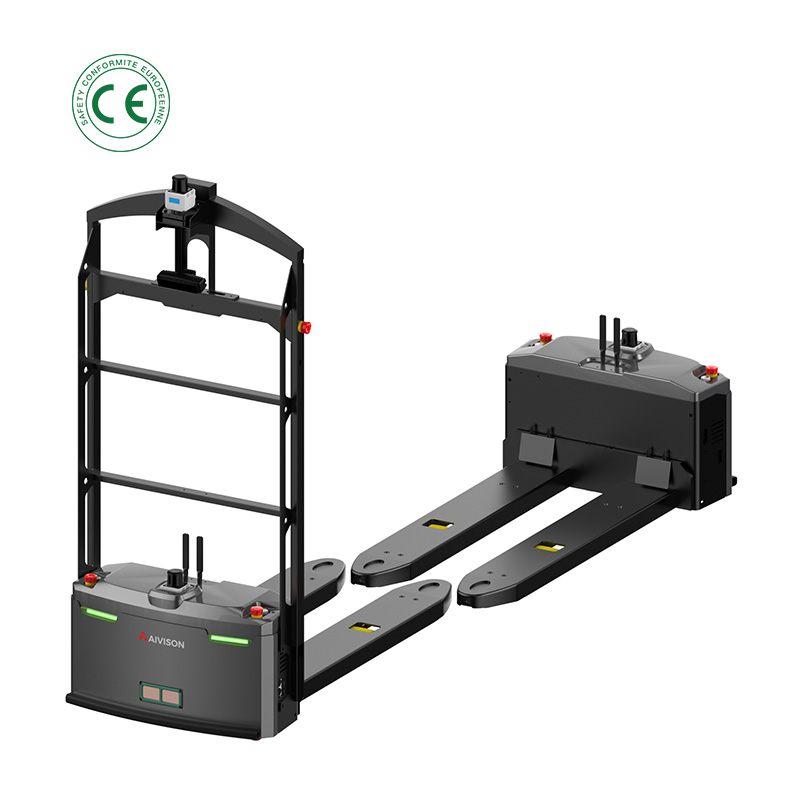
Aivison Customized 800kg Warehouse AGV Robot Lithium Battery AMR
An 800 kg lithium-battery AMR for warehouse transfer, line-side replenishment and pallet movement where flexible routing matters more than fixed floor infrastructure.

AGV AMR Autonomous Forklift Smart Version Auto Mobile Transfer Stacker Robot
A smart-version autonomous forklift and stacker for pallet pick-up, transfer and rack or trailer interfaces, designed for repetitive unmanned material flow.

High-performance Intelligent Smart Automated Guided Vehicle 2000kg AMR Robot
A 2,000 kg intelligent AGV and AMR for heavier loads, combining laser SLAM navigation with production-line and warehouse transfer duty.
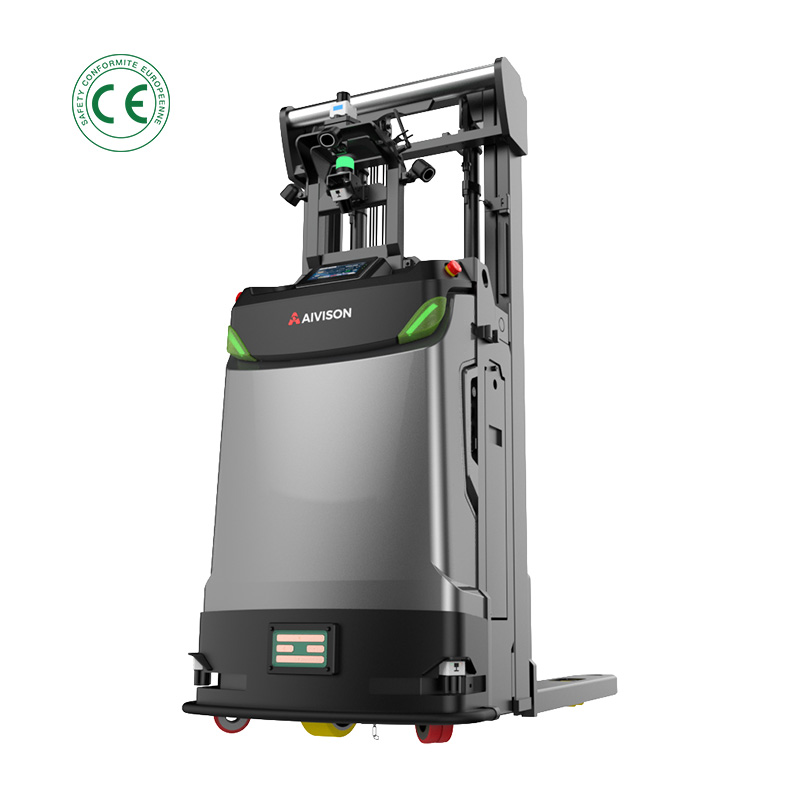
Smart Transport Robotic with Laser Navigation Reach 2000KG AGV Logistics Robots Warehouse Robot AMR
A 2,000 kg laser-navigation reach platform for high-density storage and logistics routes that require precise, repeatable positioning.

Automatic Handling CE Certificate 2000kg Forklift Robot Vehicle Laser AGV for Large Load Goods-carrying
A CE-certified 2,000 kg laser AGV forklift for large-load goods carrying, suitable for warehouse and production environments with documented compliance needs.
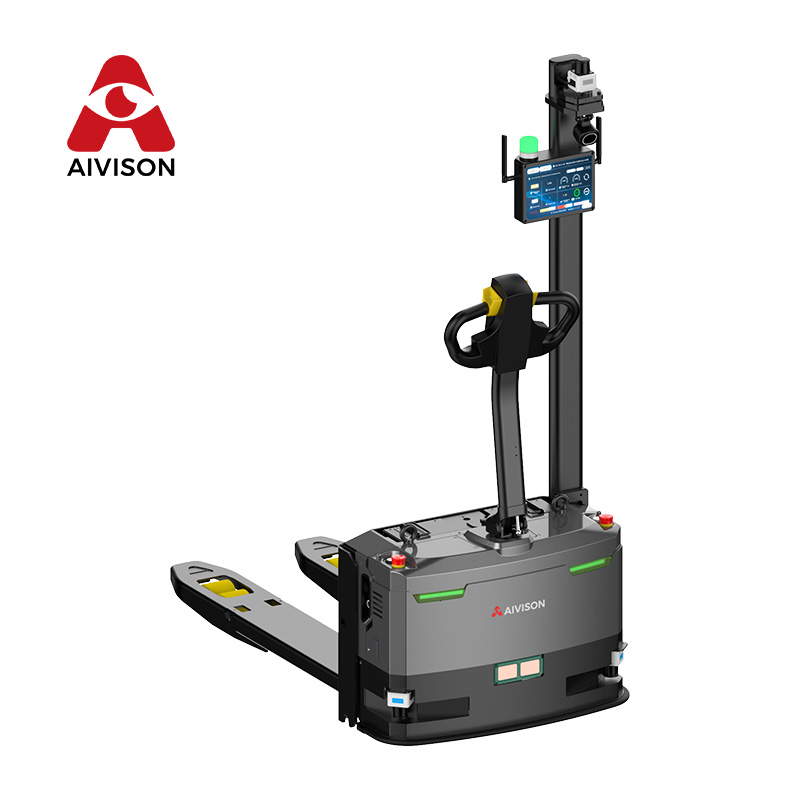
Aivison Stacker Truck Pallet Stacker Forklift Agv 1.5 Ton Autonomous Forklift Smart Deliver AMR Robot
A 1.5-ton autonomous stacker and pallet forklift AMR for smart delivery, rack handling and repetitive inbound and outbound cycles.

Omnidirectional Humanoid Robot Chassis Dual 7-DOF Arms Laser SLAM Autonomous Warehouse AMR Mobile Platform
An omnidirectional humanoid AMR chassis with dual 7-DOF arms and laser SLAM — built for mobile manipulation, machine tending and research-to-production pilots.

Hot Selling Logistics Navigation Detector Sensor Lidar Manufacturers Direct Sales
A logistics navigation detector and LiDAR sensor offer for teams comparing direct-sale component sourcing, sensor integration or localization upgrades.
Shenzhen-based R&D, assembly and testing
No magnetic tape, reflectors or floor codes
Across three continents with active deployments
Semiconductor to medical devices and textiles
Why Custom OEM Automated Mobile Robot Factories & Exporters Matter
The AMR market has moved beyond the demo phase. Buyers now ask whether a robot can be engineered into an existing operation without disrupting takt time, safety routines or IT/OT architecture.
Custom OEM is an engineering relationship, not a label on a chassis
A true automated mobile robot factory controls chassis design, payload interface, firmware configuration and test protocol. An exporter may only redirect a specification. The difference becomes visible at the station — fork-entry height, conveyor handover, rack footprint, QR target, Wi-Fi roaming, charging strategy and spare-parts fit. For that reason, the right custom AMR is not the most automated robot; it is the most maintainable robot that meets the station tolerance.
Shenzhen Marnix Intelligent Technology Co., Ltd. approaches custom OEM work from about ten years of AGV engineering experience. The product logic is modular: one SLAM chassis family, multiple top modules, one fleet scheduling layer. Buyers can begin with a transport AMR, add QR-assisted docking only where ±2 mm is required, and later introduce a 6-axis arm for composite tasks. That staged path protects capital and avoids over-specifying precision across the entire route.

For exporters, documentation is part of the product. A credible AMR factory supplies drawings, interface definitions, test records, packing configuration, spare-parts lists, commissioning support and escalation paths. These are not administrative extras; they determine whether a robot can be maintained across borders. E-E-A-T in this category is therefore measurable: years of engineering, verified facilities, trade history, customer deployments and third-party assessment.
Four questions that reveal engineering depth
Ask these before comparing unit prices. The answers show whether a supplier can act as a factory and export partner.
A factory should identify chassis, top module, safety configuration and software integration — not just colour or label.
Request a station map showing ±5 mm, ±2 mm and arm-level zones. This prevents over-specification and reduces floor work.
Ask about Wi-Fi scheduling, charging ratio, spare parts, remote diagnostics and local commissioning responsibilities.
Third-party onsite assessment, trade records, credit history and references in comparable industries should be reviewable.
Engineering Advantages of Marnix Custom AMR Factories
A complete OEM advantage is not one specification. It is the ability to hold navigation, safety, payload and serviceability together while changing the top module for your process.
Complete AMR portfolio
Jacking robots, smart forklifts, pallet AMRs, composite robots and intelligent charging docks from one source. That reduces integration risk when a project expands from one station to a full line.
SLAM + vision fusion
Laser SLAM navigates natural features; vision and QR cameras add station-level certainty. The same architecture supports ±5 mm transport, ±2 mm docking and ±0.05 mm composite repeatability.
No floor rework
Standard laser SLAM maps the existing environment. No magnetic tape, reflectors or floor QR codes are required. QR labels are added only at the few stations where high-precision docking justifies them.
Manufacturer-level customization
Chassis, payload, centre of gravity, top mechanisms and fleet interfaces can be engineered around your process. Integrators get a platform they can configure rather than a fixed machine they must adapt.
Match Navigation Precision to the Station, Not the Whole Factory
Over-specifying precision adds cost and maintenance. Use this decision ladder to specify only the accuracy each task requires.
Laser SLAM
Natural-feature navigation with no tape, reflectors or floor codes. Best for warehouse transfer, line-side delivery, pallet movement and routes that change.
SLAM + QR assist
Laser SLAM plus a QR scanning camera at selected stations. Best for high-shelf storage, machine docking, wafer handling and precision handover.
Composite robot
AMR mobility with a 6-axis arm or multi-layer synchronization for assembly, inspection and medical-device tasks, reaching ±0.05 mm repeatability.
Future Procurement Trends for Automated Mobile Robot Factories & Exporters
Procurement teams are shifting from price comparison to risk-adjusted value. These trends are already visible in multi-site factory projects.
Evidence-led shortlisting
TÜV Rheinland onsite assessment, Fortune 500 contract evidence, trade history and credit records will be reviewed before a technical workshop. Export buyers are using verification pages as screening tools, not decoration.
Modular OEM platforms
One-off prototypes create spare-parts risk. Buyers prefer a proven chassis and fleet core with custom jacking, roller, fork or arm interfaces — customized where it creates value, standardized where it protects uptime.
Total cost of ownership
Quotes will be compared on energy per mission, charging ratio, floor-marking avoidance, maintenance labour, spare-parts lead time and software update effort — not unit price alone.
Service and local support
Export projects need remote commissioning, documentation, spare-part kits and escalation paths. A low-cost robot with no service model is increasingly treated as an operational risk.
Product Development Trends Shaping the Next Generation of AMRs
The next buying cycle will reward platforms that can evolve without replacing the whole fleet. These six developments are already influencing custom OEM specifications.
Semantic 3D perception
LiDAR plus vision moves from simple obstacle detection to semantic understanding: pallet pockets, rack beams, people, forklifts and free space in mixed traffic.
Composite mobile manipulation
Dual 7-DOF arms and omnidirectional chassis turn an AMR into a mobile workstation for machine tending, inspection and precision assembly.
Modular top interfaces
Jacking, roller, conveyor, fork and arm modules will be selected as configuration options, with mechanical, electrical and software interfaces defined once.
API-first fleet orchestration
Wi-Fi scheduling, traffic control, task handover and charging will be exposed through integration interfaces so AMRs can work with MES, WMS and production equipment.
Energy strategy
Opportunity charging, intelligent docks and battery telemetry will be designed into the route plan, not added after fleet sizing.
Safety and cybersecurity
Speed limits, zone control, emergency stops, access management and software update policy will become procurement requirements alongside payload and accuracy.
Where Custom OEM AMRs Deliver Measurable ROI
Marnix robots are used by end users and system integrators in eight core industries. The same SLAM core is configured for different cleanliness, payload, docking and safety requirements.
Semiconductor
Cleanroom logistics, wafer carrier movement, precision docking and traceable material transfer.
3C Electronics
Line-side replenishment, fixture transfer, narrow-aisle delivery and fast layout changes.
Lithium battery
Heavy material movement, rack transport, process linking and repetitive shift-based delivery.
Photovoltaic
Module logistics, long-distance transfer and repetitive handling across large production areas.
Automotive parts
Pallet handling, sequencing, component warehouse transfer and mixed-traffic safety.
PCB
Roller conveyor interfaces, line-to-line transfer, buffer management and machine handover.
Textile
Warehouse transport, roll and box movement, long shifts and multi-point delivery routes.
Medical devices
Composite assembly, traceable material delivery and high-precision handover at the station.
Quality, Credentials and Export Readiness Buyers Can Verify
Reliability is engineered and verified before shipment, not discovered on the shop floor. Multi-stage inspections and thousands of operational stress tests target near-zero failure rates.

TÜV Rheinland onsite assessment
Company premises and operations assessed by an independent inspection body, supporting buyer due diligence before an export order.
Fortune 500 supplier
Procurement contract and trade history with a Fortune 500 company, assessed through independent third-party records.
200+ manufacturers, 3 continents
Deployments across semiconductor, 3C electronics, lithium battery, photovoltaic, automotive parts, PCB, textile and medical device production.
Multi-stage quality protocol
Incoming component checks, assembly inspection, navigation calibration and operational stress tests before packing and export.
For a custom OEM project, credentials should support four questions: Can the supplier engineer the top module? Can they prove navigation performance? Can they support export documentation? Can they keep the fleet serviceable after commissioning?
What to Prepare Before Requesting a Custom AMR Proposal
From project experience, six inputs determine most of robot selection. Sharing them upfront can shorten evaluation from weeks to days.
Load profile
Maximum weight, rack or pallet footprint, centre of gravity and any carrier or fixture constraints.
Site layout
A CAD drawing or sketch with aisle widths, doors, slopes, elevator or lift points and restricted zones.
Throughput target
Missions per hour, peak periods and shift pattern. This sets fleet size, charging ratio and buffer strategy.
Docking precision
Where ±5 mm is enough, where ±2 mm QR assist is needed, and whether an arm-level composite platform is justified.
Wi-Fi coverage
Existing access points, roaming quality and dead zones across the robot operating area.
Equipment interfaces
Conveyors, machines, racks, safety interlocks, top-module needs and any MES or WMS integration requirement.
Common Questions About Custom OEM Automated Mobile Robot Factories
Straight answers for project teams comparing AMR manufacturers, exporters and customization partners.
What is a custom OEM automated mobile robot factory?
A factory that controls chassis, navigation, top-module interface and test protocol, then configures those elements around a buyer’s payload, layout, safety and fleet requirements.
What navigation accuracy does Marnix achieve?
Laser SLAM reaches ±5 mm without tape, reflectors or floor QR codes. QR scanning raises station accuracy to ±2 mm. Composite robots with a 6-axis arm reach ±0.05 mm repeatability.
Do I need to modify my factory floor?
No. Standard laser SLAM maps the existing environment. QR labels are added only where ±2 mm docking precision is required, avoiding full-floor infrastructure work.
Can the robot be customized around my production line?
Yes. Chassis, payload, jacking units, roller conveyors, forklift forks, 6-axis arms and fleet interfaces can be engineered to connect with production equipment.
How are multiple robots coordinated and charged?
An intelligent scheduling system manages the fleet over indoor Wi-Fi, including task assignment, traffic control and automatic charging with compatible smart docks.
Which industries and payloads are supported?
Projects span semiconductor, 3C electronics, lithium battery, photovoltaic, automotive parts, PCB, textile and medical devices, with platforms from light AMRs to 2,000 kg class vehicles.
How is export quality verified?
Review third-party onsite assessment, trade history, credit records, multi-stage inspection reports and references from comparable deployments before placing an order.
How do I start a project evaluation?
Send load profile, layout, throughput, docking tolerance and Wi-Fi coverage to info@marnixbot.com. Our engineers will recommend platform, top module, fleet size and charging strategy.
Turn Your Floor Plan Into a Custom AMR Specification
Share payload, aisle width, throughput, docking tolerance and Wi-Fi coverage. Our engineers will recommend the right mobile robot platform, top module, fleet size and charging strategy — with export documentation and spare-parts planning from the first proposal.
Email: info@marnixbot.com