Custom OEM AMR Jacking Robots, Pallet AMRs and Smart Forklifts
Eight production platforms show the real range of what can be customised. Every unit shares the same SLAM navigation core and fleet controller, so a mixed fleet of jacking robots, pallet AMRs and smart forklifts can be scheduled from one interface. The links below go directly to the live product pages.

Hot Selling Logistics Navigation Detector Sensor Lidar Manufacturers Direct Sales
A compact navigation LiDAR and detector package supplied direct from the manufacturer for OEM integration into logistics AMRs and automated guided vehicles.
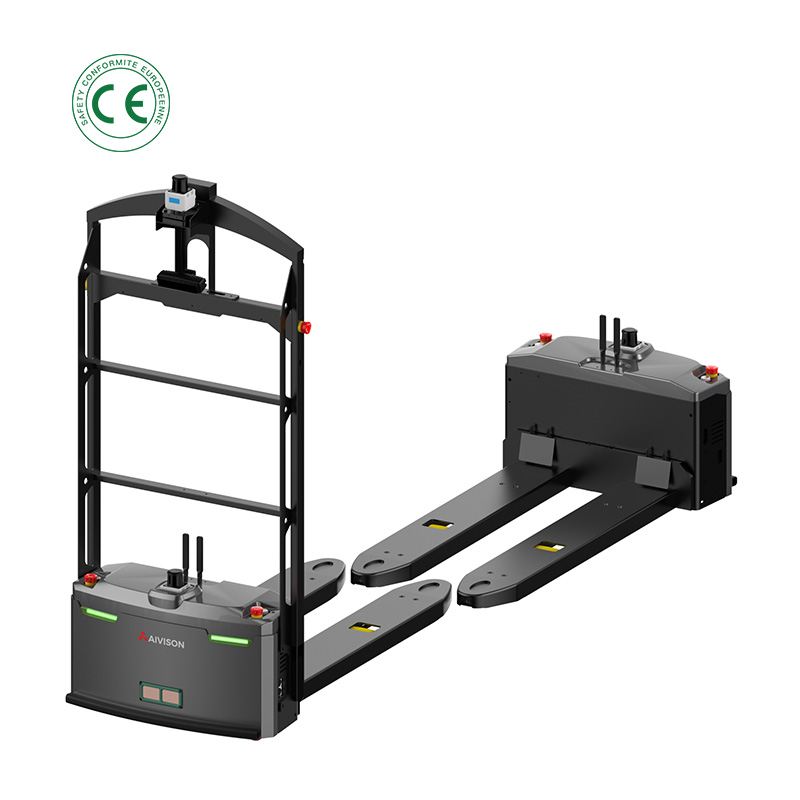
Warehouse Stacker CE Forklift AGV 800kg Load Capacity Light AMR Pallet
A CE-marked light stacker AMR with 800 kg load capacity for pallet put-away, line-side replenishment and warehouse transfer.
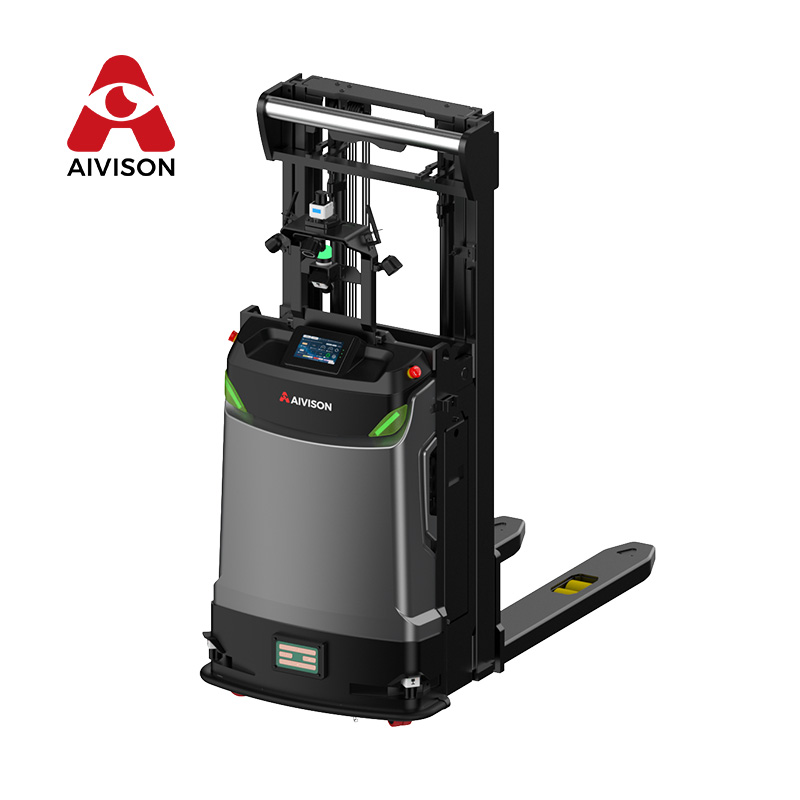
Heavy Load 2000KG Load Forklift Laser Guide AMR for Warehouse Pallet
A heavy-load 2,000 kg laser-guided forklift AMR built for pallet handling in high-throughput warehouse and distribution centres.
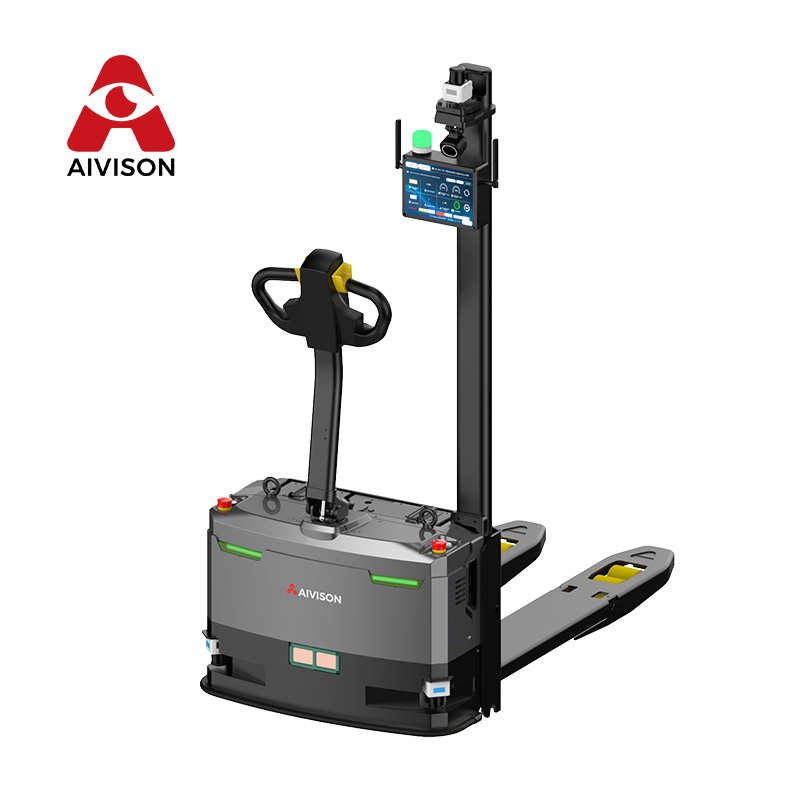
Aivison AGV Forklift High Quality Industrial Unmanned Pallet Forklift
An industrial unmanned pallet forklift for repetitive trailer loading, block stacking and horizontal transfer in mixed traffic.
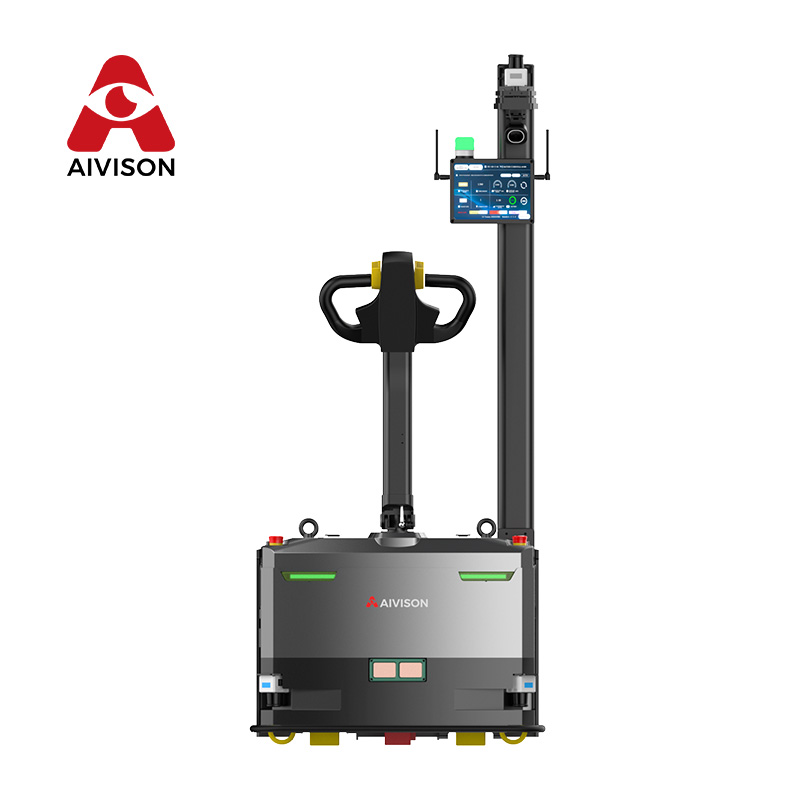
China Factory Movable Pallet Agv Robot Rack Shelf for Intelligent Robot Warehouse
A movable pallet rack and shelf system designed to pair with AGV and AMR fleets for dense, reconfigurable warehouse storage.

AI-Ready Humanoid Robot Chassis Dual 7-DOF Arms Omnidirectional Drive ROS2 Laser SLAM Open Development Platform
An open development platform with dual 7-DOF arms, omnidirectional drive, ROS2 and laser SLAM for research and pilot projects.
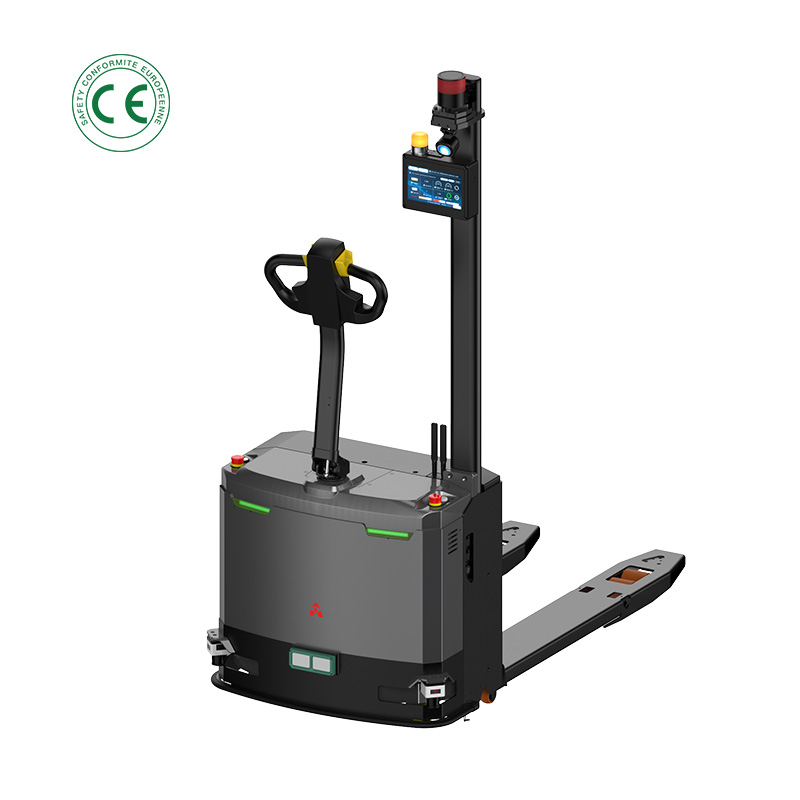
Automatic Handling CE Certificate 2000kg Forklift Robot Vehicle Laser AGV for Large Load Goods-carrying
A CE-certified 2,000 kg laser AGV forklift robot for large-load goods carrying in production and logistics operations.
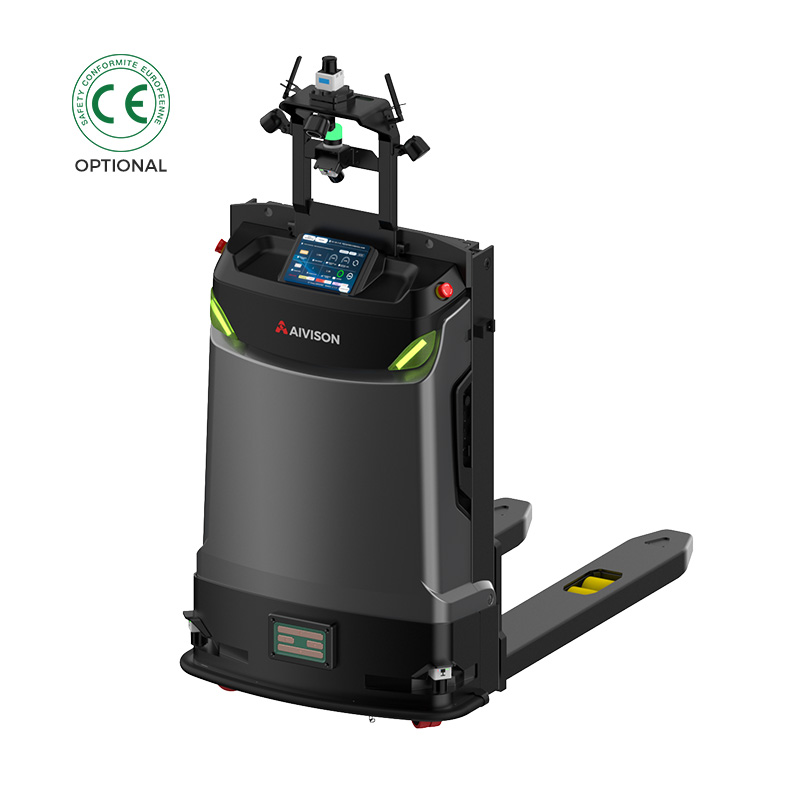
AGV AMR Warehouse Automatic Guided Vehicle 1500kg 2000kg AGV Robot Forklift
A scalable warehouse AGV/AMR forklift platform offered in 1,500 kg and 2,000 kg configurations for pallet and rack transport.
What an OEM AMR Jacking Robot Should Deliver
An AMR is not a catalogue item with a different logo. The useful specification begins with the load, the route and the handover point — and ends with a fleet that can be maintained for years.
An AMR jacking robot — also described as a lifting AMR, underride AMR or jacking AGV — slides beneath a rack, cart or pallet cage, raises the load with an onboard lift mechanism and moves it without a driver. The mechanical concept looks simple. The engineering is not. Payload, lift stroke, chassis height, floor friction, docking tolerance, traffic density and battery-to-charge ratio all interact, and a change to one usually changes the others. That is why an off-the-shelf chassis rarely fits a live production line without compromise.
Demand is rising because fixed conveyors and rail-guided carts cannot keep pace with reconfigurable production. Laser SLAM maps natural features, so routes change in software instead of concrete. There is no magnetic tape to repair and no floor QR grid to clean. For most transfer work, ±5 mm is enough. Add a QR scanning camera only at stations that need ±2 mm docking, and reserve ±0.05 mm repeatability for composite robots fitted with a 6-axis arm.
OEM matters because the variation is real. A 300 kg light pallet AMR, an 800 kg stacker and a 2,000 kg laser-guided forklift are not the same product with different stickers. Top modules change the engineering: jacking units, roller conveyors, forklift forks, lifting pins, conveyor interfaces and robotic arms each impose different loads, sensors and safety fields. The fleet software must also speak to the MES, WMS or call system that already runs the plant.
Shenzhen Marnix Intelligent Technology Co., Ltd. brings about ten years of AGV engineering experience to this problem. The company manufactures laser SLAM AMRs, jacking robots, smart forklifts and intelligent charging docks in Shenzhen, serves more than 200 manufacturers across three continents, and has been assessed onsite by TÜV Rheinland. Its robots are used by leading logistics and manufacturing companies, and it is a verified supplier to Fortune 500 companies. That combination — factory engineering plus integrator support — is what a custom AMR programme should look for.
Marnix at a Glance
- FactoryShenzhen, Guangdong, China
- ExperienceAbout 10 years in AGV engineering
- Navigation±5 mm laser SLAM; ±2 mm with QR; ±0.05 mm composite
- FleetWi-Fi scheduling and smart charging docks
- VerificationTÜV Rheinland onsite assessment; Fortune 500 supplier
- CustomChassis, payload, lift stroke, top modules, software interfaces
Laser SLAM, no floor works
Trackless navigation maps the existing building. No tape, reflectors or floor codes, so layout changes stay in software.
QR assist where it matters
A downward camera reads QR labels only at critical docking stations. Ideal for high-bay storage and precision handover.
Composite robot repeatability
An AMR chassis plus a 6-axis arm and multi-layer synchronization delivers assembly-level repeatability for semiconductor and medical work.
Match Navigation Accuracy to the Station, Not the Whole Factory
Over-specifying precision is one of the most common cost mistakes in AMR procurement. A factory does not need ±2 mm everywhere; it needs the right tolerance where a robot hands material to a machine, and a robust, low-cost tolerance everywhere else. Use the table below as a starting point for the RFQ, then confirm the design with a site survey.
| Configuration | Accuracy | Floor preparation | Best-fit tasks |
|---|---|---|---|
| Laser SLAM on natural features | ±5 mm | None — no tape, reflectors or floor codes | Line-side delivery, warehouse transfer, changing layouts |
| SLAM + QR code camera | ±2 mm | QR labels only at docking stations | High-bay storage, precision handover, wafer carrier transfer |
| Composite robot with 6-axis arm | ±0.05 mm | Station calibration | Semiconductor, medical device and precision electronics assembly |
Dynamic obstacle avoidance
Laser SLAM with obstacle detection keeps robots safe around people, forklifts and temporary obstructions. Speed zones and avoidance behaviour are configured per area.
Wi-Fi fleet scheduling
An intelligent scheduling system assigns tasks, controls traffic and manages charging across the fleet. Coverage and roaming quality should be surveyed before deployment.
Smart charging
Compatible intelligent charging docks support opportunity charging and 24/7 duty. The correct robot-to-dock ratio is calculated from shift pattern, route length and battery capacity.
Proven in Eight Industries With Mixed Human and Vehicle Traffic
The same chassis and software are configured for very different environments. In each case, the starting point is the material, the route and the handover point — not the robot model.
Semiconductor
Cleanroom-compatible transfer and ±2 mm docking for wafer carriers, cassettes and process materials.
3C Electronics
Line-side replenishment, fixture movement and finished-goods transfer in fast-changing assembly cells.
Lithium Battery
Tray, roll-goods and module transport with controlled acceleration and clean-zone compatibility.
Photovoltaic
Long-distance module, frame and pallet logistics between production halls and dispatch.
Automotive Parts
Sequencing, kitting and trailer loading with camera-assisted fork entry for pallet reliability.
PCB
Panel and magazine handling with custom roller-conveyor top modules and machine handshakes.
Textile
Yarn package and carton transport across multi-floor warehouses and narrow aisles.
Medical Devices
Traceable material flow and composite-arm assembly with ±0.05 mm repeatability.
Development Trends Reshaping AMR Jacking Robots Through 2030
Five forces are changing what buyers should specify today. None of them requires a full factory rebuild; all of them affect the useful life of a fleet.
AI-enhanced perception
SLAM is being combined with 3D vision and semantic mapping. The practical result is fewer QR labels, more reliable pallet detection and better behaviour in crowded, changing spaces.
Modular and composite design
One chassis with interchangeable jacking, roller, fork and arm modules shortens engineering time and protects the initial investment when the process changes.
Interoperability
VDA 5050 and open APIs are moving from pilot projects into tenders. Buyers increasingly require a mixed fleet to be orchestrated by one traffic controller.
Safety and cybersecurity
ISO 3691-4 practice, functional safety architecture, encrypted Wi-Fi and auditable firmware updates are becoming procurement requirements, not optional extras.
How Procurement Teams Will Buy AMR Fleets in the Next Five Years
The purchase decision is shifting from a robot price to a lifecycle business case. These six criteria are already appearing in serious RFQs.
TCO over sticker price
Battery cycle life, charging ratio, spare-part lead time and uptime matter more than the unit price. A lower-cost robot with poor service coverage can cost more within two years.
Safety documentation in the RFQ
Ask for risk assessment, CE file, E-stop architecture and evidence of ISO 3691-4 alignment. Safety claims should be verifiable, not aspirational.
Mixed-fleet interoperability
VDA 5050 or a documented API reduces single-vendor lock-in. The traffic controller, not the robot brand, should own route allocation.
Simulation-based acceptance
Digital-twin validation before shipment is becoming a contract milestone. Define the scenarios, throughput target and acceptance KPIs in advance.
Service-level agreements
Response time, spare-parts kits, remote diagnostics and local technician coverage belong in the contract. Uptime is an engineering outcome, not a promise.
Phased and as-a-service models
Pilot fleets that scale after measured ROI reduce capital risk. Rental, leasing and robot-as-a-service options are expanding, especially for logistics operators.
Why Global Buyers Choose Marnix as Their OEM AMR Factory
A supplier can show a catalogue; a factory can change the design. The distinction matters when the robot has to fit a process that already exists.
About ten years of AGV engineering
The team has worked across chassis design, navigation, fleet software and commissioning, not just assembly.
Manufacturer-level customisation
Chassis, payload, lift stroke, top modules and software interfaces are engineered to the line rather than forced into a standard frame.
Precision without floor rework
±5 mm laser SLAM, ±2 mm QR assist and ±0.05 mm composite-arm repeatability cover everything from pallet transfer to precision assembly.
Multi-stage quality protocol
Intelligent inspections and thousands of operational stress tests target near-zero failure rates before shipment.
Independently verified credentials
TÜV Rheinland onsite assessment, Fortune 500 supplier status and more than 200 manufacturers served across three continents.
Global support and integrator backup
English documentation, remote diagnostics, spare-parts planning and commissioning support for end users and system integrators.
What to Prepare Before Requesting a Custom AMR Quote
From project experience, six inputs determine most of the robot selection. Sharing them upfront shortens evaluation from weeks to days.
Load profile
Maximum weight, footprint, centre of gravity and condition of the racks, pallets or carriers to be moved. Include the heaviest and most awkward load, not the average.
Site layout
A CAD drawing or scaled sketch with aisle widths, door openings, slopes, floor condition, lifts and no-go zones.
Throughput target
Missions per hour, peak periods and shift pattern. This sets fleet size, battery capacity and the number of charging docks.
Docking precision
Identify where ±5 mm is sufficient and where ±2 mm QR assist or composite-arm accuracy is required. Precision everywhere is expensive precision.
Wi-Fi coverage
Access-point locations, roaming quality and coverage gaps across the robot operating area. Fleet scheduling depends on a stable network.
Equipment interfaces
Conveyors, machines, elevators, doors and shelving the robot must hand over to, plus the MES or WMS protocol involved.
AMR Jacking Robot Procurement FAQ
Straight answers from the engineering team. For project-specific calculations, send your load profile and site layout to info@marnixbot.com.
What navigation accuracy can an AMR jacking robot achieve?
Using laser SLAM on natural features, Marnix AMRs reach ±5 mm positioning without magnetic tape, reflectors or floor QR codes. Adding a QR scanning camera at selected stations raises accuracy to ±2 mm, and composite robots with a 6-axis arm reach ±0.05 mm repeatability. The right choice depends on the handover point, not on a site-wide maximum.
Do I need to modify my factory floor?
No. Standard laser SLAM maps the existing environment, so no auxiliary tracks or QR codes are required. QR labels are added only at stations that need ±2 mm docking precision. Floor condition, ramps and door thresholds should still be reviewed during the site survey because they affect safe travel and battery consumption.
Can Marnix customise chassis and top modules for our line?
Yes. As a manufacturer, Marnix customises chassis dimensions, payload, lift stroke and top modules such as jacking units, roller conveyors, forklift forks and 6-axis robotic arms. The goal is to connect directly to production equipment and existing racks, not to force the line to adapt to a catalogue robot.
How are multiple robots coordinated in one aisle?
An intelligent scheduling system manages the fleet over indoor Wi-Fi, handling simultaneous task assignment, traffic control and automatic charging through compatible smart charging docks. For mixed-vendor environments, the project team can discuss API or VDA 5050 integration during the technical review.
Which industries are the best fit for AMR jacking robots?
Semiconductors, 3C electronics, lithium batteries, photovoltaics, automotive parts, PCB, textiles and medical devices are the core industries. The common factor is repetitive material movement between fixed points, where labour turnover, ergonomics or cleanroom rules make manual handling costly.
What does a typical OEM project involve from enquiry to shipment?
The process normally moves through requirement review, site survey or layout analysis, mechanical and software design, prototype or configuration approval, factory acceptance testing and shipment. Lead time depends on chassis, top module and testing scope; engineered-to-order units naturally take longer than standard configurations.
How do you handle spare parts and after-sales service?
Service planning starts during the project: recommended spare-parts kits, remote diagnostics, documentation and technician training are defined before delivery. Response and coverage depend on the destination and service package, which are confirmed in the quotation.
How should we start a project evaluation?
Send the load profile, site layout, throughput target, docking tolerance and equipment interfaces to info@marnixbot.com, or use the Contact Us button on this page. Our engineers will recommend a configuration and identify any site survey or simulation work needed before quotation.
Build Your Next AMR Jacking Robot With the Factory, Not a Trading Company
Send your load profile, layout, throughput and docking tolerance. Our engineering team will respond with a recommended configuration, a realistic lead time and a transparent quotation.
Contact Us info@marnixbot.com