8 Wholesale-Ready Industrial AGV & AMR Products
The eight platforms below cover the most common wholesale requests: 800 kg to 2,000 kg pallet handling, 1,500 kg warehouse lifting, dual 7-DOF humanoid development, ROS2 open platforms, and CE-certified forklift automation. Every product URL is preserved for direct technical review. Use these configurations to compare payload, navigation, docking precision, and integration scope before requesting a quotation.
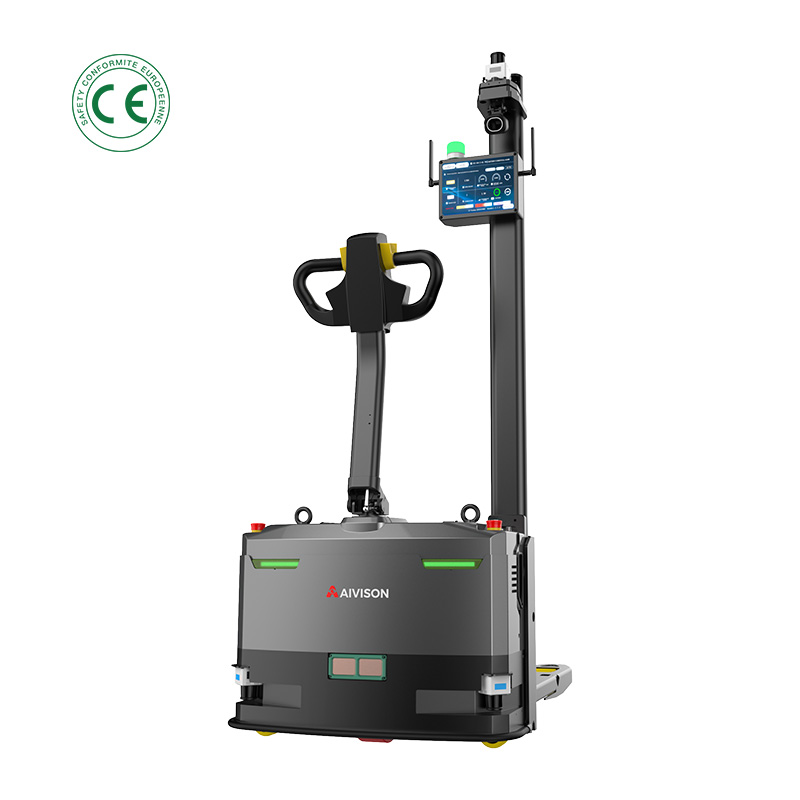
AIVISON CE Laser SLAM Navigation AGV 1500kg Warehouse Lifting Operations
A CE-marked 1,500 kg lifting AGV for warehouse operations that need stable laser SLAM navigation without floor tape. It suits high-throughput line-side transfer, rack lifting, and repetitive put-away tasks where a compact footprint and repeatable docking matter.
View product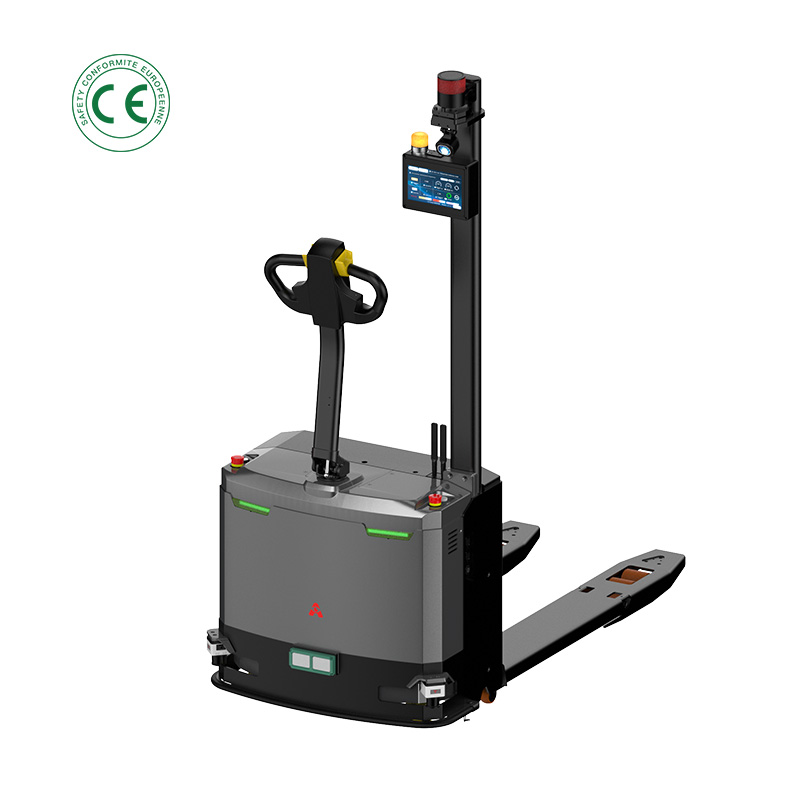
Autonomous Mobile Robot AMR AGV Forklift Pallet Stacker CE Certificate for Smart Warehouse and Production Line Automation
An autonomous mobile robot forklift with pallet stacker function for smart warehouse and production-line automation. Choose it when the project combines horizontal transfer with pallet pickup and stacking, and when CE documentation is a procurement requirement.
View product
Humanoid Robot Chassis Dual 7-DOF Arms Laser SLAM Omnidirectional Navigation ROS2 Open Platform AMR
A dual 7-DOF humanoid robot chassis with omnidirectional laser SLAM navigation and an open ROS2 platform. It is aimed at R&D teams, advanced manufacturing labs, and integrators building embodied AI applications rather than standard pallet transfer.
View product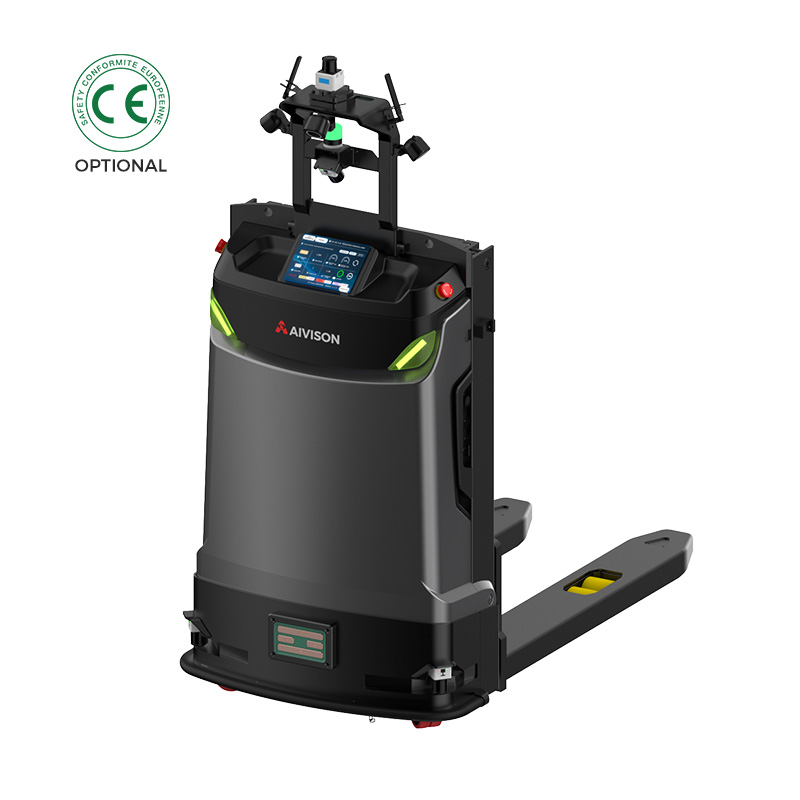
China Factory Automated Mobile Robot SLAM Lifting Wholesale AGV Chassis Vehicle
A wholesale AGV chassis vehicle for integrators and OEM buyers who need a reliable SLAM lifting platform to customize with their own top module, software layer, or application package. The chassis-first approach shortens engineering cycles.
View product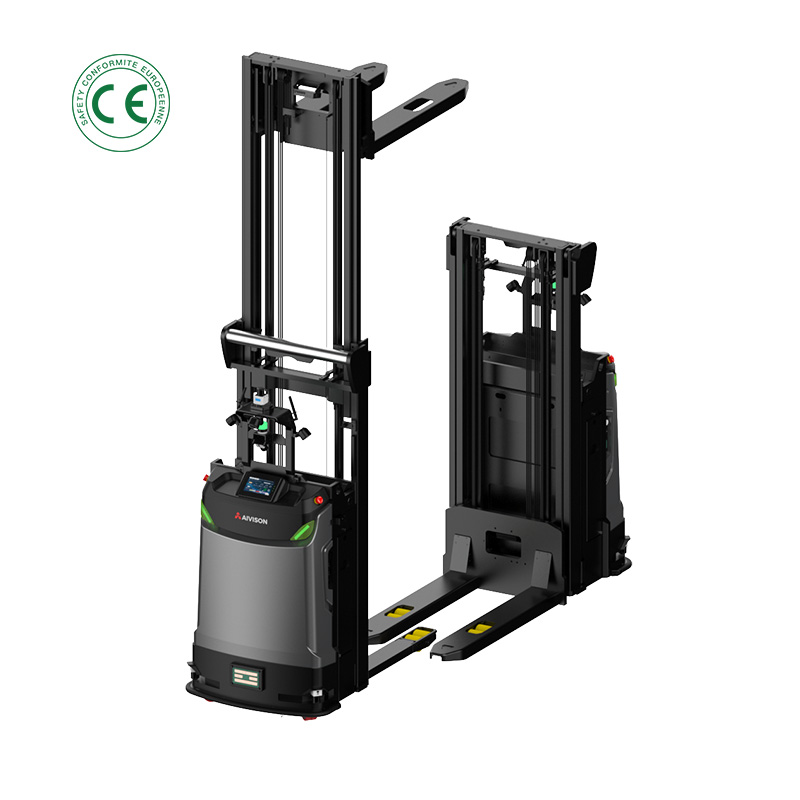
Factory AMR Robot AGV Robot Laser 2000kg Forklift AGV for Industrial Material Handling
A 2,000 kg laser forklift AGV for industrial material handling. It is intended for heavier pallets, production line replenishment, and warehouse transfer where safety, route stability, and fleet scheduling are more important than maximum travel speed.
View product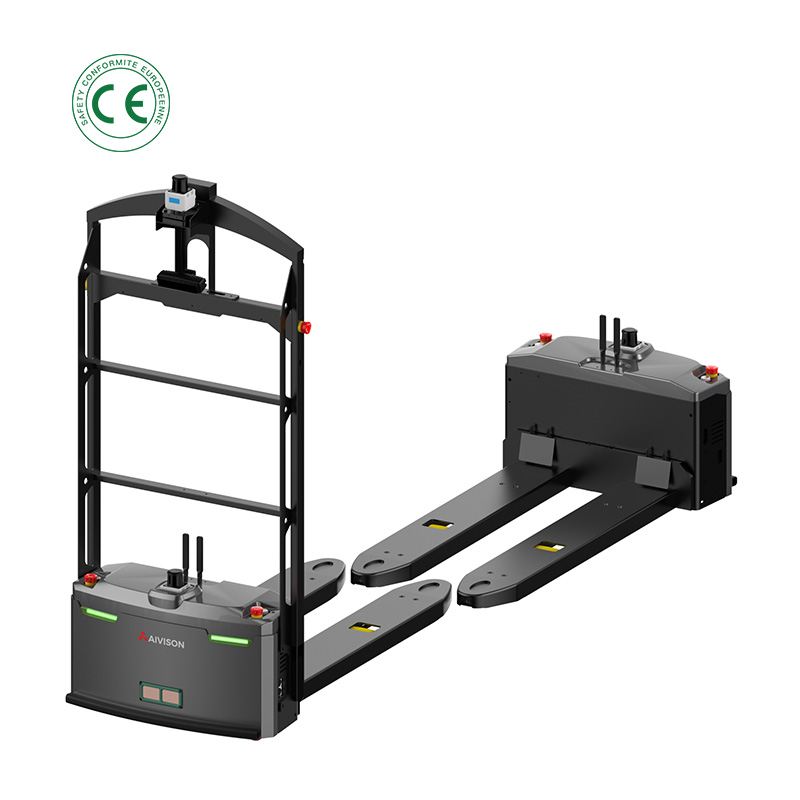
Warehouse Stacker CE Forklift AGV 800kg Load Capacity Light AMR Pallet
An 800 kg light AMR pallet stacker with CE configuration. This model is useful for narrow aisles, light manufacturing, and warehouse zones where full-size forklifts create congestion or are operationally unnecessary.
View product
Laser SLAM Navigation Automated Guided Vehicle Forklift agv 1500kg Load Capacity
A 1,500 kg laser SLAM navigation AGV forklift for automated guided vehicle projects that need pallet handling and route flexibility. It fits buyers comparing a standard forklift AGV with a more customized top-module platform.
View product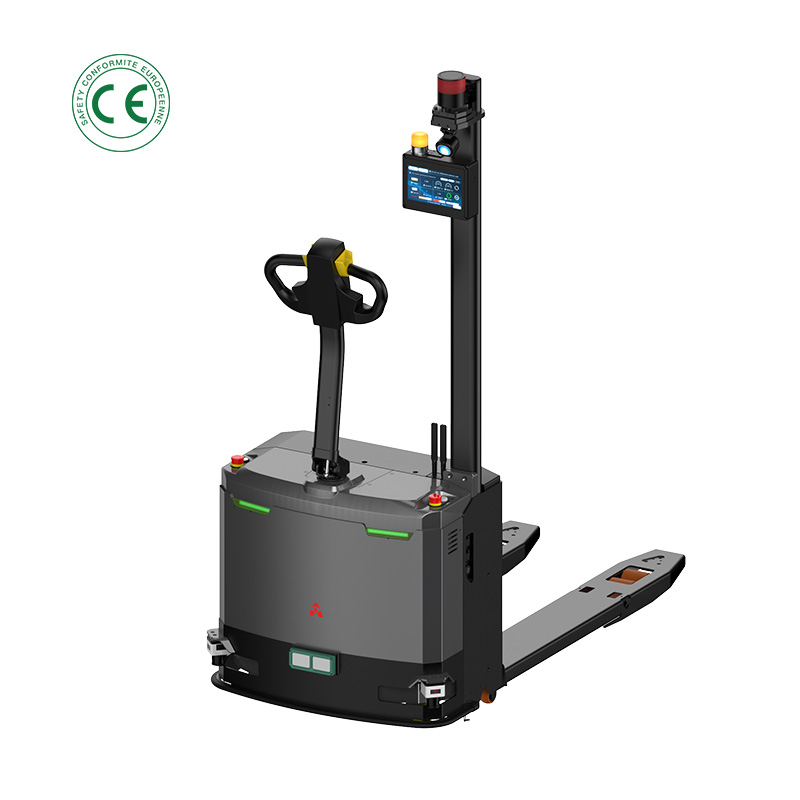
Automatic Handling CE Certificate 2000kg Forklift Robot Vehicle Laser AGV for Large Load Goods-carrying
A CE-certified 2,000 kg forklift robot vehicle for large-load goods carrying. It is the recommended shortlist item for heavy pallet flows, long duty cycles, and projects that require a clear combination of laser navigation, safety controls, and industrial-grade build quality.
View product
Why Wholesale Buyers Shortlist This Shenzhen AGV Manufacturer
Wholesale sourcing is not only a price exercise. It is a risk-management decision. A wholesaler must verify whether the exporter is a real manufacturer, whether navigation claims are repeatable across sites, whether spare parts and engineering support survive after commissioning, and whether the product roadmap can absorb future automation requirements.
Shenzhen Marnix Intelligent Technology Co., Ltd. is positioned around those questions. Drawing on about ten years of AGV engineering experience, the company designs and manufactures laser SLAM autonomous mobile robots, jacking robots, smart forklifts, composite mobile robots, and intelligent charging docks. The portfolio is developed for semiconductor, 3C electronics, lithium battery, photovoltaic, automotive parts, PCB, textile, and medical device industries.
Navigation is a strong example of information gain. Standard laser SLAM on natural features reaches ±5 mm positioning without magnetic tape, reflectors, or floor QR codes. At stations requiring tighter docking, an optional QR code scanning camera raises accuracy to ±2 mm. Composite robots with a 6-axis arm reach ±0.05 mm repeatability. This tiered approach lets buyers avoid over-specifying every route and avoid unnecessary floor infrastructure costs.
Verification matters. Marnix has undergone an onsite supplier assessment by TÜV Rheinland, holds a procurement relationship as a Fortune 500 supplier, and reports deployments across 200+ manufacturers on three continents. These are not decorative badges; they shorten the due-diligence phase for wholesale buyers who need evidence before placing a trial order.
Manufacturer-Level Customization
Chassis, payload, jacking units, roller conveyors, forklift forks, and 6-axis arm modules can be engineered around the production process rather than forcing a standard fit.
Wi-Fi Fleet Scheduling
Robots are coordinated by an intelligent scheduling system over indoor Wi-Fi for simultaneous task assignment, traffic control, and multi-robot dispatch.
Assessed & Auditable Supplier
TÜV Rheinland onsite assessment, Fortune 500 supplier evidence, and transparent credit and trade history support internal procurement review.
CE-Ready Export Configurations
Product lines include CE-certified forklift AGVs, pallet stackers, and handling robots with documentation suitable for cross-border projects.
Integrator Support
System integrators can source a stable robot platform, request custom interfaces, and reduce the engineering burden of building mobile automation from scratch.
Automatic Charging for 24/7 Duty
Compatible smart charging docks support continuous operation and predictable fleet behavior during peak throughput windows.

Wholesale AGV Procurement Trends 2025–2030
Search intent in this category is shifting from “Where can I buy one AGV?” to “Which exporter can support a scalable, auditable, multi-robot program?” The following six procurement shifts matter for distributors, system integrators, and factory owners comparing China wholesale industrial AGV exporters.
Fleet-First Purchasing
Buyers no longer ask only for one robot. They ask how many robots can share routes, how traffic is controlled, how charging is sequenced, and whether the software can scale from a pilot to a multi-floor operation.
Total Cost of Ownership
Sticker price is being replaced by energy consumption, tire and battery wear, mean time between failures, spare-part lead time, and remote diagnostics. A slightly higher quote with proven uptime can be the lower-risk purchase.
Modular Top Modules
Wholesale buyers prefer a stable SLAM chassis plus interchangeable jacking units, roller conveyors, forklift forks, or 6-axis arms. One platform reduces spare-part variety and simplifies integrator training.
Compliance & Auditability
CE-related documentation, third-party assessments, traceable trade history, and clear safety logic are becoming part of the technical specification, not an afterthought. Export buyers need documentation that survives internal audit.
Mixed-Traffic Safety
Procurement teams now ask for dynamic obstacle avoidance in mixed human and vehicle traffic, not only empty-warehouse demonstrations. Site acceptance tests increasingly include blind corners, forklift crossings, and pedestrian zones.
Service & Spare Parts
The rise of 24/7 automation has made after-sales response a board-level metric. Wholesalers want confirmed spare-part lists, remote support, and a roadmap for local commissioning.
Industrial AGV Product Development Trends Buyers Should Price Into Future Orders
Wholesale catalogs age quickly. A platform that looks competitive today may be difficult to integrate two years from now. These product development trends should be written into the evaluation criteria, not treated as future speculation.
SLAM + Vision Fusion
Laser SLAM remains the backbone, but vision and QR assist are used selectively where docking precision or pallet recognition is weak. The practical trend is not replacing SLAM; it is layering perception to reduce commissioning time.
Payload Segmentation
The market is separating into light AMR pallet platforms around 300–800 kg, mid-range 1,500 kg lifting and forklift AGVs, and heavy 2,000 kg forklift robots. Clear payload bands make wholesale selection faster and reduce over-specification.
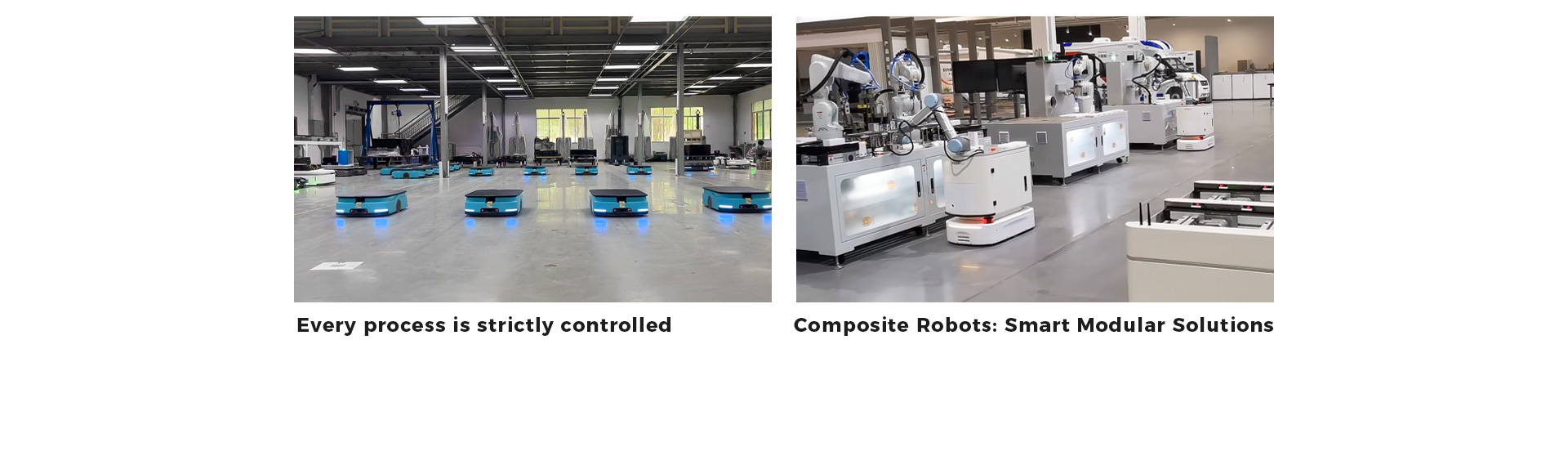
Composite Mobile Robots
AMR + 6-axis arm + roller or jacking module expands mobile manipulation into semiconductor, medical device, and precision assembly. ±0.05 mm repeatability changes the conversation from transport to production-line integration.
Open Platforms and ROS2
Humanoid and dual-arm chassis platforms with ROS2 openness create a new channel for research labs and integrators. Even traditional factory buyers benefit because open interfaces make WMS/MES integration less dependent on one vendor.
Charging and Energy Management
Automatic charging docks, opportunity charging, and battery telemetry are no longer accessories. They determine how many robots are needed for a 24/7 duty cycle and how the fleet behaves during peak throughput.
Data and Digital Twin
Buyers increasingly expect route simulation, utilization dashboards, and integration-ready APIs. The robot becomes a data node in warehouse and production flow, not a standalone machine.
For wholesale buyers, the practical takeaway is to request a platform roadmap—not only a quotation. Ask how the navigation stack will support future QR docking, how the fleet controller will scale beyond the first pilot, and whether the top module can be changed without replacing the entire chassis.
Navigation Configuration Matrix: Match Accuracy to the Station
Most factories should start with ±5 mm laser SLAM and add QR precision only at a minority of stations. This is often the highest-ROI configuration for wholesale buyers because it minimizes floor infrastructure while preserving precision where the process truly needs it.
| Configuration | Accuracy | Floor Setup | Best For | Procurement Note |
|---|---|---|---|---|
| Laser SLAM on natural features | ±5 mm | No tape, reflectors, or floor codes | Warehouse transfer, line-side delivery, layout changes | Lowest infrastructure cost; ideal baseline for multi-robot fleets |
| SLAM + QR code camera | ±2 mm | QR labels only at precision stations | High-shelf storage, precision docking, wafer handling | Invest only where station-level docking demands it |
| Composite robot with 6-axis arm | ±0.05 mm | Station calibration | Semiconductor and medical device assembly | Requires integration engineering, safety validation, and acceptance testing |
This matrix is useful during supplier comparison because it prevents every route from being priced with the highest precision option. It also gives integrators a clear language for separating transport accuracy from docking accuracy.
A 5-Step Buyer Evaluation Checklist Before You Request an AGV Quotation
From project experience, these five inputs determine most of the robot selection. Sharing them upfront shortens evaluation from weeks of clarification to days of technical comparison.
Map Load Profile
Record maximum weight, footprint, center of gravity, pallet condition, shelf type, and whether the load is lifted, towed, or stacked.
Share Site Layout
Provide a CAD drawing or sketch with aisle widths, doors, slopes, lifts, charging locations, and Wi-Fi coverage across the operating area.
Define Throughput
List missions per hour, peak windows, charging windows, and future volume growth. This sets fleet size and charging dock count.
Separate Precision Levels
Use ±5 mm SLAM for transport and specify ±2 mm QR or ±0.05 mm arm repeatability only at stations that genuinely require it.
Plan Interfaces & Service
Confirm WMS/MES integration, conveyor or machine handover, spare parts, training, acceptance tests, and after-sales escalation paths.
Wholesale Industrial AGV Procurement FAQ
These are the questions buyers most often ask when comparing China wholesale industrial AGV exporters, wholesalers, and system integrators. The answers are written for procurement, engineering, and operations teams who need practical decision support.
What does a China wholesale industrial AGV exporter do differently from a trading company?
A manufacturer-exporter controls chassis design, navigation integration, top-module customization, testing, and documentation. A trading company may source finished units but typically has less influence over engineering changes and acceptance testing. Shenzhen Marnix Intelligent Technology Co., Ltd. is presented as a manufacturer with about ten years of AGV engineering experience, TÜV Rheinland onsite assessment, and a portfolio covering laser SLAM AMRs, jacking robots, smart forklifts, composite robots, and charging docks.
What is the minimum order quantity for industrial AGV wholesale?
The MOQ depends on the platform and the level of customization. Standard platforms can be quoted for a single-unit evaluation, while wholesale programs with repeated configurations benefit from consolidated production, spare-part kits, and operator training. For accurate planning, share both the pilot quantity and the expected annual volume. Do not assume that one MOQ fits every robot type or every customization request.
What navigation accuracy should I specify for a warehouse or production line?
Start with ±5 mm laser SLAM on natural features for warehouse transfer, line-side delivery, and routes that may change. Add a QR code scanning camera only at stations that need ±2 mm docking precision. For composite robots with a 6-axis arm, ±0.05 mm repeatability is relevant to precision assembly and handling. Over-specifying every route with the highest accuracy usually adds cost without improving throughput.
Do industrial AGVs require floor modification or magnetic tape?
Standard laser SLAM navigation maps the existing environment, so no auxiliary tracks, reflectors, or floor QR codes are required. QR labels are only added at stations where tighter docking precision is needed. This is especially important for warehouses that cannot stop operations for installation or for factories that frequently rearrange production lines.
Can you customize top modules for system integrators and OEM buyers?
Yes. The product portfolio includes chassis-first options and customizable top modules such as jacking units, roller conveyors, forklift forks, and 6-axis robotic arms. Integrators can source a stable SLAM chassis, add their own application layer, and reduce the engineering burden of building mobile automation from scratch. Open platforms, including ROS2-oriented designs, are also available for advanced development projects.
How are multiple robots coordinated and charged?
Robots are managed by an intelligent scheduling system over indoor Wi-Fi, enabling simultaneous task assignment, traffic control, and automatic charging with compatible smart charging docks. Buyers should confirm Wi-Fi coverage, access-point density, and charging-window planning during the site survey. Fleet behavior during peak throughput is a better test than a single-robot demonstration.
How can I verify supplier credibility before placing an order?
Review the supplier’s manufacturing profile, onsite assessment reports, trade history, product test documentation, and reference deployments. For Marnix, relevant proof points include TÜV Rheinland onsite assessment, Fortune 500 supplier evidence, 200+ manufacturers served, and deployments across three continents. A trial project should also define acceptance criteria for navigation accuracy, payload handling, safety behavior, and uptime.
What information should I include in an RFQ for industrial AGV procurement?
Send the load profile, site layout, throughput target, docking precision requirements, interface requirements, Wi-Fi coverage, timeline, target budget, and acceptance-test expectations. Photos or video of the current material flow are also useful. With these inputs, an experienced exporter can recommend the correct platform, payload class, navigation configuration, fleet size, and charging strategy instead of quoting a generic robot.
Build a Lower-Risk Industrial AGV Wholesale Program
Send your load profile, layout drawing, throughput target, docking precision, and interface requirements. Our engineering team will return a configuration recommendation, a shortlist of platforms, and the documentation package needed for internal approval.