Eight Proven AGV, AMR and Jacking Robot Platforms for Material Flow Projects
These eight platforms cover rack lifting, pallet handling, line-side delivery, precision docking, navigation sensing and service robotics. Use the list as a starting point for a mixed-fleet quotation, then match payload, aisle width, docking tolerance and throughput to your actual process.
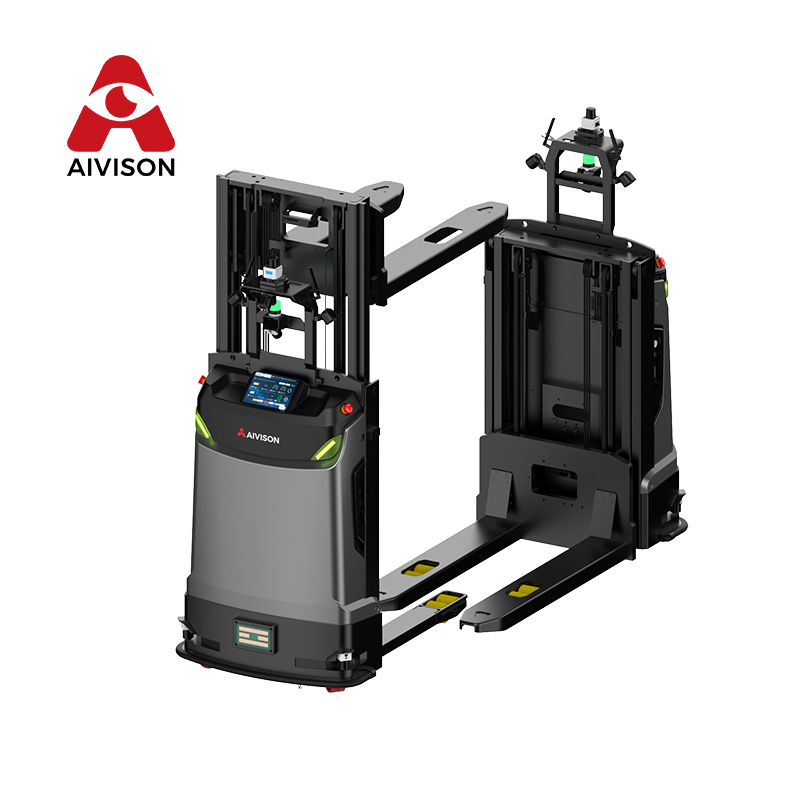
New Warehouse Autonomous Cars agv Robot 2000kg Load Capacity Stacker agv Robot
A heavy-payload autonomous stacker for warehouse transfer and high-bay support. Suitable when stable lifting, repeatable docking and 24/7 material movement are more important than maximum travel speed.
View product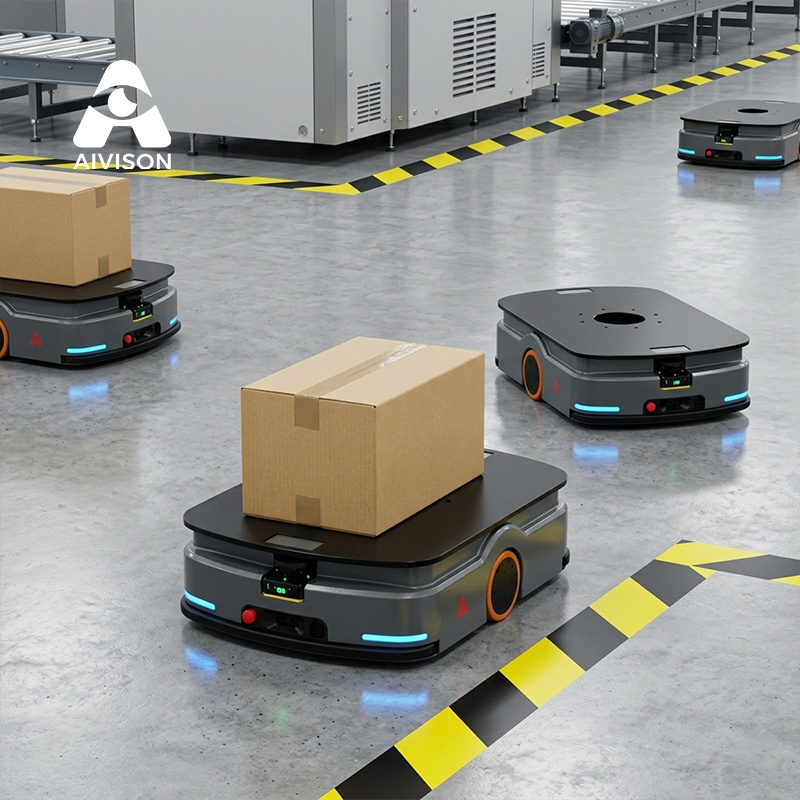
Autonomous Mobile AMR Robot 300kg Payload Laser Guided AGV for Carry Goods in Factory
A compact laser-guided AMR for narrow aisles, light assembly lines and internal goods movement. It is a practical entry platform for factories that need fast mapping and low floor disruption.
View product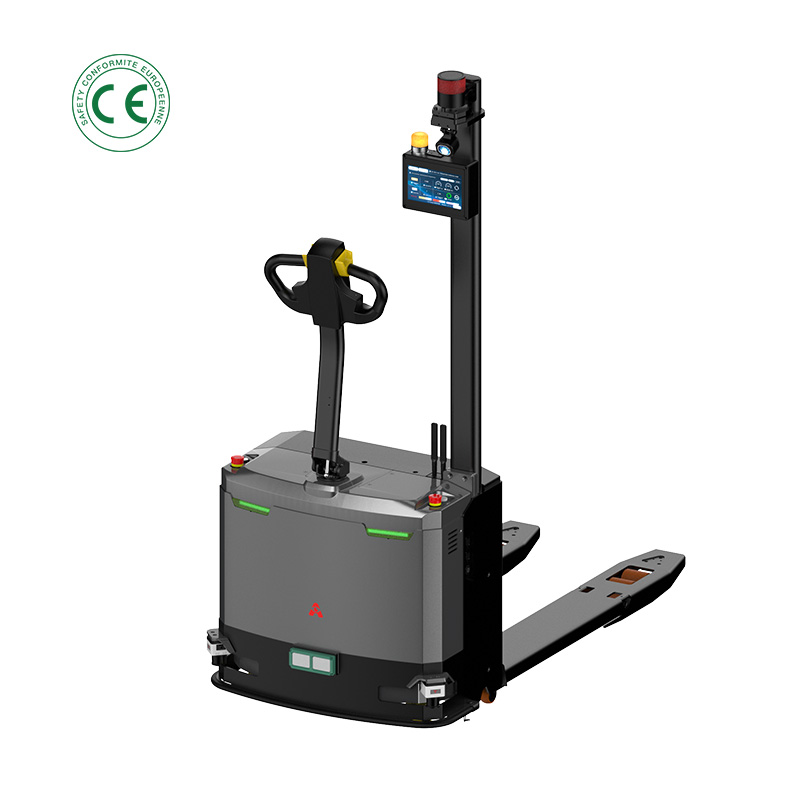
Autonomous Mobile Robot AMR AGV Forklift Pallet Stacker CE Certificate for Smart Warehouse and Production Line Automation
An AMR forklift / pallet stacker for smart warehouses and production-line automation. The platform is relevant for buyers who need CE documentation, pallet recognition options and integration with existing WMS or MES workflows.
View product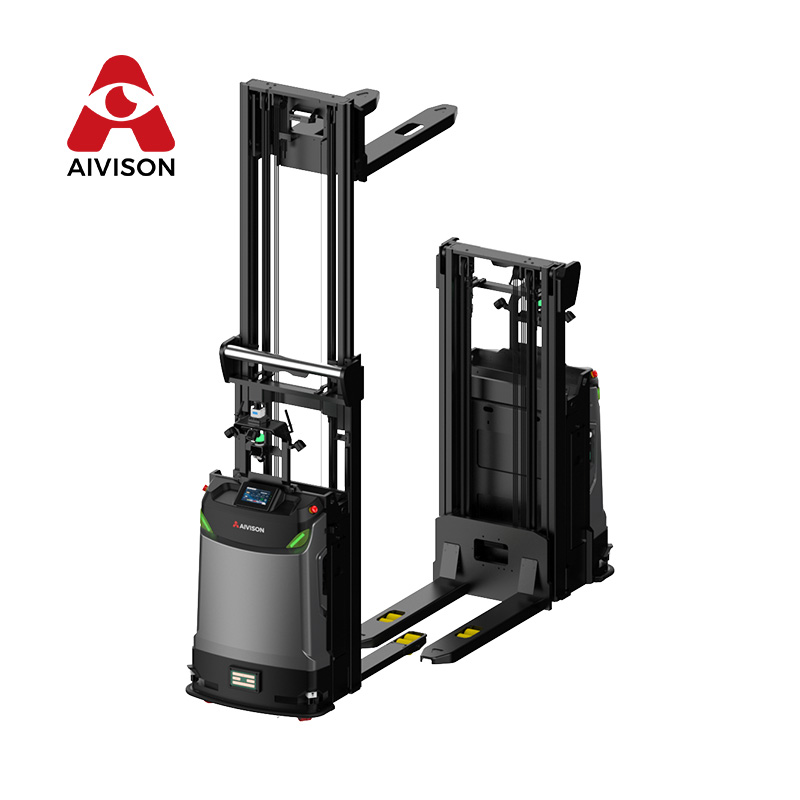
High Precision agv Forklift Full Servo Motor Controlled Laser Forklift with Heavy Load 2000kg
Full servo motor control supports smoother heavy-load handling and repeatable positioning. Recommended for projects in which forklift motion quality, load stability and maintenance access have a direct effect on uptime.
View product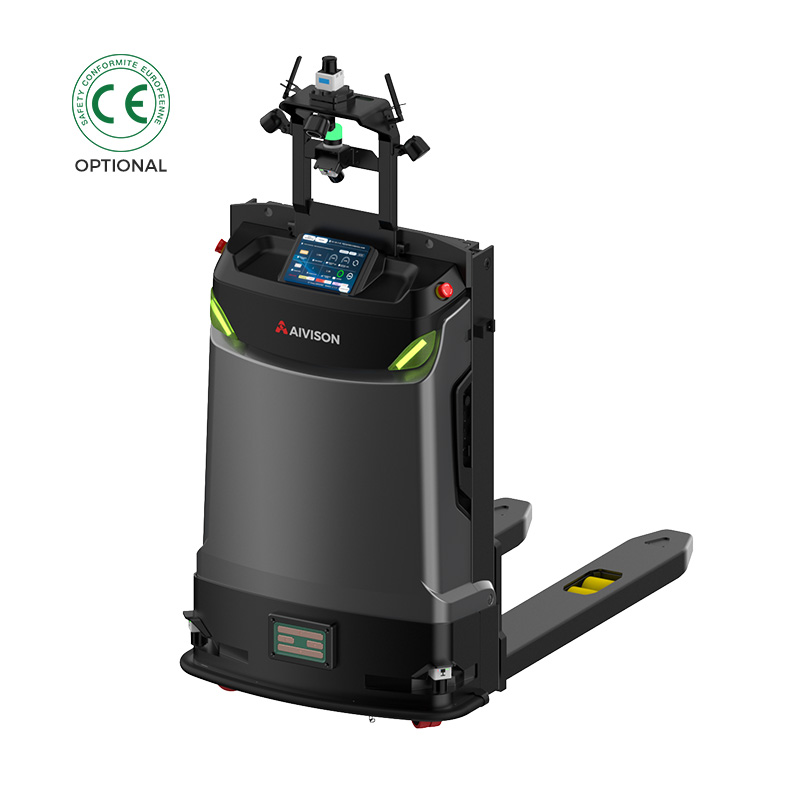
AGV AMR Warehouse Automatic Guided Vehicle 1500kg 2000kg AGV Robot Forklift
A flexible warehouse AGV/AMR forklift family for pallet movement, receiving and dispatch. Buyers can compare 1500 kg and 2000 kg configurations against rack heights, pallet quality and aisle dimensions.
View product
Hot Selling Logistics Navigation Detector Sensor Lidar Manufacturers Direct Sales
A navigation detector sensor option for logistics robots, fleet upgrades and integration projects. Useful for wholesalers and integrators comparing LiDAR sourcing alongside complete mobile robot platforms.
View product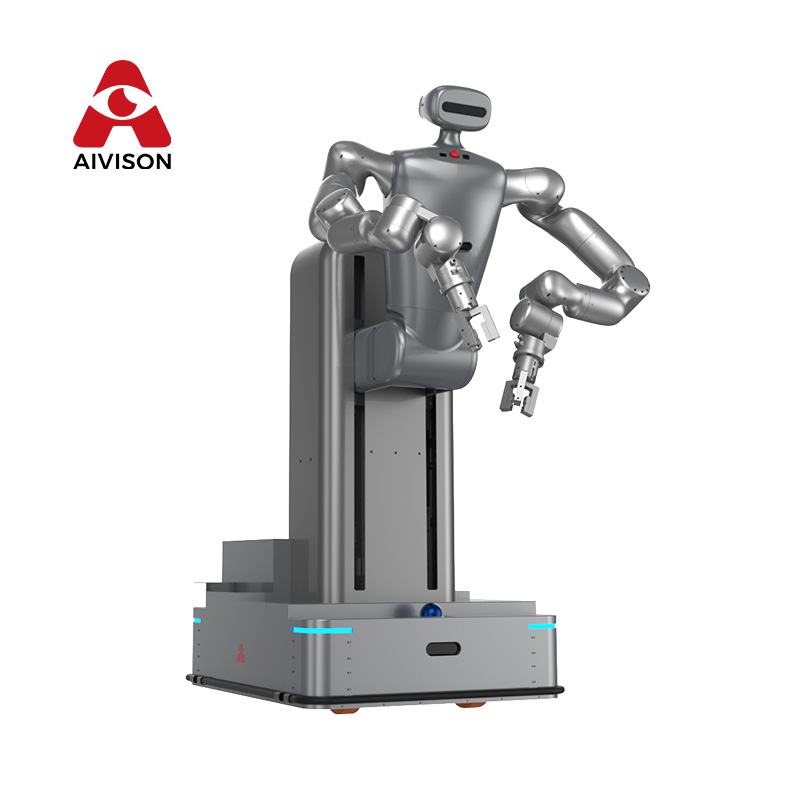
Omnidirectional Service Humanoid Robot Chassis Dual 7-DOF Arms Laser SLAM Navigation for Hospitality and Retail
An omnidirectional humanoid service robot platform with dual 7-DOF arms and laser SLAM navigation. It gives integrators a higher-level interaction and manipulation base for hospitality, retail and guided service concepts.
View product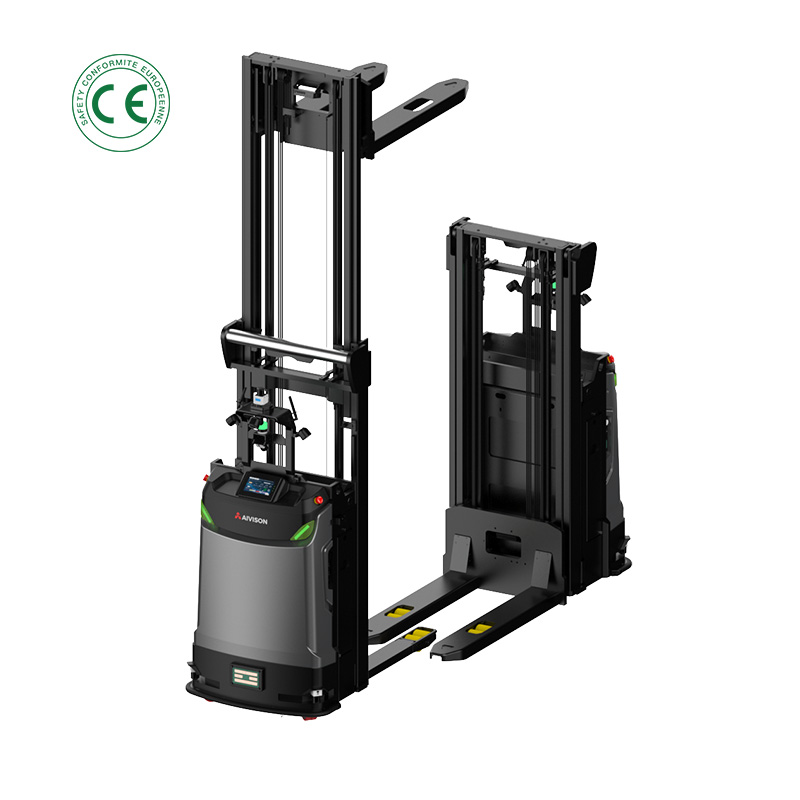
Factory AMR Robot AGV Robot Laser 2000kg Forklift AGV for Industrial Material Handling
A 2000 kg laser forklift AGV for industrial material handling, from inbound pallets to line-side replenishment. It is suited to factories that want autonomous pallet movement without rebuilding the floor.
View productWhy Serious Buyers Compare Total Cost of Ownership, Not Only the Robot Price
A buyer searching for a “China wholesale AGV jacking robot supplier & wholesaler” is usually not looking for a catalogue-only middleman. The intent is more specific: find a manufacturer or verified wholesale supplier that can match a jacking robot to a rack, pallet, production line or automated warehouse, then support the project through mapping, commissioning and after-sales service.
That is why the most useful procurement conversation begins with the work to be done. A 2000 kg stacker, a 300 kg light AMR, a CE-certified AMR forklift and a composite robot with a 6-axis arm may all appear under the same “mobile robot” keyword, yet they solve different problems. Payload, aisle width, docking tolerance, throughput and equipment interface determine the right platform far more reliably than a generic price table.
Shenzhen Marnix Intelligent Technology Co., Ltd. approaches wholesale robot supply as an engineering and manufacturing problem. The portfolio includes laser SLAM AMRs, jacking robots, smart forklifts, pallet robots, composite mobile robots, navigation sensors and intelligent charging docks. Robots are coordinated by an intelligent scheduling system over indoor Wi-Fi, enabling multi-robot task assignment, traffic control and automatic charging for mixed fleets.
For wholesale buyers and integrators, the practical question is not “Which robot is cheapest?” but “Which supplier can document the navigation method, confirm the top-module interface, provide a realistic deployment sequence and stay accountable after shipment?” That is the standard this guide uses.

Match the AGV Jacking Robot Platform to the Operational Job
Use this decision matrix during early wholesaler discussions. It prevents over-specifying precision, choosing the wrong load interface or underestimating the cost of floor changes.
| Operational need | Recommended platform | Navigation and precision | Procurement note |
|---|---|---|---|
| Rack or shelf transport on a production line | Jacking robot / low-profile lift AMR | Laser SLAM at about ±5 mm; optional QR assist at ±2 mm for handover stations | Confirm under-rack clearance, center of gravity, lift height and rack stability before quotation. |
| Palletized warehouse transfer | Smart forklift or AMR pallet stacker | SLAM with camera-assisted fork entry; CE documentation available on selected models | Pallet quality, fork pocket condition, aisle width and rack tolerance strongly affect cycle time. |
| Narrow-aisle light material handling | 300 kg AMR pallet robot | Laser navigation with fleet scheduling; map changes without floor rework | Check Wi-Fi coverage, aisle clearance and the required mission rate per hour. |
| Precision machine tending or high-value assembly | Composite mobile robot with 6-axis arm | Station calibration and multi-layer synchronization reaching ±0.05 mm repeatability | Evaluate cycle time, safety envelope, tooling and the interface protocol of the production machine. |
Four Purchasing Shifts Reshaping Wholesale AGV and AMR Projects
Wholesale robot sourcing is moving from one-off equipment buying toward a repeatable automation programme. These four shifts appear repeatedly in serious RFQs and framework agreements.
TCO replaces sticker price
Buyers now score energy use, spare-parts availability, commissioning support, uptime commitments and service response. A lower robot price can become expensive if charging docks, top modules or software integration are treated as afterthoughts.
Mixed fleets become normal
Warehouses rarely standardize on one chassis forever. Procurement teams increasingly ask for WMS/MES interfaces, Wi-Fi fleet scheduling and clear API boundaries so jacking robots, forklifts and existing equipment can share routes and traffic rules.
Modular top modules win
Rather than buying several unrelated machines, integrators prefer a proven SLAM chassis with interchangeable jacking units, roller conveyors, forklift forks or robotic arms. This reduces spare-parts complexity and shortens future line changes.
Evidence is part of the quotation
Third-party assessments, trade records, CE documentation, factory images and test reports now influence supplier selection. A wholesaler that can provide verifiable support content is easier to approve internally than one relying only on catalogue claims.
What the Next Generation of AGV Jacking Robots Must Deliver
The strongest platforms will not simply add sensors. They will reduce deployment risk, simplify integration and make mixed-fleet operation easier to manage across a factory or warehouse network.
3D LiDAR and vision fusion
Natural-feature navigation will continue to improve through combined 3D LiDAR, visual semantics and dynamic obstacle classification. The practical benefit is more reliable movement in mixed human and vehicle traffic without extra floor infrastructure.
Compact high-payload chassis
Factories want lifting capability without wasting aisle space. Future jacking robots must increase payload density while keeping the chassis low, stable and serviceable, especially in lithium battery, 3C electronics and automotive parts plants.
QR-assisted precision without floor rework
Most stations do not need ±2 mm accuracy, but some do. A hybrid model—laser SLAM as the baseline plus QR labels only at critical docking points—keeps infrastructure costs contained while meeting high-shelf and machine-tending requirements.
Opportunity charging and battery strategy
Automatic charging docks will become a design decision, not an accessory. Buyers should ask about battery chemistry, charge time, opportunity-charging logic, dock count and how fleet scheduling prevents queues during peak demand.
Digital twin and fleet orchestration
Multi-robot Wi-Fi scheduling will increasingly sit inside a digital twin used for route validation, congestion analysis and throughput planning. Procurement should ask for simulation evidence and measurable acceptance criteria, not only a dispatch screenshot.
Safety and OT integration maturity
Future buying decisions will include emergency-stop architecture, restricted-zone rules, cyber access control and maintenance lockout. Industrial buyers need a supplier that understands OT realities as well as robot navigation specifications.
A Verified China Wholesaler with Manufacturer-Level Engineering Depth
Shenzhen Marnix Intelligent Technology Co., Ltd. combines a broad mobile robot portfolio with customization and integration support. For distributors and system integrators, that means one source for jacking robots, smart forklifts, AMRs, charging docks and key navigational components—supported by a team familiar with real production lines.
The value of a wholesale relationship appears long before mass production: in the technical questions asked, the top-module decisions made and the documentation supplied for internal approval.
- About ten years of AGV engineering experience and Shenzhen-based R&D and manufacturing.
- ±5 mm SLAM navigation on natural features, with QR-assisted stations for ±2 mm and composite robots at ±0.05 mm repeatability.
- Products and solutions for both end users and system integrators, including custom top mechanisms.
- Onsite supplier assessment by TÜV Rheinland and a documented Fortune 500 supply record.
Manufacturer-level customization
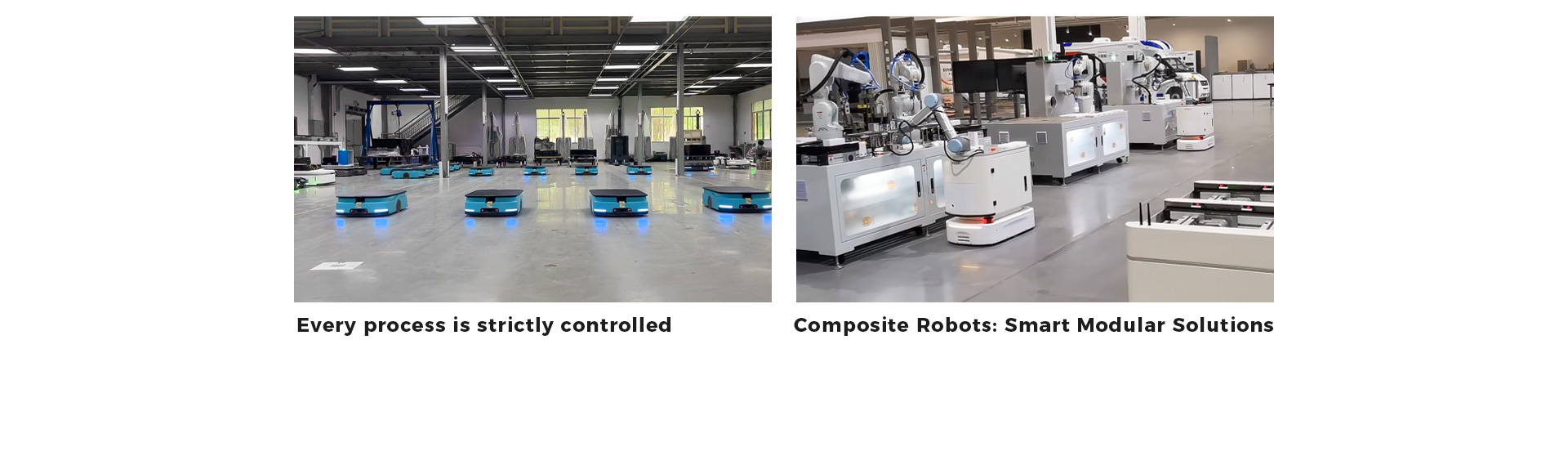
Chassis, payload and top mechanisms can be engineered around the process instead of forcing a standard fit. Typical customization areas include jacking units, roller conveyors, forklift forks and 6-axis robotic arms.
Complete AMR product ecosystem
Jacking robots, smart forklifts, pallet AMRs, composite robots, navigation sensors and compatible intelligent charging docks allow a wholesaler to quote a coherent fleet rather than disconnected items.
Precision without floor rework
Laser SLAM maps the existing environment so standard deployments do not require magnetic tape, reflectors or floor QR codes. QR labels are reserved for stations that genuinely need higher docking accuracy.
Wi-Fi multi-robot scheduling
An intelligent scheduling system coordinates simultaneous task assignment, traffic control and automatic charging. This is important for mixed fleets, peak throughput and deployments that grow from a pilot to multiple zones.
Multi-stage quality protocol
Multi-stage intelligent inspection and thousands of operational stress tests target near-zero failure rates before shipment. The aim is predictable uptime on mission-critical lines, not merely a passing factory test.
Integrator and wholesale support
Documentation, interface coordination and customization support help integrators build repeatable offers. End users benefit from the same engineering input when they need a direct project evaluation.
Quality, Compliance and Evidence That Buyers Can Check
E-E-A-T is not a claim in a brochure. It is the combination of experience, expertise, authority and trust signals that survives procurement review.
TÜV Rheinland onsite assessment
Company premises and operations have been verified through an independent onsite supplier assessment.
Review assessmentFortune 500 supply record
Procurement contract with a Fortune 500 company is supported by transaction verification and independent third-party assessment.
View trade historyVerified multispecialty supplier
Low-MOQ customization and multi-category robot procurement capability support wholesale and integrator orders.
Review trade capacityCredit and transaction transparency
Credit index and transaction level history provide additional due-diligence evidence before an AGV project is approved.
Check credit index
Where the Range Fits: Eight Industries with Different Material-Flow Realities
Each industry introduces its own constraints: cleanroom discipline, battery safety, high-shelf precision, pallet quality or mixed human traffic. The platform should be selected against those constraints.
Semiconductor
Cleanroom material movement, wafer handling and precision docking.
3C Electronics
Line-side delivery, fixture transport and flexible assembly support.
Lithium Battery
Rack transport, line-side replenishment and safety-aware routing.
Photovoltaic
Module logistics, cassette transfer and production-line interface.
Automotive Parts
Pallet handling, kitting support and mixed-traffic warehouse transfer.
PCB
Roller-conveyor top modules, cassette movement and machine tending.
Textile
Long-distance warehouse transfer and repetitive transport tasks.
Medical Devices
High-value assembly support, composite robots and traceable handling.
Common Questions About Wholesale AGV Jacking Robots
These answers are written for procurement teams, engineering managers and integrators who need clear technical and commercial direction before requesting a quotation.
What is an AGV jacking robot, and how is it different from a standard AMR?
A jacking robot is a mobile platform that drives under a rack, shelf or carrier, lifts it and moves it. The “AGV” and “AMR” labels are sometimes used interchangeably in the market; the more important distinction is the navigation method, lift mechanism, payload rating and fleet software. A modern laser SLAM jacking robot can navigate without fixed tracks while still providing stable lifting for line-side logistics.
What navigation accuracy can be achieved without modifying the floor?
Using laser SLAM on natural features, Marnix AMRs reach about ±5 mm positioning accuracy without magnetic tape, reflectors or floor QR codes. Adding a QR code scanning camera at specific stations raises accuracy to ±2 mm. Composite robots with a 6-axis arm can reach ±0.05 mm repeatability after station calibration. Actual performance depends on site conditions, load stability and acceptance criteria.
Can you customize a jacking robot or top module for my production line?
Yes. As a manufacturer, Marnix customizes chassis and top modules such as jacking units, roller conveyors, forklift forks and 6-axis robotic arms to connect with production equipment. Provide the load drawing, interface height, communication protocol and cycle-time target so the mechanical and software scope can be confirmed.
How are multiple robots coordinated, and what happens when one needs charging?
An intelligent scheduling system manages the fleet over indoor Wi-Fi, enabling simultaneous task assignment, traffic control and automatic charging with compatible smart charging docks. During quotation, confirm peak mission rate, charger count and the rules for low-battery return so charging does not create a hidden throughput bottleneck.
What information should be included in a wholesale RFQ?
Include maximum load weight, footprint and center of gravity; a floor layout with aisle widths and doors; throughput targets by shift; docking precision requirements; Wi-Fi coverage; interfaces with conveyors, machines or shelving; and the required service level. These six categories usually determine 90% of robot selection.
How should I compare quotes from different AGV suppliers?
Compare the complete scope: number of robots, charging docks, top modules, mapping and commissioning, training, spare parts, warranty terms, software interfaces, safety validation and response time. Ask each supplier to state which assumptions affect price. A good quote makes exclusions visible, while a weak quote hides integration work behind a low robot price.
Which industries have evidence of deployment?
The portfolio is applied across semiconductors, 3C electronics, lithium batteries, photovoltaics, automotive parts, PCB, textiles and medical devices. The company reports 200+ manufacturers served across three continents, including supply to system integrators and a verified Fortune 500 supply record. Buyers should always request project-relevant references and acceptance documents.
What is a sensible deployment sequence for risk control?
Start with site survey and a single-zone pilot, then validate route safety, docking accuracy, cycle time and operator response. After acceptance, expand to second-zone traffic, shared charging and WMS/MES integration. Phased deployment reduces disruption and gives procurement a documented basis for scaling the fleet.
Build a Better Wholesale Robot RFQ in Three Steps
Clear inputs shorten evaluation from weeks to days. Share the essentials below and the engineering team can recommend a platform, navigation configuration and fleet size.
Define the load and interface
Provide rack or pallet dimensions, maximum weight, center of gravity, lift height, fork entry requirements and any conveyor or machine interface.
Map the floor and traffic
Share a CAD plan or sketch with aisle widths, doors, slopes, lifts, charging locations and areas where people or forklifts share the route.
Agree on acceptance metrics
Set target missions per hour, docking tolerance, uptime assumptions, integration scope and the pilot acceptance criteria before placing a wholesale order.
Request a Wholesale AGV Jacking Robot Recommendation
Tell us your payload, layout, throughput and docking precision. We will help you compare jacking robots, AMR forklifts, composite robots and charging infrastructure without adding unnecessary floor work.