China Top Warehouse Robot Factories & Wholesaler
A procurement-grade guide to laser SLAM AMRs, jacking robots, smart forklifts, composite mobile robots and warehouse automation platforms — built for factory-direct evaluation, integrator sourcing and long-term total cost of ownership.
8 Warehouse Robot Platforms for 2025–2030 Procurement
Below the banner are eight product routes from Shenzhen Marnix Intelligent Technology Co., Ltd. — covering humanoid development chassis, omnidirectional mobile platforms, jacking robots, lifting AGVs, heavy-load forklifts and intelligent warehouse AMRs. Each product URL is preserved for direct catalog review.

Humanoid Robot Chassis Dual 7-DOF Arms Laser SLAM Omnidirectional Navigation ROS2 Open Platform AMR
A dual-arm, omnidirectional mobile platform for AI research and advanced warehouse manipulation pilots. ROS2 openness lets integrators add perception, grasping and task software without replacing the mobility stack.

Omnidirectional Humanoid Robot Chassis Dual 7-DOF Arms Laser SLAM Autonomous Warehouse AMR Mobile Platform
A warehouse-focused humanoid AMR platform combining 360° movement, dual arms and SLAM navigation. Suitable for service, laboratory and mixed-material handling where layouts change frequently.

AI-Ready Humanoid Robot Chassis Dual 7-DOF Arms Omnidirectional Drive ROS2 Laser SLAM Open Development Platform
An AI-ready development base for teams that need a stable mobile chassis and a documented open software layer. It shortens prototyping for robot learning, inspection and collaborative automation.
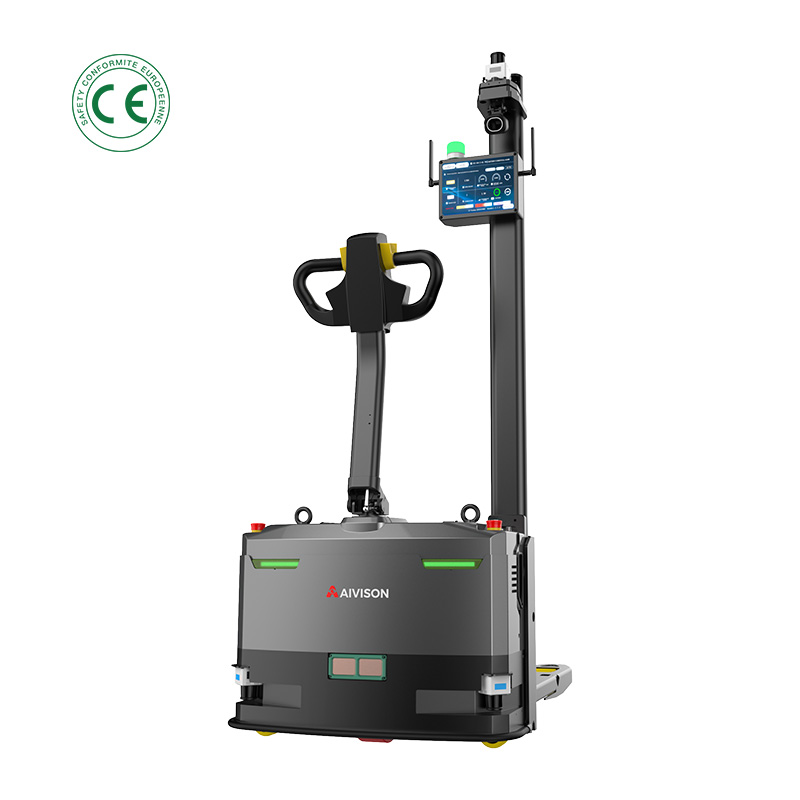
AIVISON CE Laser SLAM Navigation AGV 1500kg Warehouse Lifting Operations
A 1,500 kg-class lifting AGV/AMR for repetitive warehouse lifting and transfer. Use it where stable payload movement, automatic charging and fleet scheduling matter more than a custom top module.

Heavy Load 2000KG Load Forklift Laser Guide AMR for Warehouse Pallet
A 2,000 kg laser-guided forklift AMR for pallet handling in high-throughput warehouses. It is a practical alternative to floor tracks when pallet positions and aisle layouts change.
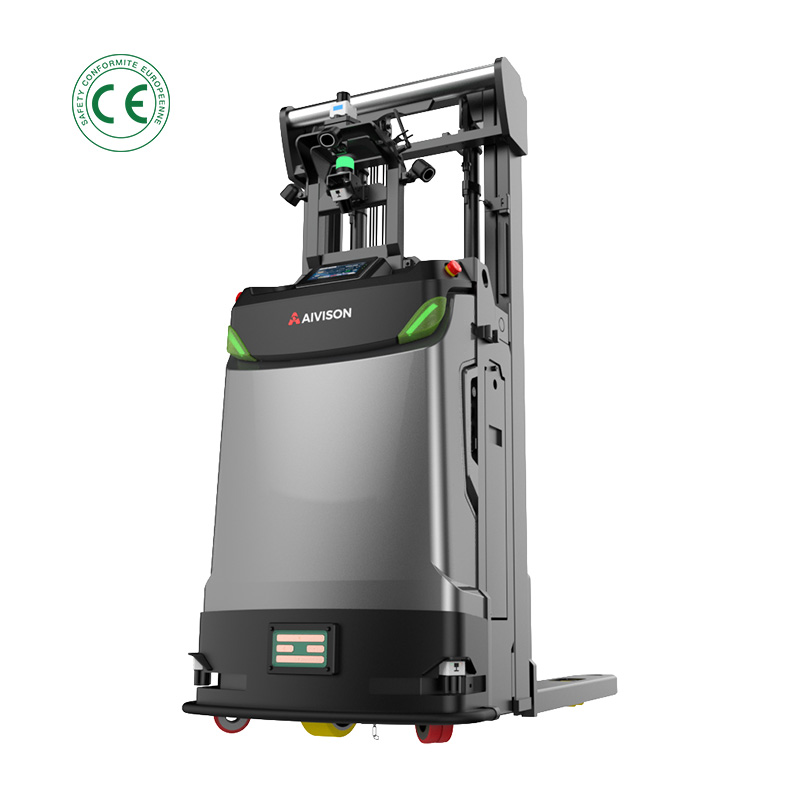
Smart Transport Robotic with Laser Navigation Reach 2000KG AGV Logistics Robots Warehouse Robot AMR
A reach-style 2,000 kg transport platform for logistics and warehouse tasks. Combine it with fleet scheduling to move mixed loads between receiving, storage and dispatch.

High-performance Intelligent Smart Automated Guided Vehicle 2000kg AMR Robot
A high-performance 2,000 kg intelligent AMR for manufacturers that need a robust transfer platform. Configure the top module for conveyors, lifting or custom docking.

Omnidirectional Service Humanoid Robot Chassis Dual 7-DOF Arms Laser SLAM Navigation for Hospitality and Retail
A service-oriented dual-arm humanoid chassis for hospitality, retail and public-facing pilots. Laser SLAM supports safe movement in dynamic spaces, while ROS2 supports custom interaction software.
What “China Top Warehouse Robot Factories & Wholesaler” Really Means for Buyers
The query blends two different procurement intentions: factory-direct sourcing for end users and wholesale/OEM supply for integrators. A credible supplier must satisfy both.
Semantic search for this phrase is rarely a request for a generic catalog. The buyer is usually comparing a factory-direct manufacturer with a trading wholesaler, or validating whether one supplier can support both a single-site deployment and a multi-project integrator program. That changes the evaluation criteria. You need evidence of engineering control, application fit, fleet software, spare-parts availability, safety validation and third-party verification — not only a low unit price.
Shenzhen Marnix Intelligent Technology Co., Ltd. is a useful reference case because its public product and credential information spans the full chain: laser SLAM AMRs, jacking robots, smart forklifts, composite mobile robots, intelligent charging docks, custom top modules, TÜV Rheinland onsite assessment and Fortune 500 supply history. For buyers, the useful part is not the claim itself — it is the operating detail behind the claim. A factory that can customize the top module, tune the navigation map and support fleet scheduling will reduce integration risk compared with a wholesaler that only passes through a catalog.
Factory Control Matters
A real factory controls chassis design, payload integration, top-module customization and test criteria. Ask who changes the robot when your conveyor, rack or docking station is non-standard.
Wholesale Without Diluted Support
Integrators need repeatable specifications, mixed-model supply, charging docks, fleet software and documentation. A wholesale program is only useful when engineering support scales with it.
Precision by Station
Do not buy one accuracy level for the whole floor. Transfer lanes usually work at ±5 mm; high-shelf docking may need ±2 mm; composite arm stations justify ±0.05 mm.
Why Shenzhen Marnix Qualifies as a Factory-Wholesaler for Warehouse Robotics
A manufacturer-level portfolio, an integrator supply model and independently assessed credentials — evaluated together rather than as isolated claims.

Located in Room 102, Building P, No. 163 Ban Xuegang Avenue, Shenzhen, Guangdong, Marnix builds laser SLAM autonomous mobile robots, jacking robots, smart forklifts, pallet AMRs, composite mobile robots and intelligent charging docks. The range is not a random list. It shares a navigation core, charging strategy and fleet scheduling layer, which is why a mixed fleet can be commissioned as one operating system rather than a collection of unrelated machines.
- About ten years of AGV engineering — manufacturer-level experience in chassis, navigation, top modules and fleet deployment.
- Complete robot + dock + scheduling portfolio — jacking robots, smart forklifts, pallet AMRs, composite platforms and compatible intelligent charging docks.
- Precision without automatic floor rework — ±5 mm laser SLAM on natural features; QR camera upgrade to ±2 mm; composite arm repeatability to ±0.05 mm.
- Custom top mechanisms — jacking units, roller conveyors, forklift forks and 6-axis robotic arms connect directly with production equipment.
- Fleet coordination over indoor Wi-Fi — simultaneous task assignment, traffic control and automatic charging through an intelligent scheduling system.
- Proven deployment footprint — more than 200 manufacturers served across three continents and eight core industries.

TÜV Rheinland Onsite Assessment
Company premises and operations verified by an independent inspection body — useful evidence for buyers who cannot visit Shenzhen immediately.
View Assessment Report
Supplier to Fortune 500
Procurement contract with a Fortune 500 company, assessed by independent third parties — a relevant signal for wholesale and integrator sourcing.
Review Trade History
Verified Multispecialty Supplier
Low-MOQ customization and multi-category robot procurement capability, suitable for mixed fleets and project-based integrator demand.
View Trade CapacityCredit & Transaction Records
Transparent credit index, transaction level and trade history on Alibaba.com — supporting due diligence before a factory-direct order.
Check Credit IndexWarehouse Robot Buying Is Moving from “Robot Price” to Operating Evidence
Buyers are comparing total cost per moved pallet, change-management effort, fleet interoperability and verified supply capability. The weighting below is an illustrative buyer-side model, not a market forecast.
SLAM-First, Infrastructure-Light Layouts
Procurement teams increasingly ask whether a robot can map existing aisles instead of installing tape or reflectors. Fixed-path AGV projects remain valid, but laser SLAM reduces change-order risk when racks, stations or product flows move.
Precision Bought by Station
Avoid specifying one accuracy level for the entire warehouse. Split transfer lanes at ±5 mm, high-shelf docking at ±2 mm with QR assist, and manipulator stations at ±0.05 mm repeatability.
Fleet Interoperability and Open Software
ROS2, APIs and scheduling interfaces matter when a site adds robot types over multiple phases. Ask for mission interfaces, traffic-control handshakes and data export formats before the first purchase order.
Composite Mobile Manipulation
AMRs with 6-axis arms and roller modules are moving from demonstrations into production tooling. The buying question is repeatability, safety zoning and cycle time — not only payload or arm reach.
Energy and Uptime as Economic Variables
Automatic charging, battery strategy and failure rate determine utilization. A lower-priced robot with poor duty cycle can cost more per moved pallet once the fleet scales beyond the pilot.
Verified Supply Chain and Service Depth
TÜV onsite assessment, Fortune 500 supply history, transaction records and spare-parts response are now part of the buying checklist, especially for wholesale or integrator orders.
Buyer-side weighting model for discussion. Adjust the percentages to your project: a high-shelf brownfield site may weight precision and re-mapping higher; a multi-vendor logistics hub may weight interoperability and service depth higher.
What the Next Warehouse Robot Platform Will Include
The next procurement cycle will favor platforms that connect mobility, manipulation, software and service evidence — without forcing a full-floor infrastructure rebuild.
Mobile Manipulation at Production Repeatability
Composite robots with AMR bases and 6-axis arms are reaching ±0.05 mm repeatability for semiconductor and medical device assembly. The integration focus shifts to station calibration, safety and cycle-time validation.
Hybrid Localization: SLAM + QR + Vision
Natural-feature SLAM remains the default for transfer routes, QR labels are added only at precision stations, and vision assists pallet or rack recognition. This hybrid approach avoids unnecessary floor infrastructure.
Fleet Orchestration Becomes the Product
Wi-Fi fleet scheduling, traffic control and automatic charging are now central to utilization. Buyers should request the task-assignment logic, exception handling and data export model, not only a robot specification sheet.
Modular Payload Interfaces
One chassis can support jacking units, roller conveyors, forklift forks or robotic arms. Modularity reduces spare-parts complexity while allowing end users and integrators to adapt the same platform to different production zones.
Digital Commissioning and Layout Agility
Mapping and re-mapping without floor works allows warehouses to change racking, stations and traffic rules. Digital commissioning and simulation reduce the risk of stopping operations during installation.
Safety and Mixed-Traffic Intelligence
Dynamic obstacle avoidance for people, forklifts and manual carts is becoming a baseline requirement. Ask for the safety concept, operating zones, speed rules and incident-handling procedure at the site level.
Buy Precision Only Where It Pays
One of the most common procurement errors is over-specifying navigation accuracy across the entire facility. Use a station-level accuracy map instead.
| Configuration | Accuracy | Floor Setup | Best Fit | Procurement Note |
|---|---|---|---|---|
| Laser SLAM on natural features | ±5 mm | No tape, reflectors or floor QR codes | Warehouse transfer, line-side delivery, changing layouts | Default for most lanes; validate mapping and re-mapping workflow. |
| SLAM + QR code scanning camera | ±2 mm | QR labels only where precision is required | High-shelf storage, precision docking, wafer handling | Use at selected stations rather than the whole floor. |
| Composite robot with 6-axis arm | ±0.05 mm | Station calibration | Semiconductor and medical device assembly | Evaluate repeatability, safety zoning and cycle time together. |
Eight Industries Served by Marnix Warehouse Robots
Mixed human and vehicle traffic, changing layouts and 24/7 duty cycles are the common operating conditions across these applications.
Semiconductor
Cleanroom logistics, wafer handling and precision docking with QR or composite arms.
3C Electronics
Line-side delivery, assembly transfer and material movement in fast-changing production cells.
Lithium Battery
Jacking robots for rack and material transport, with fleet scheduling across production zones.
Photovoltaic
Module logistics and heavy pallet handling with smart forklifts and warehouse AMRs.
Automotive Parts
Pallet transfer, warehouse lifting and line-side delivery in mixed-traffic environments.
PCB
Roller conveyor AMR modules for automatic load transfer between production equipment.
Textile
Warehouse transport and high-bay movement where routes may change with seasonal demand.
Medical Devices
Composite mobile robot assembly with high repeatability and traceable station handover.
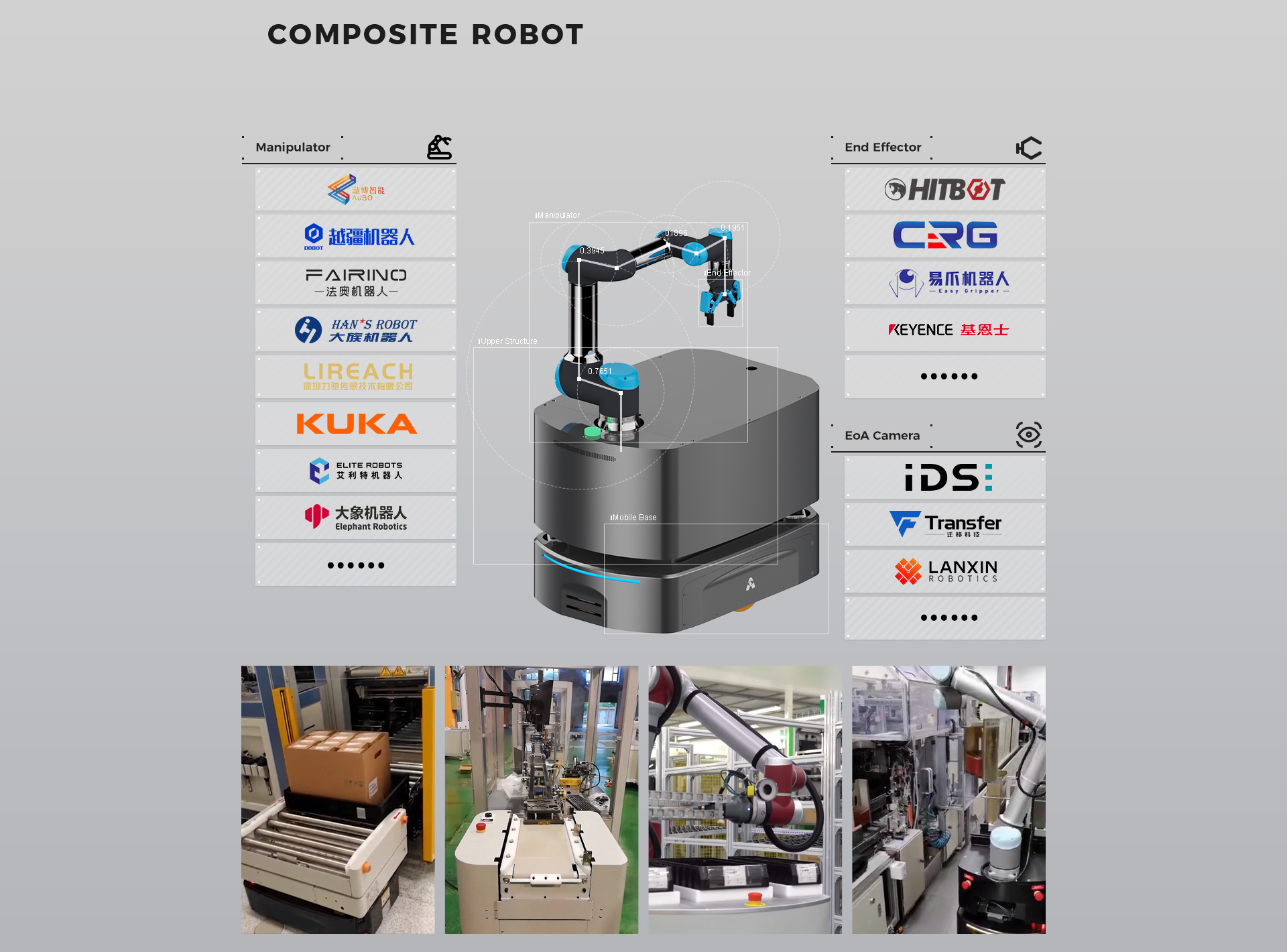
Tested for Uptime, Built for Mission-Critical Lines
Reliability is engineered and verified before shipment — not discovered on the shop floor. Marnix describes multi-stage intelligent inspections and thousands of operational stress tests intended to target near-zero failure rates. Those claims matter most when they are tied to a specific application: load profile, aisle width, docking tolerance, traffic density and shift pattern.
For buyers, the useful quality evidence is not a slogan. It is a test plan, a factory acceptance test, a spare-parts list and a commissioning checklist. The same logic applies to the TÜV Rheinland onsite assessment and the Fortune 500 supply history: these are third-party or transaction-level signals that reduce the information asymmetry between an overseas buyer and a Shenzhen factory.
Composite Repeatability
AMR base plus 6-axis arm for semiconductor and medical device assembly.
Manufacturers Served
Deployments across three continents, including integrator projects.
- Multi-stage inspection: electrical, mechanical, navigation and safety checks before shipment.
- Operational stress testing: repeated missions, docking cycles and route changes to expose integration issues early.
- Fleet validation: traffic control, charging behavior and exception handling before full-scale rollout.

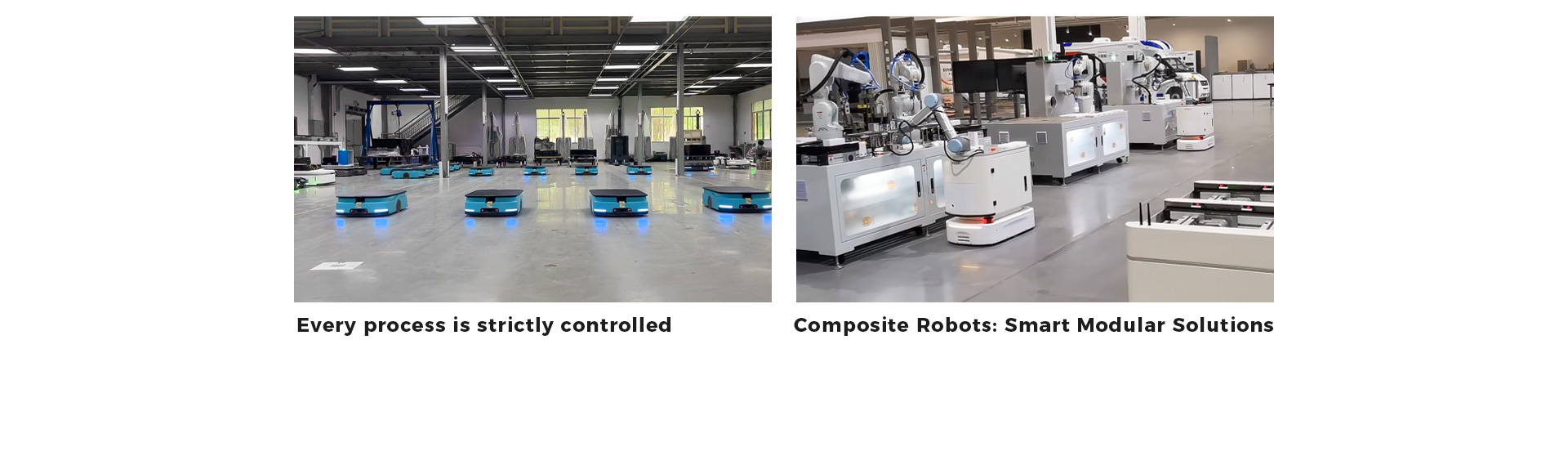
Composite Robotics: Where the Factory’s Engineering Depth Shows
A standard transfer AMR proves mobility. A composite robot proves integration. The combination of autonomous navigation, a 6-axis arm and a production interface requires coordinated engineering across mechanism design, safety zones, task sequencing, calibration and software. Marnix states that multi-layer synchronization protocols deliver ±0.05 mm repeatability for semiconductor and medical device production — a specification that should be validated against your station tolerance, cycle time and quality plan.
For integrators, this is also the clearest differentiator between a factory-wholesaler and a catalog seller. A catalog seller can quote a chassis. A factory-wholesaler can discuss how the top module, robot arm, docking routine and fleet scheduler will work together in the final cell.
Six Inputs That Shorten Warehouse Robot Evaluation
From Marnix project experience, these six inputs determine most of robot selection. Sharing them upfront shortens evaluation from weeks of clarification to a focused technical review.
Load Profile
Maximum weight, footprint, center of gravity and whether the load is a rack, pallet, shelf or custom carrier.
Site Layout
CAD drawing or sketch with aisle widths, doors, slopes, elevator or lift points, charging area and fire routes.
Throughput Target
Missions per hour, peak periods and shift pattern. This sets fleet size, battery strategy and charging dock count.
Docking Precision
Identify where ±5 mm is enough and where ±2 mm QR assist or ±0.05 mm arm-level precision is genuinely required.
Wi-Fi Coverage
Existing access points, dead zones and coverage quality across the robot operating area. Fleet scheduling depends on it.
Equipment Interfaces
Conveyors, machines, shelving and handover stations the robot must connect to, plus any top-module requirement.
China Warehouse Robot Factories & Wholesaler FAQ
Direct answers for end users, procurement teams and system integrators comparing factory-direct suppliers.
What is the difference between a China warehouse robot factory and a wholesaler?
A factory controls design, assembly, testing and customization of the robot; a wholesaler may only resell an existing product. For warehouse robots, the distinction matters because navigation maps, top modules, safety validation and spare parts all require engineering feedback. Marnix operates as a Shenzhen manufacturer and supplies both end users and integrators, which is the practical model for a factory-wholesaler relationship.
Do I need to modify my floor to use a laser SLAM AMR?
Usually no. Laser SLAM maps natural features in the existing environment, so standard transfer routes do not need magnetic tape, reflectors or floor QR codes. QR labels are added only at stations that need ±2 mm docking, and composite arm stations are calibrated separately. Always confirm aisle width, floor condition and traffic rules during the site survey.
What navigation accuracy can Marnix robots achieve?
The hierarchy is ±5 mm with laser SLAM on natural features, ±2 mm with a QR code scanning camera, and ±0.05 mm repeatability for composite robots with a 6-axis arm. The right choice depends on the station, not on the entire floor. Over-specifying precision across every route can add unnecessary infrastructure and commissioning cost.
Can Marnix customize a robot for my production line?
Yes. As a manufacturer, Marnix customizes chassis, payload and top mechanisms such as jacking units, roller conveyors, forklift forks and 6-axis arms. This is especially relevant for integrators that need a platform to connect to existing conveyors, machines or shelving. Provide the interface drawing and load data early so the mechanical and software scope can be reviewed together.
How are multiple robots coordinated in the same warehouse?
An intelligent scheduling system manages the fleet over indoor Wi-Fi, including simultaneous task assignment, traffic control and automatic charging with compatible smart charging docks. Ask for the traffic rules, exception handling and data export model used at your site. For mixed-brand fleets, confirm the API or mission interface before ordering.
Which industries have the strongest fit for these warehouse robots?
Semiconductor, 3C electronics, lithium battery, photovoltaic, automotive parts, PCB, textile and medical devices are the core industries. The common thread is repetitive material movement where layout change, uptime and docking precision affect operating cost. The same platform can be adapted through jacking, roller, fork or arm modules.
Can I buy one unit, a pilot fleet, or wholesale quantities?
Yes. Buyers typically start with a pilot cell, then scale to a fleet once cycle time, docking and safety are validated. Wholesale and integrator programs can include mixed models, charging docks and software support. The configuration should be quoted against the application, not just the chassis, because the top module and charging plan often determine project success.
How do I verify the supplier before placing an order?
Review third-party evidence such as the TÜV Rheinland onsite assessment, Fortune 500 supply history, verified supplier status, trade capacity and transaction records. Then request a factory acceptance test plan, spare-parts list, commissioning checklist and training scope. A credible factory-wholesaler should be comfortable with technical due diligence before the purchase order.
What should I include in the first inquiry?
Include load profile, maximum weight, rack or pallet footprint, site layout, aisle widths, throughput, peak periods, docking precision, Wi-Fi coverage and equipment interfaces. These inputs let an engineer size the chassis, battery and fleet instead of quoting a generic robot. Photos or CAD drawings of the handover points are especially useful.
Request a Warehouse Robot Configuration Review
Share your payload, layout, throughput and precision targets. The Marnix engineering team can recommend a chassis, top module, charging plan and pilot scope based on the eight platforms above — or discuss a custom OEM/ODM program for integrators and wholesale buyers.
Send an Inquiry