8 Material Transfer Robots to Shortlist Before You Request a Quote
The configurations below reflect the platforms most often requested by warehouse operators, system integrators and manufacturers in semiconductor, 3C electronics, lithium battery, photovoltaics, automotive parts, PCB, textile and medical devices. Each platform can be matched with laser SLAM navigation, Wi-Fi fleet scheduling and application-specific top modules.

Hot Selling Logistics Navigation Detector Sensor Lidar Manufacturers Direct Sales
Navigation sensing platform for trackless logistics routes, obstacle detection and stable SLAM mapping in mixed factory environments.
View product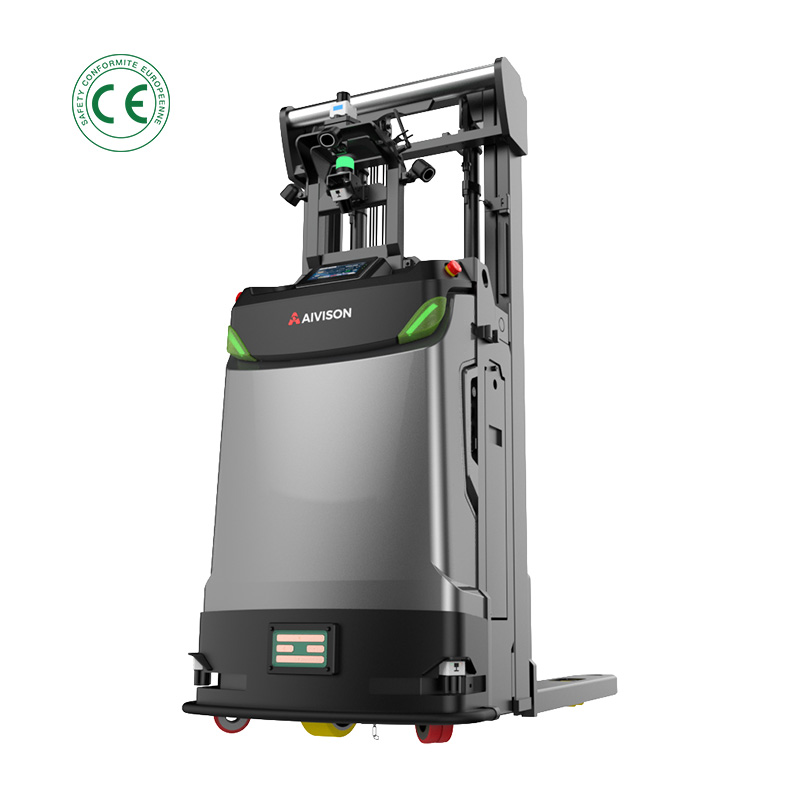
Smart Transport Robotic with Laser Navigation Reach 2000KG AGV Logistics Robots Warehouse Robot AMR
Heavy-duty warehouse transport AMR for pallet and material movement where laser navigation, throughput and fleet coordination matter.
View product
AGV AMR Autonomous Forklift Smart Version Auto Mobile Transfer Stacker Robot
Autonomous forklift platform for pallet stacking, line-side delivery and repetitive transfer tasks that require reliable fork entry.
View product
Heavy Load 2000KG Load Forklift Laser Guide AMR for Warehouse Pallet
Laser-guided heavy-load forklift AMR for warehouse pallets, wide-aisle transfer and high-throughput material flow.
View product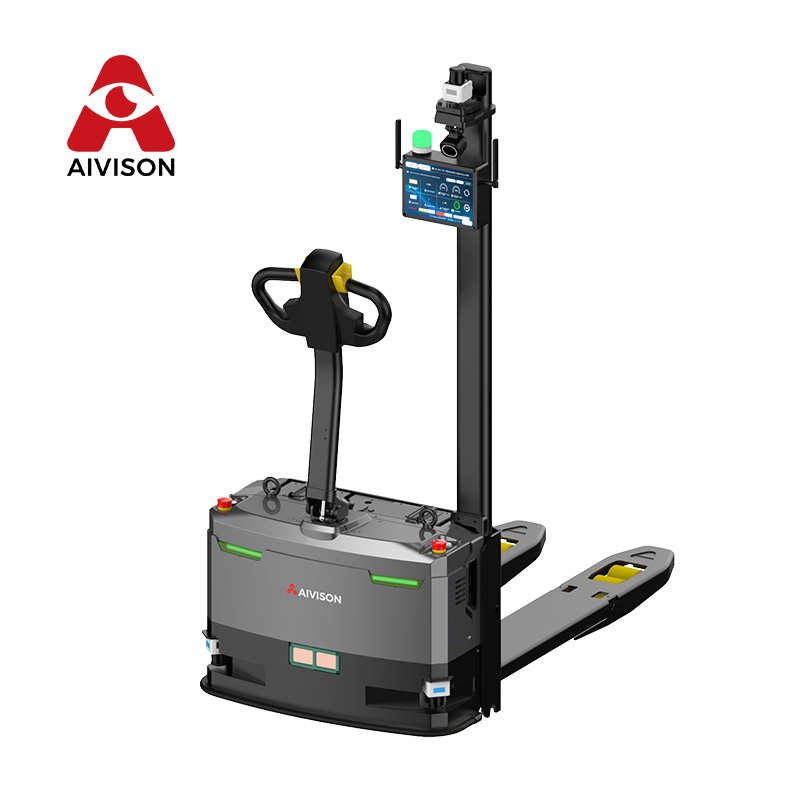
Aivison AGV Forklift High Quality Industrial Unmanned Pallet Forklift
Industrial unmanned pallet forklift for factories and warehouses that need repeatable pallet movement without fixed floor tracks.
View product
Omnidirectional Humanoid Robot Chassis Dual 7-DOF Arms Laser SLAM Autonomous Warehouse AMR Mobile Platform
Mobile manipulation platform with dual 7-DOF arms and laser SLAM for advanced warehouse, assembly and research applications.
View product
High-performance Intelligent Smart Automated Guided Vehicle 2000kg AMR Robot
High-performance 2000 kg AMR for demanding material transfer routes with fleet scheduling and mixed-traffic avoidance.
View product
Omnidirectional Service Humanoid Robot Chassis Dual 7-DOF Arms Laser SLAM Navigation for Hospitality and Retail
Service-oriented humanoid mobile platform for hospitality, retail and guided interaction scenarios with autonomous navigation.
View productShare your payload, aisle width, docking precision and throughput target. We will map the right chassis and top module before you commit to a budget.
Match the Robot to the Transfer Job, Not to the Product Name
Most successful projects start with three candidate configurations, then narrow them through a live site review. This is the practical shortlist logic our engineers use during early project evaluation.
High-throughput pallet movement
Start with the 2000KG laser navigation AMR and the heavy-load 2000KG laser-guided forklift AMR. Validate aisle width, floor loading, pallet condition and peak throughput before choosing fleet size. This pairing is usually the fastest route to warehouse and line-feeding ROI.
Line-side rack and tote flow
Use autonomous forklift stackers and jacking robots where racks, totes or pallets move between staging areas and production cells. If handover is tight, specify QR-assisted docking only at the stations that need it. This keeps floor infrastructure lean while improving repeatability where it matters.
Precision assembly and mobile manipulation
Consider the omnidirectional dual 7-DOF platform when the task combines mobility with manipulation. It fits advanced assembly, machine tending and service robotics, but it should only be specified where arm integration and ±0.05 mm repeatability are genuinely required. Do not buy a manipulation platform for simple pallet transfer.
Material Transfer Robot Selection Starts With the Transfer Task
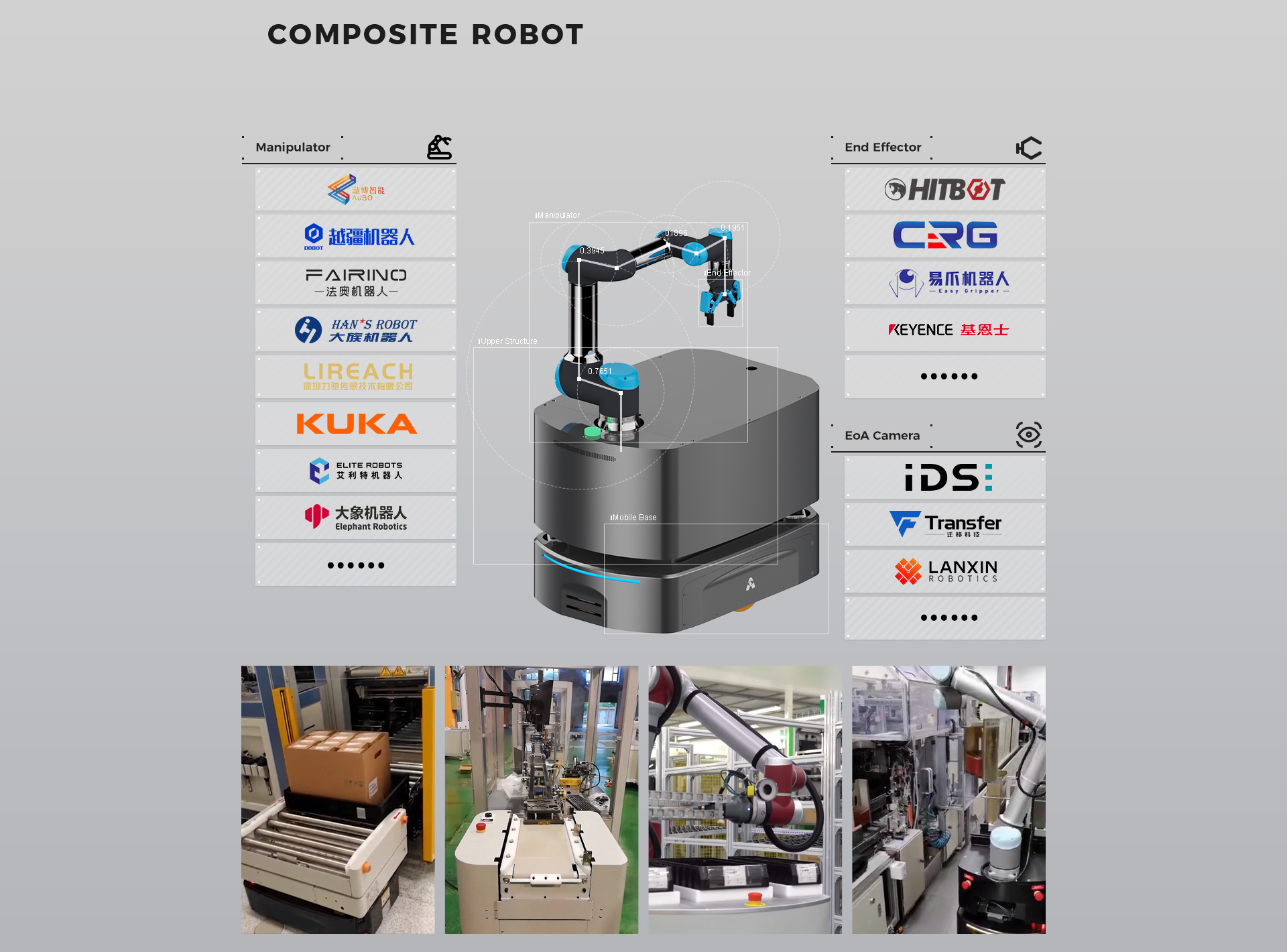
In the Chinese export market, “material transfer robot” is a commercial umbrella term, not a single machine type. It can describe a laser SLAM AMR, a jacking robot, a smart forklift, a pallet truck AMR, a composite mobile robot with a robotic arm, or a humanoid development chassis used as a mobile manipulation platform.
Information gain for buyers: the acronym is not the specification
AGV traditionally implied an automated guided vehicle with fixed paths, magnetic tape or reflectors. AMR implies natural-feature navigation, dynamic route planning and easier layout changes. In practice, many suppliers blur the labels. Buyers should evaluate the task — not the acronym.
The useful questions are: what is being moved, from where to where, how often, with what docking tolerance, and who or what must the robot interface with at each end? A 2,000 kg AMR purchased for a 300 kg pallet is not a premium solution; it is an unnecessary floor-loading, aisle-width and charging-infrastructure project.
Use a three-tier precision model: ±5 mm laser SLAM for general transfer; ±2 mm QR-assisted docking for high-shelf and tight handover; and ±0.05 mm composite-arm repeatability for assembly tasks. Over-specifying precision is one of the most common ways to inflate floor infrastructure and project cost.

What a Top China Material Transfer Robot Exporter Actually Manufactures
China has many exporters that can quote a material transfer robot. Fewer can show a manufacturing floor, a stable navigation stack, a customization process and third-party verification. Shenzhen Marnix Intelligent Technology Co., Ltd. is a useful benchmark because its public profile combines product breadth with independent factory assessment.
Marnix draws on about ten years of AGV engineering experience and manufactures laser SLAM AMRs, jacking robots, smart forklifts, composite mobile robots and intelligent charging docks. Its robots use laser SLAM on natural features to reach ±5 mm positioning without magnetic tape, reflectors or floor QR codes. A QR code scanning camera can raise docking accuracy to ±2 mm, while composite robots with a 6-axis arm reach ±0.05 mm repeatability for semiconductor and medical-device assembly.
Instead of forcing one chassis into every project, the company engineers top modules: jacking units for rack transport, roller conveyors for PCB and 3C lines, forklift forks for pallets, and 6-axis arms for pick-and-place. An intelligent scheduling system coordinates multiple robots over indoor Wi-Fi, handling task assignment, traffic control and automatic charging through compatible smart docks.
Manufacturer-level customization matters because material flow is rarely standard. A factory may need a low-profile chassis for one aisle, a 2,000 kg forklift for another, and a 300 kg light AMR for narrow-aisle transfers. A shared navigation core and fleet controller reduce training and spare-parts complexity while letting the payload interface change by station.
Marnix serves end users and system integrators across semiconductors, 3C electronics, lithium batteries, photovoltaics, automotive parts, PCB, textiles and medical devices. The company reports 200+ manufacturers served across three continents and is a verified supplier to a Fortune 500 company, supported by TÜV Rheinland onsite assessment and transparent trade records.
Ask for production-floor evidence, navigation validation, custom top-module drawings and a reference list relevant to your industry.
Laser SLAM, QR Assist or Composite Precision? Use the Lowest Cost That Meets the Station
Most buyers over-specify navigation. The right approach is to map accuracy to the transfer task, then use the lowest-cost configuration that meets every safety and process requirement.
| Configuration | Accuracy | Floor setup | Best for |
|---|---|---|---|
| Laser SLAM on natural features | ±5 mm | No tape, reflectors or floor codes | Warehouse transfer, line-side delivery, frequent layout changes and mixed traffic |
| SLAM + QR code camera | ±2 mm | QR labels only where precision is needed | High-shelf storage, precision docking, wafer handling and tight handover points |
| Composite robot with 6-axis arm | ±0.05 mm | Station calibration | Semiconductor and medical-device assembly, machine tending and mobile manipulation |
Product Development Trends Reshaping Material Transfer Robots (2025–2030)
The next buying cycle will not be decided by payload alone. It will be decided by sensor fusion, modularity, fleet orchestration, uptime engineering and verifiable safety in shared human–machine environments.
Sensor fusion becomes the baseline
Laser SLAM remains the backbone, but vision, QR assist and obstacle-classification will increasingly combine in one navigation stack. The result is more reliable docking and fewer exceptions when pallets, people or forklifts block the route.
The robot becomes a chassis
Buyers will increasingly purchase a navigation chassis and specify the top module: jacking unit, roller conveyor, forklift forks or 6-axis arm. Modularity shortens engineering time and protects the automation investment when the process changes.
Fleet orchestration moves from optional to essential
A single robot is a device; a fleet is a system. Indoor Wi-Fi scheduling, task assignment, traffic control and automatic charging will become standard procurement criteria, especially as mixed fleets of AMRs, forklifts and jacking robots share one floor.
Payload lanes split into light and heavy AMR
The 300 kg light AMR and the 2,000 kg heavy AMR will continue to separate into different procurement lanes. Narrow-aisle sites increasingly prefer compact light AMRs, while pallet-heavy warehouses need higher strength, larger batteries and better floor-loading analysis.
Energy management shifts to opportunity charging
Automatic charging docks and opportunity charging will be designed into the layout, not added at the end. The goal is predictable 24/7 uptime without over-buying battery capacity or sacrificing aisle space for charging stations.
Safety and mixed-traffic confidence drive acceptance
Dynamic obstacle avoidance, clear human–robot traffic rules and stable performance around forklifts will matter more than a brochure top speed. Procurement teams will ask for acceptance testing that reflects real mixed traffic, not only an empty demo hall.
How Procurement Teams Will Buy China Material Transfer Robots in the Next Five Years
China will remain a major source of AMR, AGV, jacking robot and smart forklift supply. The difference between a good and a poor outcome will be the buying method: evidence-led, pilot-led and total-cost-led.
TCO replaces lowest unit price
Buyers will compare installation downtime, commissioning time, spare-parts lead time, energy use, exception handling and fleet software fees. A cheaper chassis can become expensive if it needs floor rework or cannot be integrated with WMS, MES or existing forklifts.
Pilot-to-fleet purchasing becomes standard
Procurement will start with one route or one production cell, then scale after acceptance criteria are met. This reduces risk and gives operations teams time to adapt. It also forces suppliers to prove fleet scheduling, charging and service response, not just single-robot movement.
Integrator-ready customization wins
System integrators need stable APIs, documented interfaces, custom top modules and predictable engineering support. Exporters that only sell standard units will lose ground to factories that can co-engineer jacking units, roller conveyors, forks and arm platforms around a project schedule.
Verified evidence over catalogue claims
Onsite assessment, credit records, trade history, Fortune 500 references and live factory tours will carry more weight than a generic “top supplier” badge. Buyers will ask for acceptance tests, navigation reports and spare-parts lists before releasing a deposit.
Six Inputs That Determine About 90% of Robot Selection
From real project experience, these six inputs shorten evaluation from weeks to days. Share them upfront and ask every supplier to quote against the same operating assumptions.
Load profile
Maximum weight, pallet or rack footprint, center of gravity and whether the load is stable during acceleration. Include the heaviest real load, not the average.
Site layout
A CAD drawing or clear sketch with aisle widths, door widths, slopes, elevator or lift points, staging areas, charging locations and high-traffic intersections.
Throughput target
Missions per hour, peak periods and shift patterns. This sets fleet size, charging dock count and whether a single robot can realistically absorb demand.
Docking precision
Identify each handover point. Where is ±5 mm enough? Where is ±2 mm QR assist required? Where does a 6-axis arm create real value rather than added complexity?
Wi-Fi and IT environment
Access-point coverage, roaming quality, WMS or MES integration needs, cybersecurity requirements and who owns the fleet-scheduling server.
Equipment interfaces
Conveyors, machines, shelving, safety gates and manual handover stations. The top module and software handshake are often the real cost drivers.
You will get a clearer chassis recommendation, top-module proposal and acceptance-test outline instead of a generic quotation.
Where Material Transfer Robots Deliver Fast Payback
Robots are most valuable where transport is repetitive, safety-critical, labor-constrained or difficult to synchronize manually. These eight industries repeatedly show strong fits for AMR, AGV, jacking robot and smart forklift platforms.

How to Verify a China Material Transfer Robot Exporter Before You Send a Deposit
E-E-A-T is not a slogan. It is the evidence a buyer can inspect: factory assessment, test process, trade history, references and the ability to support the robot after commissioning.

Reliability is engineered and verified before shipment
Shenzhen Marnix applies multi-stage intelligent inspections and operational stress testing to target near-zero failure rates. That matters because a material transfer robot is not judged in a demo hall; it is judged on a factory floor where Wi-Fi changes, pallet damage, human traffic and shift handovers expose weak integration.
For composite mobile robots, autonomous mobility is combined with modular add-ons such as 6-axis arms and roller systems. Multi-layer synchronization protocols deliver ±0.05 mm repeatability for semiconductor and medical-device production. The same engineering discipline should be visible in the acceptance-test plan, spare-parts list and operator training package.
Ask every exporter for the same four evidence types: independent onsite assessment, production-floor video, a live navigation test using your load, and a reference in your industry. If the supplier cannot provide them, the quotation is incomplete.
TÜV Rheinland onsite assessment
Company premises and operations verified by an independent inspection body. Request the current report and check that the assessed legal entity matches the contract entity.
Fortune 500 supplier record
Procurement history with a Fortune 500 company, assessed by independent third parties, is stronger evidence than a self-declared “top exporter” label.
Verified multispecialty supplier
Low-MOQ customization and multi-category robot procurement capability reduce the risk of mixing incompatible chassis, chargers and fleet software.
Credit and transaction records
Transparent credit index and transaction-level history help procurement teams compare commercial reliability before releasing a deposit.
Questions Buyers Ask Before Automating Material Flow
Direct answers from the engineering and export side of material transfer robot projects. For a project-specific recommendation, share your load, layout and docking points.
What navigation accuracy do Marnix AMRs achieve?
Using laser SLAM on natural features, Marnix AMRs reach ±5 mm positioning without magnetic tape, reflectors or floor QR codes. Adding a QR code scanning camera raises accuracy to ±2 mm, and composite robots with a 6-axis arm reach ±0.05 mm repeatability.
Do I need to modify my factory floor?
No for standard laser SLAM navigation. The robot maps your existing environment, so no auxiliary tracks or floor codes are required. QR labels are only added at stations that need ±2 mm docking precision.
Can Marnix customize robots for my production line?
Yes. As a manufacturer, Marnix customizes chassis and top modules such as jacking units, roller conveyors, forklift forks and 6-axis robotic arms to connect directly with production equipment.
How are multiple robots coordinated?
An intelligent scheduling system manages the fleet over indoor Wi-Fi, handling simultaneous task assignment, traffic control and automatic charging with compatible smart charging docks.
Which industries use Marnix robots?
Semiconductors, 3C electronics, lithium batteries, photovoltaics, automotive parts, PCB, textiles and medical devices, serving both end users and system integrators.
How should I compare AMR and AGV for material transfer?
Do not buy the acronym. Compare route flexibility, floor infrastructure, docking tolerance, traffic density, fleet software and total cost. Laser SLAM AMRs usually reduce floor rework, while fixed-path AGVs may still fit highly stable, repetitive routes.
What should be in an RFQ to a China material transfer robot factory?
Include load profile, site layout, throughput target, docking precision, Wi-Fi coverage, equipment interfaces, acceptance criteria, spare-parts requirements, training needs and warranty terms. Ask for a live navigation test with your load or a comparable load.
How can I start a project evaluation?
Email info@marnixbot.com with your payload, floor layout, throughput and docking precision requirements, or use the inquiry button on this page. A complete input set usually produces a clearer proposal than a request for “best price”.
Turn Your Material Flow Into a Verifiable Robot Specification
Share your load, aisle width, throughput, docking precision, Wi-Fi environment and equipment interfaces. The reply should be a configuration recommendation with acceptance-test logic — not a generic catalogue PDF.