China Top Logistics AMR Factories & Wholesalers
A buyer’s white paper on laser SLAM AMRs, smart forklifts, jacking robots, composite mobile manipulators, and the supplier verification signals that separate export-grade factories from catalogue traders.
Eight Logistics AMR Platforms to Benchmark Before You Shortlist a Chinese Factory
Use this set as a reference architecture, not a catalogue dump. Each platform maps to a common logistics bottleneck: line-side transfer, pallet handling, high-shelf docking, mobile manipulation, or multi-robot fleet expansion.

Omnidirectional Mobile Manipulator AMR Dual 7-DOF Arms ±0.03 mm Repeatability Laser SLAM Humanoid Robot Base
Dual 7-DOF arms on an omnidirectional mobile base for machine tending, lab automation, and flexible transfer tasks that need mobile manipulation rather than a fixed conveyor.
View specifications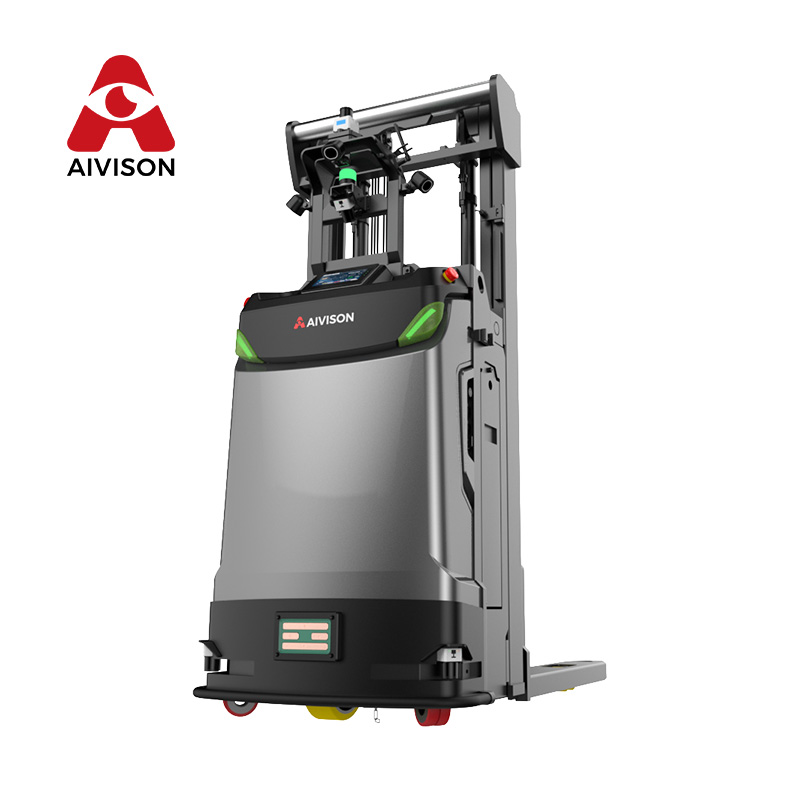
Autonomous Mobile Robots (AMR) Implement Cargo Transportation Between Warehouse and Conveyor Line
A practical warehouse-to-line platform for repetitive cargo transfer. Evaluate aisle width, handover height, conveyor interface, and missions per hour before selecting fleet size.
View specifications
Heavy Load 2000KG Load Forklift Laser Guide AMR for Warehouse Pallet
A 2-ton class autonomous forklift for pallet flows where manual forklift labor is a bottleneck. Confirm pallet quality, fork entry tolerance, lift height, and safety zones.
View specifications
AI-Ready Humanoid Robot Chassis Dual 7-DOF Arms Omnidirectional Drive ROS2 Laser SLAM Open Development Platform
An open development platform for research teams and integrators that need ROS2, laser SLAM, and dual-arm mobility in one extensible humanoid base.
View specifications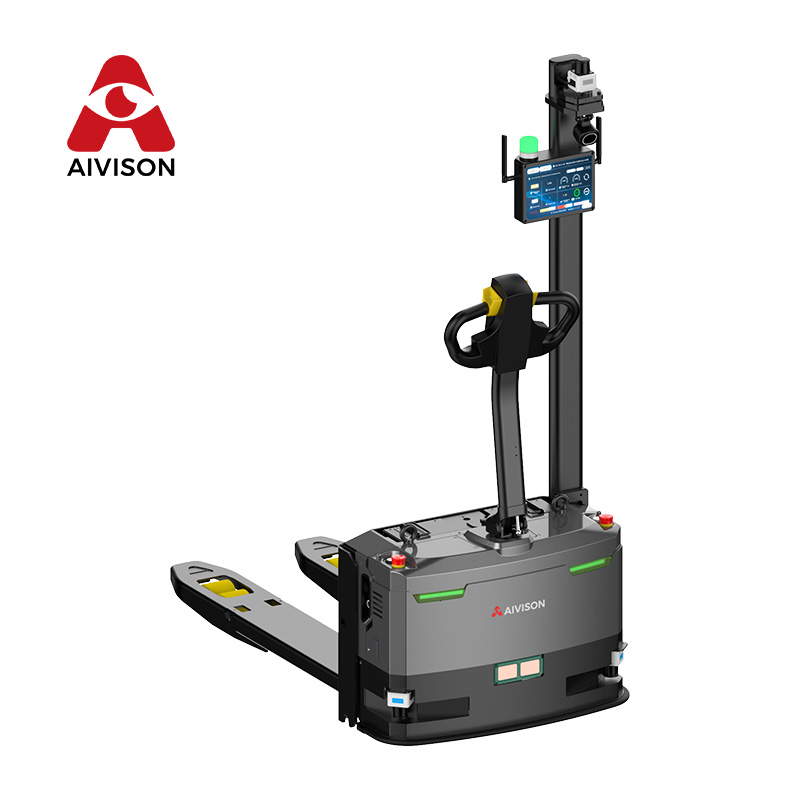
Aivison Stacker Truck Pallet Stacker Forklift Agv 1.5 Ton Autonomous Forklift Smart Deliver AMR Robot
A compact 1.5-ton autonomous forklift for smart delivery and stacking. Useful where a full 2-ton platform is over-specified but manual pallet movement remains high.
View specifications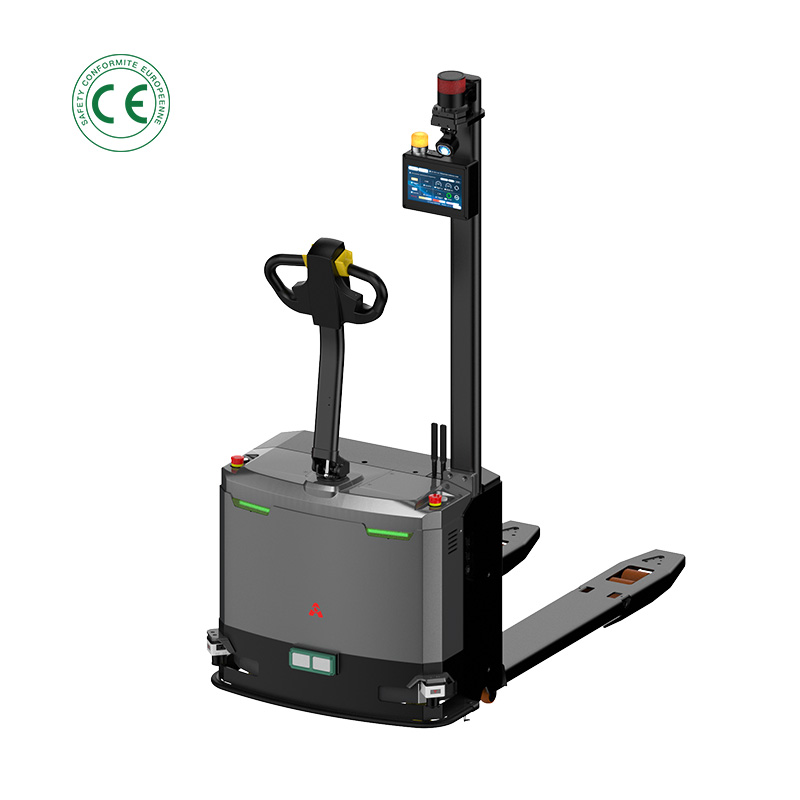
CE Certification Industrial AMR AGV Robot for Warehouse Automation Autonomous Material Handling Logistics
A CE-certified industrial AMR for autonomous material handling. Ask for the technical file, risk assessment, safety configuration, and site acceptance test plan.
View specifications
Warehouse Robot Robotics 2000KG CE Warehousing Automatic Forklift Stacking AGV
A 2000KG automatic stacking AGV for warehousing operations. The key selection question is not only payload, but rack tolerance, floor flatness, and repeatable fork positioning.
View specifications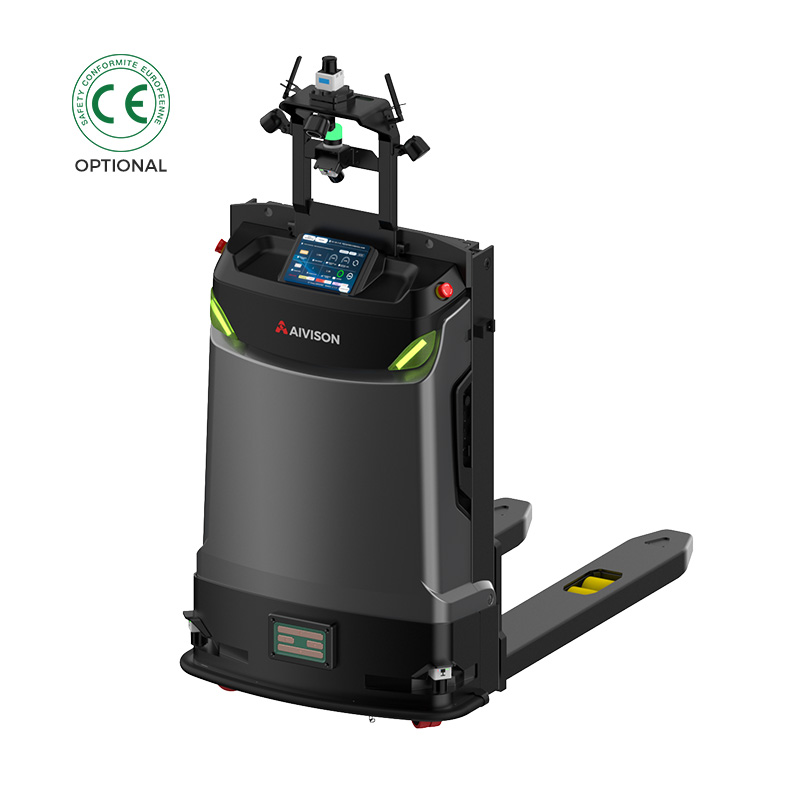
AGV AMR Warehouse Automatic Guided Vehicle 1500kg 2000kg AGV Robot Forklift
A flexible 1500kg to 2000kg AGV/AMR forklift category for wholesale buyers and integrators seeking a common platform across several end-customer projects.
View specificationsFor wholesale buyers and system integrators, the pattern matters more than the individual SKU: a shared navigation core, modular top mechanisms, and one fleet-scheduling layer reduce integration risk as projects expand.
From Catalogue Shopping to Engineering Due Diligence: A China AMR Sourcing Framework
Buyers searching for China top logistics AMR factories and wholesalers usually need to compare far more than payload and price. The real decision is whether a robot platform can survive layout changes, integrate with production equipment, and stay supported after commissioning.
China’s logistics AMR cluster is not a single market. It includes chassis manufacturers, navigation-software teams, forklift integrators, top-module specialists, and trading wholesalers that package several factories into one quotation. That breadth is useful, but it also creates a due-diligence problem: many suppliers can show a robot; fewer can prove repeatable engineering.
A practical sourcing framework should score six dimensions: payload and duty cycle; navigation accuracy by station; mixed-traffic safety; throughput and fleet scheduling; software openness and data ownership; and spare-parts plus remote-support capability. This white paper deliberately adds information gain beyond product listings: a precision-to-infrastructure matrix, a workflow-based shortlist, a procurement trend map, and a buyer checklist that can be sent directly to an AMR factory.
The most expensive AMR is rarely the invoice price. It is the platform that cannot be re-tasked after a line change, or the fleet that requires floor rework every time a station moves. For that reason, evaluate the navigation layer and the top-module architecture before you negotiate unit price.
Precision vs. Floor Infrastructure
Use ±5 mm laser SLAM across general transfer routes, add QR labels only at stations that need ±2 mm docking, and reserve arm-level repeatability for precision assembly or machine tending.
Product Recommendation by Logistics Workflow
Match the platform to the material flow first. Product families then become easier to compare across Chinese factories, wholesalers, and integrator-led projects.
Warehouse-to-Line Transfer
Choose a general laser SLAM AMR when the main task is repetitive point-to-point delivery between receiving, storage, and a conveyor line. Measure aisle width, handover height, and peak missions per hour before sizing the fleet.
Pallet and Rack Movement
Use jacking robots for rack lifting and compact transfer, or 1.5-ton to 2-ton autonomous forklifts for pallet stacking. Ask for fork-entry tolerance, pallet condition assumptions, and lift-height verification under load.
High-Shelf and Precision Docking
Specify QR-camera assistance when the route is open but the station requires ±2 mm docking. This hybrid approach avoids full-floor QR installation while still meeting high-shelf storage and precision handover requirements.
Precision Assembly and Machine Tending
A composite mobile robot with a 6-axis arm or dual-arm humanoid base is appropriate when mobility and manipulation must be combined. Verify repeatability at the workstation, not only the published chassis accuracy.
Electronics, Semiconductor, and Clean Logistics
For 3C electronics, PCB, semiconductor, and medical-device flows, ask for documentation on safety configuration, CE certification where applicable, contamination controls, and interface protocols for existing equipment.
Multi-Robot Fleet Expansion
When one robot becomes a fleet, scheduling software matters as much as hardware. Confirm indoor Wi-Fi coverage, traffic-control rules, charging-dock ratio, and whether mixed robot types can be dispatched from one system.
Logistics AMR Procurement Trends: What Wholesalers and Factory Buyers Should Price In
Procurement teams are moving away from one-off robot purchases toward multi-site platform decisions. The strongest suppliers will be judged on uptime, integration speed, and lifecycle support, not only catalogue breadth.
Total Cost of Ownership Over Unit Price
Buyers now model battery life, charging infrastructure, spare parts, software upgrades, and engineering hours. A lower-priced robot that requires frequent site visits can cost more than a better-supported platform.
Software-First Validation
Procurement teams increasingly test fleet scheduling, route editing, API access, and data ownership before hardware acceptance. Ask for a software demonstration using your own process logic and exception scenarios.
Mixed Fleets and Modularity
Factories rarely automate every flow at once. A modular chassis with jacking, roller, fork, or arm modules lets buyers start with one workflow and expand without replacing the entire fleet architecture.
Precision Tiering by Station
Over-specifying floor infrastructure is a hidden cost. Use natural-feature SLAM across general routes and add QR or vision assistance only where the docking station truly requires ±2 mm or better.
Safety and Compliance Evidence
CE certification, risk assessments, safety-zone configuration, and emergency-stop validation are becoming standard due-diligence items. Documentation quality is a useful proxy for engineering discipline.
Local Support and Spare-Parts Strategy
Remote diagnostics reduce response time, but critical spares still need a clear plan. Wholesalers and end users should ask for recommended spare-parts kits, wear-item lists, and escalation procedures.
Product Development Trends Inside China’s AMR Factories
Hardware differentiation is narrowing at the chassis level. The next competitive layer is sensing, manipulation, fleet software, and maintainability across real production environments.
Natural-Feature SLAM and Sensor Fusion
Laser SLAM on natural features is reducing dependence on magnetic tape, reflectors, and floor codes. Vision and lidar fusion are improving dynamic obstacle avoidance in mixed human and vehicle traffic.
QR and Vision Fusion for Millimetre Docking
Factories increasingly combine global SLAM navigation with local QR or vision correction. This hybrid design keeps routes flexible while meeting high-shelf storage and precision station-docking targets.
Mobile Manipulation and Humanoid Bases
Composite robots and dual-arm humanoid bases are moving from demonstration projects into machine tending, assembly support, and laboratory workflows where fixed automation is too rigid.
Higher-Payload Smart Forklifts with Vision
2000KG-class forklift AMRs are adding camera assistance for pallet recognition and fork entry. For buyers, the practical question is how the system handles damaged pallets and imperfect rack alignment.
Fleet Orchestration and Open APIs
Indoor Wi-Fi scheduling, traffic control, and multi-robot task assignment are becoming core buying criteria. Integrators should ask whether the fleet controller can connect to MES, WMS, or existing automation equipment.
24/7 Duty and Intelligent Charging
Automatic charging docks and smarter energy management support continuous operation. Buyers should model charge-to-work ratios, dock placement, and peak-period reserve capacity before committing to fleet size.
Inside a Factory-First AMR Supplier: Marnix’s Engineering Advantages
Shenzhen Marnix Intelligent Technology Co., Ltd. draws on about ten years of AGV manufacturing experience to build autonomous mobile robots that drop into existing factories with minimal disruption—for end users and for the system integrators who serve them.

The supplier portfolio covers jacking robots, smart forklifts, pallet AMRs, composite robots, humanoid development platforms, and compatible intelligent charging docks from one source. Robots are coordinated by an intelligent scheduling system over indoor Wi-Fi, enabling simultaneous multi-robot dispatch.
For buyers, the advantage is not simply product breadth. It is the ability to keep a common navigation core while changing the top module: jacking unit, roller conveyor, forklift forks, or 6-axis arm. That reduces spare-parts complexity and shortens engineering time when a new project requires a different material-flow interface.
The company serves semiconductors, 3C electronics, lithium batteries, photovoltaics, automotive parts, PCB, textiles, and medical devices—for both end users and integrators. Verified credentials, onsite assessment, and trade records are part of the evaluation file, not marketing footnotes.
Manufacturer-Level Customization
Flexible engineering of chassis, payload, and top mechanisms to match your process rather than forcing a standard fit.
SLAM and Vision Fusion
±5 mm laser SLAM navigation without tracks or floor codes; QR-camera assistance raises docking accuracy to ±2 mm where needed.
Multi-Stage Quality Protocol
Intelligent inspections and operational stress tests target near-zero failure rates before shipment.
Integrator-Ready Support
Products and solutions for system integrators, with customization support for multiple end-customer projects.
TÜV Rheinland Onsite Assessment
Company premises and operations verified by an independent inspection body.
Supplier to Fortune 500
Procurement contract with a Fortune 500 company, assessed by independent third parties.
Verified Multispecialty Supplier
Low-MOQ customization and multi-category robot procurement capability.
Credit and Transaction Records
Transparent credit index and transaction-level history available for buyer review.

Before You Request a Quote: Six Inputs That Shorten AMR Evaluation
From project experience, these six inputs determine most of robot selection. Sharing them upfront can shorten evaluation from weeks to days and produce a more comparable quote from every Chinese factory or wholesaler.
Load Profile
Maximum weight, footprint, and center of gravity of racks, pallets, or carriers to be moved. Include any custom fixtures and the heaviest abnormal load.
Site Layout
A CAD drawing or sketch with aisle widths, doors, slopes, elevator or lift points, traffic rules, and any zones where humans and robots share the same floor.
Throughput Target
Missions per hour, peak periods, and shift patterns. This sets fleet size, charging-dock count, and the traffic-control logic required at intersections.
Docking Precision
Identify where ±5 mm is enough and where ±2 mm QR assist or arm-level precision is required. Precision tiering prevents unnecessary floor-infrastructure cost.
Wi-Fi Coverage
Existing access points and coverage quality across the robot operating area. Fleet scheduling and task handover depend on stable indoor wireless coverage.
Equipment Interfaces
Conveyors, machines, or shelving the robot must hand over to, plus any custom top-module needs such as rollers, forks, or a robotic arm.
Logistics AMR Sourcing FAQ
Straight answers for buyers comparing China logistics AMR factories, wholesalers, and integrator-ready platforms.
What navigation accuracy do Marnix AMRs achieve?
Using laser SLAM on natural features, the AMRs reach ±5 mm positioning without magnetic tape, reflectors, or floor QR codes. Adding a QR code scanning camera raises accuracy to ±2 mm, and composite robots with a 6-axis arm reach ±0.05 mm repeatability.
Do I need to modify my factory floor?
No. Standard laser SLAM navigation maps the existing environment, so no auxiliary tracks or QR codes are required across general routes. QR labels are only added at stations where ±2 mm docking precision is needed.
Can the robots be customized for my production line?
Yes. As a manufacturer, the supplier can customize chassis and top modules—jacking units, roller conveyors, forklift forks, and 6-axis robotic arms—to connect directly with production equipment.
How are multiple robots coordinated?
Robots are managed by an intelligent scheduling system over indoor Wi-Fi, enabling simultaneous task assignment, traffic control, and automatic charging with compatible smart charging docks.
Which industries use these logistics AMRs?
Semiconductors, 3C electronics, lithium batteries, photovoltaics, automotive parts, PCB, textiles, and medical devices are core industries, serving both end users and system integrators.
How do I start a project evaluation?
Share your payload, floor layout, throughput target, docking precision, Wi-Fi coverage, and equipment interfaces. That package lets an engineering team recommend the right chassis, top module, fleet size, and charging strategy.
Build a Vendor Scorecard, Then Ask for a Site-Specific Quote
Compare China top logistics AMR factories and wholesalers on navigation accuracy, modular top mechanisms, fleet software, testing discipline, and after-sales evidence. Use the eight platforms above as your technical benchmark, then request a configuration matched to your actual load, layout, and throughput target.