Recommended Logistics AGV and AMR Configurations From Marnix
The eight platforms below cover the most common starting points for logistics automation: payload transfer, rack movement, pallet handling, heavy-duty transport and humanoid service-robot development. All are available from Marnix as a China logistics AGV manufacturer, with customization of chassis and top modules for integrators. Use the product links to review original specifications and confirm payload, footprint and interface details for your project.

Humanoid Robot Chassis Dual 7-DOF Arms Laser SLAM Omnidirectional Navigation ROS2 Open Platform AMR
Recommended for R&D teams and integrators building humanoid or dual-arm service robots. The omnidirectional chassis combines laser SLAM with a ROS2 open platform, dual 7-DOF arms and a stable base for hospitality, retail and laboratory automation.
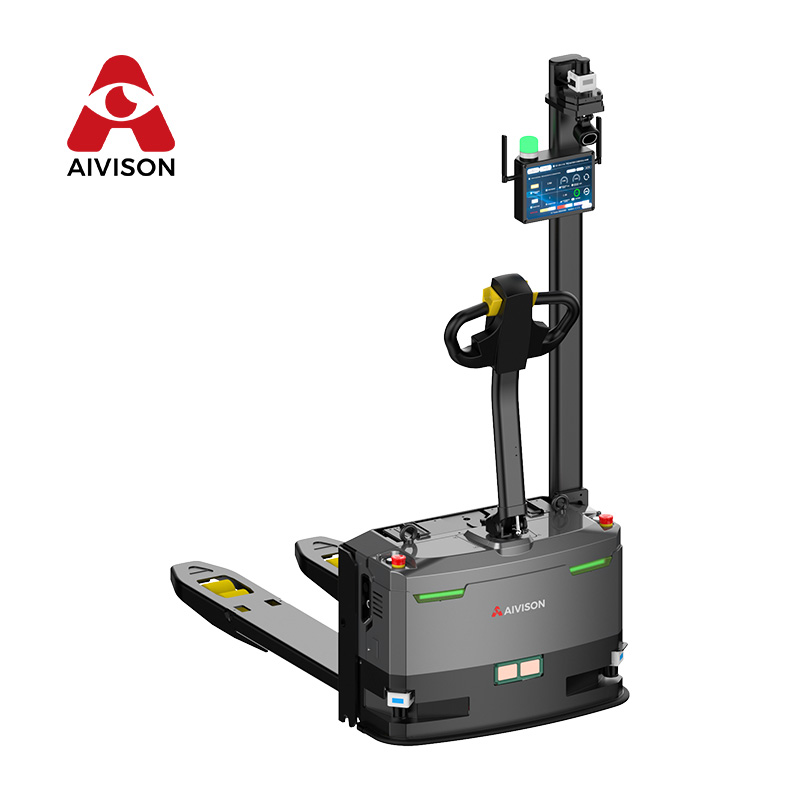
Laser SLAM Navigation Automated Guided Vehicle Forklift agv 1500kg Load Capacity
Recommended for pallet transfer in warehouses where 1.5 t loads and laser SLAM navigation are required. No reflectors or fixed guidepath are needed, while fleet scheduling and auto charging support 24/7 duty.
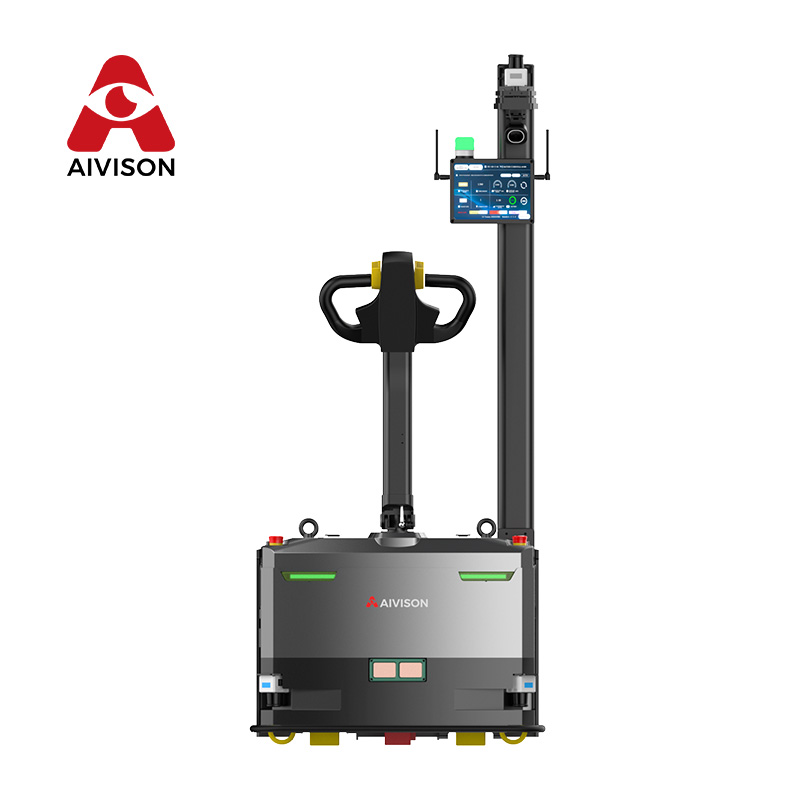
China Factory Movable Pallet Agv Robot Rack Shelf for Intelligent Robot Warehouse
Recommended for intelligent robot warehouses using movable rack shelves. The platform lifts and moves racks to create flexible storage zones without fixed conveyor infrastructure or major floor changes.

Omnidirectional Service Humanoid Robot Chassis Dual 7-DOF Arms Laser SLAM Navigation for Hospitality and Retail
Recommended for hospitality, retail and service environments requiring an omnidirectional humanoid chassis. Dual 7-DOF arms and SLAM navigation support interactive tasks, precise approach and flexible movement.
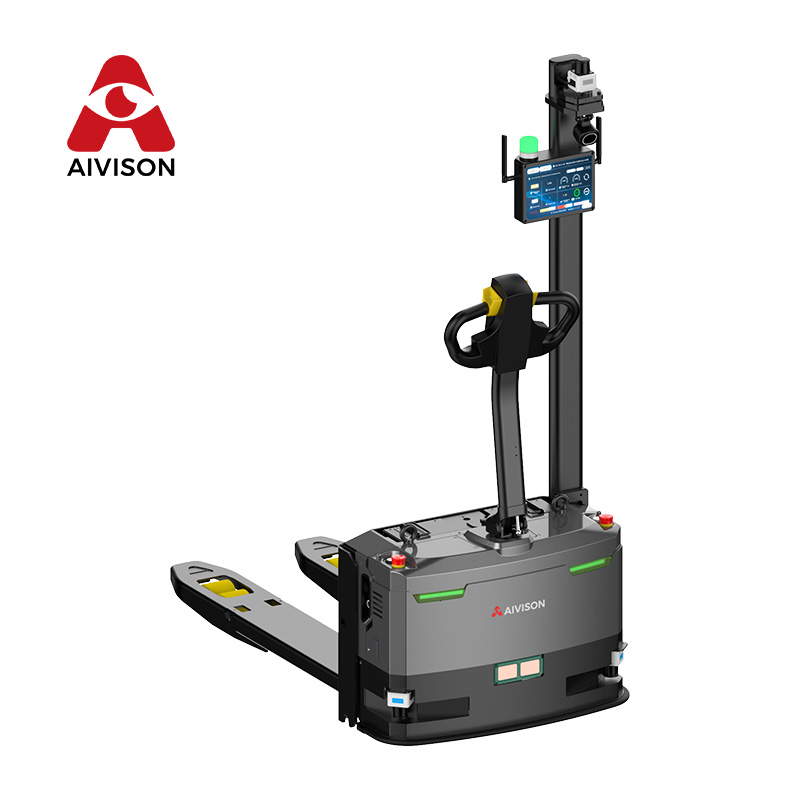
Aivison Stacker Truck Pallet Stacker Forklift Agv 1.5 Ton Autonomous Forklift Smart Deliver AMR Robot
Recommended for smart delivery and stacking of pallets. The 1.5 t autonomous forklift is suited to warehouses and production lines that need automated pallet pick-up and put-down with minimal manual handling.

High-performance Intelligent Smart Automated Guided Vehicle 2000kg AMR Robot
Recommended for heavy-duty material flow up to 2,000 kg. The platform balances high payload with intelligent navigation for repetitive warehouse, inbound and line-side transport tasks.
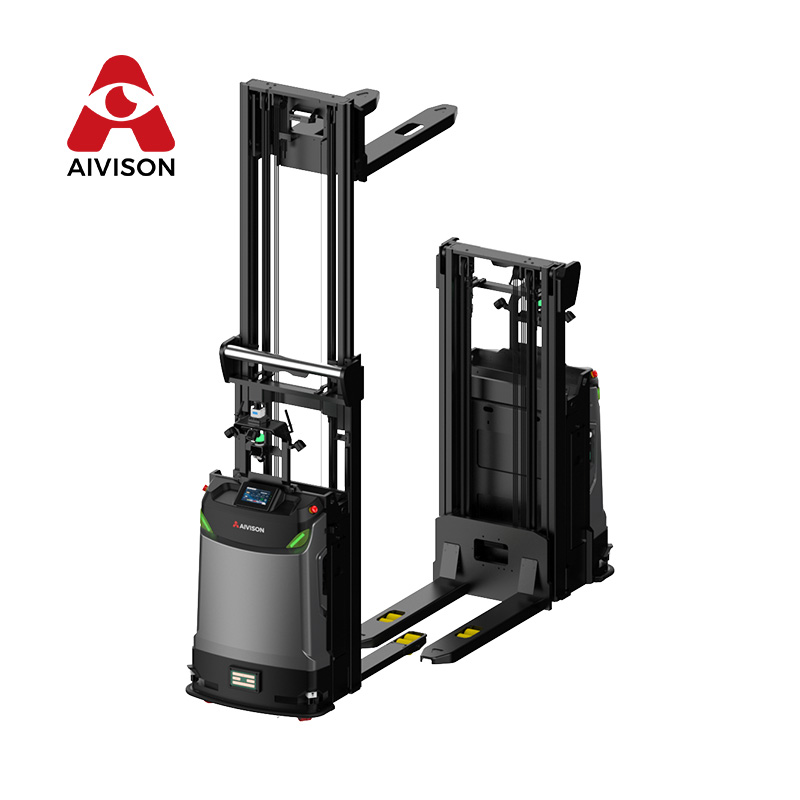
High Precision agv Forklift Full Servo Motor Controlled Laser Forklift with Heavy Load 2000kg
Recommended for precision pallet handling with full servo motor control. The laser-guided forklift is aimed at heavy loads up to 2,000 kg where smooth, controlled fork movement and repeatable docking matter.
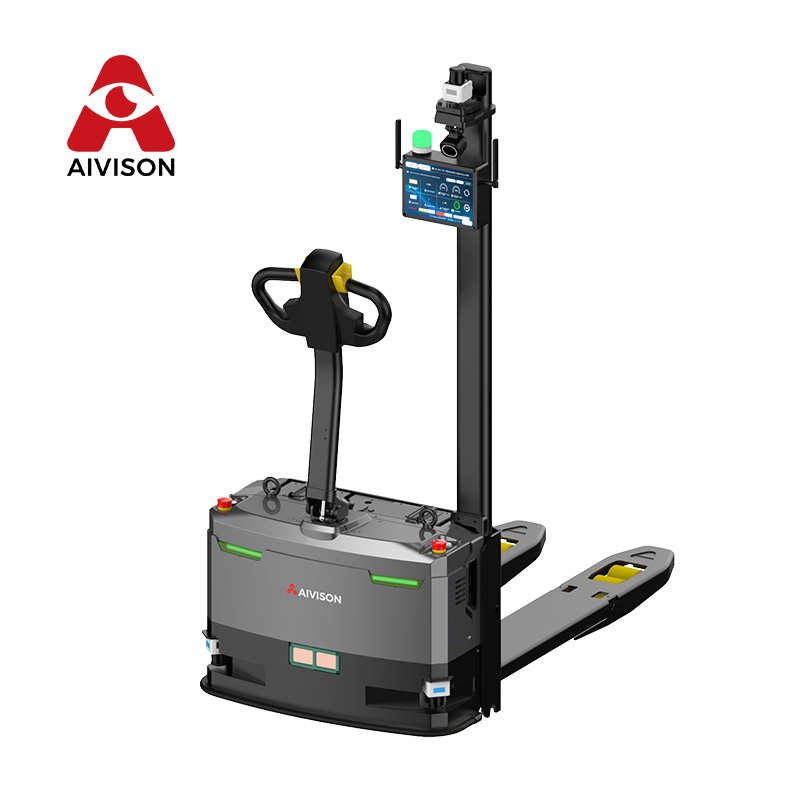
Aivison AGV Forklift High Quality Industrial Unmanned Pallet Forklift
Recommended as a robust unmanned pallet forklift for industrial logistics. It integrates AGV navigation with a pallet fork chassis for repetitive inbound, outbound and transfer tasks across warehouse zones.
Why China Logistics AGV Sourcing Has Moved From Hardware to Verified Engineering Capability
China remains the world’s deepest supply base for logistics AGV and AMR hardware, but the purchase decision has changed. Procurement teams now compare navigation accuracy on real floor layouts, fleet-scheduling maturity, safety documentation, customization depth and lifecycle support—not only unit price. For a China Top Logistics AGV Manufacturer & Suppliers shortlist, the useful question is not whether a supplier can build a robot, but whether it can prove repeatable performance inside your process.
Shenzhen Marnix Intelligent Technology Co., Ltd. is a useful reference point. The company draws on about ten years of AGV engineering experience and manufactures laser SLAM autonomous mobile robots, jacking robots, smart forklifts, pallet AMRs, composite mobile robots and intelligent charging docks. Its robots are deployed in semiconductor, 3C electronics, lithium battery, photovoltaic, automotive parts, PCB, textile and medical device operations, and the company also supplies system integrators that need a flexible manufacturing partner rather than a catalogue reseller.
The most important technical distinction is precision on demand. Standard laser SLAM maps natural features and reaches ±5 mm positioning without magnetic tape, reflectors or floor QR codes. When a station needs tighter docking, a QR code scanning camera raises accuracy to ±2 mm. Composite robots that add a 6-axis arm can reach ±0.05 mm repeatability for semiconductor and medical-device tasks. Specifying all three levels everywhere usually adds cost without improving throughput; the right approach is to map accuracy to the station, not the whole building.
The matrix below is a practical buying reference. It also illustrates the information gain a serious China supplier should provide: a clear configuration map, floor-preparation implications and best-fit applications.

Navigation configuration and floor-preparation matrix
Accuracy on demand| Configuration | Accuracy | Floor setup | Best for |
|---|---|---|---|
| Laser SLAM on natural features | ±5 mm | No tape, reflectors or floor codes | Warehouse transfer, line-side delivery, frequent layout changes |
| SLAM + QR code camera | ±2 mm | QR labels only at precision stations | High-shelf storage, precision docking, wafer handling |
| Composite robot with 6-axis arm | ±0.05 mm | Station calibration | Semiconductor and medical device assembly |
A Buyer’s Framework for Vetting China Logistics AGV Manufacturers
Use this six-part scorecard during supplier discovery. It is written from the perspective of an engineering-led manufacturer that also supports system integrators, and it reflects the questions that most often change a project outcome.
Navigation Proof, Not Just a Spec Sheet
Ask for test evidence on a layout similar to yours: ±5 mm laser SLAM on natural features, ±2 mm QR docking where needed, and repeatability data for composite arms. Confirm whether the robot needs magnetic tape, reflectors or floor codes. A supplier that can explain when not to use QR codes is usually more credible than one that quotes the tightest number everywhere.
Safety Architecture and Standards Fit
Review emergency stops, personnel detection, speed zoning, load security and fault response. For autonomous forklifts, align the design review with ISO 3691-4 and your local site rules. Documentation should include risk assessment inputs, commissioning checks and operator training, not only a CE-style marketing claim.
Fleet Software and Interface Depth
Multi-robot projects succeed or fail on scheduling. Verify Wi-Fi coverage planning, traffic control, task prioritization, charging logic and API/ERP/MES/WMS handshakes. Ask how the system handles a blocked aisle, a low battery and a manual intervention. Open interfaces reduce lock-in and make phased automation easier.
Customization and Integrator Support
China suppliers differ in engineering depth. A manufacturer should adjust chassis dimensions, payload, jacking units, roller conveyors, forklift forks and 6-axis arms. Integrators need CAD files, interface documentation, test protocols and responsive engineering communication. Reseller-only suppliers often cannot support these changes.
Quality Protocol and Failure Data
Look for multi-stage inspection, operational stress tests and a clear failure-analysis workflow. Ask for mean time between failures, spare-parts lists, recommended wear items and remote diagnostics capability. A near-zero failure target is credible only when it is backed by inspection records and a service process.
Lifecycle Cost and Global Service
Compare total cost of ownership: installation, mapping, training, spares, charging infrastructure, software updates and downtime. Confirm service coverage, response times and remote support. For cross-border projects, spare-parts strategy and documentation quality often matter more than a small hardware price difference.
Why Marnix Is a Qualified China Logistics AGV Supplier
Marnix combines Shenzhen-based engineering, a broad AMR portfolio and independent verification. The following advantages are the ones buyers usually validate during a factory audit and a pilot project.
About Ten Years of AGV Engineering
Marnix has built its product line around real production-line constraints, with R&D and manufacturing based in Shenzhen. This experience shortens requirement analysis and reduces the risk of a prototype that cannot be serviced.
Full Portfolio From One Source
Jacking robots, smart forklifts, pallet AMRs, composite robots and intelligent charging docks share a navigation and fleet-management core. Mixed fleets can be phased in without starting a new software stack.
±5 mm Laser SLAM Without Floor Rework
Standard robots map existing aisles, doors and workstations. No auxiliary tracks or reflectors are required, which matters in leased buildings and factories that cannot stop production for infrastructure work.
±2 mm QR and ±0.05 mm Composite Precision
A QR scanning camera adds precision only where docking demands it, while composite robots with 6-axis arms support machine tending and assembly tasks that need repeatability at the 0.05 mm level.
Wi-Fi Fleet Scheduling and Auto Charging
An intelligent scheduling system coordinates simultaneous task assignment, traffic control and automatic charging through compatible docks. This supports 24/7 duty without a control-room operator for every robot.
Manufacturer-Level Customization
As a manufacturer, Marnix customizes chassis and top modules such as jacking units, roller conveyors, forklift forks and 6-axis arms to connect directly with production equipment.
Independently Assessed Supplier
Marnix has completed an onsite supplier assessment by TÜV Rheinland and is a supplier to a Fortune 500 company. These credentials are supported by trade history, credit and transaction records that buyers can review.
200+ Manufacturers, 3 Continents
More than 200 manufacturers across three continents use Marnix robots, from semiconductor cleanrooms to textile warehouses. The company also supports system integrators building automation projects worldwide.

Procurement Trends Reshaping China Logistics AGV Projects
The next buying cycle will reward suppliers that can document performance and integrate with existing operations. These six trends are already visible in project specifications from multinational manufacturers and their integrators.
Total Cost of Ownership Beats Lowest Unit Price
Buyers are modeling installation, mapping, training, charging, spares and downtime over five years. A lower-priced AGV that requires floor markers or frequent manual recovery can cost more than a trackless SLAM robot with predictable service.
AMR and AGV Convergence
Laser SLAM is replacing fixed guidepath in many greenfield projects, while traditional AGV routes remain in high-repeatability areas. Suppliers need a hybrid roadmap rather than a single navigation technology.
Software-Defined Procurement
Fleet orchestration, API access and data visibility are now part of the purchase decision. Procurement teams ask how robots connect to WMS, MES and ERP, and whether the supplier supports multi-vendor integration.
Modular Customization and Integrator-Led Projects
System integrators increasingly select a chassis and specify a top module—rollers, forks, jacking units or arms—for the end customer. Manufacturers that publish interfaces and support low-volume customization win these projects.
Safety Documentation as a Gate
ISO 3691-4 and site-specific risk assessments are moving from optional to mandatory. Buyers request safety functions, validation records and operator training before a pilot is approved.
Local Service and Spare Parts
Global buyers want remote diagnostics, a spare-parts strategy and clear response times. A China supplier with documented service processes can outperform a lower-cost vendor that cannot support the installed base.
Product Development Trends: What the Next Generation of Logistics AGVs Will Deliver
Robot hardware is converging around a smaller number of proven chassis, while differentiation shifts to sensors, manipulation, software and energy management. These are the development directions most relevant to a 2025–2030 logistics automation plan.
SLAM + Vision + QR Fusion
The next baseline is not a single navigation mode. Laser SLAM handles natural-feature mapping, vision improves pallet and obstacle recognition, and QR codes provide local precision. The control system selects the right mode for each mission.
Higher Payload Density and Compact Footprints
Warehouses need more throughput per square meter. Designers are reducing chassis height and turning radius while increasing payload, so robots can work in narrow aisles and existing rack layouts.
Composite Robots and Mobile Manipulation
AMRs with 6-axis arms, roller conveyors and multi-layer synchronization protocols extend automation from transport to machine tending. Repeatability around ±0.05 mm makes these platforms relevant to semiconductor and medical-device assembly.
Humanoid and Dual-Arm Service Platforms
Open ROS2 humanoid chassis with dual 7-DOF arms are creating new options for hospitality, retail and laboratory service. The near-term logistics value is in flexible interaction and omnidirectional movement, not in replacing every fixed robot.
Digital Twin, Fleet Learning and Open APIs
Fleet software is becoming a data product. Simulation, traffic replay and utilization dashboards help buyers size fleets and diagnose bottlenecks. ROS2 and open interfaces reduce integration risk and support continuous improvement.
Smart Charging and Energy Management
Opportunity charging, intelligent docks and battery-health monitoring are becoming standard requirements for 24/7 operations. Energy strategy is now part of the robot layout, not an afterthought.
Logistics AGV Procurement FAQ
These are the questions our engineering team most often answers during a first project review. For a project-specific response, share your payload, layout, throughput and docking precision.
What is the difference between a logistics AGV and an AMR?
An AGV traditionally follows fixed routes or markers, while an AMR uses laser SLAM and onboard perception to navigate and avoid obstacles. In practice, the categories are converging; Marnix uses laser SLAM as the standard and adds QR or vision where higher precision is needed.
Do I have to modify my factory floor?
No for standard laser SLAM. The robot maps natural features such as walls, pillars and fixed equipment. QR labels are only added at stations that require ±2 mm docking. This reduces installation time and avoids production downtime.
Which navigation accuracy should I specify?
Use ±5 mm for general transport, ±2 mm for high-shelf or precision docking, and ±0.05 mm for composite robots with arms. Over-specifying every route increases cost; the better method is station-by-station accuracy mapping.
Can Marnix customize robots for my production line?
Yes. As a manufacturer, Marnix customizes chassis, payload, jacking units, roller conveyors, forklift forks and 6-axis arms. Integrators can request interface documentation, CAD data and factory acceptance test protocols.
How are multiple robots coordinated?
An intelligent scheduling system manages the fleet over indoor Wi-Fi, including task assignment, traffic control, charging and manual intervention. The project should include a Wi-Fi survey and a plan for blocked aisles and peak throughput.
What information do I need for a quotation?
Provide load weight and footprint, a CAD or sketch of the layout, aisle widths, throughput per hour, docking precision, Wi-Fi coverage and equipment interfaces. These inputs determine the robot model, fleet size and charging-dock count.
Ready to Shortlist a China Logistics AGV Manufacturer With Verifiable Performance?
Send your load profile, layout and throughput target. Marnix engineers will respond with a recommended configuration, accuracy plan and project next steps. Use the catalogue request for the full product range, or email info@marnixbot.com to start a technical review.