China Top Automated Pallet Handling Suppliers & Exporter
A procurement-grade buyer brief for AGV pallet robots, AMR pallet handling systems, autonomous forklifts, jacking robots and smart warehouse automation—built around 2025–2030 cost, safety and integration requirements.
8 Automated Pallet Handling Robots for Global Buyers
These configurations cover the most common pallet, rack, shelf and line-side material flows. Product URLs are preserved from the current catalog so procurement teams can verify specifications directly before requesting a site-specific proposal.
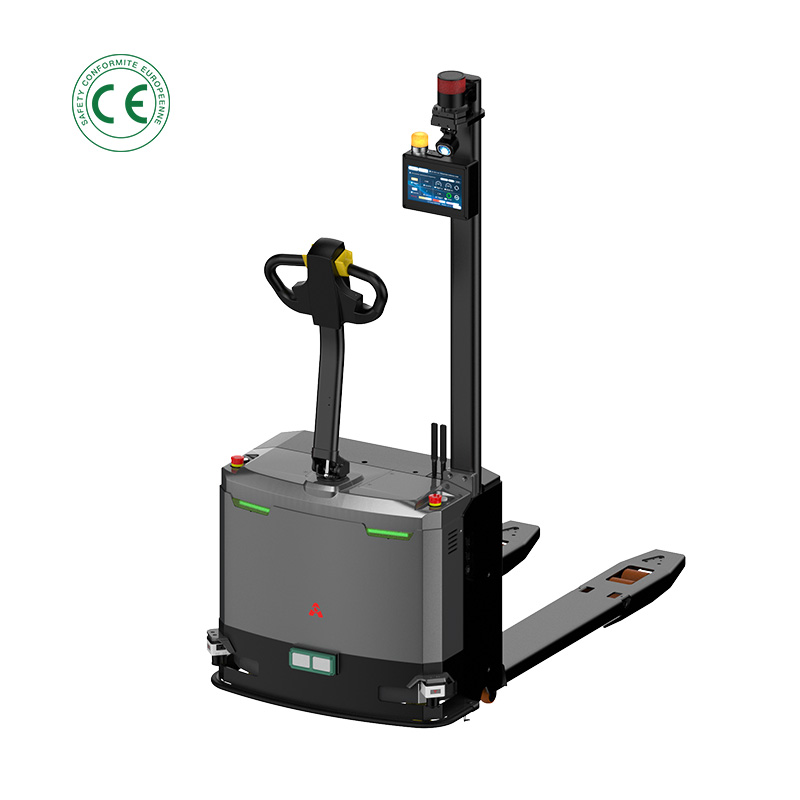
CE Certification Industrial AMR AGV Robot for Warehouse Automation Autonomous Material Handling Logistics
Recommended for mixed warehouse transfer where compliance documents and flexible route changes matter. A laser SLAM-ready platform can map existing aisles, reduce fixed infrastructure and integrate with fleet scheduling for repetitive pallet movement.
View product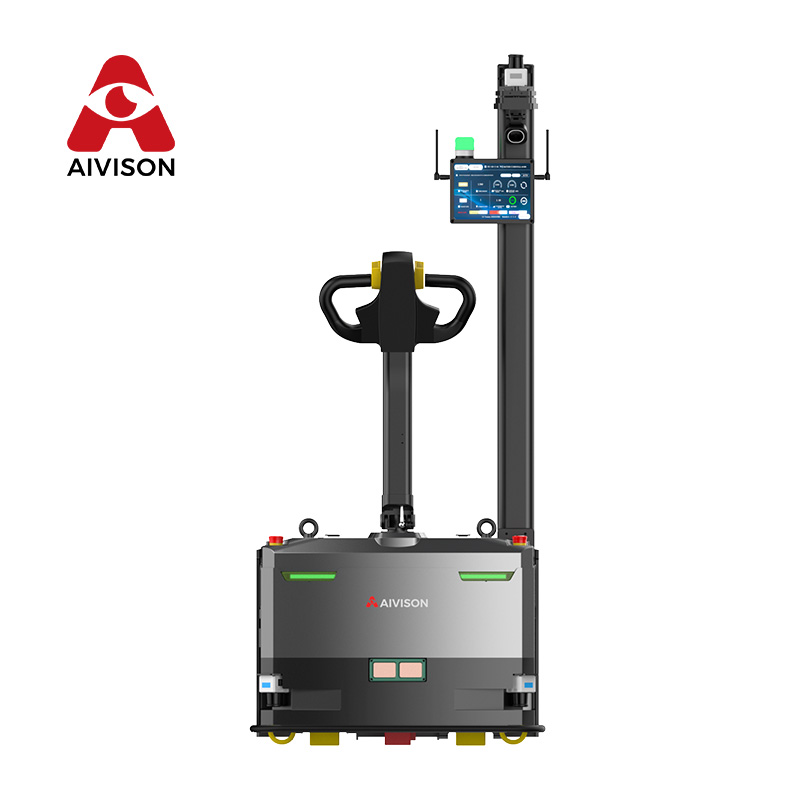
China Factory Movable Pallet Agv Robot Rack Shelf for Intelligent Robot Warehouse
Best fit for intelligent rack and shelf movement when storage density must adapt quickly. Moving the rack—not only the pallet—can shrink staging buffers and allow layout resets without adding new conveyors.
View product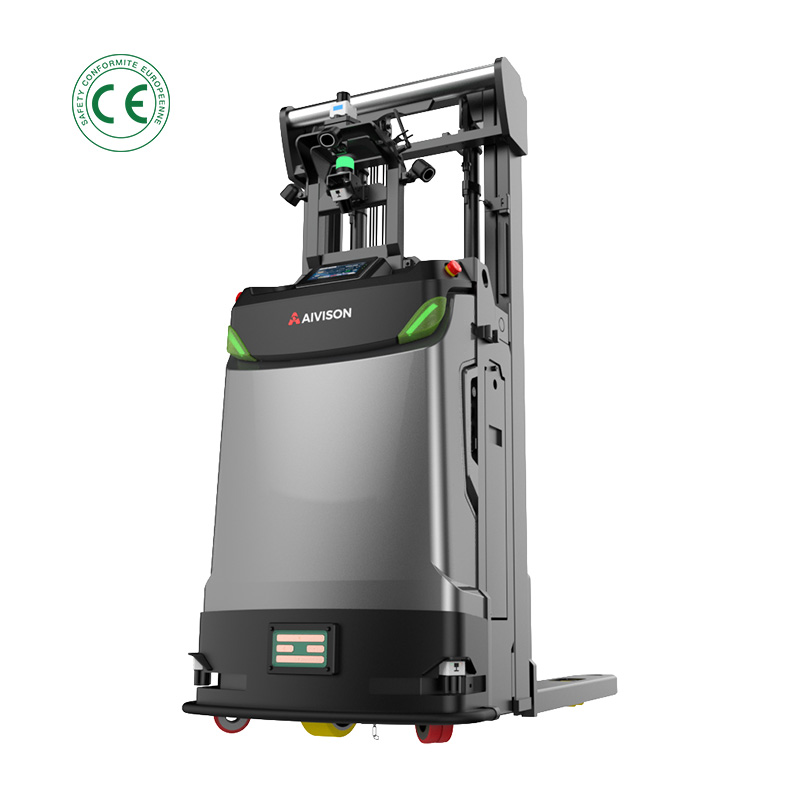
Smart Transport Robotic with Laser Navigation Reach 2000KG AGV Logistics Robots Warehouse Robot AMR
For 2,000 kg class logistics tasks in warehouses with mixed traffic. Laser navigation supports dynamic obstacle avoidance, making it suitable for heavy pallet transfer and line-side replenishment on the same floor.
View product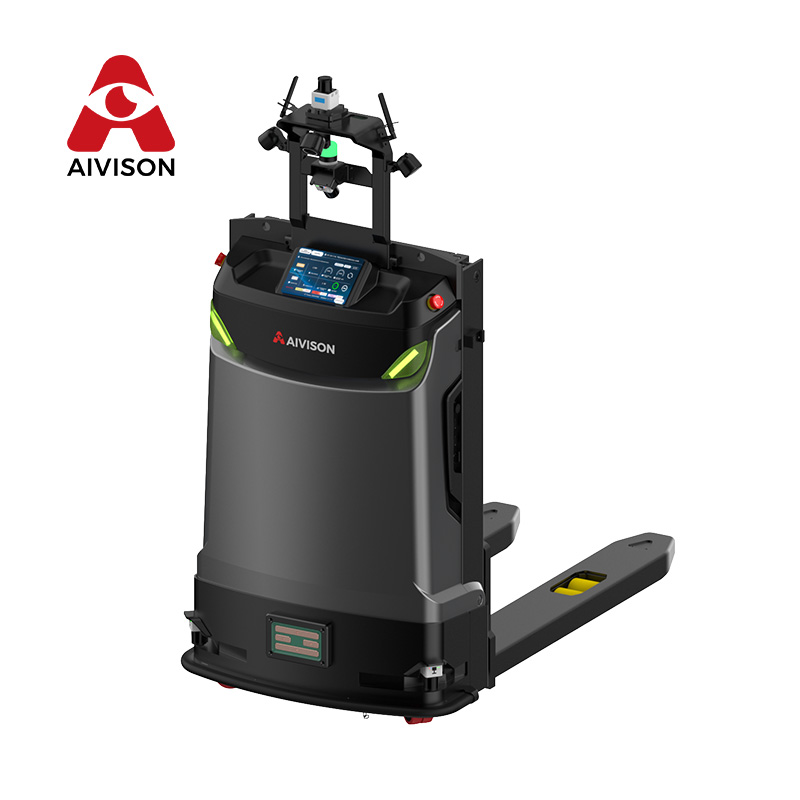
AGV AMR Autonomous Forklift Smart Version Auto Mobile Transfer Stacker Robot
For operations replacing manual counterbalance or stacker moves at pallet interfaces. Autonomous forklifts are strongest where existing pallets and racks remain unchanged and the process cannot be rebuilt around a conveyor.
View product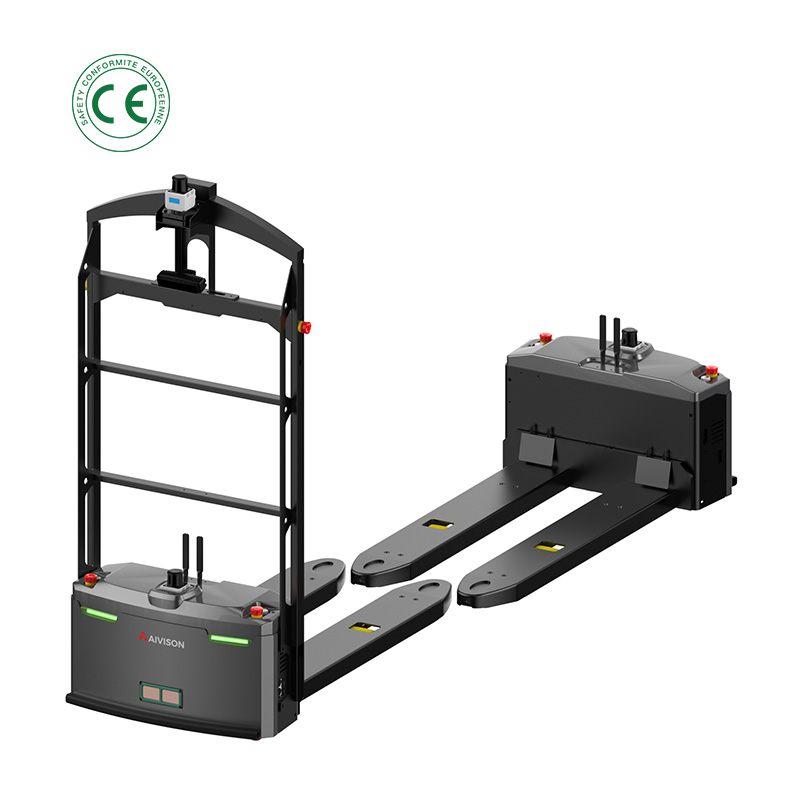
Aivison Customized 800kg Warehouse AGV Robot Lithium Battery AMR
For 800 kg class flexible manufacturing cells requiring a compact footprint and lithium-battery duty cycle. Custom top modules can align with line-side equipment, making it a pragmatic choice for staged automation.
View product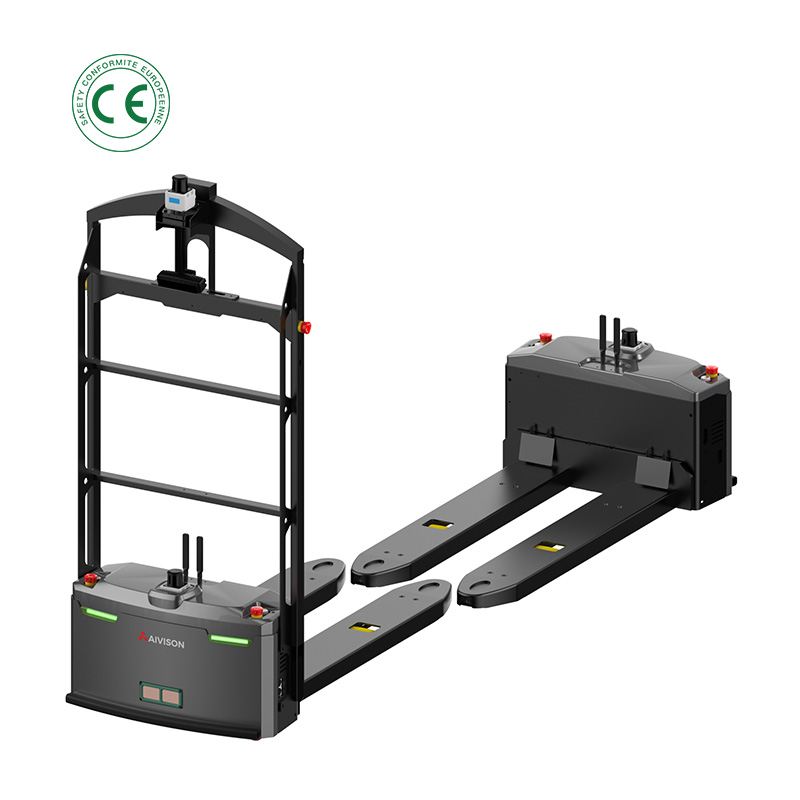
Warehouse Stacker CE Forklift AGV 800kg Load Capacity Light AMR Pallet
For light AMR pallet handling where CE documentation, low aisle impact and simple operator handover are priorities. The stacker format bridges manual pallet positions and automated replenishment without heavy floor rework.
View product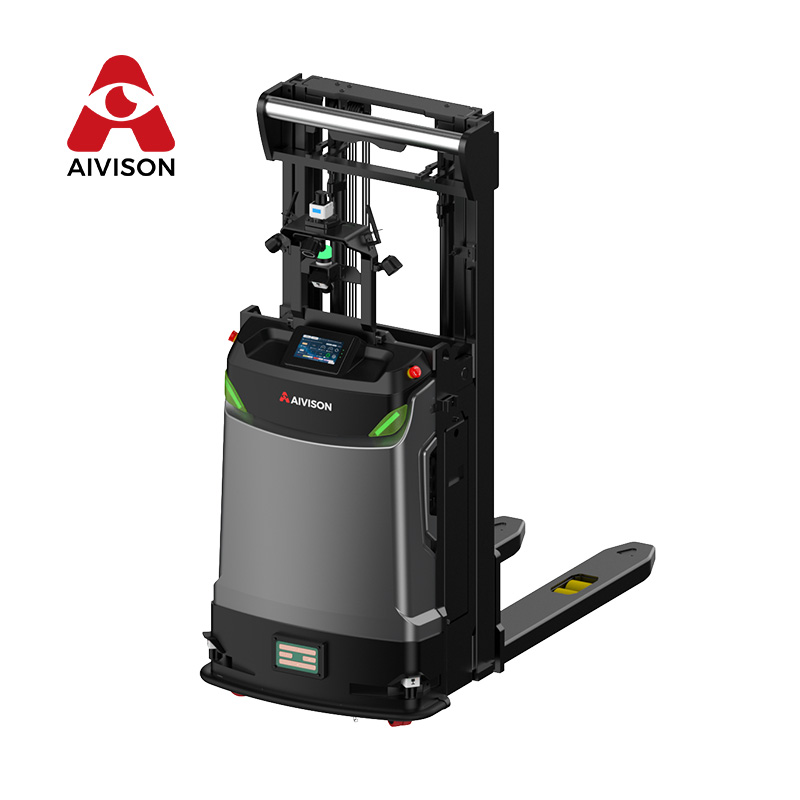
Heavy Load 2000KG Load Forklift Laser Guide AMR for Warehouse Pallet
For high-payload warehouse pallet flows and repeated dock-to-rack transfers. Laser-guided navigation suits large sites where fixed magnetic tape would be expensive to install, clean, maintain and modify.
View product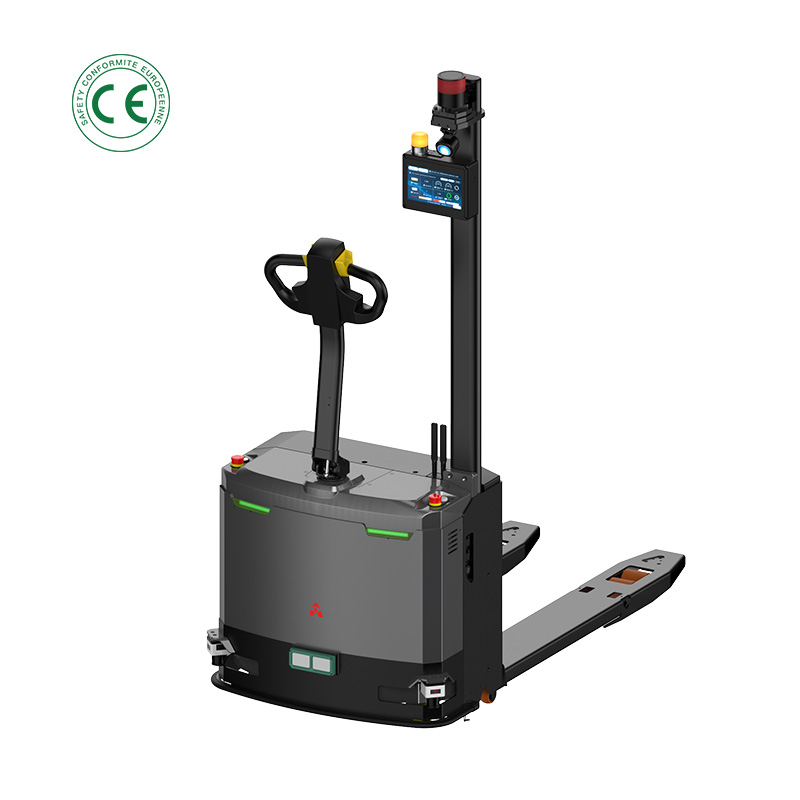
Automatic Handling CE Certificate 2000kg Forklift Robot Vehicle Laser AGV for Large Load Goods-carrying
For large-load goods-carrying where procurement requires an automatic forklift robot with CE certification and a clear safety file. Ideal for heavy pallet movement that must connect to scheduling, WMS or MES workflows.
View productFinal payload, lifting height, aisle width, speed, gradeability, battery runtime, safety configuration and certification scope must be confirmed against the project-specific datasheet and risk assessment. The most reliable starting point is not a catalog number—it is your load profile, layout and docking tolerance.
Why China’s Automated Pallet Handling Supply Base Matters Now
The category has moved from “robot demonstrations” to production-grade material flow. Buyers are now comparing navigation reliability, safety evidence, fleet software, uptime engineering and lifecycle support—not only machine price.
Mature Engineering Ecosystem
China now combines mature lidar, motor, battery, controller and sheet-metal supply chains with deep deployment experience in semiconductor, 3C electronics, lithium battery, photovoltaic, automotive parts, PCB, textile and medical device factories. This compresses prototype cycles and improves access to proven components.
Faster Layout Iteration
Warehouses change. E-commerce peaks, new SKUs, line rebalancing and seasonal storage all pressure fixed automation. Laser SLAM pallet handling robots let teams remap routes and change docking points without rebuilding the floor, which is a major advantage in fast-moving operations.
Export-Grade Verification
For overseas buyers, supplier selection is an audit exercise. Independent onsite assessment, trade history, Fortune 500 supply relationships, product CE documentation and stress-test records reduce risk. A credible exporter should be able to connect the commercial quotation to a verifiable quality system.
Information gain for buyers: the lowest unit price is rarely the lowest total cost. The real comparison should include mapping effort, docking precision, charger count, fleet software, spare-part strategy, acceptance testing and the cost of future layout changes.
What Pallet Handling Buyers Will Demand Next
Procurement teams are shifting from single-machine purchasing to fleet-level capability. The following six trends should be written into the specification before quotations are compared.
Fleet-First Procurement
Buyers increasingly evaluate traffic control, task dispatch, route optimization, charging orchestration and uptime dashboards before the first robot is ordered. A single robot proves feasibility; a reliable fleet proves ROI. Specifications should require Wi-Fi scheduling, exception handling and clear APIs for WMS or MES integration.
Right-Sized Precision
Over-specifying accuracy is one of the most common hidden costs. Many transfer routes only need ±5 mm laser SLAM navigation with no floor codes. High-shelf docking may justify ±2 mm QR assist, while semiconductor or medical assembly may require composite robots with ±0.05 mm repeatability. Precision should be assigned station by station.
Modular Payload Interfaces
One navigation chassis with interchangeable top modules is becoming more valuable than many separate robot types. Jacking units, roller conveyors, forklift forks, lift decks and 6-axis arms can be engineered around the process. This lowers spare-part complexity and shortens future expansion lead time.
Energy and Uptime Orchestration
The robot is only productive when the energy plan matches the shift plan. Buyers are asking for intelligent charging docks, opportunity charging, battery health visibility and charger count calculations based on peak throughput. A 24/7 warehouse should model energy as part of fleet capacity, not as an afterthought.
Audit-Ready Safety Files
Safety is no longer a checkbox. Procurement teams need risk assessments, CE-related documentation where applicable, emergency-stop design, obstacle-zone logic, lifting verification and operator training records. A supplier that cannot support an audit pack becomes a project risk, especially in regulated production environments.
Lifecycle Service, Not Spare-Part Luck
Export buyers want predictable support: remote diagnostics, firmware updates, spare-part lists, training, acceptance test plans and escalation paths. The supplier’s ability to support commissioning remotely while coordinating local service partners is becoming a competitive differentiator for cross-border pallet handling projects.
How Pallet Handling Robots Are Evolving
The next generation of AMR and AGV pallet robots will be judged by adaptability, data quality and integration depth. These four development directions matter for buyers planning multi-year automation roadmaps.
3D Perception and Semantic Maps
Laser SLAM remains the workhorse, but richer perception is improving pallet recognition, fork entry and obstacle classification. Future maps will encode meaning—dock, aisle, no-go zone, charger, handover station—so robots behave more consistently during layout changes and mixed traffic.
Higher Payload in Slimmer Chassis
Warehouses want more throughput without wider aisles. Mechanical redesign, stronger lifting structures and improved thermal management are allowing higher payloads in compact footprints. Buyers should validate lifting stability, floor loading and safety distances, not just the payload number in a brochure.
Battery Chemistry and Charging Logic
Lithium battery systems, opportunity charging and smart docks are turning energy management into a scheduling problem. The best configuration depends on shift patterns, charger location and peak mission rate. A larger battery is not always better if charging windows and fleet rotation are poorly designed.
Open Integration and Digital Twins
Robots increasingly need to communicate with WMS, MES, ERP, conveyors, elevators and safety systems. Open APIs, simulation models and digital twins help buyers test throughput before installation. Integration capability is now a product feature, not a consulting add-on.
Inside Marnix: An Export-Ready Pallet Handling Manufacturer
Shenzhen Marnix Intelligent Technology Co., Ltd. combines about ten years of AGV engineering experience with a modular AMR portfolio, verified quality systems and customization for integrators and end users.
Marnix designs and manufactures laser SLAM autonomous mobile robots, jacking robots, smart forklifts, composite mobile robots and intelligent charging docks from Shenzhen, China. The company serves semiconductor, 3C electronics, lithium battery, photovoltaic, automotive parts, PCB, textile and medical device industries, supporting both direct factory projects and system integrators who need reliable robot platforms.
About Ten Years of AGV Engineering
Long-cycle engineering experience matters in pallet handling because the hard problems appear after the demo: floor transitions, pallet quality variation, Wi-Fi dead spots, charger planning and exception recovery.
±5 mm SLAM, ±2 mm QR, ±0.05 mm Composite
Natural-feature laser SLAM avoids floor tracks and reflectors. A QR scanning camera can raise docking to ±2 mm where required, while composite robots with a 6-axis arm can reach ±0.05 mm repeatability for precision production tasks.
One Core, Multiple Top Modules
Jacking units, roller conveyors, forklift forks, lift decks and robotic arms can be engineered around the same navigation core. This reduces training complexity and makes phased automation easier to justify.
Verified Quality and Global Supply
Marnix has served more than 200 manufacturers across three continents, is reported as a supplier to a Fortune 500 company, and has undergone onsite supplier assessment by TÜV Rheinland. These are useful proof points for procurement due diligence.

Manufacturing base: R&D, assembly and testing for AMR, AGV and smart forklift platforms.

Quality protocol: multi-stage inspection and operational stress testing before shipment.
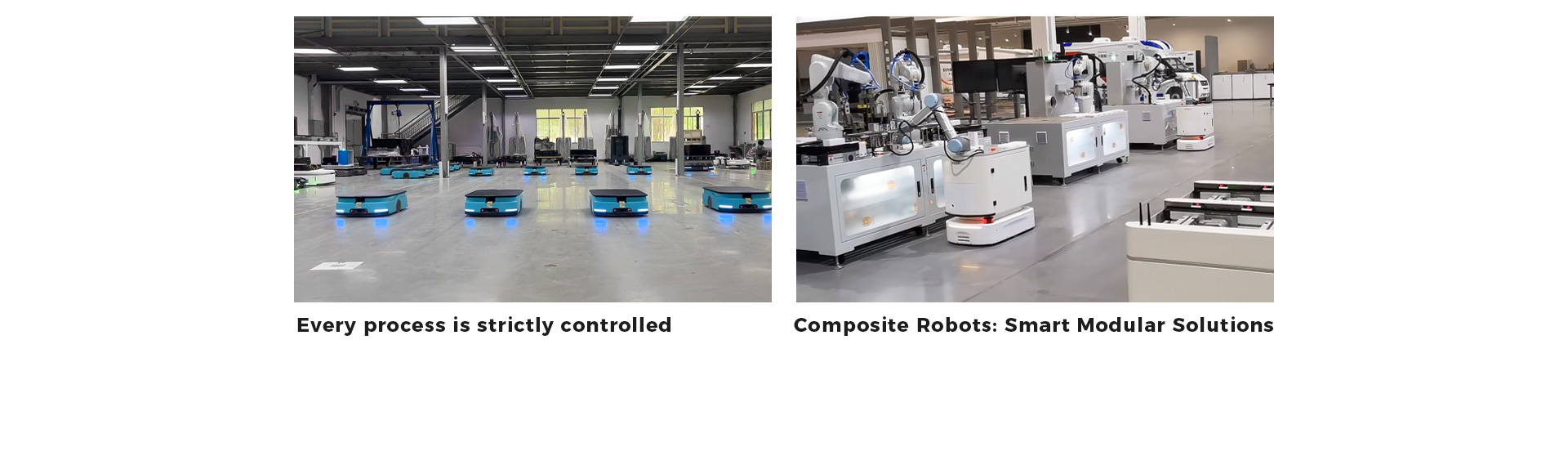
Composite robotics: mobile platforms with arms, rollers and production-line interfaces.
Specify Precision by Station, Not by Habit
One of the most useful cost controls in pallet handling automation is a precision budget. Match navigation accuracy to the actual handover task and avoid paying for labels, calibration and maintenance you do not need.
Natural-Feature Laser SLAM
No auxiliary tracks, reflectors or floor QR codes. Best for warehouse transfer, line-side delivery, dock-to-staging routes and sites that change layout frequently.
SLAM + QR Code Camera
QR labels only where high-precision docking is needed. Best for high-shelf storage, precision handover, wafer handling and conveyor interfaces with tight tolerances.
Composite Robot + 6-Axis Arm
Station calibration and repeatability for demanding assembly. Best for semiconductor, medical device and precision electronics processes where the robot becomes part of the production cell.
Buyer rule of thumb: most pallet handling projects need only two precision tiers—transfer routes and docking stations. Requiring QR codes everywhere often adds label maintenance, cleaning risk and exception handling without improving throughput.
From Requirement to Acceptance in Four Practical Stages
A disciplined deployment sequence protects schedule and reduces rework after the robots arrive. The same logic applies to a single autonomous forklift or a mixed fleet of jacking, pallet and composite robots.
Requirement and TCO
Define load, route, throughput, shift pattern, docking precision and future layout changes. Build a total cost model that includes mapping, integration, charging, training and spares.
Site and Data
Share CAD or layout sketches, aisle widths, door transitions, floor conditions, elevator or lift points, Wi-Fi coverage, rack drawings and pallet samples or photos.
Simulation and Safety
Review routes, traffic rules, charger placement, handover logic and risk assessment. Identify any station that needs QR assist or custom top modules before manufacturing.
Pilot, Acceptance, Scale
Run a controlled pilot against agreed KPIs: cycle time, mission success rate, docking success, intervention rate and charger utilization. Scale only after acceptance data is stable.
Six Questions That Reveal Real Export Capability
Use these questions to compare quotations from China automated pallet handling suppliers. Strong answers are specific, documented and traceable to test records or project references.
Safety File
Can the supplier provide risk assessment support, emergency-stop logic, CE-related documentation where applicable and operator training materials?
Navigation Evidence
Is accuracy stated by configuration and station type? Are mapping effort, QR label requirements and dynamic obstacle performance explained clearly?
Load Validation
Has the lifting structure been verified for payload, center of gravity, lifting height and floor loading? Ask for test criteria, not only a payload label.
Fleet and Software
How are tasks assigned, traffic controlled, chargers scheduled and exceptions escalated? Can the system integrate with WMS, MES, conveyors or elevators?
Factory Audit
Has the manufacturing site been independently assessed? Can the supplier show trade history, credit records, customer references or third-party inspection reports?
After-Sales Path
What happens when a robot stops? Clarify remote diagnostics, spare-part lead time, firmware support, training, escalation levels and commissioning responsibilities.
Automated Pallet Handling Procurement FAQ
Direct answers for factory owners, logistics managers and system integrators comparing China automated pallet handling suppliers and exporters.
What does automated pallet handling include?
It typically includes pallet transfer, rack or shelf movement, dock-to-rack transport, line-side replenishment, autonomous forklift operations, jacking robot transport and conveyor handover. The right mix depends on pallet condition, load weight, aisle width, docking tolerance and existing interfaces.
Is an AGV or AMR better for pallet handling?
AGV usually implies more fixed guidance, while AMR emphasizes laser SLAM and flexible mapping. For many modern warehouses, laser SLAM AMR pallet robots offer faster layout changes and lower floor infrastructure. AGV-style fixed routes can still be appropriate where the process is highly stable.
What navigation accuracy is enough?
Use ±5 mm laser SLAM for general transfer and line-side delivery. Add QR assist for ±2 mm at high-precision docking stations. Consider composite robots with ±0.05 mm repeatability only when the robot must perform precision assembly or wafer-level handling.
Do I need to modify my factory floor?
Usually not for standard laser SLAM navigation. The robot maps natural features and avoids floor tape, reflectors or codes. QR labels are added only where ±2 mm docking is required. Floor transitions, slopes, gaps and lighting should still be reviewed during the site survey.
Can the robot work with existing racks and pallets?
Often yes, but the rack, pallet and fork interface must be checked. Payload, center of gravity, pallet condition, fork pocket dimensions and rack tolerances all affect reliability. A supplier should ask for drawings or photos before confirming the configuration.
How are multiple robots coordinated?
Fleet software assigns tasks, controls traffic and manages charging over indoor Wi-Fi. For mixed fleets, the acceptance criteria should include mission success rate, route conflicts, charger utilization, handover logic and exception recovery—not just single-robot speed.
Can Marnix customize top modules?
Yes. As a manufacturer, Marnix supports customization of chassis and top modules such as jacking units, roller conveyors, forklift forks and 6-axis robotic arms. Customization should begin with the process interface, load data and safety requirements.
Which industries are the best fit?
Common deployments include semiconductor, 3C electronics, lithium battery, photovoltaic, automotive parts, PCB, textile and medical device production. The strongest fit is repetitive pallet or material movement where labor risk, space constraints or quality consistency justify automation.
How do I start a project evaluation?
Send payload, pallet or rack dimensions, layout drawing, throughput target, docking precision, shift pattern, Wi-Fi coverage, equipment interfaces and target timeline. Use the Inquire Now button to start a configuration review with the supplier’s engineering team.
Send Your Pallet Handling Requirement for a Configuration Review
Share your load, layout, throughput and docking tolerance. A focused review can turn a broad automation idea into a practical robot, fleet and charging configuration before commercial negotiation begins.
Inquire NowShenzhen Marnix Intelligent Technology Co., Ltd. · Laser SLAM AMR, jacking robot, smart forklift, composite mobile robot and charging dock solutions for global factories and integrators.