China Best Smart Warehouse Robot Factories & Exporter
A practical 2025 buyer’s guide to laser SLAM AMRs, jacking robots, smart forklifts, humanoid development platforms and composite mobile robots — with the engineering evidence serious integrators should verify before placing an order.
Eight Smart Warehouse Robot Platforms Worth Comparing First
The strongest shortlist is not the longest catalogue. It is the one that lets you compare payload, navigation accuracy, floor readiness, fleet control and future module expansion on equal terms. The eight platforms below cover light pallet handling, heavy traction, unmanned forklifts, jacking and line-side transfer, humanoid development, and conveyor-linked AMR workflows. Product names and destination URLs are preserved for direct technical review; every image is displayed complete inside its card so proportions are not compressed or cropped.
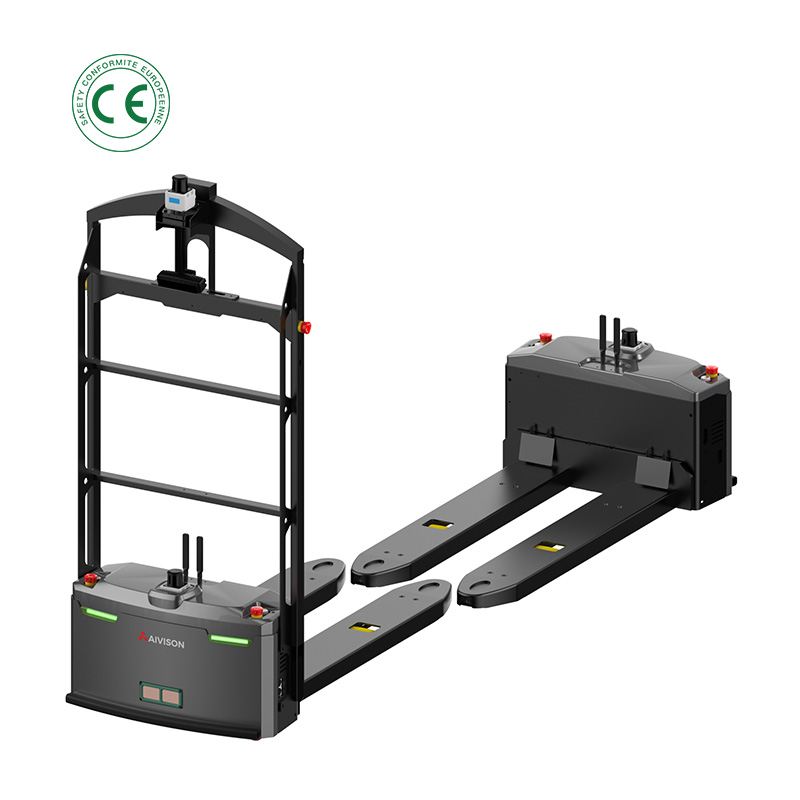
Warehouse Stacker CE Forklift AGV 800kg Load Capacity Light AMR Pallet
A compact pallet stacker for light warehouse and line-side work where aisle width and changeover speed matter. Best suited to 800 kg-class loads and repetitive put-away or replenishment tasks.
View product
AI-Ready Humanoid Robot Chassis Dual 7-DOF Arms Omnidirectional Drive ROS2 Laser SLAM Open Development Platform
An open development platform for robotics teams that need omnidirectional mobility, dual 7-DOF arms, ROS2 tooling and laser SLAM in one integration base rather than a closed black box.
View product
Humanoid Robot Chassis Dual 7-DOF Arms Laser SLAM Omnidirectional Navigation ROS2 Open Platform AMR
A research-to-production bridge for humanoid and mobile-manipulation projects: omnidirectional navigation, laser SLAM, dual-arm kinematics and a ROS2 open architecture.
View product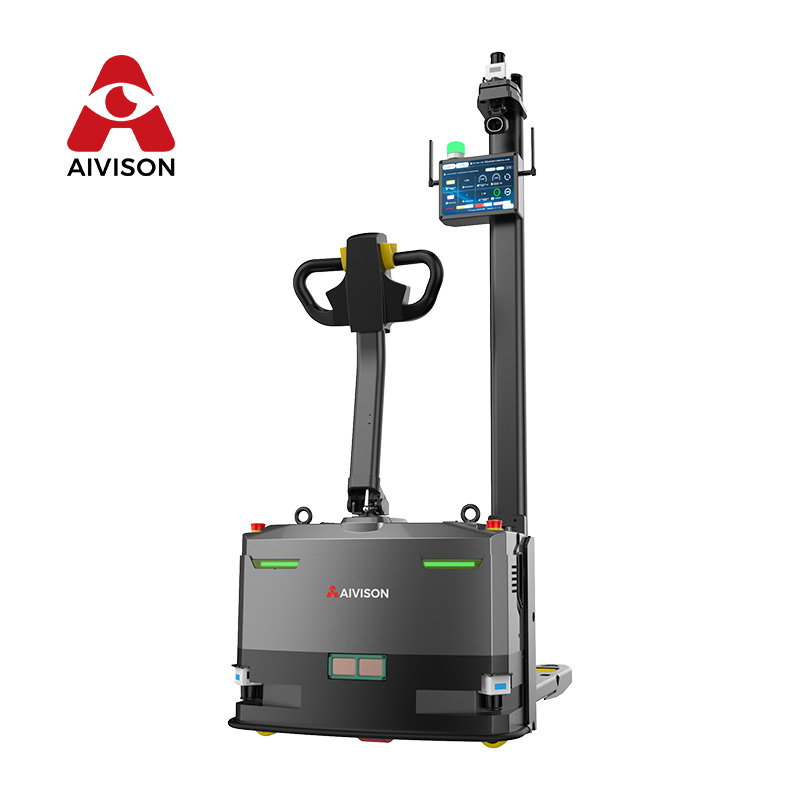
Customizable 1500KG Traction Capacity AGV Autonomous Mobile Robot Amr with Lidar Guided Sensor
A heavier traction platform for towed or train-style material movement, with lidar-guided navigation and customization options for factory layouts that cannot add fixed tracks.
View product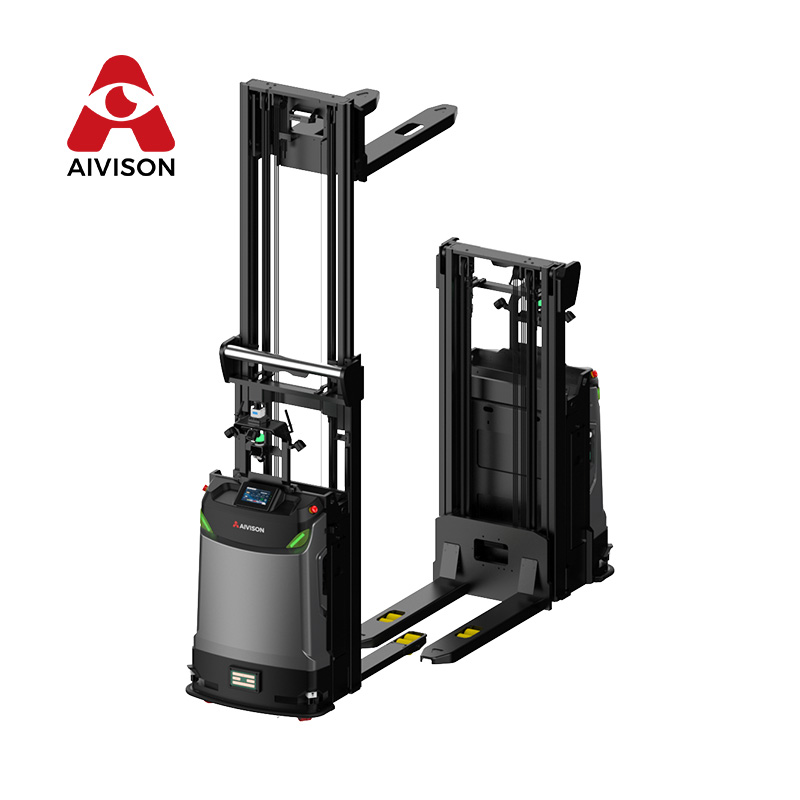
High Precision agv Forklift Full Servo Motor Controlled Laser Forklift with Heavy Load 2000kg
Built for heavier pallet flows where fork positioning and motion control need full servo response. A practical candidate for high-bay interfaces, heavy components and 24/7 transfer routes.
View product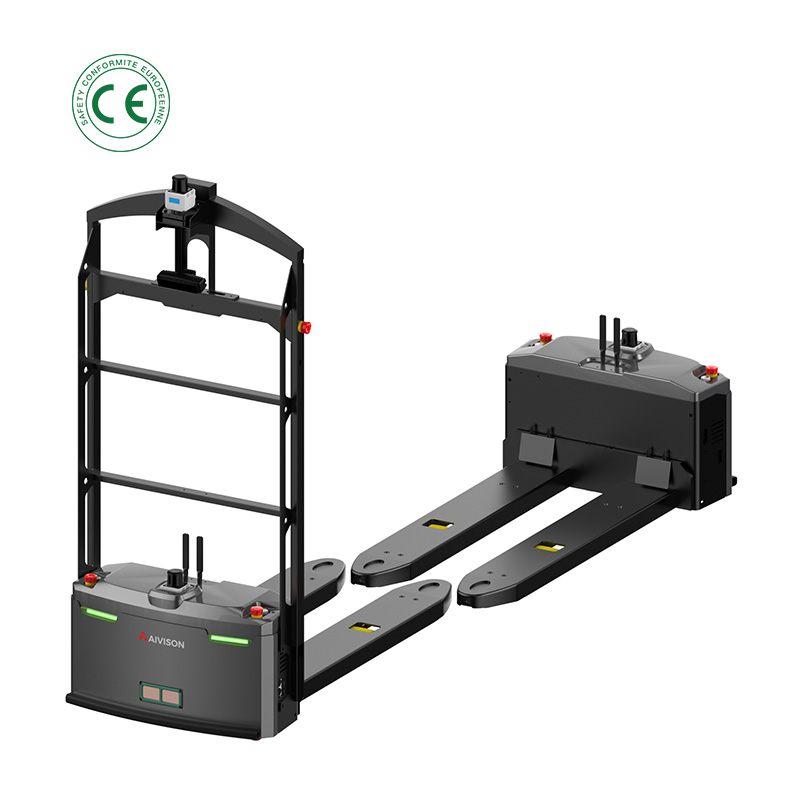
Aivison Customized 800kg Warehouse AGV Robot Lithium Battery AMR
A lithium-battery warehouse AGV platform for buyers who need flexible scheduling, lower routine battery intervention and a chassis that can be adapted to site-specific fixtures.
View product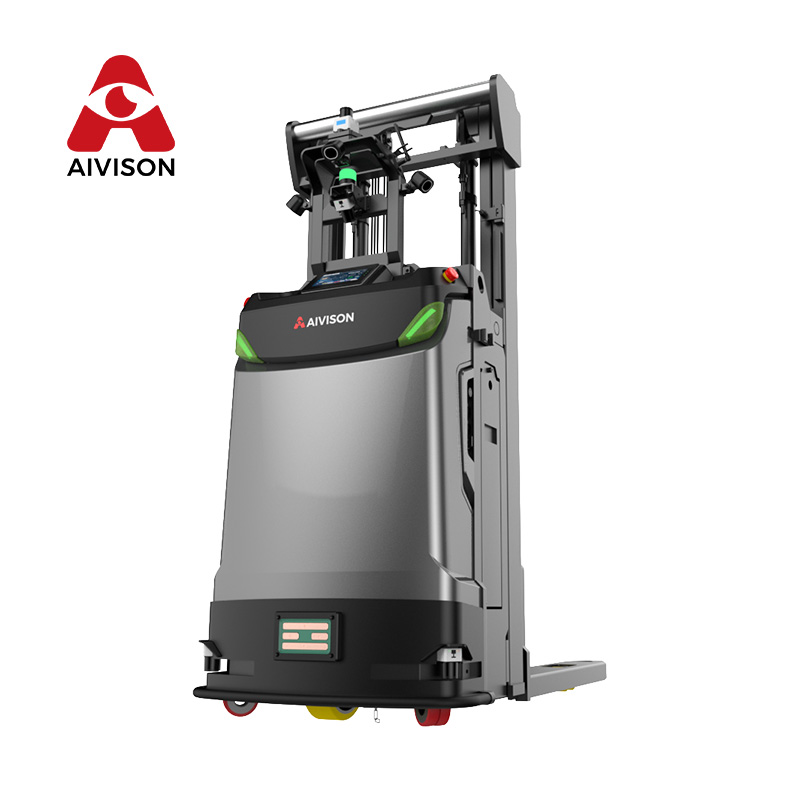
Autonomous Mobile Robots (AMR) Implement Cargo Transportation Between Warehouse and Conveyor Line
An application-focused AMR solution for the handoff zone between storage and production conveyors, where repeatable docking and WMS/MES coordination often determine success.
View product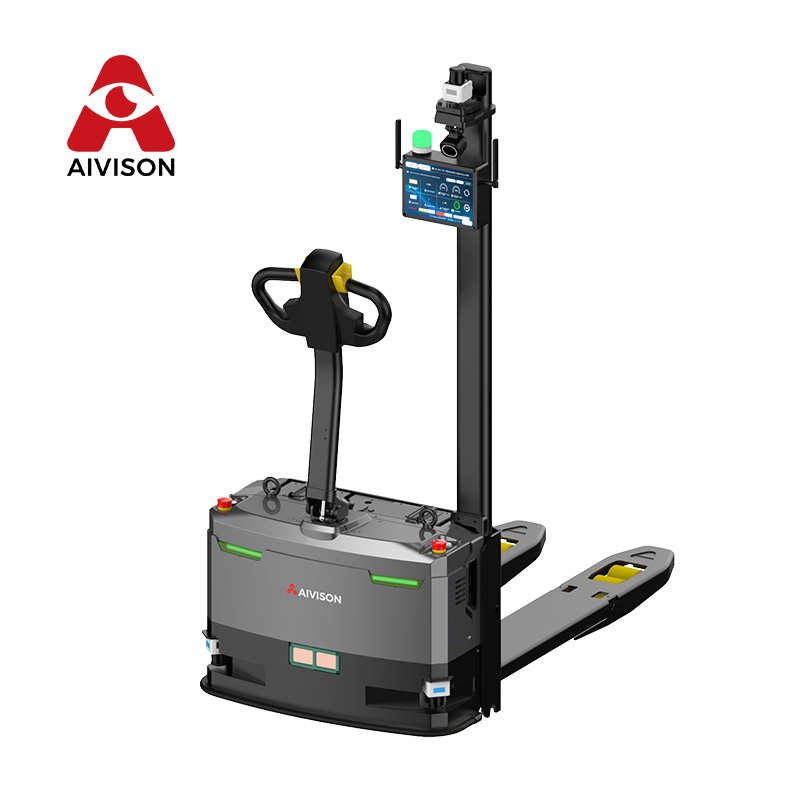
Aivison AGV Forklift High Quality Industrial Unmanned Pallet Forklift
An industrial unmanned pallet forklift for factories standardizing on autonomous fork entry, steady pallet transport and tighter coordination with production schedules.
View productNeed help matching payload and docking precision to a specific aisle? Share your load profile, layout and throughput target with the engineering team. Get a Quote
What “China Best Smart Warehouse Robot Factory” Should Mean to a Buyer
China’s smart warehouse robot supply chain is deep, but “best” is not a universal label. For a semiconductor cleanroom, the best factory may be the one with ±2 mm QR-assisted docking and contamination-aware integration experience. For a pallet warehouse, it may be the supplier that can prove stable fork entry, fleet traffic control and fast spare-parts response. For an integrator, it is the manufacturer that exposes enough engineering detail to de-risk the project instead of hiding behind a catalogue price.
Shenzhen Marnix Intelligent Technology Co., Ltd. is a useful benchmark for this evaluation. The company draws on about ten years of AGV engineering experience, builds laser SLAM AMRs, jacking robots, smart forklifts and charging docks, and supplies both end users and system integrators. Its published navigation architecture combines natural-feature laser SLAM at ±5 mm with optional QR camera assistance at ±2 mm; composite mobile robots with a 6-axis arm reach ±0.05 mm repeatability for precision assembly support.
The practical lesson is to evaluate the factory against your process, not against a generic “smart robot” claim. Ask for the navigation configuration, floor preparation assumptions, WMS/MES interface plan, charging strategy and validation protocol in writing. That is the information gain that separates a brochure from a procurement decision.

Smart Warehouse Robot Procurement Trends Shaping 2025–2030
Buyers are moving from “one robot for one task” to fleet-level operational design. The commercial winners will be suppliers who can prove interoperability, lifecycle support and measurable uptime — not simply the lowest quoted chassis price.
Fleet-first procurement
Instead of validating a single vehicle, buyers now ask for multi-robot scheduling, traffic control, Wi-Fi coverage assumptions and charging-dock ratios. A factory that cannot demonstrate coordinated dispatch creates hidden scale-up risk.
Modular top-module contracts
Jacking units, roller conveyors, forklift forks and 6-axis arms are increasingly specified as interchangeable modules. Procurement teams want one navigation core, one fleet controller and a clear upgrade path when the production line changes.
Interoperability and data access
WMS, MES and production equipment interfaces are becoming contract items. Ask how tasks are assigned, what APIs are available, how alarms are escalated and whether fleet software can operate alongside existing automation.
TCO instead of sticker price
The buying decision now includes battery strategy, charging infrastructure, spare parts, training, integration labour, re-mapping and service response. Request a total-cost-of-ownership model that exposes these assumptions before comparison.
Product Development Trends: What the Next AMR Generation Must Prove
The next wave of warehouse robots will not be judged only by navigation accuracy. They will be judged by how gracefully they combine mobility, manipulation, data and serviceability inside an existing factory.
Hybrid SLAM + vision + QR
Natural-feature laser SLAM handles the route; QR or visual markers are reserved for high-precision stations. This layered approach avoids unnecessary floor infrastructure while still meeting tight docking requirements.
Composite mobile manipulation
AMRs with 6-axis arms and synchronized top modules move from pilot projects into semiconductor, medical-device and precision-electronics workflows where repeatability and clean handoff matter.
AI scheduling and digital twins
Fleet software is shifting from simple task dispatch to traffic prediction, congestion avoidance and simulation-assisted layout planning. Buyers should ask whether the supplier can model throughput before installation.
Opportunity charging and uptime
Battery strategy is part of system design: opportunity charging during natural idle windows, compatible smart docks and clear battery-health reporting can determine whether a 24/7 fleet is commercially viable.
| Configuration | Typical accuracy | Floor readiness | Best-fit tasks | Procurement note |
|---|---|---|---|---|
| Laser SLAM on natural features | ±5 mm | No tape, reflectors or floor QR by default | Warehouse transfer, line-side delivery, changing layouts | Validate Wi-Fi coverage and traffic rules; confirm map update workflow. |
| SLAM + QR scanning camera | ±2 mm | QR labels only at precision stations | High-shelf storage, precision docking, wafer handling | Define who installs and maintains labels; specify camera cleaning and calibration. |
| Composite robot with 6-axis arm | ±0.05 mm | Station calibration required | Semiconductor and medical-device assembly support | Require repeatability test data and a machine-tending safety review. |
Enterprise Advantages: Experience, Verification and Integrator Support
A credible China smart warehouse robot exporter should make verification easy. The following advantages are the ones procurement teams can actually check during supplier assessment.
About a decade of AGV engineering
Shenzhen-based R&D and manufacturing experience in AGV/AMR platforms, with a portfolio covering jacking robots, smart forklifts, pallet AMRs, composite robots and charging docks.
TÜV Rheinland onsite assessment
Company premises and operations have been verified through an independent onsite supplier assessment, giving overseas buyers a third-party reference point beyond self-reported capability.
Fortune 500 supplier record
The supplier profile cites a procurement contract with a Fortune 500 company, independently assessed trade history and transparent credit and transaction records on Alibaba.com.
OEM, ODM and integrator support
Custom chassis and top modules — jacking units, roller conveyors, forklift forks and 6-axis arms — help system integrators connect the robot directly to production equipment rather than forcing a standard fit.

From Factory Evidence to Fleet Performance
Robots are coordinated by an intelligent scheduling system over indoor Wi-Fi, enabling simultaneous task assignment, traffic control and automatic charging through compatible smart docks. That architecture matters because most warehouse automation failures are not caused by a single robot’s navigation accuracy; they are caused by weak integration between traffic, charging, operators and the host production system.
Marnix reports more than 200 manufacturers served across three continents, with deployments in semiconductors, 3C electronics, lithium batteries, photovoltaics, automotive parts, PCB, textiles and medical devices. For export buyers, the practical next step is to request a project-specific configuration rather than a generic quotation. Get a Quote
Where Smart Warehouse Robots Earn Their Payback
The same navigation core can serve very different environments. The right supplier should be able to explain the operating assumptions for each industry, not simply list logos.
Semiconductor
Cleanroom-compatible transfer and precision docking where QR assist and particle control matter.
3C Electronics
Fast line-side replenishment, fixture movement and repetitive transfer in high-mix assembly areas.
Lithium battery
Jacking and material-flow support across processes where safety, traceability and uptime are critical.
Photovoltaic
Module and component logistics that require stable routes, clear handoffs and scalable fleet dispatch.
Automotive parts
Pallet movement, towed transport and warehouse-to-line delivery in mixed human and forklift traffic.
PCB
Roller-conveyor and custom top-module integration for equipment-to-equipment material transfer.
Textile
Repetitive warehouse transfer and replenishment where manual pushing creates bottlenecks and safety exposure.
Medical devices
Precision assembly support and controlled material movement where repeatability and documentation are essential.
What to Prepare Before Requesting an AMR or AGV Proposal
From project experience, six inputs determine most of the robot selection. Sharing them upfront shortens evaluation from weeks to days and produces a quotation that can actually be compared.
Load profile
Maximum weight, footprint, centre of gravity and whether the load is a rack, pallet, cart, fixture or towed train.
Site layout
CAD or a clear sketch with aisle widths, doors, slopes, lifts, charging locations and restricted zones.
Throughput target
Missions per hour, peak periods and future volume growth — these set fleet size and charging-dock count.
Docking precision
Where ±5 mm is sufficient, where ±2 mm QR assist is required, and whether an arm-level ±0.05 mm process is involved.
Wi-Fi and IT
Access-point coverage, latency, roaming quality, cybersecurity expectations and the interface plan for WMS or MES.
Equipment interfaces
Conveyors, machines, shelves and safety systems the robot must hand over to, plus any custom top-module needs.
Illustrative planning weights for comparing project budgets; actual percentages depend on payload, top module, precision and site conditions.
Common Buyer Questions About Smart Warehouse Robot Factories
Factual answers for procurement, engineering and integration teams evaluating a China-based exporter.
Are AMR and AGV the same thing?
They overlap but are not identical. AGV traditionally follows fixed routes or guidance infrastructure, while an AMR uses onboard sensing and mapping to navigate dynamically. Modern suppliers often use “AMR” for laser SLAM platforms and “AGV” for vehicles in broader industrial contexts. For procurement, focus on the actual navigation configuration, safety concept and traffic-management capability rather than the label.
What navigation accuracy can laser SLAM robots achieve?
With natural-feature laser SLAM, the reference architecture reaches ±5 mm without magnetic tape, reflectors or floor QR codes. Adding a QR scanning camera raises docking accuracy to ±2 mm at selected stations. Composite robots with a 6-axis arm can reach ±0.05 mm repeatability for precision assembly support. Buyers should specify accuracy by station, not by robot alone.
Do we need to modify the factory floor?
Usually not for standard laser SLAM navigation. The robot maps existing features and operates without auxiliary tracks or floor codes. QR labels are added only where higher docking precision is needed. However, aisle width, floor condition, lighting, Wi-Fi coverage and traffic rules still need to be validated before deployment.
Can the robot be customized for our production line?
Yes, customization is one of the main reasons to work directly with a manufacturer. Chassis size, payload, jacking units, roller conveyors, forklift forks and 6-axis arms can be engineered around the load and handoff point. For integrators, the key question is how much of the top module and software interface can be documented before the project starts.
How are multiple robots coordinated?
Fleet scheduling software assigns tasks, manages traffic and coordinates automatic charging over the indoor Wi-Fi network. During evaluation, ask for evidence of multi-robot dispatch, congestion handling, task priority rules, alarm escalation and how the fleet controller integrates with WMS or MES. A single-robot demonstration is not enough for a scalable warehouse project.
What information is needed for a useful quotation?
Send the maximum load, load footprint, site layout, aisle widths, required throughput, docking precision, Wi-Fi coverage, target go-live date and the equipment the robot must interface with. If the application is unusual, include photos or video of the existing process. The supplier can then recommend a navigation configuration, top module and fleet size with fewer assumptions. Get a Quote
Build a Smart Warehouse Robot Shortlist You Can Defend
Compare navigation accuracy, top modules, fleet scheduling, charging strategy and supplier evidence before you commit. Share your layout and payload profile — the engineering team will respond with a configuration path, not a generic catalogue page.