China Best Pallet Jacking Robot Exporter & Exporters
Evaluate Chinese pallet jacking robot exporters with engineering evidence, not brochure claims: laser SLAM accuracy, modular top mechanisms, fleet scheduling, charging infrastructure, factory verification and export-ready support.
8 Pallet Jacking Robot & AMR Platforms for Global Buyers
Compare jacking AMRs, pallet forklifts, industrial AGVs and advanced mobile manipulator platforms. Each card preserves the original product URL for direct technical review.
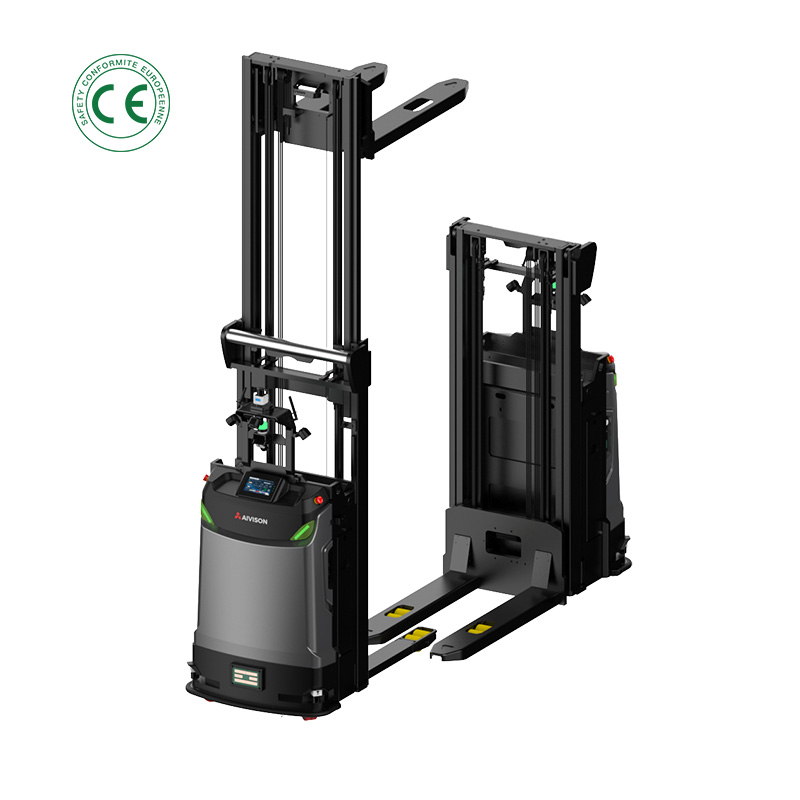
High-performance Intelligent Smart Automated Guided Vehicle 2000kg AMR Robot
Heavy-duty autonomous platform for repetitive pallet, rack and material transfer where stable navigation and uptime matter.
View product →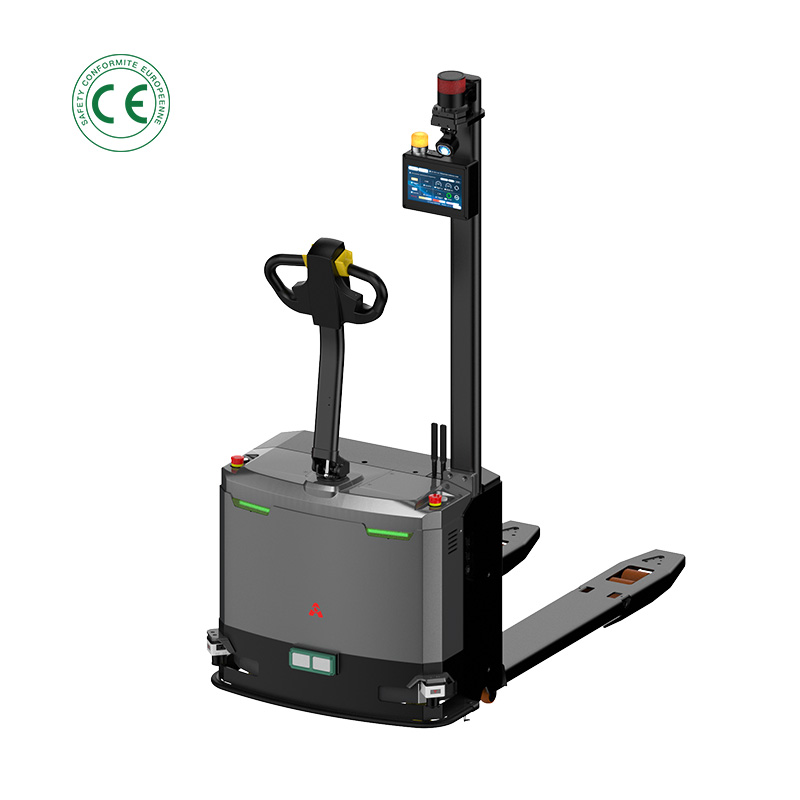
CE Certification Industrial AMR AGV Robot for Warehouse Automation Autonomous Material Handling Logistics
Industrial material handling with autonomous route planning for warehouses integrating people, forklifts and automated equipment.
View product →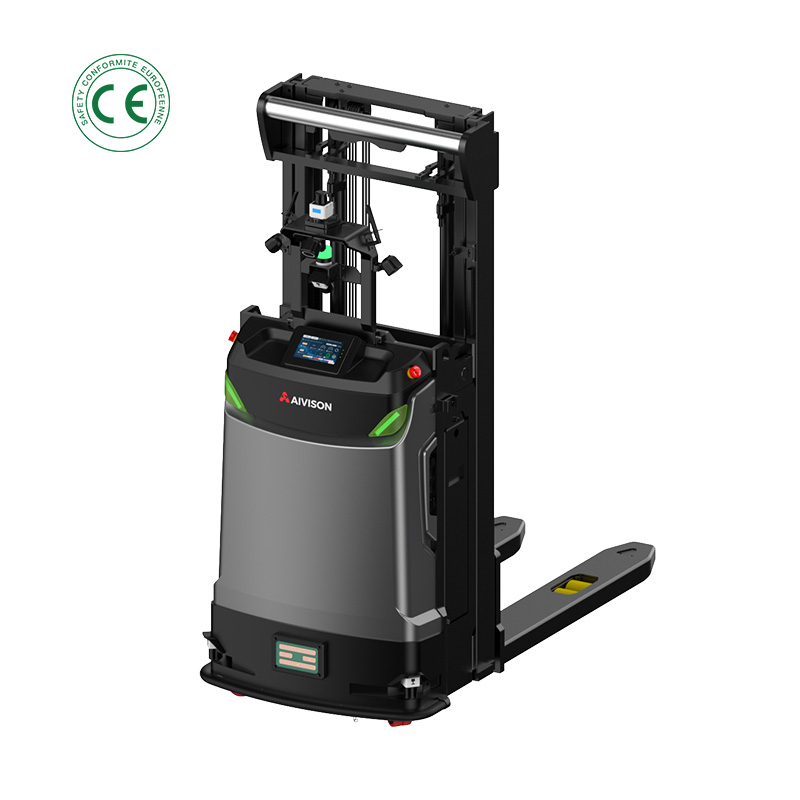
Aivison AMR Robot Whicle Automated Warehouse Automatico agv Logistics Industrial Guided Vehicles
Automated warehouse vehicle concept for buyers comparing throughput, aisle compatibility and fleet expansion paths.
View product →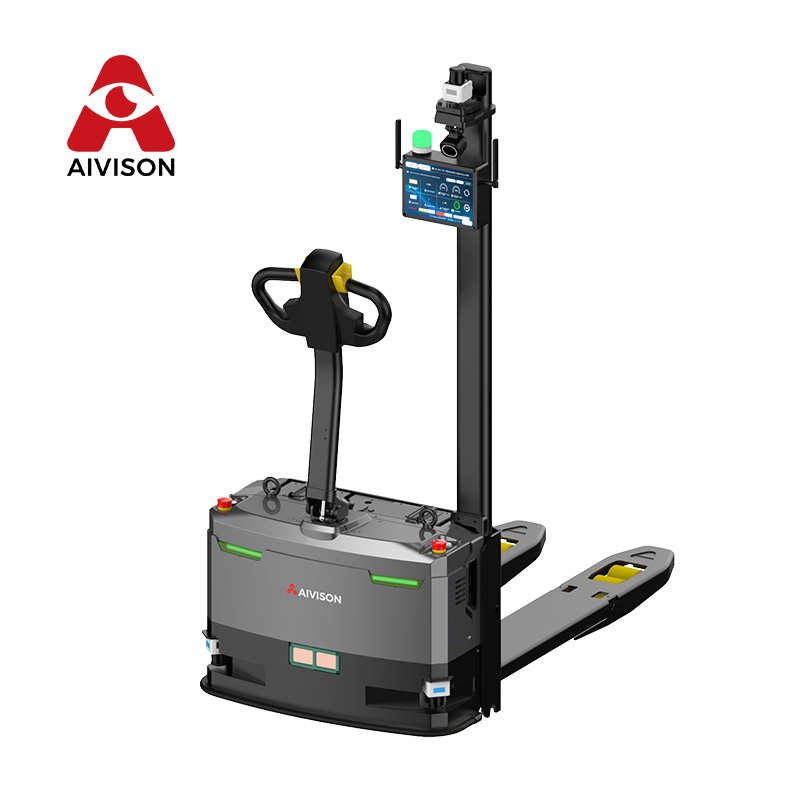
Aivison AGV Forklift High Quality Industrial Unmanned Pallet Forklift
Pallet-focused autonomous forklift for operations moving from manual handling to repeatable, scheduled pallet flow.
View product →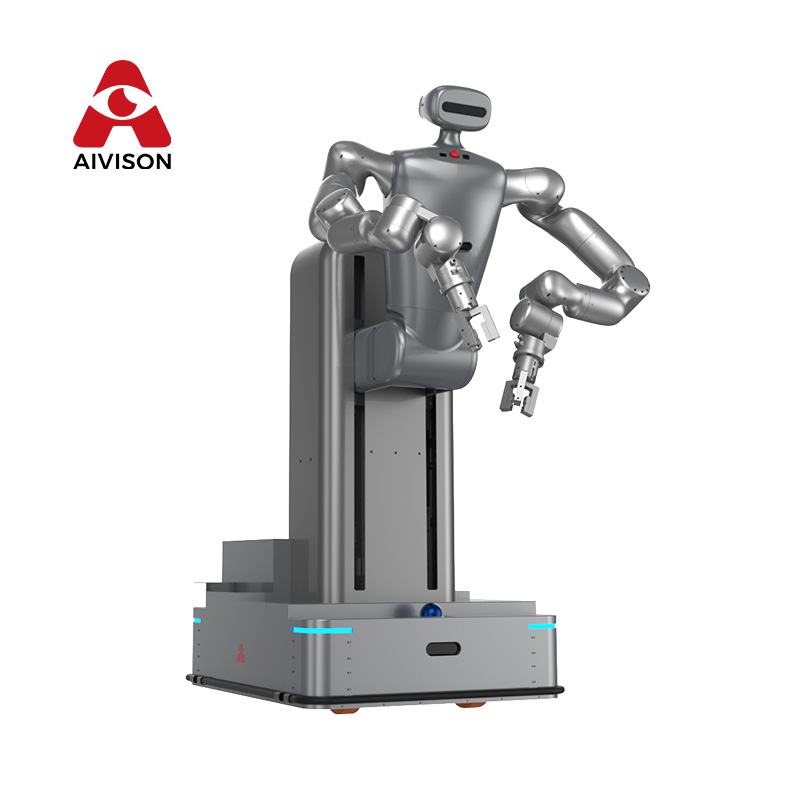
Omnidirectional Service Humanoid Robot Chassis Dual 7-DOF Arms Laser SLAM Navigation for Hospitality and Retail
Advanced service robotics platform for retail, hospitality and research teams requiring omnidirectional movement.
View product →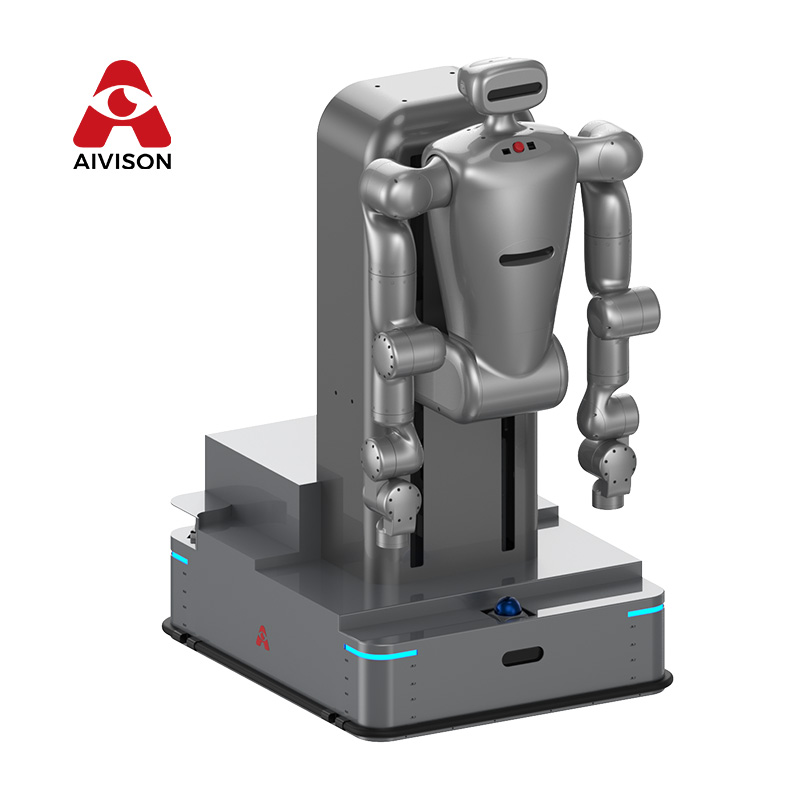
Omnidirectional Mobile Manipulator AMR Dual 7-DOF Arms ±0.03 mm Repeatability Laser SLAM Humanoid Robot Base
Composite mobile manipulator approach for precision tasks where mobility and repeatable arm positioning converge.
View product →
AI-Ready Humanoid Robot Chassis Dual 7-DOF Arms Omnidirectional Drive ROS2 Laser SLAM Open Development Platform
Open development platform for robotics teams building perception, manipulation and autonomous navigation applications.
View product →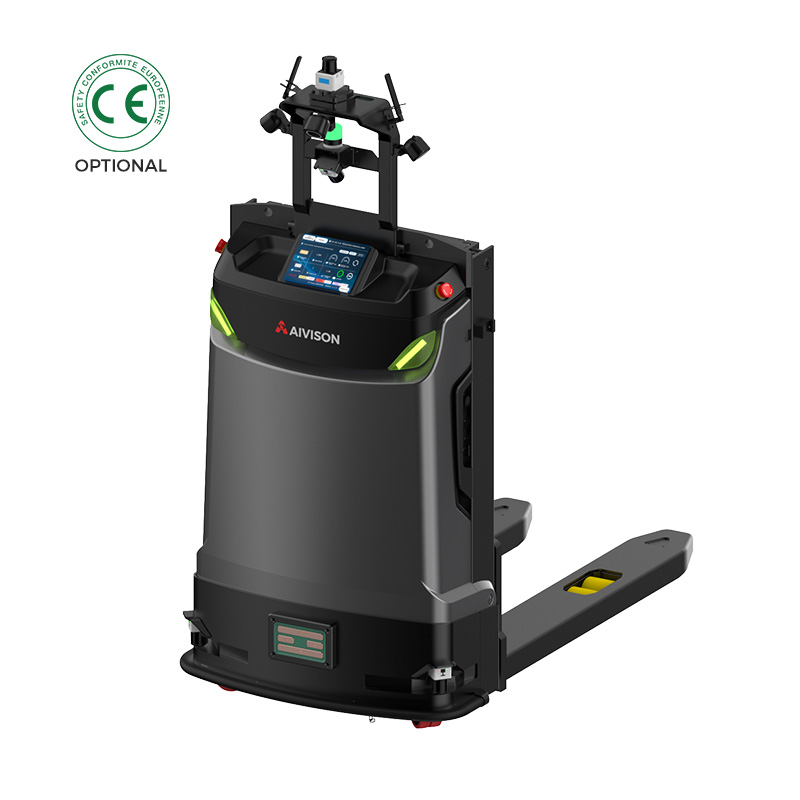
China Factory Automated Mobile Robot SLAM Lifting Wholesale AGV Chassis Vehicle
Factory-oriented SLAM lifting chassis for integrators and distributors seeking a configurable base for automation projects.
View product →Shenzhen-based R&D and manufacturing experience in mobile robotics.
Trackless positioning without magnetic tape, reflectors or floor QR codes.
Deployments across three continents and eight core industries.
Mobile manipulator precision for demanding semiconductor and medical tasks.
Why “China Best Pallet Jacking Robot Exporter & Exporters” Is a Technical Buying Decision
Buyers searching for Chinese pallet jacking robot exporters usually compare three things at once: payload and lift interface, navigation accuracy, and long-term service. The strongest supplier evidence is not a slogan; it is a traceable engineering configuration.

Shenzhen manufacturing base: approximately ten years of AGV engineering experience, with custom mobile robot development for end users and integrators.
A pallet jacking robot—also described as a jacking AMR, lifting AGV or pallet lifting robot—drives beneath a rack, shelf, pallet carrier or custom fixture, lifts the load, and transfers it without a driver. In export projects, the real question is whether the robot can repeat that task safely inside your existing aisle width, floor conditions, Wi-Fi coverage and docking tolerance.
That is where a manufacturer-exporter differs from a trading intermediary. A manufacturer can align the chassis, jacking unit, top module, sensor package and fleet controller around the actual production interface. A trader can quote a price, but may struggle to explain how the robot reaches ±2 mm docking at a machine or how multiple robots avoid deadlocks in a mixed-traffic zone.
For buyers comparing Chinese exporters, require evidence in five areas: navigation accuracy by station, payload and lift height, custom top-module capability, multi-robot scheduling, and independent supplier verification. The product series above reflects that logic: pallet AMRs, industrial AGVs, smart forklifts, lifting chassis and advanced mobile manipulators share a modular engineering direction.
Procurement Trends Reshaping Pallet Jacking Robot Purchases
Price-per-unit still matters, but total cost of deployment now depends on precision matching, fleet software, charging strategy and integration speed.
Mixed-Fleet Interoperability
Buyers increasingly prefer one navigation core across jacking robots, forklifts, lifting chassis and custom platforms. Shared fleet software reduces training, spare-parts complexity and integration risk.
Precision by Exception
Most travel routes need ±5 mm laser SLAM navigation. Only critical docking points add QR labels for ±2 mm, and specialized composite stations use arm-level repeatability. This avoids unnecessary floor rework.
Modular Top Mechanisms
Procurement is shifting from “buy a robot” to “buy a handling interface.” Jacking units, roller conveyors, forklift forks and 6-axis arms let one chassis serve multiple material-flow tasks.
Auto Charging & 24/7 Duty
Smart charging docks and scheduling logic are now evaluated as part of the robot specification, because fleet availability depends on recharge strategy as much as battery capacity.
Verification & Auditability
Third-party onsite assessment, Fortune 500 supplier records and transparent trade history are becoming pre-qualification filters for serious B2B buyers.
Documentation & Remote Support
Export projects demand English documentation, project coordination, spare-parts planning and remote commissioning support. Service readiness is part of product quality.
Match Navigation Accuracy to the Station, Not to the Brochure
Over-specifying precision raises cost and slows deployment. Under-specifying it compromises docking and line-side handover. Use a tiered approach.
Laser SLAM on Natural Features
No magnetic tape, reflectors or floor QR codes. Suitable for warehouse transfer, line-side delivery and layouts that change frequently.
SLAM + QR Code Camera
QR labels are added only where precision docking is needed, such as high-shelf storage, machine tending and controlled handover points.
Composite Robot with 6-Axis Arm
Mobile manipulation with station calibration for semiconductor, medical device and other high-precision assembly environments.
Engineering note: Marnix laser SLAM AMRs reach approximately ±5 mm positioning without auxiliary tracks; a QR scanning camera raises accuracy to ±2 mm; composite robots with a 6-axis arm reach ±0.05 mm repeatability. Product-specific configurations should always be confirmed against the actual load, route and docking interface.
From Tracked AGVs to AI-Ready Mobile Manipulation
The pallet jacking robot category is evolving from a single-purpose trolley replacement into a configurable mobile automation platform.
Sensor Fusion Navigation
Laser SLAM, vision and optional QR assist let robots handle mixed-traffic areas while preserving precise docking where needed.
Wi-Fi Fleet Scheduling
Multi-robot dispatch, traffic control and task assignment become part of the export specification, not an afterthought.
Intelligent Charging Docks
Compatible charging infrastructure supports 24/7 duty cycles and reduces reliance on manual battery handling.
ROS2 & AI-Ready Platforms
Humanoid chassis and dual 7-DOF arm bases create development paths for AI, vision and manipulation teams.

Multi-stage inspection and operational stress testing target reliable uptime before export shipment. More than 200 manufacturers across three continents have been served.
Where Pallet Jacking Robots Create Measurable Information Gain
Real value comes from repeatable material flow in environments where people, forklifts and robots share the same floor.
Semiconductor
Cleanroom-compatible movement and precise docking for sensitive workflows.
3C Electronics
Line-side delivery and repeatable transfer in fast-cycle electronics assembly.
Lithium Battery
Jacking robots support rack transport and production-line material flow.
Photovoltaic
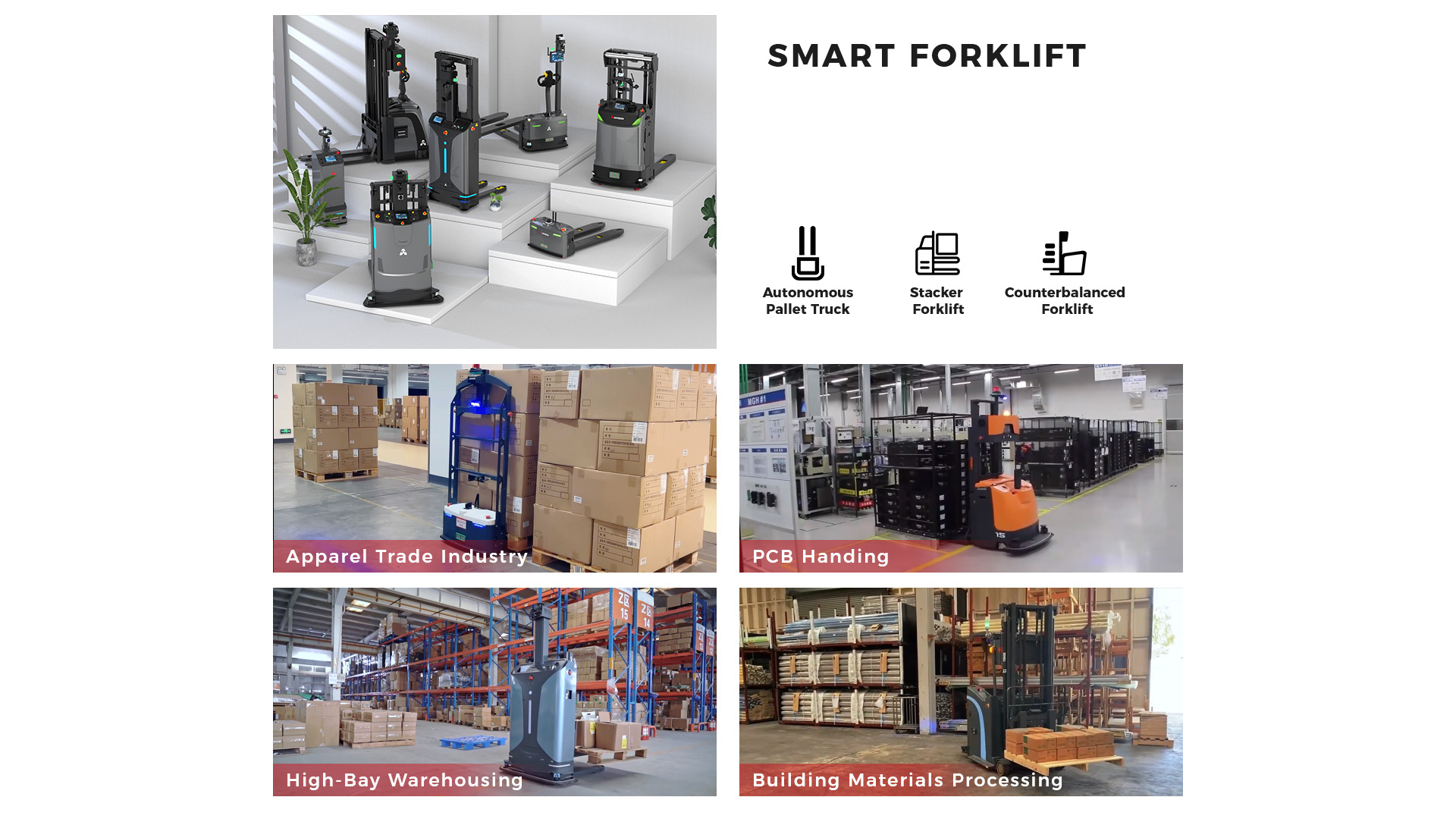
Vision-guided smart forklifts and AMRs for module logistics.
Automotive Parts
Pallet handling and warehouse transfer in mixed vehicle environments.
PCB
Roller-conveyor top modules and docking for automated line handover.
Textile
Autonomous warehouse transport for repetitive material movement.
Medical Devices
Composite robots with arms for high-precision assembly support.
How to Judge a China Pallet Jacking Robot Exporter
Use this matrix to separate engineering-led exporters from catalogue resellers.
Engineering Evidence
Ask for navigation accuracy by station, payload calculations, lift height, safety logic, custom top-module drawings and fleet control details.
Factory Verification
Look for onsite assessment, production process, testing records and supplier credentials—not only rendered product images.
Integration Support
Check whether the exporter supports Wi-Fi fleet scheduling, charging docks, I/O handshakes, conveyor interfaces and project commissioning.
Export Readiness
Confirm documentation, packaging, spare-parts recommendations, model configuration sheets and after-sales communication paths.
A Shenzhen Manufacturer Built Around Real Production Lines
Shenzhen Marnix Intelligent Technology Co., Ltd. draws on about ten years of AGV manufacturing experience to build autonomous mobile robots that drop into existing factories with minimal disruption—for end users and for the system integrators who serve them.
The portfolio covers jacking robots, smart forklifts, pallet AMRs, composite robots, humanoid development platforms and compatible intelligent charging docks. Robots can be coordinated through an intelligent scheduling system over indoor Wi-Fi, enabling simultaneous task assignment and traffic control across a fleet.
For export buyers, that means one engineering partner can discuss payload, navigation, top modules, charging and software as a system. Customization is manufacturer-level: chassis, jacking units, roller conveyors, forklift forks and 6-axis arms can be aligned with your process rather than forcing a standard fit.
Credibility signals include an onsite supplier assessment by TÜV Rheinland, supplier records linked to a Fortune 500 company, more than 200 manufacturers served across three continents, and a verified multispecialty supplier profile with low-MOQ customization capability.
Get Catalog
What to Prepare Before Requesting an Export Proposal
From project experience, these six inputs determine most robot-selection decisions—sharing them upfront shortens evaluation time.
01 · Load Profile
Maximum weight, footprint and center of gravity of racks, pallets, shelves or custom carriers to be moved.
02 · Site Layout
A CAD drawing or sketch showing aisle widths, doors, slopes, elevator or lift transfer points and charging locations.
03 · Throughput Target
Missions per hour and peak periods. This determines fleet size, route design and charging dock count.
04 · Docking Precision
Identify where ±5 mm is sufficient and where ±2 mm QR assist or arm-level precision is required.
05 · Wi-Fi & Traffic
Existing access points, coverage quality, mixed human and forklift traffic, and any restricted zones.
06 · Equipment Interfaces
Conveyors, machines, shelving or safety systems the robot must hand over to, plus any top-module needs.

Custom top mechanisms—jacking units, roller conveyors, forklift forks and 6-axis arms—connect mobile robots directly to production equipment.
Pallet Jacking Robot Export & Procurement FAQ
Straight answers for project teams evaluating Chinese pallet jacking robot exporters.
What is a pallet jacking robot?
A pallet jacking robot is a mobile robot that drives under a pallet, rack or carrier, lifts it and moves it autonomously. It is often called a jacking AMR, lifting AGV or pallet lifting robot. It differs from a manual pallet jack because navigation, task dispatch and safety control are automated.
How is it different from an AGV forklift?
A jacking robot typically lifts from underneath a rack or pallet carrier with a low-profile jacking unit. An AGV forklift uses forks to enter pallet pockets or stack loads. The right choice depends on load type, lift height, aisle space and whether stacking is required.
What navigation accuracy can Marnix robots achieve?
Laser SLAM on natural features reaches approximately ±5 mm without magnetic tape, reflectors or floor QR codes. Adding a QR scanning camera raises accuracy to ±2 mm. Composite robots with a 6-axis arm reach ±0.05 mm repeatability for high-precision tasks.
Do we need to modify the factory floor?
No for standard laser SLAM navigation. The robot maps your existing environment, so auxiliary tracks or floor codes are not required. QR labels are added only at stations that need ±2 mm docking precision, which keeps infrastructure cost under control.
Can the robot be customized for our production line?
Yes. Manufacturer-level customization covers chassis configuration, payload, jacking units, roller conveyors, forklift forks and 6-axis robotic arms. The goal is to connect the robot directly to your production equipment or material-flow interface.
How are multiple robots coordinated?
An intelligent scheduling system manages the fleet over indoor Wi-Fi. It supports simultaneous task assignment, traffic control and automatic charging with compatible smart charging docks, helping avoid congestion and idle time.
Which industries are the best fit?
Common deployments include semiconductors, 3C electronics, lithium batteries, photovoltaics, automotive parts, PCB, textiles and medical devices. Both end users and system integrators can source robots or complete solutions.
How should we start an export project evaluation?
Share your load profile, layout drawing, throughput target, docking precision, Wi-Fi coverage and equipment interfaces. For a catalog or project discussion, use the Get Catalog button below or email info@marnixbot.com. Lead time and MOQ depend on configuration and project scope.
Ready to Shortlist a Pallet Jacking Robot Exporter?
Use the catalog to compare chassis options, navigation configurations, top modules and factory credentials. Then send your load, layout and throughput requirements for an engineering-based recommendation.
Shenzhen Marnix Intelligent Technology Co., Ltd. · Laser SLAM AMR, jacking robot and smart forklift manufacturing · TÜV Rheinland onsite assessed · Supplier records linked to a Fortune 500 company.