Shenzhen Marnix Intelligent Technology Co., Ltd. · Verified AMR Manufacturer
China Best Load Transfer Robot Suppliers & Wholesaler
A procurement-grade guide to laser SLAM AMRs, jacking robots, smart forklifts, pallet robots and mobile manipulators—supported by 10+ years of AGV engineering, ±5 mm navigation and 200+ manufacturer deployments.
Immediate Product Shortlist
Eight Load Transfer Robot Platforms for 2025–2030 Procurement
These eight platforms cover the practical buying range: navigation sensing, pallet and rack movement, heavy load transfer, autonomous stacking, AI-ready mobile manipulation and dual-arm precision. Every platform shares the same engineering logic—minimal floor rework, scalable fleet control and manufacturer-level customization.

Hot Selling Logistics Navigation Detector Sensor Lidar Manufacturers Direct Sales
Lidar-based navigation and obstacle detection for transfer robots that need stable mapping in mixed human and vehicle traffic, with direct-source supply for fleet builders and integrators.
View product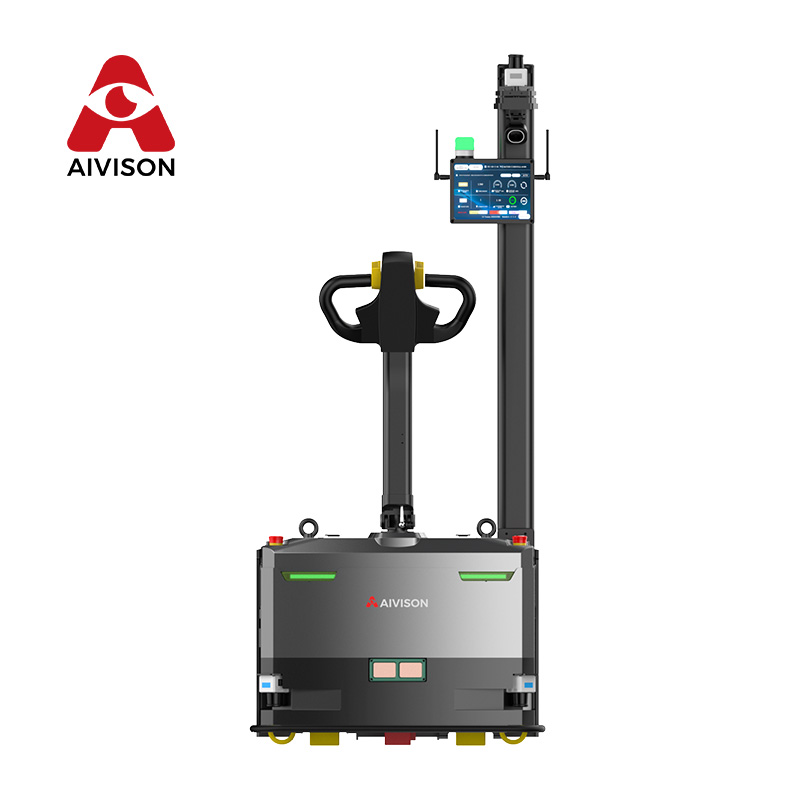
China Factory Movable Pallet Agv Robot Rack Shelf for Intelligent Robot Warehouse
A movable rack concept that raises storage density while allowing AMRs to lift, relocate and retrieve rack systems under software-driven warehouse flows.
View product
High-performance Intelligent Smart Automated Guided Vehicle 2000kg AMR Robot
A heavy-duty autonomous platform for line-side transfer, pallet movement and repetitive logistics where payload stability and uptime matter more than peak speed.
View product
New Warehouse Autonomous Cars agv Robot 2000kg Load Capacity Stacker agv Robot
A stacker AGV for high-bay pallet handling, replenishment and vertical transfer tasks where conventional forklift labor is repetitive or difficult to schedule.
View product
AI-Ready Humanoid Robot Chassis Dual 7-DOF Arms Omnidirectional Drive ROS2 Laser SLAM Open Development Platform
An open development platform for AI, humanoid and mobile manipulation research, combining omnidirectional drive, dual 7-DOF arms and laser SLAM in one ROS2-ready base.
View product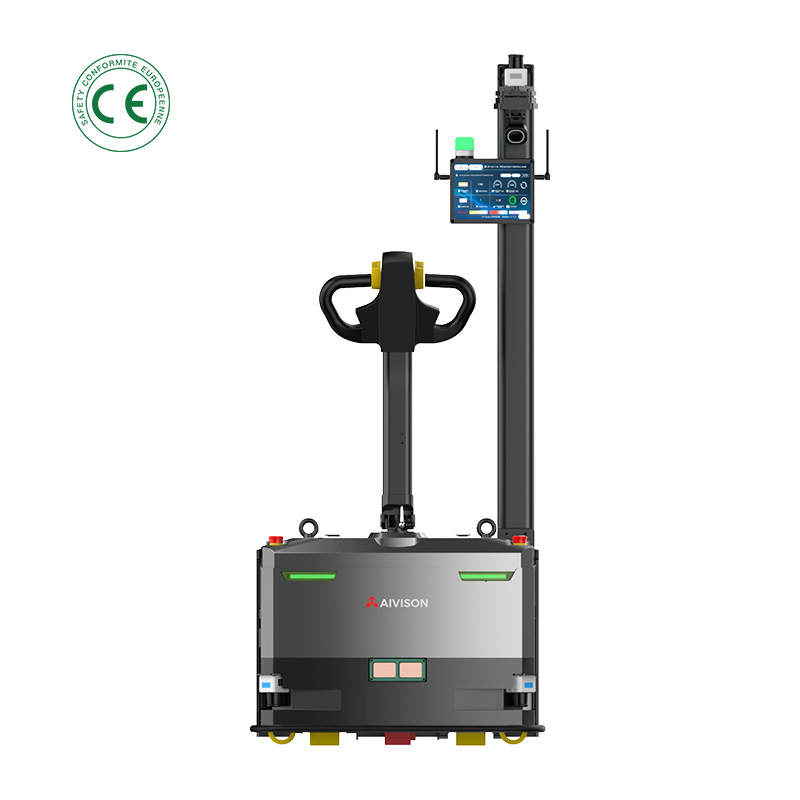
Autonomous Mobile Robot AGV CE Laser SLAM Navigation for Material Handling and Logistics
A CE-oriented laser SLAM AMR for general material handling. It maps natural features, avoids auxiliary tracks and supports rapid route changes without floor reconstruction.
View product
Customizable 1500KG Traction Capacity AGV Autonomous Mobile Robot Amr with Lidar Guided Sensor
A customizable 1,500 kg traction AMR for tugger trains, long-distance transport and mixed production logistics, with lidar guidance and configurable top modules.
View product
Omnidirectional Mobile Manipulator AMR Dual 7-DOF Arms ±0.03 mm Repeatability Laser SLAM Humanoid Robot Base
A dual-arm mobile manipulator for precision assembly and machine tending, combining an omnidirectional base, laser SLAM navigation and ±0.03 mm repeatability.
View productNeed help matching payload, aisle width and docking precision?
Get CatalogSupplier Selection Logic
Why China Best Load Transfer Robot Suppliers Compete on System Fit, Not Price Alone
For procurement teams, a load transfer robot is not a standalone machine. It is a moving node inside traffic flow, safety rules, Wi-Fi coverage, charging strategy, operator behavior and production takt time. The strongest China load transfer robot suppliers and wholesalers therefore compete less on a single unit price and more on integration certainty: can the platform map the existing floor, avoid costly infrastructure, connect with line-side equipment, and scale from one robot to a coordinated fleet?
Shenzhen Marnix Intelligent Technology Co., Ltd. approaches this with about ten years of AGV manufacturing experience, laser SLAM navigation at ±5 mm, optional QR-assisted docking at ±2 mm, and composite mobile robots reaching ±0.05 mm repeatability. More than 200 manufacturers across three continents use these platforms in semiconductor, 3C electronics, lithium battery, photovoltaic, automotive parts, PCB, textile and medical device operations.
Procurement Value Drivers
Product Recommendation Matrix
Match the Load Transfer Robot to the Real Job
A common procurement mistake is buying one specification for every station. The better approach is to define precision, payload, traffic and handover needs station by station—then choose the simplest platform that meets each one.
Trackless General Transfer
Use laser SLAM AMRs for warehouse transfer, line-side delivery and route changes. They map existing features and avoid floor reconstruction, making them ideal for older factories with evolving layouts.
Precision Docking
Add QR code cameras only where ±2 mm handover is required. This station-level strategy controls cost while meeting high-shelf storage, wafer handling and precise machine docking requirements.
Heavy Pallet Movement
Select 2,000 kg-class AMR or stacker AGV platforms for pallet transfer, replenishment and high-bay warehouse tasks. Confirm load center of gravity and fork or jacking interface before quoting.
Jacking and Rack Transport
Jacking robots drive under racks, lift and deliver. They suit lithium battery, 3C and line-side logistics where floor space is valuable and racks must move without manual handling.
Mobile Manipulation
Composite robots combine an AMR base with 6-axis arms or dual arms. They are appropriate for semiconductor, medical device and precision assembly tasks requiring ±0.05 mm repeatability.
Fleet and Charging
Compare the fleet scheduling system, Wi-Fi coverage and charging dock ratio. Multiple robots require coordinated task assignment, traffic control and autonomous charging to sustain 24/7 duty.
Procurement Trends
What Buyers Will Expect from Load Transfer Robot Wholesalers by 2030
The market is moving from isolated robot purchases to engineered material-flow systems. The strongest suppliers will be judged on interoperability, lifecycle support and measurable productivity gain.
Mixed Fleets, One Traffic System
Factories will mix jacking robots, forklifts, pallet AMRs and mobile manipulators. Procurement will prioritize one fleet scheduling layer that manages shared routes, task priority, elevators and charging.
Precision by Station, Not Fleet-Wide
Over-specifying QR codes on every route adds cost and maintenance. Buyers will specify ±5 mm SLAM as the baseline and ±2 mm QR or arm-level precision only at high-value docking points.
Software and APIs Become the Deciding Layer
WMS, MES and production equipment increasingly need direct robot APIs. Wholesalers that provide clear interfaces, ROS2 support and integrator documentation will win complex projects.
Total Cost of Ownership Takes Priority
Hardware price is only one line item. Floor changes, commissioning, spare parts, charging ratio, safety assessment, training and downtime dominate lifecycle cost. Suppliers will need to prove uptime.
Safety and Verified Credentials
CE-related documentation, risk assessment, third-party onsite verification and traceable transaction history will become normal procurement filters for China suppliers and wholesalers.
Modular Customization over One-Off Engineering
Buyers want proven chassis, navigation and fleet software with customizable top modules: jacking units, roller conveyors, forklift forks, cameras and robotic arms for production interfaces.
Product Development Trends
The Load Transfer Robot Roadmap: From Navigation to Autonomous Material Flow
Hardware will continue to improve, but the bigger gains will come from sensing fusion, fleet intelligence and integration with production equipment. The following trends are especially relevant when evaluating a China load transfer robot supplier.
Semantic and 3D Navigation
Future AMRs will interpret floor semantics—doors, aisles, waiting zones, charging areas and human walkways—rather than relying only on geometric maps. This improves route robustness in changing factories.
Mobile Manipulation at Production Precision
Composite robots with 6-axis or dual 7-DOF arms will move closer to machine tending and precision assembly, reaching ±0.05 mm repeatability and reducing fixed automation footprint.
Open Interfaces and ROS2
Integrators need access to maps, task states, safety zones and charging status. Open development platforms and ROS2-ready bases shorten commissioning and protect integration investment.
24/7 Energy Strategy
Battery capacity alone is not the answer. Smart charging docks, opportunity charging, battery diagnostics and dispatch logic determine real fleet availability across three-shift operations.
Modular Top Mechanisms
Jacking units, roller conveyors, forks, lift platforms and robotic arms will be chosen as modules. The base chassis and fleet software then remain stable across multiple production lines.
Digital Twin and Simulation
Before delivery, buyers will expect simulation of traffic, throughput, charging and bottlenecks. A digital twin reduces commissioning risk and helps validate fleet size before capital release.

Manufacturer Advantages
What Shenzhen Marnix Brings to a Load Transfer Robot Project
Shenzhen Marnix Intelligent Technology Co., Ltd. is a Shenzhen-based manufacturer of laser SLAM autonomous mobile robots, jacking robots, smart forklifts, composite mobile robots and intelligent charging docks. The company serves both end users and system integrators, with customization at chassis, payload and top-module level rather than forcing a standard fit.
The company has about ten years of AGV engineering experience, an onsite supplier assessment by TÜV Rheinland, supplier records with a Fortune 500 company, and verified multispecialty supplier status. Its robots are deployed by more than 200 manufacturers across three continents and eight core industries.
- Complete portfolio: jacking robots, smart forklifts, pallet AMRs, composite robots, QR cameras, fleet scheduling and charging docks from one source.
- Precision without floor rework: ±5 mm laser SLAM on natural features; ±2 mm with QR assist only where needed.
- Fleet coordination: intelligent scheduling over indoor Wi-Fi for simultaneous task assignment, traffic control and automatic charging.
- Quality protocol: multi-stage intelligent inspections and thousands of operational stress tests target near-zero failure rates before shipment.
- Integrator-ready customization: roller conveyors, forks, jacking units, wireless cameras and 6-axis arms connect robots directly to production equipment.

Industry Applications
Where Load Transfer Robots Prove Their Value
Robots deliver the most value where material movement is repetitive, safety-sensitive, labor-constrained or poorly synchronized with production. These are the environments where Marnix platforms have been engineered and tested.

Buyer Preparation
What to Prepare Before Requesting a Load Transfer Robot Proposal
From project experience, six inputs determine most of the robot selection. Sharing them at the inquiry stage shortens evaluation from weeks to days and reduces the risk of over-specification.
Load Profile
Maximum weight, footprint and center of gravity for racks, pallets or carriers, plus any top-module requirements.
Site Layout
CAD drawing or sketch with aisle widths, doors, slopes, elevator or lift points, and no-go zones for people or equipment.
Throughput Target
Missions per hour, peak periods and future volume. This defines fleet size, charging ratio and scheduling logic.
Docking Precision
Identify where ±5 mm is sufficient and where ±2 mm QR assistance or arm-level repeatability is truly necessary.
Wi-Fi and Power
Access point coverage, signal stability in racking areas, charging room locations and electrical capacity for docks.
Equipment Interfaces
Conveyors, machines, shelving, doors and WMS/MES systems the robot must hand over to or receive tasks from.
Procurement FAQ
Questions Buyers Ask Before Choosing a China Load Transfer Robot Supplier
These answers reflect the most common technical and commercial questions from manufacturers and system integrators evaluating autonomous mobile robots.
Need a specification review? Use the catalog request button and share payload, layout, throughput and docking precision.
Get CatalogWhat navigation accuracy do Marnix load transfer robots achieve?
Using laser SLAM on natural features, Marnix AMRs reach ±5 mm positioning without magnetic tape, reflectors or floor QR codes. Adding a QR code scanning camera raises docking accuracy to ±2 mm where required, and composite robots with a 6-axis or dual-arm configuration reach ±0.05 mm repeatability for precision assembly.
Do I need to modify my factory floor before deployment?
No for standard laser SLAM navigation. The robot maps existing environmental features, so auxiliary tracks and floor codes are not required. QR labels are added only at stations that need ±2 mm docking precision, which keeps infrastructure cost focused on the highest-value handover points.
Can robots be customized for my production line?
Yes. As a manufacturer, Marnix customizes chassis and top modules such as jacking units, roller conveyors, forklift forks, wireless cameras and robotic arms. This allows robots to connect directly with production equipment instead of forcing the production line to adapt to a standard robot.
How are multiple robots coordinated in one factory?
Robots are managed by an intelligent scheduling system over indoor Wi-Fi. The system handles simultaneous task assignment, traffic control, route priority and automatic charging through compatible smart charging docks, allowing mixed fleets to share the same operating area.
Which industries are the best fit for load transfer robots?
Semiconductors, 3C electronics, lithium batteries, photovoltaics, automotive parts, PCB, textiles and medical devices are strong fits. The common thread is repetitive material movement with safety, cleanliness, traceability or labor constraints that make manual transfer less reliable.
How do I compare total cost of ownership between suppliers?
Compare floor modification, commissioning time, fleet software licensing, charging dock ratio, spare parts, training, warranty and expected uptime—not only the robot unit price. A lower-priced platform can become more expensive if it requires more infrastructure or has lower availability.
What safety and verification evidence should I request?
Ask for risk assessment documentation, applicable CE-related information, third-party onsite verification, transaction records and references in your industry. Marnix has an onsite supplier assessment by TÜV Rheinland, Fortune 500 supplier records and verified multispecialty supplier status.
How do I start a project evaluation?
Send your load profile, site layout, throughput target, docking precision and equipment interface needs. Our engineers will recommend the right platform and top module, then confirm whether laser SLAM alone or QR-assisted docking is sufficient for each station.
Ready to Shortlist the Right Load Transfer Robot?
Share your layout and payload requirements. Our engineering team will help you compare laser SLAM AMRs, jacking robots, smart forklifts and composite mobile robots for your production and warehouse flows.