Eight Jacking Robot and AMR Platforms for Real Production Flows
Product selection starts with the load, the handover point and the route — not with a catalogue photo. The eight platforms below show how a manufacturer-led range can cover rack lifting, pallet handling, line-side transfer, humanoid chassis development and conveyor-linked material flow.
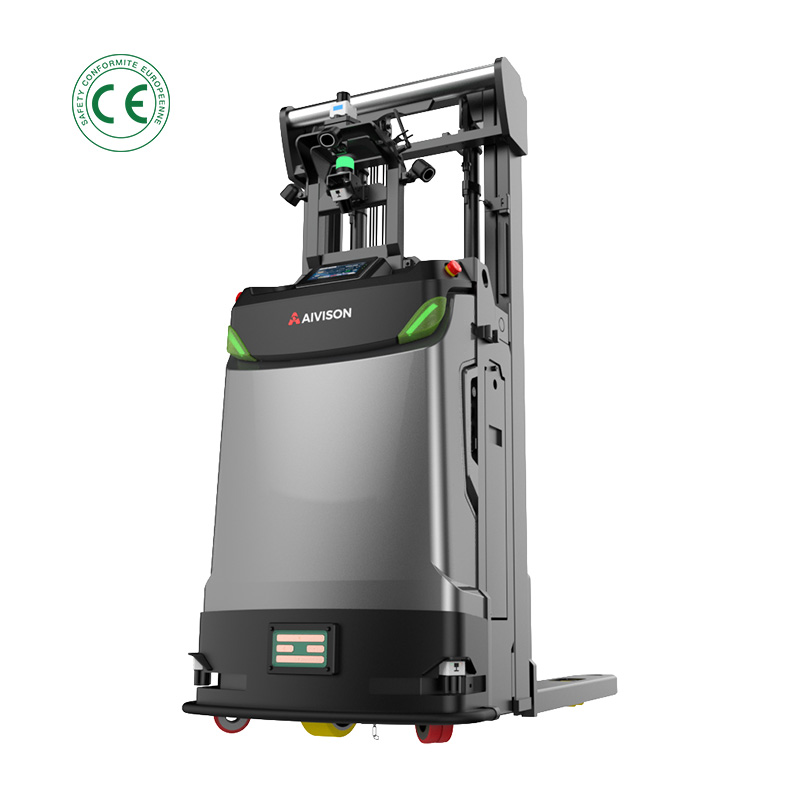
Smart Transport Robotic with Laser Navigation Reach 2000KG AGV Logistics Robots Warehouse Robot AMR
A 2000 kg-class laser navigation transport platform for warehouse transfers where route changes are frequent and floor infrastructure should stay minimal.
View product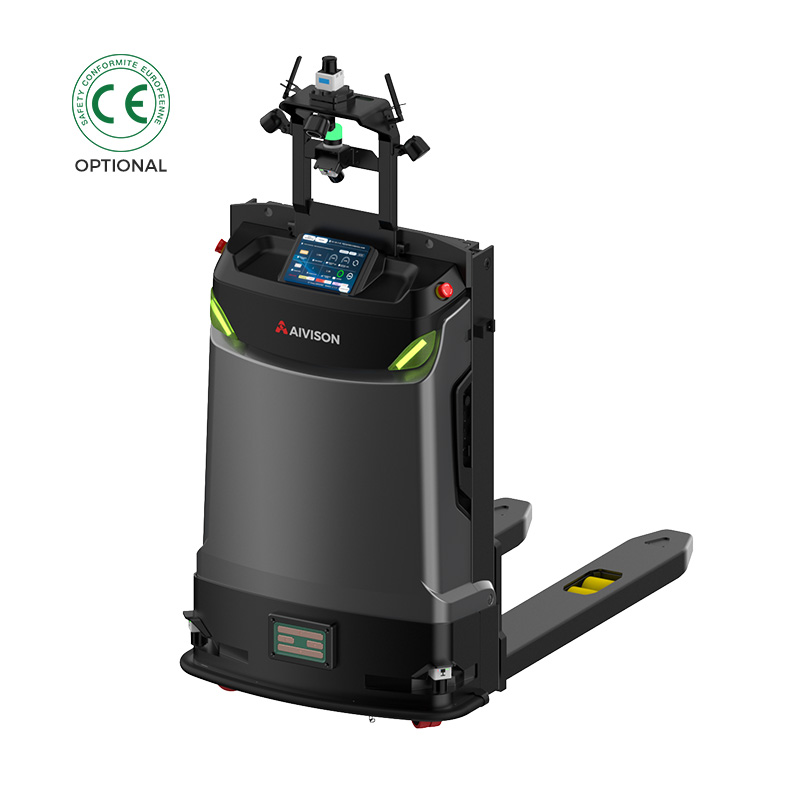
AGV AMR Warehouse Automatic Guided Vehicle 1500kg 2000kg AGV Robot Forklift
A combined AGV/AMR forklift platform for 1500–2000 kg pallet flows, suitable for warehouses that need automated pick-up and stacking without fixed guides.
View product
Omnidirectional Service Humanoid Robot Chassis Dual 7-DOF Arms Laser SLAM Navigation for Hospitality and Retail
An omnidirectional humanoid service platform with dual 7-DOF arms and laser SLAM navigation for hospitality, retail and guided service applications.
View product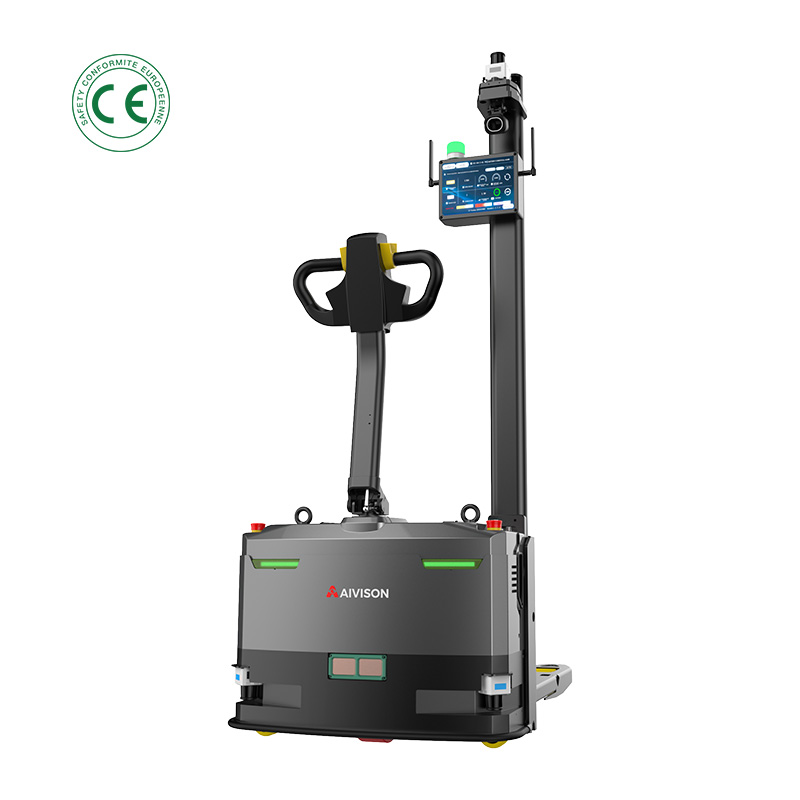
AIVISON CE Laser SLAM Navigation AGV 1500kg Warehouse Lifting Operations
A CE-oriented 1500 kg laser SLAM lifting AGV for jacking and lifting operations where stable docking and repeatable line-side delivery matter.
View product
Omnidirectional Humanoid Robot Chassis Dual 7-DOF Arms Laser SLAM Autonomous Warehouse AMR Mobile Platform
A mobile humanoid AMR platform for system integrators building dual-arm manipulation, inspection or warehouse assistance solutions on a proven chassis.
View product
Warehouse Robot Robotics 2000KG CE Warehousing Automatic Forklift Stacking AGV
A 2000 kg automatic stacking AGV forklift for high-throughput warehousing, designed to reduce manual pallet movement and repetitive stacking work.
View product
Warehouse Stacker CE Forklift AGV 800kg Load Capacity Light AMR Pallet
An 800 kg light AMR pallet stacker for narrow aisles and lighter loads, giving smaller warehouses a practical entry point into automated pallet handling.
View product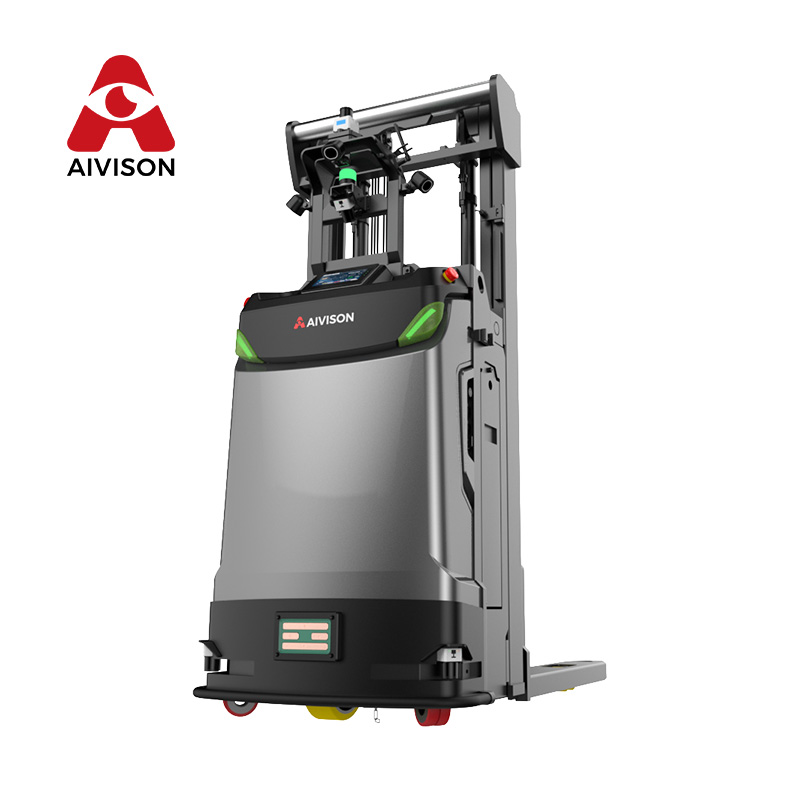
Autonomous Mobile Robots (AMR) Implement Cargo Transportation Between Warehouse and Conveyor Line
An AMR solution for connecting warehouse zones with conveyor lines, especially where roller or conveyor top modules must synchronize with fixed equipment.
View productShenzhen-based R&D and manufacturing experience.
Natural-feature navigation without tape, reflectors or floor codes.
Active projects across three continents.
Semiconductor, 3C, lithium battery, PV, automotive, PCB, textile and medical.
Why “China Best Jacking Robot Manufacturer & Suppliers” Is a Technical Buying Decision
The search phrase China Best Jacking Robot Manufacturer & Suppliers looks like a supplier shortlist query, but the commercial intent behind it is usually more specific: reduce labour dependence in line-side logistics, protect takt time, avoid expensive floor rework and choose a robot platform that can be expanded after the first project. For serious buyers, the useful comparison is not “who sells the cheapest jacking robot,” but who can deliver repeatable docking, fleet coordination, top-module customization and verified service capability after the purchase order.
Information gain comes from matching precision to the station. A natural-feature laser SLAM jacking robot can operate at ±5 mm without magnetic tape, reflectors or floor QR codes, which keeps route changes fast. When high-shelf storage or precision handover demands tighter positioning, adding a QR scanning camera can raise docking accuracy to ±2 mm. For composite mobile robots fitted with a 6-axis arm, multi-layer synchronization can reach ±0.05 mm repeatability. That three-level logic — natural SLAM, QR assist and composite precision — is more useful than a generic “high accuracy” claim because it lets procurement teams avoid over-specifying every part of the route.
Shenzhen Marnix Intelligent Technology Co., Ltd. is positioned as a manufacturer rather than a trading intermediary. The company builds jacking robots, smart forklifts, pallet AMRs, composite mobile robots and intelligent charging docks, and supports OEM and integrator customization of chassis, payload and top mechanisms. That matters when a buyer needs a jacking unit for one line, a roller conveyor module for another and a forklift interface for a third — all coordinated through a common fleet scheduling system over indoor Wi-Fi.
Decode the Search Intent Before Comparing Suppliers
Manufacturer, supplier and integrator searches often overlap. Treating them as one query can lead to the wrong shortlist.
Manufacturer-Intent Buyers
These buyers want engineering control: non-standard payloads, custom top modules, direct communication with production engineers and the ability to repeat a configuration across sites. They usually ask about jacking height, chassis dimensions, roller interfaces, QR docking and fleet software — not only unit price.
Supplier-Comparison Buyers
These teams compare delivery time, spare parts, CE documentation, TÜV or third-party verification, and after-sales response. They need evidence: an onsite assessment report, trade history, credit index and product-level certification variants. Supplier comparison is risk reduction, not just price discovery.
Integrator and OEM Intent
System integrators look for stable mobile bases, open interfaces, multi-robot scheduling and customizable upper mechanisms. They value a manufacturer that can supply the robot platform, charging dock and expansion modules separately, while leaving room for the integrator’s own software, arms or end-effectors.
Manufacturer Advantages That Matter After the PO
What separates a durable jacking robot project from a one-time installation is manufacturing depth, customization capability and verifiable quality control.

A Shenzhen AMR Manufacturer Built Around Real Production Lines
Shenzhen Marnix Intelligent Technology Co., Ltd. draws on about ten years of AGV manufacturing experience to build autonomous mobile robots that can be inserted into existing factories with minimal disruption. The portfolio is broad enough for a first pilot and coherent enough for later expansion: jacking robots, smart forklifts, pallet AMRs, composite robots and compatible intelligent charging docks.
- Trackless laser SLAM navigation maps existing environments, reducing the need for auxiliary tracks or floor QR codes.
- Multi-robot dispatch is handled by an intelligent scheduling system over indoor Wi-Fi.
- Custom top modules include jacking units, roller conveyors, forklift forks and 6-axis robotic arms.
- Products are supported by verification signals such as TÜV Rheinland onsite assessment and Fortune 500 supplier records.
Complete AMR Portfolio from One Source
Jacking robots, pallet AMRs, smart forklifts, composite mobile robots and charging docks can be sourced together, reducing interface risk between robot, charger and fleet controller.
SLAM Lidar + Vision Fusion
Natural-feature SLAM reaches ±5 mm without tapes, reflectors or floor codes. Adding a QR scanning camera raises docking to ±2 mm where precision stations require it.
Precision Without Floor Rework
Standard laser SLAM maps your existing environment, so route changes do not force immediate floor reconstruction. QR labels are added only where ±2 mm docking is truly needed.
Manufacturer-Level Customization
Chassis, payload and upper mechanisms can be engineered around the process instead of forcing a standard platform into a non-standard production line.
Quality Protocol and Composite Precision
Multi-stage intelligent inspections and thousands of operational stress tests target near-zero failure rates. Composite robots with 6-axis arms can reach ±0.05 mm repeatability.
Verified Credentials and Integrator Support
TÜV Rheinland onsite assessment, Fortune 500 supplier records, verified multispecialty capability and credit history help procurement teams qualify the supplier before commissioning.

Which Robot Should You Shortlist?
Use the application first, then match the platform. This keeps the technical comparison grounded in throughput and handover accuracy.
Rack and Shelf Lifting
For lithium battery, 3C and general line-side logistics, a low-profile jacking robot that drives under racks and lifts is often the cleanest fit. Prioritize rack footprint, lift height, route width and whether ±5 mm is enough or QR-assisted scanning should be specified at selected stations.
View lifting AGVPallet Handling and Stacking
For 1500–2000 kg pallets, compare forklift AMRs and stacking AGVs by fork entry reliability, aisle width, pallet condition and whether camera assistance is needed. Smart forklifts with wireless cameras improve pallet recognition in real warehouse lighting.
View stacking AGVConveyor-Line Connection
When material must move between warehouse and conveyor line, the top module becomes the project. Roller conveyors, transfer height and equipment handshake protocols should be defined before comparing robot prices, because line integration determines cycle time.
View conveyor AMRHumanoid and Composite Platforms
For integrators building dual-arm manipulation or service applications, a stable omnidirectional chassis with dual 7-DOF arm support can reduce development time. Specify repeatability, payload distribution and whether the mobile platform or the complete composite robot is required.
View mobile platformProcurement Trends Shaping 2025–2030 Jacking Robot Projects
Buyers are shifting from single-robot pilots to multi-site standards. The procurement criteria are becoming more financial, more integration-focused and more data-driven.
Total Cost of Ownership over Unit Price
Procurement teams increasingly compare deployment cost, floor modification, training, spare parts, charging strategy and route-change labour. A robot that needs less floor work and fewer codes can have a lower total cost even when the unit price is not the lowest.
Fleet Interoperability and Scheduling
Warehouses and factories do not want isolated islands of automation. Buyers now ask whether jacking robots, forklifts and pallet AMRs share one scheduling layer, how traffic is controlled and whether new robots can be added without redesigning the whole route network.
OEM and Integrator Collaboration
More projects are being structured with an integrator managing the process and a manufacturer supplying the mobile platform. Clear division of mechanical interfaces, software protocols, safety responsibilities and spare-parts ownership is becoming part of the purchase negotiation.
Energy, Charging and Uptime Planning
Automatic charging is no longer an accessory; it is part of fleet sizing. Buyers model missions per hour, opportunity charging, charging dock count and battery strategy so that 24/7 duty is designed rather than discovered after installation.
Product Development Trends Buyers Should Track
Future procurement decisions will be shaped by how robot platforms handle unstructured routes, precision handover and modular production interfaces.
Semantic SLAM and Dynamic Environments
Navigation is moving from simply avoiding obstacles to understanding operational zones, human traffic, temporary storage and changing line layouts. This reduces re-mapping interruption in mixed-traffic factories.
Vision-Assisted Docking
QR cameras and vision systems let robots combine broad natural-feature navigation with tighter station accuracy. Instead of coding the whole floor, a project can add precision only where the process actually needs it.
Modular Top Mechanisms
Jacking units, roller conveyors, forklift forks and robotic arms are becoming modules on a common mobile chassis. This modularity lets one fleet serve multiple handover types and makes later line expansion easier.
Safety, Diagnostics and Service Data
Fleet software is increasingly expected to show mission status, fault diagnostics, charging events and utilization. Buyers should ask what data is available, how service teams use it and whether the robot can support multi-shift audits.
What to Prepare Before Requesting an AMR Proposal
From project experience, these six inputs determine most of the robot selection and shorten evaluation from weeks to days.
Load Profile
Maximum weight, footprint and center of gravity of racks, pallets or carriers. Include whether the load is stable during acceleration and whether the robot must lift it or simply carry it.
Site Layout
A CAD drawing or clear sketch with aisle widths, doors, slopes, floors, elevator or lift points, and any zones where humans, forklifts and robots will share the same route.
Throughput Target
Missions per hour and peak periods determine fleet size, route design and charging dock count. A single-shift average can understate the true peak load.
Docking Precision
Define where ±5 mm natural-feature navigation is enough and where ±2 mm QR assist or arm-level ±0.05 mm composite precision is genuinely required.
Wi-Fi and Scheduling
Existing access points, coverage quality and whether the fleet scheduling system will be integrated with a higher-level MES, WMS or production control system.
Equipment Interfaces
Conveyors, machines, shelving and handover heights the robot must connect to. This is where top-module selection and custom engineering are decided.
Verified Supplier Signals for International Buyers
Technical fit should be considered together with third-party verification and trade records.
TÜV Rheinland Onsite Assessment
Company premises and operations assessed by an independent inspection body — a useful signal for buyers who cannot visit Shenzhen before the first order.
View reportSupplier to Fortune 500
Procurement experience with a Fortune 500 company, supported by trade history and third-party assessment signals.
Trade historyVerified Multispecialty Supplier
Low-MOQ customization and multi-category robot procurement capability, suitable for mixed fleets and integrator projects.
Trade capacityCredit and Transaction Records
Transparent credit index and transaction level history can be reviewed before technical evaluation begins.
Credit indexCommon FAQ from Jacking Robot Buyers
Straight answers from the engineering team. For project-specific guidance, use the contact button below.
What navigation accuracy do Marnix AMRs achieve?
Using laser SLAM on natural features, Marnix AMRs reach ±5 mm positioning without magnetic tape, reflectors or floor QR codes. Adding a QR code scanning camera raises accuracy to ±2 mm, and composite robots with a 6-axis arm reach ±0.05 mm repeatability.
Do I need to modify my factory floor?
No for standard laser SLAM projects. The robot maps your existing environment, so no auxiliary tracks or floor codes are required. QR labels are only added at stations that need ±2 mm docking precision.
Can you customize robots for my production line?
Yes. As a manufacturer, Marnix customizes chassis and top modules such as jacking units, roller conveyors, forklift forks and 6-axis robotic arms to connect directly with production equipment.
How are multiple robots coordinated?
An intelligent scheduling system manages the fleet over indoor Wi-Fi, enabling simultaneous task assignment, traffic control and automatic charging through compatible smart charging docks.
Which industries use Marnix robots?
Semiconductors, 3C electronics, lithium batteries, photovoltaics, automotive parts, PCB, textiles and medical devices. The company serves both end users and system integrators.
How do I start a project evaluation?
Prepare your load profile, layout, throughput target and docking precision needs. Share the requirement through the contact channel and the engineering team can recommend a robot configuration and next-step validation plan.
Ready to Shortlist the Right Jacking Robot Platform?
Share your payload, layout, throughput and precision requirements. The team can advise whether natural-feature SLAM at ±5 mm, QR-assisted docking at ±2 mm, a smart forklift, or a composite mobile robot is the better starting point.