CE Certified Warehouse AMR Supplier & Suppliers
Engineering-led warehouse AMRs, jacking robots, smart forklifts and fleet software from Shenzhen — with the precision tiers, safety evidence and customization depth serious buyers need before automating material flow.
Eight CE-Ready Warehouse AMR Configurations for 2025–2026 Projects
CE certification is not a single sticker that applies to every robot in a catalog. For warehouse AMRs, the relevant evidence usually spans the machinery safety file, EMC information, risk assessment and the exact mechanical and software configuration. The eight systems below are therefore presented as configurations to evaluate: match payload, lift method, aisle width, docking tolerance and fleet size, then ask for the model-specific Declaration of Conformity and technical file. Marnix’s range is built around a shared laser SLAM navigation core, with QR-code assist for tighter stations and composite top modules for machine interfacing.
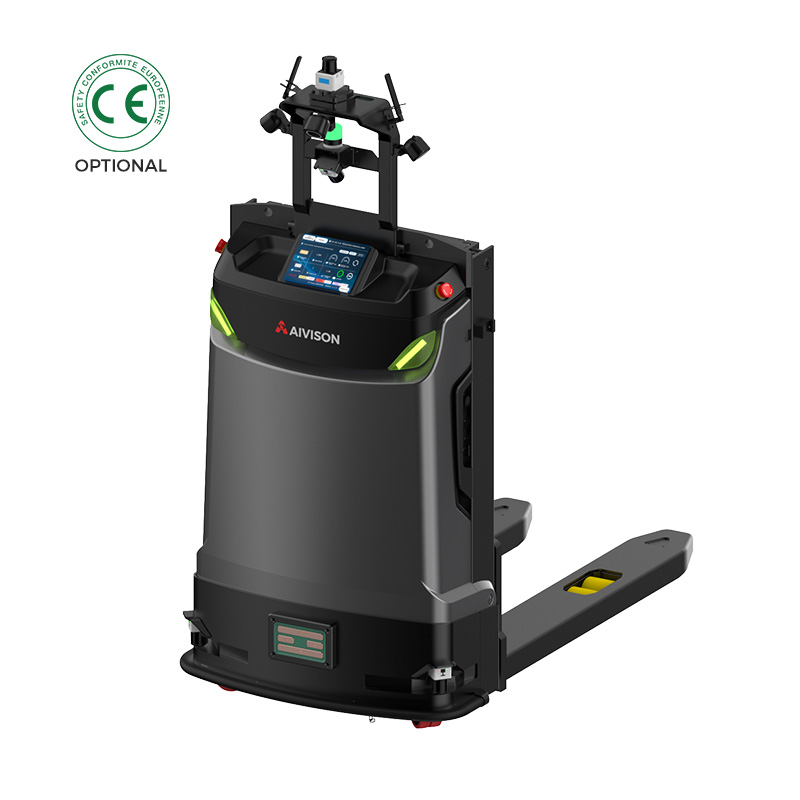
China Factory Automated Mobile Robot SLAM Lifting Wholesale AGV Chassis Vehicle
A flexible SLAM lifting chassis for factories that need to move racks, carts or custom carriers without magnetic tape. Recommended for mixed production and warehouse areas where routes change and the floor cannot be rebuilt. The ±5 mm navigation tier is usually sufficient for line-side replenishment; add QR assist only at constrained handover points.

Laser SLAM Navigation Automated Guided Vehicle Forklift AGV 1500kg Load Capacity
A 1,500 kg laser SLAM forklift for pallet and rack handling where conventional fork entry and stable lifting matter. Recommended for warehouses replacing repetitive manned forklift trips with scheduled robot missions. Validate pallet quality, fork-pocket condition, aisle clearance and floor flatness during engineering review.
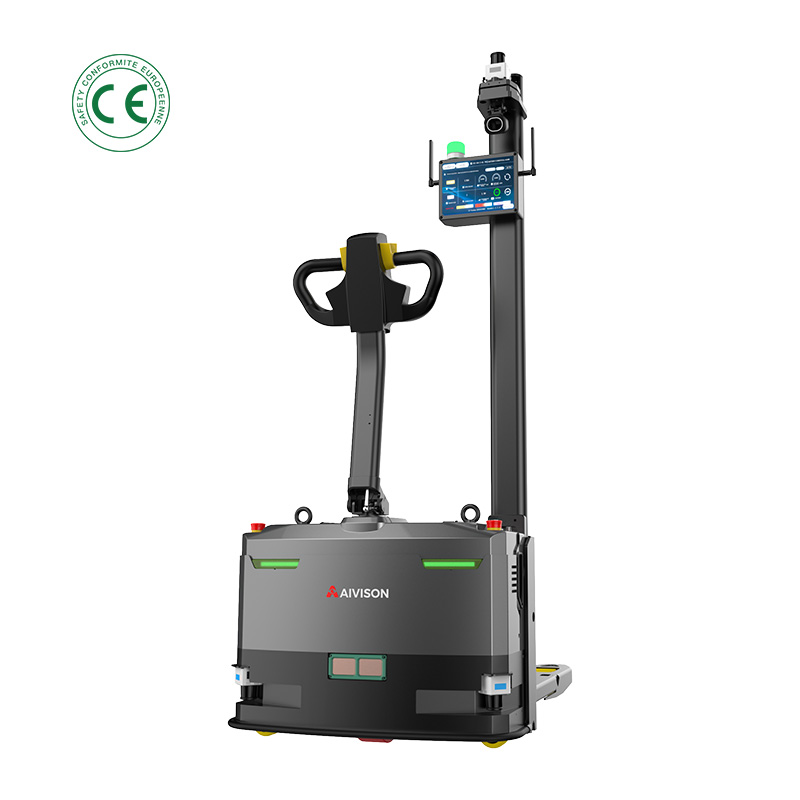
AIVISON CE Laser SLAM Navigation AGV 1500kg Warehouse Lifting Operations
A CE-oriented 1,500 kg warehouse lifting AGV for users who need documented lifting operations and repeatable station docking. Recommended when buyers want a defined CE review package and a lifting platform that integrates with existing racks or conveyors. Confirm the exact top module and safety scanner layout for your layout.
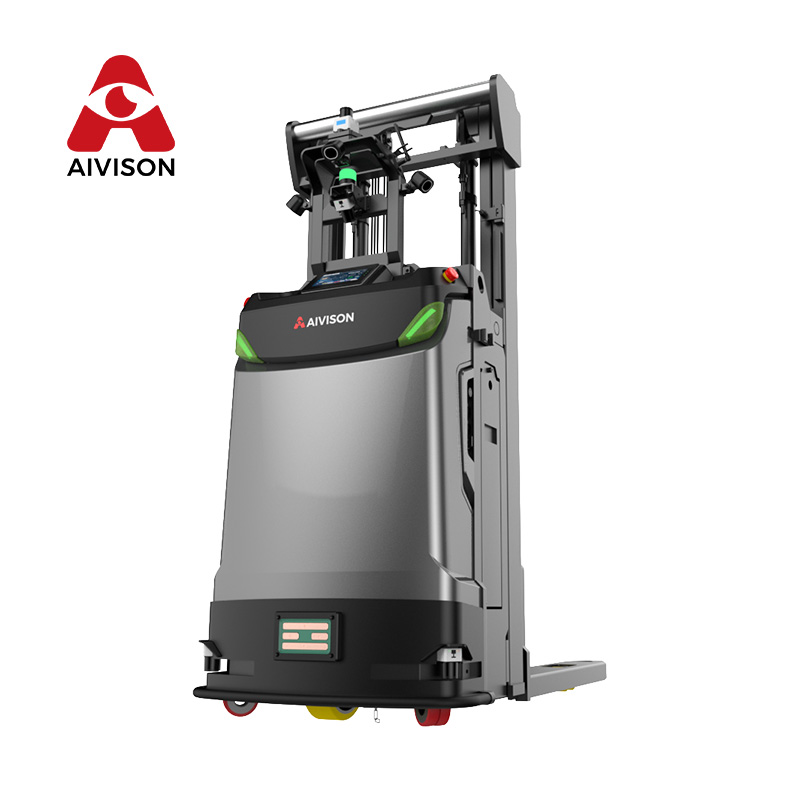
Autonomous Mobile Robots (AMR) Implement Cargo Transportation Between Warehouse and Conveyor Line
An AMR for cargo transfer between warehouse storage and conveyor lines. Recommended for bridging islands of automation without fixed conveyors, especially where WMS/WCS-triggered handovers are required. The project should define conveyor heights, handshake signals, buffer positions and exception handling for misaligned loads.
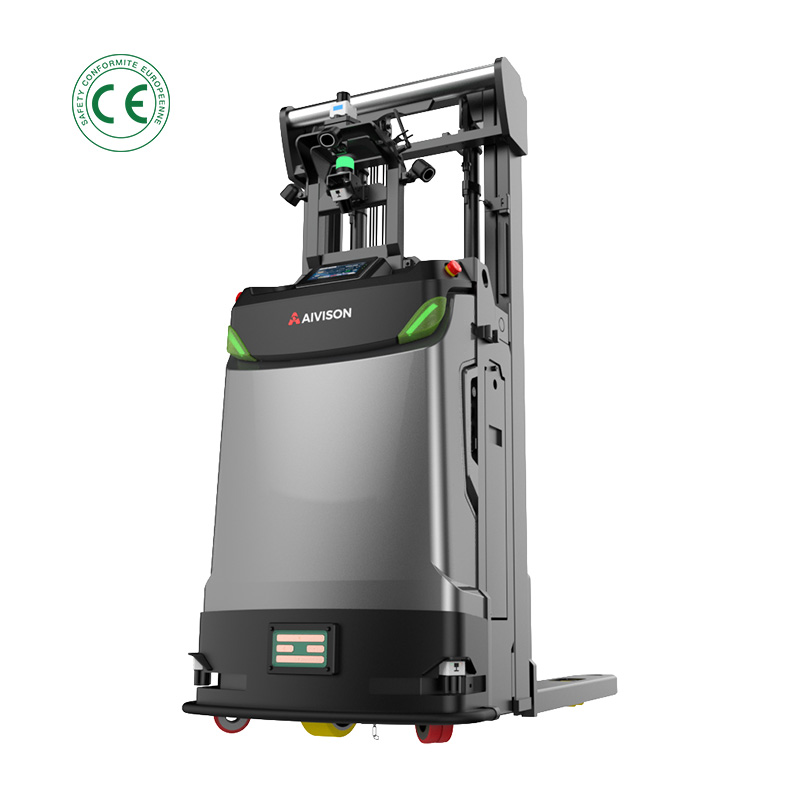
Smart Transport Robotic with Laser Navigation Reach 2000KG AGV Logistics Robots Warehouse Robot AMR
A 2,000 kg laser-navigation AMR for heavier logistics tasks that still need compact maneuverability. Recommended for automotive parts, battery modules and industrial material handling where payload growth is expected. Use the engineering review to check wheel loading, braking distance and charging ratio at peak throughput.
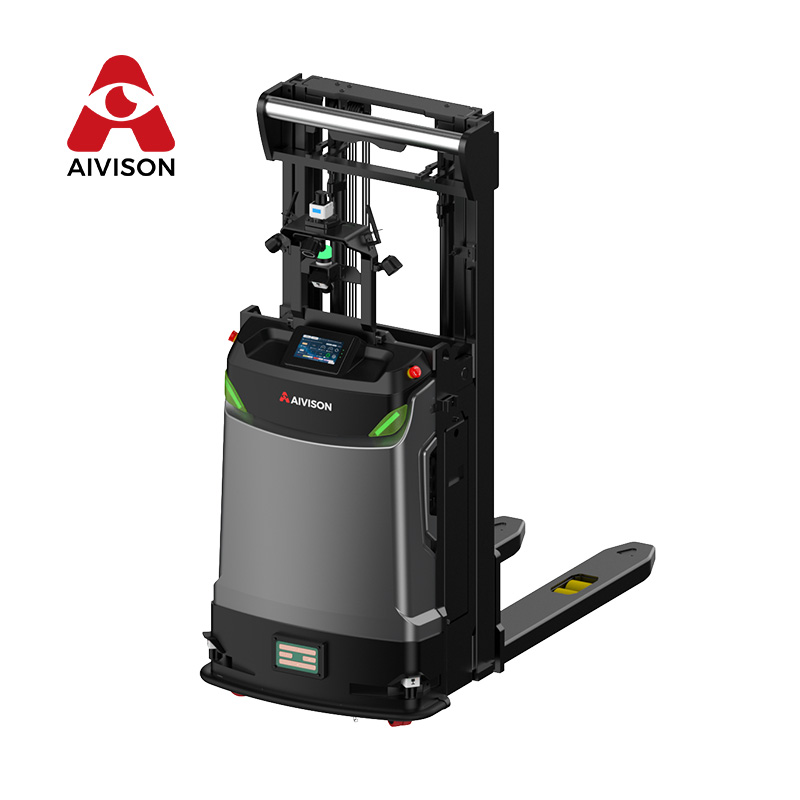
Heavy Load 2000KG Load Forklift Laser Guide AMR for Warehouse Pallet
A 2,000 kg laser-guided forklift AMR for pallet handling in warehouse and production environments. Recommended where pallet dimensions vary and reliable fork entry is a bottleneck. Camera assist, pallet detection and station rules should be specified together — not added after the layout is frozen.
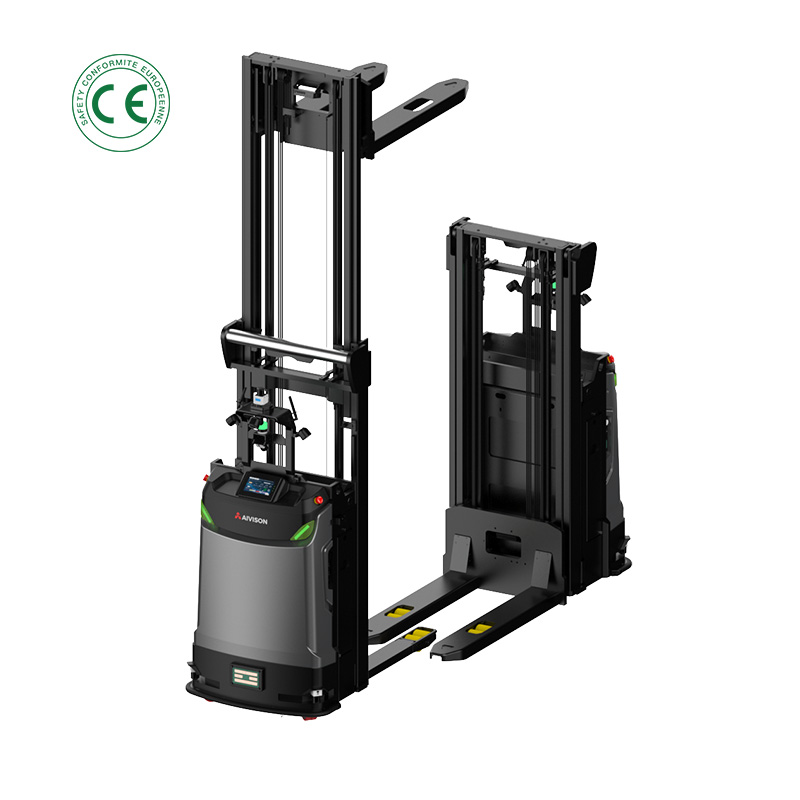
Factory AMR Robot AGV Robot Laser 2000kg Forklift AGV for Industrial Material Handling
A 2,000 kg industrial forklift AGV for repetitive material handling between production and storage zones. Recommended for factories that need an automation-ready chassis rather than a modified manual truck. Evaluate hydraulic duty cycle, safety zones and fleet traffic rules in shared pedestrian areas.
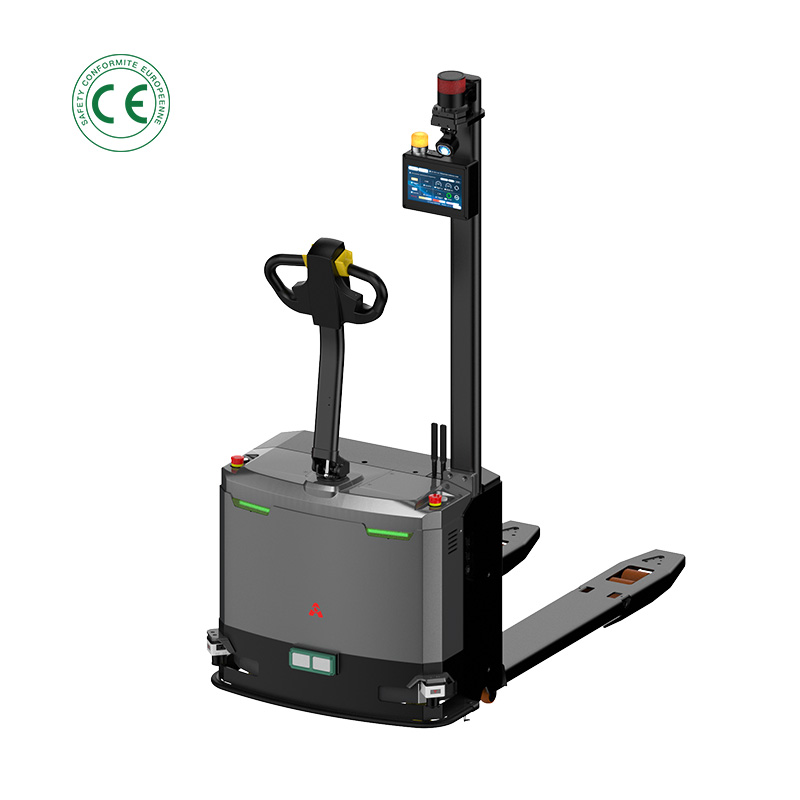
CE Certification Industrial AMR AGV Robot for Warehouse Automation Autonomous Material Handling Logistics
A CE-oriented industrial AMR AGV for warehouse automation and autonomous material logistics. Recommended as a starting platform for buyers who need a scalable fleet with charging docks, scheduling and custom top modules. The final CE file should reflect the delivered options, software version and operating limits.
Engineering Depth Behind the CE Warehouse AMR Range
Buyers comparing CE certified warehouse AMR suppliers should look beyond a product photo. The useful signals are engineering tenure, precision discipline, installed base and the ability to support mixed fleets across production and warehouse environments.
Why Marnix Is Evaluated as a CE AMR Supplier, Not Just a Robot Seller
Shenzhen Marnix Intelligent Technology Co., Ltd. is a Shenzhen-based mobile robot manufacturer with about ten years of AGV engineering experience. Its portfolio covers laser SLAM AMRs, jacking robots, smart forklifts, composite mobile robots and intelligent charging docks. That product breadth matters at procurement stage because a warehouse project rarely needs one robot type: receiving may need a pallet AMR, line-side supply may need a jacking robot, and finished-goods transfer may need a smart forklift. Buying from one engineering team reduces integration risk across the fleet.
The engineering logic is precision-on-demand. Laser SLAM maps natural features and reaches ±5 mm without auxiliary tracks, reflectors or floor QR codes. Where a station truly needs tighter handover, a QR scanning camera can bring docking to ±2 mm; composite robots with a 6-axis arm reach ±0.05 mm repeatability for semiconductor and medical-device tasks. This tiered approach avoids the common mistake of over-specifying every route and then paying for unnecessary floor infrastructure.
Marnix supports both end users and system integrators. Custom top modules include jacking units, roller conveyors, forklift forks and robotic arms. Robots are coordinated through an intelligent scheduling system over indoor Wi-Fi, with traffic control and automatic charging via compatible docks. Quality control includes multi-stage inspections and thousands of operational stress tests designed to expose failure modes before shipment.
For CE-oriented procurement, ask for evidence that matches the delivered build: Declaration of Conformity, applied standards, risk assessment, safety function description, EMC information, installation boundaries and maintenance instructions. Marnix’s credentials include a TÜV Rheinland onsite assessment, Fortune 500 supplier history and verified supplier records. These are useful trust signals, but they do not replace model-specific CE documentation. A serious supplier should welcome that distinction.

CE-Ready Documentation
Model-specific conformity file, risk assessment inputs, safety function description and integration boundaries for the delivered build.
Precision Tiers
±5 mm laser SLAM, ±2 mm QR assist and ±0.05 mm composite arm repeatability — chosen by station, not by brochure claim.
Custom Top Modules
Jacking, roller, fork and 6-axis arm interfaces engineered to connect with production equipment and conveyor handovers.
Fleet Uptime
Wi-Fi scheduling, dynamic avoidance, automatic charging and multi-stage testing support continuous warehouse and line-side duty.

Modular top mechanisms — jacking units, roller conveyors, forks and 6-axis arms — let one navigation core serve different handover tasks across a warehouse or production line.
Product Development Trends Reshaping Warehouse AMR Specification
The warehouse AMR market is maturing from “can a robot move a pallet?” to “can the supplier prove safety, fit the process and support a fleet over its lifecycle?” These six trends are visible in serious buyer requirements and should shape your technical specification.
Precision-on-Demand Architecture
Buyers are moving away from one accuracy claim for every task. They request a precision map by station: ±5 mm for transport, ±2 mm for docking, and ±0.05 mm only where a robot arm performs assembly. This lowers cost and avoids fragile floor infrastructure.
Modular Top Modules
Jacking, roller, fork and arm modules let a common chassis serve multiple processes. Procurement teams should ask whether top modules are engineered as replaceable interfaces or one-off modifications; the former improves spares strategy and future redeployment.
Fleet Interoperability
Warehouse AMR buyers increasingly require WMS/WCS integration, APIs and emerging fleet standards such as VDA 5050. Even when a single-vendor fleet is chosen today, contractual access to task status, traffic zones and telemetry protects future negotiating power.
Safety Standards by Design
EN ISO 3691-4 is becoming a reference point for driverless industrial truck safety. Expect more RFQs to require risk assessment, safety laser scanner coverage, emergency stop performance, speed monitoring and clear operating-zone definitions.
Energy and Charging Strategy
Opportunity charging and smart docks are shifting from optional features to uptime design. Buyers should model charging ratio by shift, battery chemistry, dock count and peak mission rate — not just nominal runtime.
Digital Lifecycle Management
Telemetry and predictive maintenance are becoming procurement criteria. A robot fleet that reports mission exceptions, battery health and collision near-misses supports continuous improvement and helps justify expansion.
How CE Warehouse AMR Buyers Will Source in the Next Buying Cycle
Price-only comparisons are giving way to total cost per successful material move, documentable safety and a service model that survives multi-site expansion. These procurement shifts favor suppliers who can engineering-review the application, not merely ship a catalog unit.
TCO and Cost per Successful Move
Sticker price is a poor comparison. Model labor displacement, uptime, charging ratio, floor preparation, integration, spare parts and reconfiguration. A slightly higher robot price can be cheaper per successful pallet move.
Audit-Ready CE Evidence
CE claims should be traceable to the delivered model. Buyer checklists should include DoC, technical file summary, risk assessment, safety performance, EMC, installation conditions and change-control rules.
Phased Fleet Scaling
Pilot one route, measure exceptions, then scale. Phased procurement reduces integration risk, lets safety zones mature and gives operators time to adapt. Frame contracts should protect unit pricing and software support as the fleet grows.
Integrator-Aligned Service
Global buyers are asking for local commissioning, spare-parts access, training and escalation paths. Suppliers with integrator programs and documentable service processes are better positioned than catalog-only sellers.
How to Compare CE Certified Warehouse AMR Suppliers
Use navigation accuracy as a cost driver, not a headline. Most routes do not need the tightest specification; precision stations do. The table below shows how to match accuracy tier to floor setup and procurement risk.
| Navigation Tier | Typical Accuracy | Floor / Site Setup | Best Fit | Procurement Note |
|---|---|---|---|---|
| Laser SLAM on natural features | ±5 mm | No tape, reflectors or floor codes | Warehouse transfer, line-side delivery, changing layouts | Default for most routes; validate scanner coverage and floor constraints. |
| SLAM + QR code camera | ±2 mm | QR labels only at precision stations | High-shelf storage, docking, wafer handling | Add only where needed; define label maintenance and exception rules. |
| Composite robot with 6-axis arm | ±0.05 mm | Station calibration | Semiconductor and medical-device assembly | Treat as an automation cell, not a simple AMR; specify repeatability and safety boundaries. |
Six Inputs That Determine 90% of Robot Selection
01 · Load Profile
Maximum weight, footprint and center of gravity of racks, pallets or carriers. Include load stability and any overhang.
02 · Site Layout
CAD drawing or sketch with aisle widths, doors, slopes, elevator or lift points, pedestrian zones and charger locations.
03 · Throughput Target
Missions per hour and peak periods. This sets fleet size, charging ratio, buffer capacity and traffic-control rules.
04 · Docking Precision
Identify where ±5 mm is enough and where ±2 mm QR assist or arm-level precision is required. Avoid blanket over-specification.
05 · Wi-Fi and IT
Existing access points, coverage quality, roaming behavior and integration expectations with WMS, WCS or MES.
06 · Equipment Interfaces
Conveyors, machines or shelving the robot must hand over to, plus top-module needs such as roller, jacking or fork.
Frequently Asked Questions from Global Warehouse AMR Buyers
These are the questions that most often decide whether an AMR project moves from inquiry to site survey. Clear answers shorten the evaluation cycle and reduce integration surprises.
What does CE certification cover on a warehouse AMR?
CE marking is model- and configuration-specific. For a warehouse AMR, verify the Declaration of Conformity, applied standards, EMC information, risk assessment, safety functions and installation boundaries for the exact build you will receive. A supplier’s general CE claim is not a substitute for the delivered unit’s technical file.
What navigation accuracy can Marnix AMRs achieve?
Laser SLAM on natural features typically reaches ±5 mm without tape or reflectors. Adding a QR scanning camera at selected stations can raise docking accuracy to ±2 mm. Composite robots with a 6-axis arm can reach ±0.05 mm repeatability for precision assembly tasks.
Do I need to modify my factory floor?
No for standard laser SLAM navigation. The robot maps existing features, so auxiliary tracks or floor QR codes are not required on normal routes. QR labels are added only at stations where ±2 mm docking precision is justified by the process.
Can Marnix customize robots for my production line?
Yes. As a manufacturer, Marnix customizes chassis and top modules such as jacking units, roller conveyors, forklift forks and 6-axis robotic arms. Provide load, layout, throughput and interface details so the engineering team can propose a fit-for-purpose configuration.
How are multiple robots coordinated?
An intelligent scheduling system manages the fleet over indoor Wi-Fi, handling simultaneous task assignment, traffic control and automatic charging with compatible smart charging docks. For larger projects, define WMS/WCS integration, traffic zones and exception workflows early.
Which industries use Marnix robots?
Semiconductor, 3C electronics, lithium battery, photovoltaic, automotive parts, PCB, textile and medical-device operations. Marnix serves both end users and system integrators building automation projects worldwide.
How does Marnix support CE documentation?
Marnix can provide build-specific documentation inputs covering the delivered configuration, safety functions, intended use and integration boundaries. Buyers should still validate the Declaration of Conformity, risk assessment and installation conditions for their site. Third-party credentials such as a TÜV Rheinland onsite assessment are trust signals, not a replacement for model-specific CE evidence.
What is a realistic project sequence?
A typical sequence is requirement review, layout and throughput analysis, configuration proposal, commercial quote, factory testing, shipment, site commissioning and after-sales support. Lead time depends on chassis type, top module, safety options and documentation scope; confirm it after the engineering review.
How do I start a project evaluation?
Share payload, layout, throughput, docking precision, Wi-Fi coverage and equipment interfaces. Use the inquiry button on this page or email info@marnixbot.com. Our engineers will return a configuration matrix covering navigation tier, chassis, top module, charging ratio and documentation requirements.
Get a CE AMR Selection Review Before You Commit CAPEX
Share your payload, layout, throughput, docking tolerance and target standards. Our engineers will return a configuration matrix covering navigation tier, chassis, top module, charging ratio, safety functions and documentation requirements.
Prefer email? info@marnixbot.com · Shenzhen Marnix Intelligent Technology Co., Ltd.