What a CE-Certified Bin Handling Robot Supplier Should Prove
CE marking is not a decorative sticker. For bin handling robots, it is evidence that the machine configuration has been assessed for applicable safety, electromagnetic compatibility and electrical requirements, supported by a technical file, risk assessment and declaration of conformity where required.
Buyers sourcing bin handling robots are usually solving a practical material-flow problem: moving totes, small containers, shelving, racks or pallets between receiving, line-side storage, picking stations and dispatch. The robot must navigate a real floor with people, forklifts, tight aisles and changing layouts. That is why the strongest suppliers do not start with a catalogue model. They start with load profile, docking tolerance, throughput and the safety concept.
As a Shenzhen-based CE-certified bin handling robot supplier and exporter, Marnix combines about ten years of AGV engineering with laser SLAM navigation, QR-assisted docking and composite robot options. Standard SLAM navigation reaches ±5 mm without magnetic tape or floor QR codes. A QR scanning camera can raise docking accuracy to ±2 mm, while composite robots with a 6-axis arm reach ±0.05 mm repeatability for precision production tasks. This tiered approach prevents over-specifying every route and helps procurement teams control infrastructure cost.
For overseas buyers, the export question is broader than the robot. It includes safety documentation, packaging, spare-parts strategy, Wi-Fi readiness, operator training and acceptance testing. Marnix supports end users and system integrators with manufacturer-level customization, fleet scheduling over indoor Wi-Fi, compatible intelligent charging docks and multi-robot dispatch.
Match Navigation Accuracy to the Station, Not the Whole Floor
Use the lowest infrastructure that meets the task. This is one of the most useful cost-control decisions in bin handling robot procurement.
CE-Ready Bin Handling Robots for Bins, Totes, Racks and Pallets
Eight deployable platforms share the same engineering philosophy: mapped-site navigation, flexible top modules, fleet-ready controls and configuration-specific CE documentation. Product links are preserved for direct evaluation.
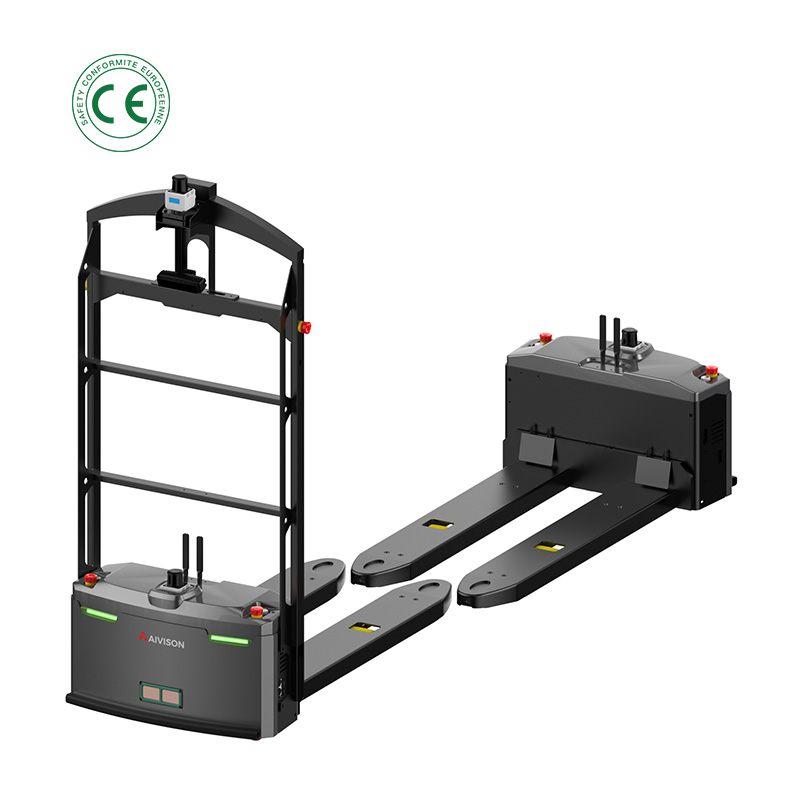
Aivison Customized 800kg Warehouse AGV Robot Lithium Battery AMR
An 800 kg-class lithium-battery AMR for warehouse and line-side bin transfer, with customizable top modules and fleet-ready controls.
View product details
Humanoid Robot Chassis Dual 7-DOF Arms Laser SLAM Omnidirectional Navigation ROS2 Open Platform AMR
Dual 7-DOF arms on an omnidirectional laser SLAM chassis for research, inspection and precision bin or tote handling via a ROS2 open platform.
View product details
Warehouse Robot Robotics 2000KG CE Warehousing Automatic Forklift Stacking AGV
A 2000 kg CE warehousing stacker AGV for pallets, racks and heavy bins in high-bay and throughput-intensive warehouse flows.
View product details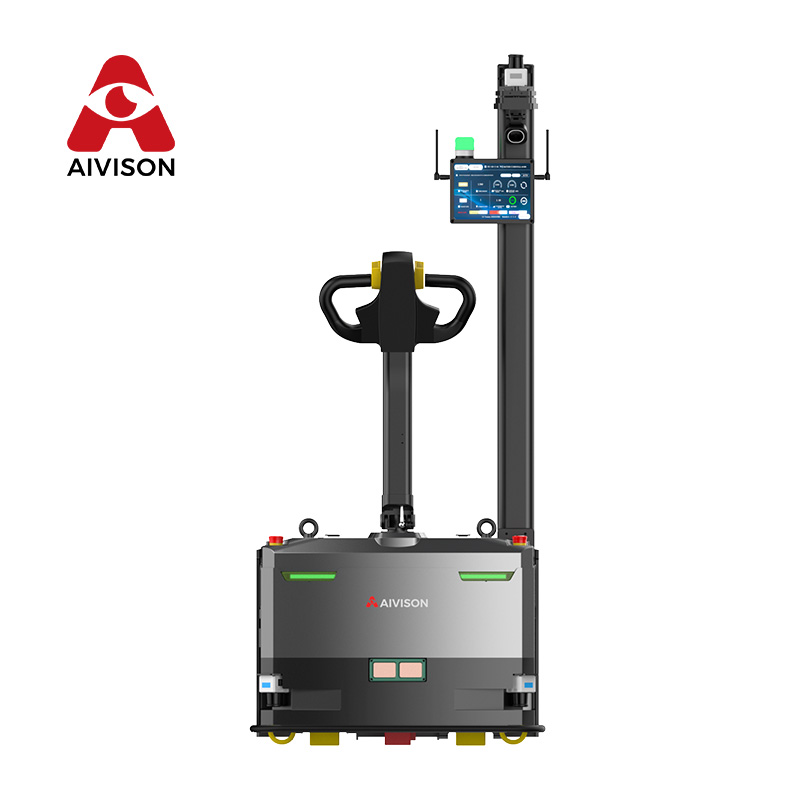
China Factory Movable Pallet Agv Robot Rack Shelf for Intelligent Robot Warehouse
Turns storage racks into flexible mobile inventory for intelligent robot warehouses, reducing fixed aisle dependence and manual rack handling.
View product details
AGV AMR Autonomous Forklift Smart Version Auto Mobile Transfer Stacker Robot
A smart autonomous forklift and stacker for pallet transfer, inbound and outbound handling, and repetitive trailer or rack movement.
View product details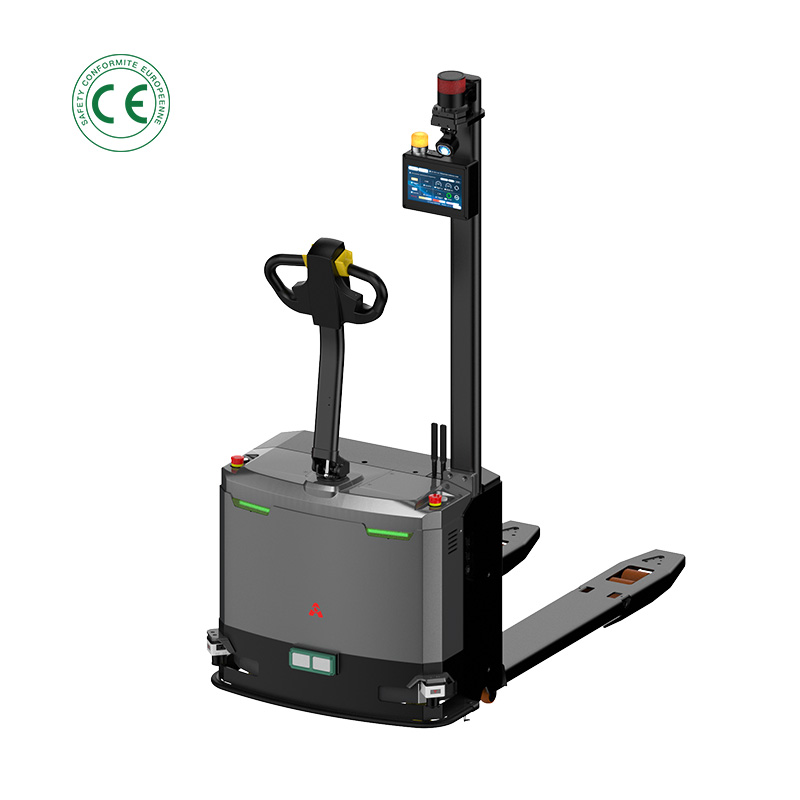
CE Certification Industrial AMR AGV Robot for Warehouse Automation Autonomous Material Handling Logistics
A CE-certified industrial AMR for warehouse automation, autonomous material handling and logistics with a safety-first configuration approach.
View product details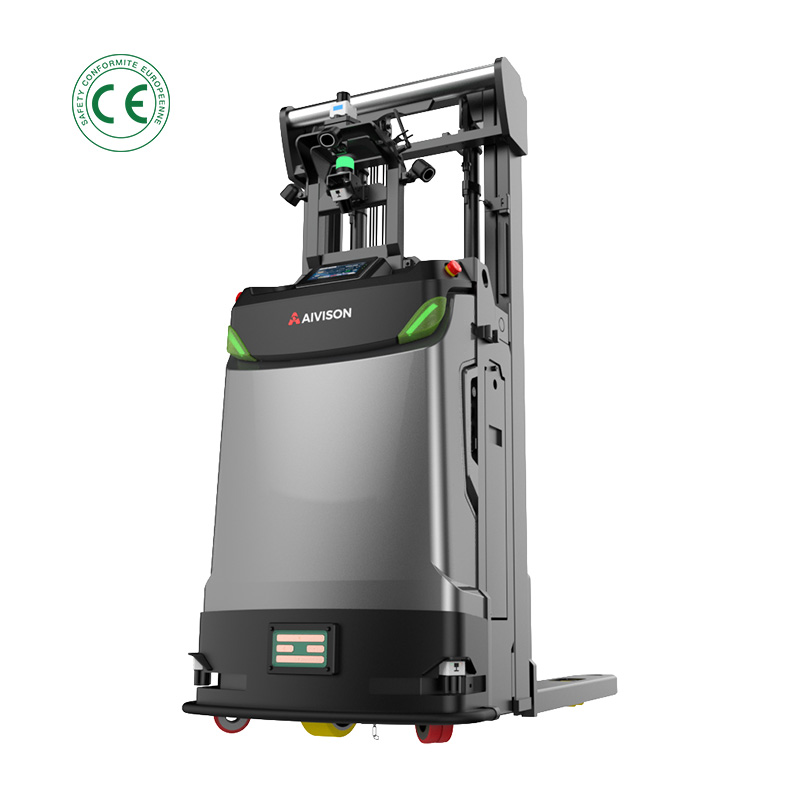
Smart Transport Robotic with Laser Navigation Reach 2000KG AGV Logistics Robots Warehouse Robot AMR
A laser navigation reach robot with 2000 kg capability for high-rack logistics, bin transfer and throughput-intensive warehouse tasks.
View product details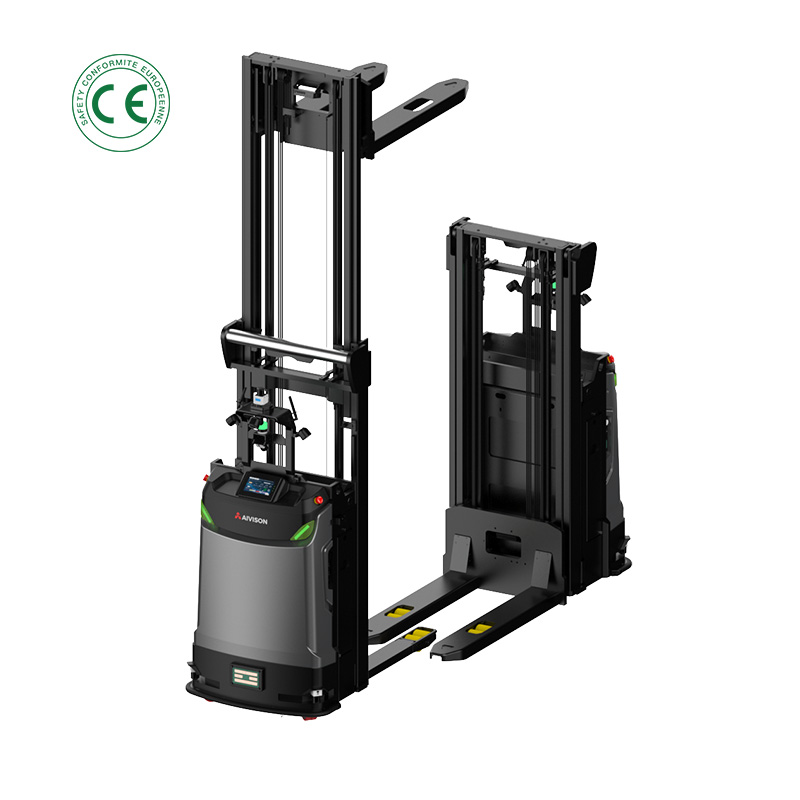
Factory AMR Robot AGV Robot Laser 2000kg Forklift AGV for Industrial Material Handling
A laser-guided 2000 kg forklift AGV for industrial material handling, with camera-assisted pallet recognition options for reliable fork entry.
View product detailsProcurement Trends Reshaping Bin Handling Robot Purchases
Buyers are moving from isolated robot purchases to fleet-level automation. The strongest proposals now compete on safety evidence, integration cost and measurable cost per move.
Fleet-First Business Cases
Procurement teams compare cost per bin move, charging ratio, uptime and service response—not only the unit price. A smaller fleet with higher uptime can beat a larger fleet with poor scheduling.
Safety Evidence Before Quotation
CE documentation, risk assessment, emergency-stop logic, lidar safety fields and load stability are increasingly requested before supplier shortlisting. EN ISO 3691-4 awareness is becoming a buyer expectation for driverless industrial trucks.
Modular Top Modules
One chassis platform can accept jacking, roller, fork or arm modules. This extends asset life and lets a factory reconfigure the fleet as product lines change instead of replacing the whole robot.
Mixed-Fleet Integration
WMS, MES and ERP integration is now part of the robot specification. Open interfaces, ROS2 options and Wi-Fi fleet scheduling protect buyers from single-vendor lock-in and support phased rollouts.
Product Development Trends to Watch
The next generation of bin handling robots will be judged less by raw navigation claims and more by safety documentation, uptime, integration speed and lifecycle cost.
Tiered Sensor Fusion
Laser SLAM remains the workhorse, QR vision handles precise docking, and 3D perception improves pallet, rack and obstacle recognition. The commercial advantage is selecting the right tier per station.
Composite Robot Platforms
AMR mobility plus 6-axis arms, roller conveyors or lift units lets one robot perform transfer and load-handling tasks. This is especially relevant for semiconductor, medical device and precision electronics flows.
Opportunity Charging and Energy Uptime
Lithium battery systems and intelligent charging docks are becoming project-level design decisions. Fleet success depends on charge-to-work ratios, dock count and route planning rather than battery capacity alone.
AI Scheduling and Digital Twin Validation
Simulation-supported deployment helps validate traffic, throughput and charging before installation. AI scheduling then reduces congestion and improves task assignment in mixed human and vehicle environments.
Safety by Design and Cybersecurity
Safety functions are being documented as part of the product architecture, not added at the end. Secure remote support, access control and software update practices are also entering procurement checklists.
Open Interfaces for Integrators
ROS2 open platforms, API access and I/O modules help system integrators connect robots to conveyors, machines and upper-level software. This reduces engineering hours and shortens time to first productive move.
Recommended Bin Handling Robot Configurations by Operational Need
Use these starting points for a supplier discussion, then validate payload, aisle width, docking tolerance and throughput with a site survey.
Line-Side Bin and Tote Replenishment
Best for repetitive delivery from central storage to production cells, with frequent route changes and limited floor modification.
- Aivison Customized 800kg Warehouse AGV Robot Lithium Battery AMR for flexible bin transfer.
- CE Certification Industrial AMR for warehouse automation and autonomous material handling.
- Use ±5 mm laser SLAM for most routes, adding QR docking only at precision handover points.
High-Bay Pallet, Rack and Heavy Bin Movement
Best for warehouse and dispatch flows where stability, reach height and safe pallet engagement drive the purchase decision.
- 2000KG CE Warehousing Automatic Forklift Stacking AGV for heavy pallet and rack work.
- Movable Pallet AGV Robot Rack Shelf for flexible mobile storage layouts.
- 2000kg Laser Forklift AGV for industrial material handling with camera-assisted options.
Precision Manufacturing Cells and Integrator Projects
Best for automation cells that need robot-to-machine handover, composite handling or an open platform for custom engineering.
- Humanoid Robot Chassis Dual 7-DOF Arms Laser SLAM ROS2 AMR for advanced manipulation.
- Smart Transport Robotic with Laser Navigation Reach 2000KG for high-rack logistics.
- Autonomous Forklift Smart Version for pallet transfer and repetitive stacking tasks.
Need a configuration recommendation based on your payload and floor plan? Inquire Now
Why Marnix Is a Trusted CE-Certified Supplier and Exporter
Shenzhen Marnix Intelligent Technology Co., Ltd. combines product engineering, factory customization and export support for end users and system integrators.
About Ten Years of AGV Engineering
Marnix draws on roughly a decade of AGV manufacturing experience, with Shenzhen-based R&D and production focused on mobile robots for real factory environments.
Precision Without Floor Rework
Laser SLAM reaches ±5 mm without magnetic tape, reflectors or floor QR codes. A QR scanning camera can raise docking accuracy to ±2 mm, while composite robots with a 6-axis arm reach ±0.05 mm repeatability.
Complete Portfolio and Fleet Software
Jacking robots, smart forklifts, pallet AMRs, composite robots and compatible intelligent charging docks come from one source, coordinated by an intelligent scheduling system over indoor Wi-Fi.
Manufacturer-Level Customization
Chassis, payload, battery, charging and top mechanisms can be engineered around your process—jacking units, roller conveyors, forklift forks and 6-axis robotic arms for direct machine interfacing.
Independent Trust Signals
Marnix has completed an onsite supplier assessment by TÜV Rheinland and has supplied a Fortune 500 company. The company serves more than 200 manufacturers across three continents.
Quality Protocol and Lifecycle Support
Multi-stage intelligent inspections and thousands of operational stress tests target near-zero failure rates. Export projects are supported with documentation, commissioning guidance and spare-parts planning.

CE Due Diligence Checklist Before You Buy
Use this checklist to separate a genuinely export-ready bin handling robot supplier from a catalogue reseller.
Declaration and Technical File
Ask for the Declaration of Conformity, applicable directives and standards, and the technical file scope for the exact model and configuration you are purchasing.
Risk Assessment and Standards
Confirm risk assessment practice, EN ISO 12100 awareness and, for driverless industrial trucks, EN ISO 3691-4 considerations. Validate EMC and electrical requirements where applicable.
Safety Functions and Load Stability
Review emergency stops, bumper protection, lidar safety zones, speed control, load stability, manual recovery and behavior in mixed human and forklift traffic.
Site Acceptance and Training
Require mapping validation, route tests, docking trials, charging checks, Wi-Fi verification, operator training and a signed site acceptance test before final payment.
Bin Handling Robot Procurement FAQ
Straight answers for buyers comparing CE-certified bin handling robots, AMRs, jacking robots and smart forklifts.
What is a CE-certified bin handling robot?
It is a bin, tote, rack or pallet handling robot supplied with CE conformity documentation for the applicable configuration. The evidence usually includes a declaration of conformity, technical file, risk assessment and relevant safety standards. Because final integration can affect compliance, buyers should confirm the exact model, top module and site conditions with the supplier.
How do I choose between ±5 mm SLAM, ±2 mm QR and ±0.05 mm composite accuracy?
Use ±5 mm laser SLAM for most warehouse transfers and line-side delivery where no floor infrastructure is desired. Add QR assistance at stations that need ±2 mm docking. Choose a composite robot with a 6-axis arm only when the process genuinely requires ±0.05 mm repeatability, such as precision assembly or medical device handling.
Do bin handling robots require floor modification?
Standard laser SLAM robots map the existing environment, so no magnetic tape, reflectors or floor QR codes are required for normal navigation. QR labels are added only at selected docking points where ±2 mm precision is needed. This keeps installation fast and avoids disrupting production.
Can multiple robots coordinate with WMS, MES or conveyors?
Yes, when the project is specified correctly. Marnix robots can be coordinated by an intelligent scheduling system over indoor Wi-Fi for simultaneous task assignment, traffic control and automatic charging. Integrators can also discuss I/O, API and top-module requirements for conveyor, machine or rack handover.
What can be customized for export projects?
Typical customization includes payload, chassis dimensions, jacking units, roller conveyors, forklift forks, 6-axis arms, battery and charging strategy, safety options, documentation, packaging and spare-parts recommendations. Manufacturer-level customization is most valuable when the robot must connect directly to existing production equipment.
How do I start a project evaluation?
Share your maximum load and footprint, site layout, aisle widths, throughput target, docking precision, Wi-Fi coverage and equipment interfaces. With those inputs, an engineering team can recommend the right platform, navigation tier and fleet size. Use the Inquire Now button to begin the evaluation.
Turn Bin, Tote and Pallet Movement into a Measurable ROI
Share your payload, layout and throughput target. Marnix engineers will recommend a CE-ready bin handling robot configuration, navigation tier and fleet plan for your site.
Inquire NowEmail: info@marnixbot.com · Shenzhen Marnix Intelligent Technology Co., Ltd.